Business Insider

Search documents
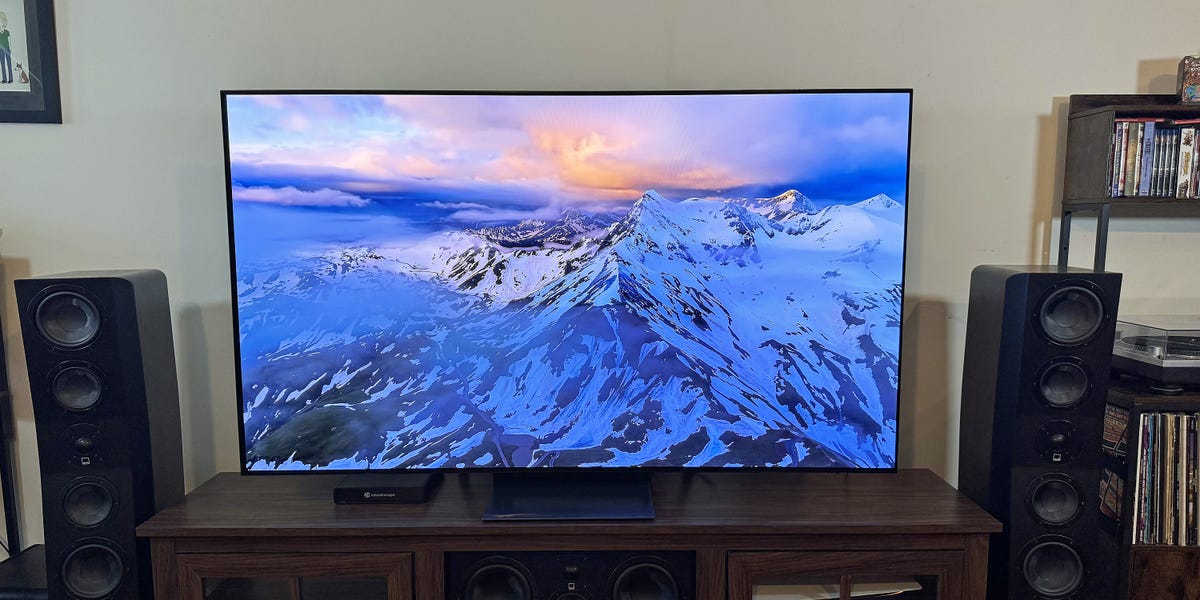
The 4 best TVs of 2026
Business Insider· 2026-01-30 21:33
Core Insights - The article provides a comprehensive guide to the best TVs currently available, highlighting four top models based on performance and value [1][3]. Group 1: Best Overall Picks - The Samsung S90F is recommended as the best overall TV, featuring an OLED panel that offers excellent contrast, rich colors, and deep black levels, priced around $1,500 for the 65-inch model [2][10]. - The LG G5 is noted for its superior picture quality, achieving a peak brightness of about 2,400 nits, making it the best in terms of brightness among OLEDs [20][24]. - The TCL QM6K is highlighted as the best budget model, often available for $650 or less, providing solid performance for its price [34][38]. - The TCL QM7K is recognized as the best midrange option, priced around $1,000, with improved brightness and contrast control compared to its predecessor [46][54]. Group 2: Technical Specifications - The Samsung S90F features a QD-OLED panel with a peak brightness of 1,460 nits and supports HDR10, HDR10+, and HLG formats [18][11]. - The LG G5 also supports HDR10 and Dolby Vision, with a peak brightness of 2,400 nits, and offers a 165Hz refresh rate for PC gaming [23][24]. - The TCL QM6K utilizes a Mini LED backlight with local dimming, achieving a peak brightness of 557 nits on a 10% HDR test pattern [40][38]. - The TCL QM7K boasts a peak brightness of around 1,800 nits, significantly enhancing HDR performance [52][51]. Group 3: User Experience and Features - The Samsung S90F includes a Tizen smart TV interface with access to major streaming services and Xbox Cloud Gaming, although its navigation is noted to be somewhat clumsy [14][15]. - The LG G5's webOS interface is functional but criticized for its barebones design and issues with voice search [28][29]. - The TCL QM6K features a responsive Google TV interface, enhancing user experience with quick navigation [42][41]. - The TCL QM7K improves upon viewing angles and backlight control, providing a better overall experience compared to older models [53][52].


Automaker Stellantis is rolling out a 5-day return to office for US staff
Business Insider· 2026-01-30 16:15
Core Viewpoint - Stellantis has mandated a return to office (RTO) policy requiring US employees to work on-site five days a week starting March 30, aiming to enhance customer satisfaction and foster innovation [1][2][7]. Group 1: RTO Policy Details - Directors and above must be on-site five days a week from February 16, as per an internal email from Stellantis CFO Joao Laranjo [2]. - The RTO initiative, titled "Back Together We Win," will apply to all employees globally, with specific timings varying by country [3]. - Employees are expected to confirm their on-site working hours with managers and teams [7]. Group 2: Employee Support and Flexibility - While the majority of work hours are expected to be on-site, the company continues to support flexibility in work hours [8]. - Resources available to assist employees during the transition include childcare discounts and access to 10 free counseling sessions annually through an employee assistance program [8]. Group 3: Company Context and Challenges - Stellantis has faced significant challenges, including struggling US sales and underperforming stock compared to rivals Ford and GM [11]. - The company employed nearly 250,000 people globally as of the end of 2024 [9]. - Recent leadership changes include the departure of CEO Carlos Tavares in December 2024, replaced by former Jeep CEO Antonio Filosa [11].

Trump says airlines can fly to Venezuela again — and American wants to be the first to return
Business Insider· 2026-01-30 16:08
Group 1 - Flights to Venezuela are set to resume for the first time in six years following the US military strikes and the capture of Nicolás Maduro, with President Trump announcing the opening of commercial airspace [1] - The Federal Aviation Administration (FAA) has removed precautionary notices related to Venezuela, indicating a focus on safety and the facilitation of regular travel between the US and Venezuela [2] - American Airlines has announced plans to be the first airline to reinstate flights to Venezuela, although ticket sales may take some time as they work with federal authorities on necessary permissions and security assessments [3] Group 2 - American Airlines has a long history of service to Venezuela, having first started operations in 1987 and previously being the largest operator in the country before suspending flights in 2019 due to political instability [4] - The resumption of flights is expected to help reconnect families and foster new business opportunities between the US and Venezuela, as stated by American Airlines' chief commercial officer [4]


Target's problems go much deeper than the national economic blackout brewing in its backyard
Business Insider· 2026-01-30 14:21
Company Overview - Minneapolis-based Target is facing challenges related to civil unrest and a new CEO, Michael Fiddelke, who is taking over this weekend [4] - Fiddelke has a long history with the company, starting as a finance intern, and former CEO Brian Cornell will remain as executive chairman [6] Recent Developments - Target employees have expressed their concerns by signing a letter urging the company to bar ICE from its stores [5] - The company has experienced flat or declining comparable sales in 10 out of the last 12 quarters, indicating a need for strategic changes [5] Market Context - A nationwide protest is being organized in response to recent fatal shootings by immigration officers, which may impact consumer behavior [1][2] - Previous protests, such as the economic blackout planned last year, resulted in only a 5.4% drop in sales, suggesting that while protests signal frustration, they may not significantly affect companies' financials [3]


What smart people in economics and business are saying about Kevin Warsh's nomination as Fed chair
Business Insider· 2026-01-30 14:09
The renowned economist Mohamed El-Erian congratulated Warsh on his nomination to lead the Fed."Having observed and interacted with Kevin during his prior tenure as Fed Governor, in academia, and as a fellow member of the Group of Thirty (G-30), I believe he brings a strong mix of deep expertise, broad experience, and sharp communication skills," El-Erian wrote in a post on X."His commitment to reforming and modernizing the Fed bodes well for enhancing policy effectiveness and protecting the institution's po ...

Uber's new plan to deploy 25,000 robotaxis will come from an autonomous trucking company — led by an Uber alum
Business Insider· 2026-01-30 11:23
Core Insights - Uber has announced a partnership with Waabi, a Canadian self-driving trucking startup, to deploy 25,000 robotaxis, with a $250 million investment contingent on Waabi meeting certain milestones [1] - Waabi's leadership includes former Uber executives, highlighting a connection between the two companies [2] - Waabi is developing a generalizable AI system that can be applied across different vehicle platforms, which is crucial for scaling autonomous vehicle technology [5] Group 1: Partnership and Investment - Uber's partnership with Waabi includes a significant investment of $250 million, although specific milestones for the investment have not been disclosed [1] - The collaboration aims to leverage Waabi's expertise in autonomous trucking to support Uber's robotaxi initiative [1] Group 2: Leadership and Expertise - Raquel Urtasun, Waabi's founder, previously served as the chief scientist at Uber's self-driving division, indicating a strong background in autonomous vehicle technology [2] - Lior Ron, Waabi's COO, is also an Uber alum who previously led Uber Freight, showcasing a blend of experience in both ride-hailing and trucking sectors [2] Group 3: Technology and Development - Waabi is focused on creating a sophisticated AI "brain" that can adapt to various vehicle types without needing extensive redevelopment [5] - The company has developed a mixed reality testing simulator that allows for extensive scenario training, which is essential for preparing AI drivers for real-world challenges [6][7] - This simulation technology enables testing of numerous traffic scenarios that would be difficult or dangerous to replicate in real life, enhancing the safety and reliability of autonomous systems [6][7]


The CEO of Wix shares the jobs he's most and least concerned about AI replacing
Business Insider· 2026-01-30 10:43
Core Insights - The CEO of Wix, Avishai Abrahami, expresses significant concern about the future of the workforce due to AI advancements, predicting that approximately 70% of the top 20 most popular jobs in the US will be affected within the next five to ten years [1][3] Impact of AI on Jobs - Abrahami highlights that many roles, particularly in driving for ride-share apps, taxi, and truck driving, are at high risk of being impacted by AI, with over 4 million such jobs reported by the Bureau of Labor Statistics for 2024 [4] - Customer service and call center positions are also expected to be significantly affected, as noted by other tech leaders like OpenAI's CEO [5] - A Google Cloud report indicates that AI adoption among software professionals has surged to 90%, reshaping roles such as software developers and analysts [6] Job Security and New Opportunities - Jobs requiring human performance or interaction, such as athletes and roles in the performing arts, are predicted to be safer from AI replacement [7] - High-level thinking jobs are currently performed better by humans than AI, with Abrahami stating that AI is not adept at creating new concepts or inventions [8] - The introduction of new roles, such as the xEngineer at Wix, illustrates how AI can create new job types that leverage human expertise alongside AI capabilities [3]


Target's new CEO is thrown into crisis mode on day one
Business Insider· 2026-01-30 10:01
Core Insights - Target's new CEO, Michael Fiddelke, is stepping into a challenging environment with declining sales and political pressures, marking a significant leadership transition [1][2][3] Financial Performance - Target has experienced flat or declining comparable sales in 10 of the last 12 quarters, with stock prices down over 25% in the past year [2] - The company has lost its position on Fortune's list of 50 most admired companies for the first time in over two decades, while competitors like Walmart and Costco remain in the top 10 [4] Leadership Challenges - Fiddelke faces a complex leadership paradox, needing to balance business responsibilities with sensitivity to social and political issues [3] - The board's decision to retain former CEO Brian Cornell as executive chairman may hinder Fiddelke's ability to implement significant changes [7][8] Employee Relations - Relations with employees are strained, particularly regarding the company's response to immigration enforcement in Minneapolis, leading to employee dissatisfaction [6] - A significant number of employees have urged the company to take a stand against ICE's actions, indicating a need for improved communication and support from leadership [6] Strategic Vision - Fiddelke has outlined a three-point plan focusing on enhancing Target's brand image, improving in-store experiences, and increasing technology investments to regain customer trust [5] - Leadership experts suggest that Fiddelke's long tenure at Target and his community ties may provide him with credibility and support from employees [15] Community Engagement - The company has been involved in political controversies, particularly in Minneapolis, affecting its public image and employee morale [11][12] - Experts recommend that Fiddelke could strengthen relationships with stakeholders by demonstrating support for employees, potentially through radical actions like temporarily closing stores in affected areas [16]

Data centers power Blackstone's $1.3 trillion investment empire
Business Insider· 2026-01-29 18:49
Core Insights - Data center investments are a significant growth driver for Blackstone, particularly through its acquisition of QTS, which has become the largest contributor to the company's portfolio gains in 2025 [2][6] - The firm reported a total of $239 billion in inflows for the year, the highest since 2021, largely driven by investor interest in artificial intelligence [3] - Blackstone's infrastructure platform, bolstered by data center appreciation, grew by 40% to $77 billion, with returns of 8.4% for the quarter and 23.5% for the year [4] Investment Performance - Blackstone Real Estate Income Trust (BREIT), valued at $54 billion, achieved an 8.1% return, significantly outperforming its sector benchmark, and is heavily invested in QTS [5] - Real estate investments overall were the weakest segment, with opportunistic strategies showing a 0.6% loss and core assets gaining 3% [5] Strategic Focus - Blackstone plans to continue investing in digital infrastructure, including data centers and private credit, as part of its broader investment strategy [6][7] - The firm has invested in AI developers and energy providers to support the growing demand for AI infrastructure, including a notable $11.5 billion acquisition of TXNM Energy [10] Financial Metrics - Blackstone reported $14.5 billion in revenue for the year, reflecting a 9% increase, and $4.4 billion for the quarter, marking a 42% rise [11] - The private credit portfolio increased by 30% to $130 billion, although there were concerns about redemption upticks related to default risks [8]

Elon Musk ended Tesla's earnings call with an urgent plea
Business Insider· 2026-01-29 17:55
Core Viewpoint - Elon Musk emphasized the urgent need for American companies to invest in battery-making infrastructure to avoid falling behind in the electric vehicle and energy storage sectors [1][2]. Group 1: Tesla's Actions and Investments - Tesla has begun processing lithium at its $1 billion refinery in Robstown, Texas, and is producing advanced dry-electrode 4680 cells in Austin [3]. - The company is currently the largest and only lithium and cathode refinery in the U.S., indicating a significant investment in domestic battery production [4]. - Tesla's investments in battery infrastructure and energy storage have helped mitigate revenue pressures from its automotive business [6]. Group 2: Industry Context and Risks - An analysis by the Dallas Federal Reserve identified 66 lithium projects in the U.S., many of which are in early development stages and face challenges such as long timelines and high costs [5]. - General Motors has invested $625 million in a lithium mine project in Nevada, which is expected to be the largest in the U.S. and is set to open between late 2026 and early 2027 [6]. - Analysts express concerns about Tesla's commitment of over $20 billion to long-term industrial projects amid uncertainty regarding near-term returns [7][8]. Group 3: Geopolitical Risks - Musk warned that many companies are underestimating their exposure to geopolitical risks associated with fragile supply chains for critical materials [2]. - He stated that companies failing to address these risks could face severe consequences, potentially leading to their demise [9].