Investopedia

Search documents
Roomba Maker iRobot Declares Bankrupty. Its Stock Is Plunging 70%
Investopedia· 2025-12-15 16:40
Core Insights - iRobot (IRBT) shares dropped over 70% following the announcement of a Chapter 11 bankruptcy filing, with plans for a Chinese robotics firm, Picea, to acquire 100% of its equity [1][5] - CEO Gary Cohen described the bankruptcy and acquisition as a crucial step for iRobot's long-term future, aiming to enhance financial stability and ensure continuity for stakeholders [2] - Current Roomba users will not experience disruptions, as iRobot assured that app functionality, customer programs, and product support will remain intact [3] Financial Context - The Chapter 11 filing allows iRobot to restructure its operations and negotiate with creditors, with Picea set to acquire the company [2] - Earlier in 2023, iRobot's shares fell 35% due to concerns over tariffs, macroeconomic conditions, and competition, leading to a strategic review of options [4] - iRobot shares have lost approximately 85% of their value in 2025, reflecting ongoing financial struggles [5] Historical Background - A previous acquisition deal with Amazon fell through due to regulatory scrutiny, leading to significant changes in iRobot's leadership and workforce reductions of about 30% [3] - The company has faced substantial challenges, including a decline in consumer demand and increased competition, contributing to its current financial situation [4]



To Get This New Tax Deduction, You Must Calculate Your Overtime Pay—Here’s How
Investopedia· 2025-12-15 13:00
KEY TAKEAWAYS Ask your employer how much you earned in overtime this year. It may impact your tax bill in April. That means many workers will have to calculate how much overtime pay they can deduct themselves for the 2025 tax year and will have to work with their employer to obtain this amount, said Alison Flores, director of tax research and content strategy at H&R Block. "For most people, we expect a pay stub is what we'll be looking at. So you'll want your last pay stub of the year," Flores said. "It hop ...

This Age Group Is The Most Likely To Max Out Their 401(k)—See How You Compare
Investopedia· 2025-12-15 13:00
Core Insights - The article highlights the increasing importance of maximizing 401(k) contributions for older workers approaching retirement, particularly those aged 55 to 64, who are the most likely to have maxed out their contributions in 2024 [1][7]. Group 1: 401(k) Contribution Trends - In 2024, nearly 19% of individuals aged 55 to 64 maxed out their 401(k) contributions, with the contribution limit set at $23,000 [2]. - Only 3% of workers younger than 25 contributed up to the 401(k) limit, indicating a significant disparity in retirement savings behavior between age groups [2]. Group 2: Retirement Preparedness - There is a growing retirement crisis in the U.S., exacerbated by rising costs, inadequate savings, and the potential depletion of the Social Security trust fund, necessitating increased savings for stable retirement income [3][4]. - Research from Vanguard indicates that older generations exhibit lower levels of retirement readiness compared to younger generations, which is measured by their ability to maintain a similar lifestyle in retirement [5]. Group 3: Factors Affecting Retirement Savings - Changes in the U.S. retirement system, such as improved access to defined contribution plans, have positioned younger workers to be better prepared for retirement than older workers [6]. - Strategies for older workers to improve their retirement readiness include increasing contributions to tax-advantaged accounts, delaying Social Security benefits, utilizing home equity, working longer, and reducing spending in retirement [7].

Make These 4 Key Moves Before Year-End for Tax-Free Student Loan Forgiveness
Investopedia· 2025-12-14 13:00
Core Insights - The Department of Education has resumed student loan forgiveness for most income-driven repayment plans, but there is no confirmed date for when borrowers will receive their forgiveness [2] - Borrowers eligible for forgiveness in 2025 will not have to pay federal taxes on their discharged loans, provided they take necessary steps before the end of the year [3][4] Group 1: Loan Forgiveness Process - The Department of Education is processing tax-free loan discharges for borrowers under Income-Based Repayment, Pay As You Earn, and Income-Contingent Repayment plans, while the Saving for a Valuable Education plan remains blocked due to lawsuits [5] - Borrowers under the SAVE plan are currently in forbearance, and payments made during this period do not count toward forgiveness; however, they can transfer to eligible plans by December 31, 2025, to qualify for tax-free discharge [6] Group 2: Payment Requirements - Borrowers must have made 240 or 300 monthly payments, depending on their repayment plan, to qualify for tax-free forgiveness; they can verify their payment count with their loan servicer [7][10] - The number of required payments varies by plan: 300 payments for IBR and ICR plans, and 240 payments for PAYE [10] Group 3: Documentation and State Taxes - Borrowers should keep any confirmation from their loan servicer regarding tax-free forgiveness and verify their qualifying payments with their servicer [11][12] - While federal taxes on forgiveness are waived, some states may still impose taxes on discharged loans, including Arkansas, Indiana, Mississippi, North Carolina, and Wisconsin [13][14][15][16][17]

What to Expect in Markets This Week: Jobs Report, Inflation Data, Earnings From Micron, Nike and FedEx
Investopedia· 2025-12-14 10:50
Economic Data Release - Several key economic reports are scheduled for release this week, including employment levels, retail sales, and inflation data, which are crucial for assessing the economic landscape and guiding Federal Reserve interest rate decisions [2][4][5] - The Bureau of Labor Statistics will release November employment data, alongside October retail sales and September business inventories, providing insights into consumer demand and labor market conditions [4] Earnings Reports - Micron Technology is set to report earnings this week, following a significant stock surge of over 200% in the past year, highlighting the ongoing interest in the artificial intelligence sector [7] - Nike's earnings report will reflect its successful turnaround efforts, although the company has warned that tariffs may still impact its profitability despite recent sales growth [8] - FedEx will also report earnings, having reinstated its full-year outlook with a forecast of 4% to 6% annual revenue growth, indicating resilience despite tariff challenges [10] Consumer Insights - Additional earnings reports from companies like CarMax, General Mills, Conagra, Darden Restaurants, Birkenstock, and Carnival will contribute to understanding consumer health and spending patterns [9] - The upcoming Consumer Price Index (CPI) report will shed light on inflation trends and the impact of tariffs, which is closely monitored by the Federal Reserve as it plans for 2026 [5]



The Fed Is Split on 2026 Rates—This Real-Time Tool Shows What Your Savings Could Earn Next Year
Investopedia· 2025-12-13 13:01
Core Insights - The Federal Reserve's recent rate cut has led to a divided outlook for interest rates in 2026, with expectations ranging from small hikes to cuts of up to 1.50 percentage points, indicating significant uncertainty in future policy direction [3][4][9] Group 1: Federal Reserve's Rate Outlook - The Fed's latest projections show a wide range of opinions among policymakers regarding future rate changes, reflecting uncertainty due to delayed economic data from a recent government shutdown [3][4] - The Fed's dot plot illustrates the tension between rising unemployment and reaccelerating inflation, contributing to the unpredictability of future rate decisions [4][9] Group 2: Impact on Savings and CD Yields - Following the Fed's rate cut, there is downward pressure on savings, money market, and CD yields, with expectations that banks may lower their annual percentage yields (APYs) in response [6][7] - Despite potential decreases, current high-yield savings accounts still offer mid-4% APYs, with some reaching 5%, while top CDs provide guaranteed yields between 4.00% and 4.50% across various terms [6][7] Group 3: Strategies for Consumers - Consumers can lock in higher rates with CDs before banks potentially reduce yields further, although the divided outlook may lead banks to maintain CD yields until clearer policy direction emerges [7][8] - Timing is crucial when shopping for CDs, as tracking market expectations can inform decisions on whether to lock in rates now [8]

It's Not Too Late to Finish Your Holiday Shopping—Or to Score Some Deals
Investopedia· 2025-12-13 13:01
Group 1 - Retailers are extending discounts on various goods, including sports gear and books, to attract price-sensitive consumers amid rising costs and tariffs [2][3] - The average size of discounts on Amazon has slightly decreased from 2024 to 2025, with markdowns rarely exceeding 5% [3] - Major retailers like Target and Lowe's are promoting sales and encouraging consumers to take their time with purchases [5][9] Group 2 - Merchants are providing clear deadlines for holiday orders to ensure timely delivery, with cut-off dates varying by retailer [6] - Up to 20% of items may be available at their lowest prices of the year leading up to Christmas, with average reductions around 20% [7] - Heavily discounted categories include toys, books, games, and apparel, which are expected to remain well discounted [8][9]





Affordability, AI Stocks, Parlays and Bad Bunny Top Investopedia’s Terms of the Year
Investopedia· 2025-12-13 01:00
Economic Overview - The year 2025 has been marked by significant events reshaping the global economy, including a tariff war, advancements in AI, the rise of sports betting, the integration of cryptocurrencies into the banking system, and a sustained bull market [1] Key Terms and Trends - **Affordability** has been a major concern for consumers, driven by persistent inflation and high prices in food, healthcare, and housing, leading to a decline in consumer sentiment [2][3] - **Tariffs** have played a crucial role in economic policy, with their impacts on affordability being a primary concern for investors and consumers [4] - **Gold** has emerged as a leading asset class, surging over 60% year-to-date, as investors seek safe-haven assets amid market uncertainties [5] - **AI Stocks** have seen significant investment, with major companies pledging $380 billion in capital expenditures, raising concerns about a potential bubble in the sector [6] - The **Stablecoin Act of 2025** has established a federal framework for payment stablecoins, marking a significant step in the U.S. cryptocurrency landscape [7] - **Sports Betting** has gained mainstream acceptance, with Americans expected to wager over $150 billion in 2025, reflecting a growing interest in high-risk betting strategies like parlays [8] - **Insider Trading** has garnered attention, particularly following market fluctuations related to tariff policies, raising questions about market integrity [9] - **Private Markets** are becoming more accessible due to regulatory changes, allowing broader participation in alternative investments [11] - **Covered Calls** have become a popular strategy for generating income in a sideways stock market, appealing to investors looking for stable returns [13]

Where Gas Is Cheapest Right Now: A State-by-State Breakdown
Investopedia· 2025-12-13 01:00
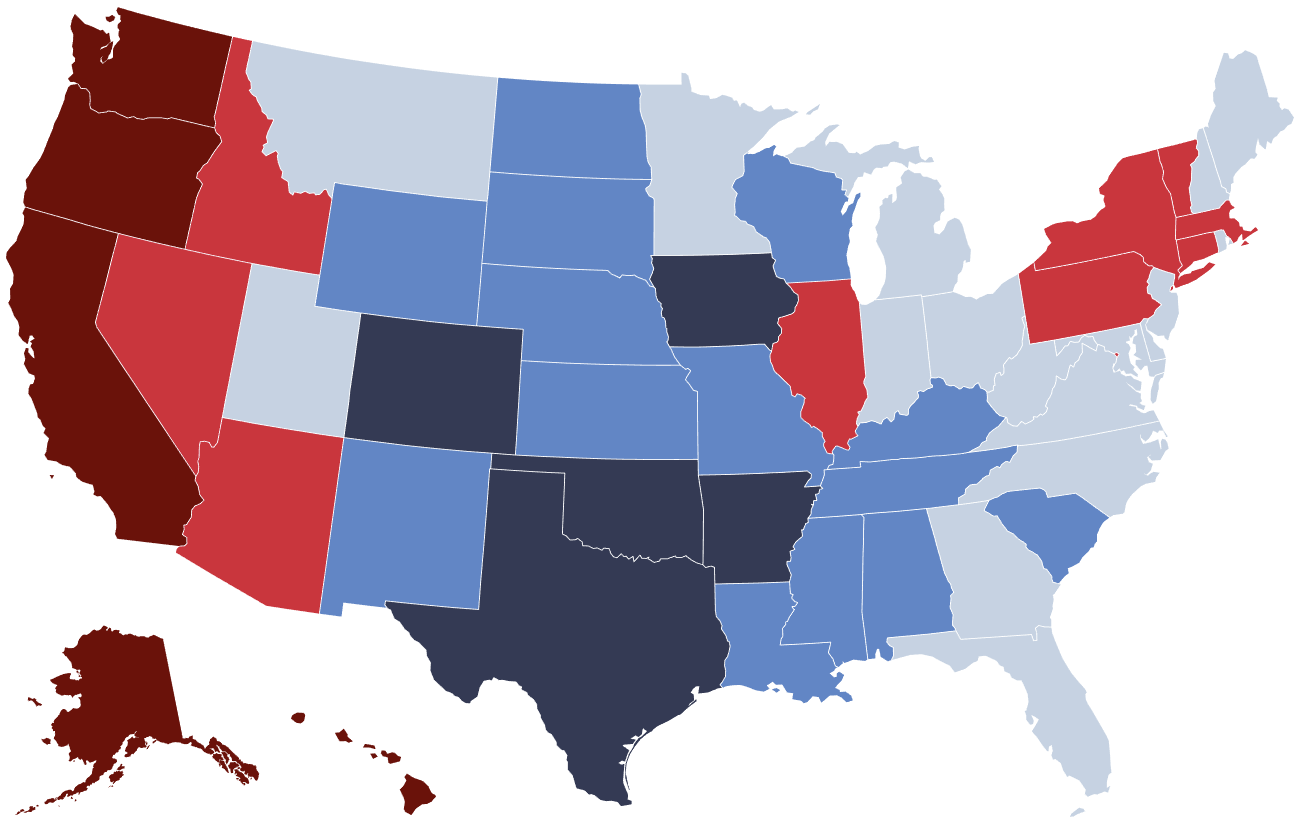
Core Insights - The national average price for regular gas is currently $2.93, down from $2.98 a week ago and $3.08 a month ago, indicating a steady decline in prices [2] - This price is also lower than the same time last year when the average was $3.03, providing some relief for consumers ahead of the holiday season [2] Price Variations by State - The cheapest gas prices are found in the South and Midwest, with Oklahoma having the lowest average at $2.36 per gallon, followed by Texas, Colorado, and Iowa at $2.51, and Arkansas at $2.52 [4] - Conversely, states with the highest prices include Hawaii at $4.45, California at $4.40, and Washington at $4.04, with Oregon and Alaska also above $3.60 [4] Factors Influencing Gas Prices - Fuel taxes significantly contribute to the variation in gas prices across states, accounting for over 14% of the average price per gallon in 2023 [6] - Proximity to refineries and the requirement for special fuel blends also affect prices, as seen in California, which has higher and more variable prices due to its unique fuel blend and high gasoline taxes [7] Consumer Guidance - Understanding local gas prices can help consumers assess whether they are paying unusually high prices and assist in travel planning [5] - AAA provides tips for improving fuel efficiency, including smooth driving habits, regular vehicle maintenance, and effective trip planning to reduce fuel consumption [9][10][11][12]
Trump Says He'll Work With Democrats on Health Care—With Just Days Left
Investopedia· 2025-12-13 01:00
Core Points - The deadline for enrolling or renewing coverage in an Affordable Care Act (ACA) health insurance plan is December 15, with a potential premium increase looming if subsidies are not renewed [2][4] - If subsidies expire, the average health insurance premium for the 24 million ACA enrollees could rise from $888 in 2025 to $1,904 in 2026, more than doubling [2][7] - An estimated 2.2 million people may lose their insurance entirely if the subsidies are not extended [3] Economic Implications - Rising health care costs are a significant burden for households already facing increased cost-of-living pressures since the pandemic, reducing consumer spending power [4] - Without a resolution by December 15, individuals seeking ACA coverage will face higher premiums without clarity on potential subsidy extensions [4] Political Landscape - There has been significant partisan conflict over the future of ACA subsidies, with recent attempts by Democrats to extend subsidies being blocked by Senate Republicans [5] - President Trump has expressed a willingness to collaborate with Democrats on health care, but time is limited for negotiations [3][7]