TechXplore

Search documents
Apple production hubs hit by tariffs, sending shares plummeting
TechXplore· 2025-04-03 12:41
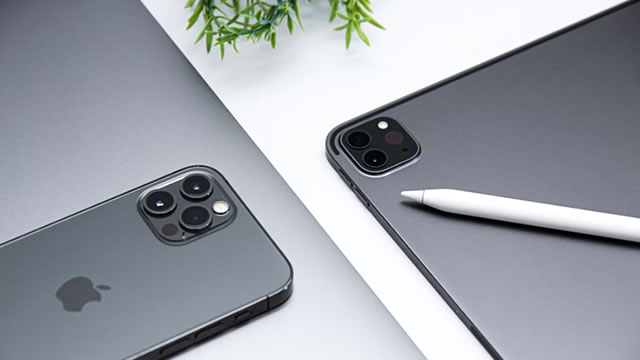
This article has been reviewed according to Science X's editorial process and policies . Editors have highlighted the following attributes while ensuring the content's credibility: Credit: Unsplash/CC0 Public Domain Apple Inc. is finding itself squarely in the crosshairs of President Donald Trump's new tariffs, even after a years-long effort to insulate the iPhone maker from trade wars and supply chain disruptions. A long list of levies unveiled by the White House are poised to hit the company especially ...


Amazon makes last-minute bid for TikTok: report
TechXplore· 2025-04-02 18:56
Group 1 - Amazon has made a last-minute bid to acquire TikTok, which is facing a potential ban in the US if not sold by its Chinese owner, ByteDance [1][2] - The bid was communicated in a letter to officials involved in the sale discussions, aimed at addressing US national security concerns [1] - President Trump has expressed confidence in finding a buyer for TikTok's US operations by the upcoming deadline, despite downplaying the risks of a ban [2][5] Group 2 - The most likely resolution involves existing US investors in ByteDance rolling over their stakes into a new independent global TikTok company, with additional US investors like Oracle and Blackstone joining to reduce Chinese ownership [3] - TikTok has over 170 million users in the US and is under threat from a law requiring it to separate from ByteDance or face a ban [4] - The deadline for TikTok to be sold is set for April 5, 2025, with potential extensions from President Trump if a deal is not finalized [5][6] Group 3 - Trump's administration may offer to reduce tariffs on China to facilitate Beijing's approval for the sale of TikTok [6] - Trump has shifted from supporting a ban to defending TikTok, recognizing its popularity among younger voters [7] - Other bidders for TikTok include Frank McCourt's Project Liberty initiative, AI startup Perplexity, and internet personality MrBeast [7]


From IBM to OpenAI: 50 years of winning (and failed) strategies at Microsoft
TechXplore· 2025-04-02 18:40
Core Insights - Microsoft celebrates its 50th anniversary, marking its evolution from a small computer company to one of the world's most powerful corporations, with a net profit of $88 billion from sales of $245 billion in 2024 and a market value close to $3,000 billion [1][2] Group 1: Historical Development - Microsoft was founded in 1975 by Bill Gates and Paul Allen in Albuquerque, New Mexico, initially focusing on programming languages [2] - The first significant era involved a partnership with IBM, where Microsoft provided the operating system MS-DOS, leading to substantial profits and market presence [3][5][7] - The second era was characterized by the launch of Windows, which transformed user experience with a graphical interface, culminating in Windows 95, which held over 70% market share in operating systems [9][10] Group 2: Challenges and Internal Conflicts - The mid-1990s brought challenges as Microsoft struggled to adapt to the internet era, leading to legal issues and competition from new browsers like Google Chrome [12] - Under CEO Steve Ballmer, Microsoft attempted diversification into various sectors, with mixed results; successful ventures included Azure and Xbox, while failures included Windows Phone and Zune [13][14] - Internal conflicts and bureaucratization hindered innovation, leading to criticism of products like Internet Explorer 6 and Windows Vista [15][16] Group 3: Recent Developments and Future Outlook - In 2014, Satya Nadella took over as CEO, shifting the focus to cloud services, with Azure becoming the second-largest cloud service provider by 2024, contributing over 56% of Microsoft's revenue [17] - Significant acquisitions included LinkedIn for $26.2 billion and GitHub for $7.5 billion, alongside a $14 billion investment in OpenAI, positioning Microsoft favorably in the AI sector [18] - Microsoft's evolution reflects a series of strategic moves and adaptations, raising questions about its future sustainability and relevance in the tech landscape [19]


Meta's head of AI research stepping down
TechXplore· 2025-04-02 13:30
This article has been reviewed according to Science X's editorial process and policies . Editors have highlighted the following attributes while ensuring the content's credibility: The Meta logo is seen at the Vivatech show in Paris, France, on June 14, 2023. Credit: AP Photo/Thibault Camus, File The head of Meta's artificial intelligence research division said she plans to step down, vacating a high-profile position at a time of intense competition in the development of AI technology. Joelle Pineau, Met ...


Microsoft president's vision for Pacific Northwest: 'Tomorrowland' everywhere
TechXplore· 2025-04-02 11:40
Core Perspective - Microsoft, under the leadership of Brad Smith, aims to transform the Cascadia region through initiatives like the Cascadia Innovation Corridor, focusing on economic growth and connectivity between cities such as Vancouver, Seattle, and Portland [3][4][8]. Group 1: Leadership and Vision - Brad Smith, as Microsoft's president and vice chair, has shifted the company's focus from competition to collaboration, seeking to improve relationships with competitors and regulatory bodies [2][24]. - Smith's vision for Microsoft includes a commitment to community engagement and economic development in the Pacific Northwest, which he refers to as "Tomorrowland" [3][27]. Group 2: Cascadia Innovation Corridor - The Cascadia Innovation Corridor is an initiative aimed at enhancing economic collaboration across the region, co-chaired by notable figures including former Washington Governor Christine Gregoire [4]. - The initiative envisions a future with affordable housing, collaborative scientific research, and high-speed rail connectivity by 2035 [8][9]. Group 3: Infrastructure and Funding - The federal government has provided funding for the planning of high-speed rail in Washington, with a $49.7 million grant awarded to advance the Cascadia High-Speed Rail program [10]. - Microsoft has invested over $750 million into an affordable housing fund to create or preserve more than 9,200 housing units in the Puget Sound region, addressing housing issues exacerbated by tech job growth [11]. Group 4: Economic Impact of Tech Industry - The tech sector in Washington accounts for 9.4% of the workforce and contributes over 22% to the state's economic output, highlighting its significance to the local economy [13][14]. - The rapid growth of tech jobs in the Vancouver area has outpaced other large North American cities since 2017, with Microsoft playing a crucial role in developing local talent [16]. Group 5: Taxation and Business Environment - Smith opposes new tax proposals targeting tech companies, arguing that they could undermine the state's economic foundation and discourage business growth [17][18]. - Washington's tax structure is considered regressive, with a reliance on flat taxes that do not differentiate between various types of businesses and individuals [19]. Group 6: Community Engagement and Education - Microsoft has established public-private partnerships and philanthropic initiatives to support education and fill the tech worker pipeline, expanding its focus from basic digital literacy to artificial intelligence training [21]. - Smith emphasizes the importance of balancing economic interests with community responsibilities, advocating for a collaborative approach between businesses and local governments [22].

How Meta's upcoming $1,000+ smart glasses with a screen will work
TechXplore· 2025-04-02 10:41
Core Insights - Meta Platforms Inc. is developing a premium version of its smart glasses, featuring hand-gesture controls and a display for photos and apps [1][2] - The new glasses, codenamed Hypernova, are expected to launch by the end of this year and are seen as a strategic move to compete with Apple Inc.'s mobile devices [2] - The anticipated price range for Hypernova is between $1,000 and $1,400, significantly higher than the current Ray-Ban Meta Glasses priced at $299 [3][4] Product Features - The Hypernova glasses will include a monocular display located in the lower-right quadrant of the right lens, showing information primarily when the user looks downward [5] - A second-generation model, Hypernova 2, is already in development, featuring a binocular display system and planned for release in 2027 [6] - The new model aims to enhance camera capabilities, targeting performance comparable to the iPhone 13, and will include a new carrying case design [9] User Experience - The glasses will feature a home screen with circular icons, similar to app docks on Apple devices, and will support dedicated apps for photography, navigation, and notifications from phone apps [8][15] - Users will control the glasses through capacitive touch controls and a new neural wristband accessory, codenamed Ceres, allowing gesture-based navigation [15] Future Developments - Meta is also working on a new line of smart glasses without a display, named Supernova 2, optimized for athletic use [11] - The company has plans for augmented reality glasses, with prototypes named Orion and a follow-up product called Artemis, expected to be available after 2027 [12][13] - There are ongoing discussions within Meta regarding the potential integration of the Hypernova and Artemis products or their release at different price points [14]

Meta allegedly used pirated books to train AI—US courts may decide if this is 'fair use'
TechXplore· 2025-04-01 16:11
Core Perspective - The article discusses the legal and ethical implications of AI companies, particularly Meta, using copyrighted materials for training their AI models, raising concerns among authors and publishers about intellectual property rights and fair compensation [2][3][5][24]. Group 1: Legal Challenges - Meta is facing a lawsuit in the United States for copyright infringement, with allegations that it used the LibGen dataset, which contains pirated materials, to train its AI models [4][10]. - The legal debate centers on whether mass data scraping for AI training qualifies as "fair use," a legal doctrine that allows limited use of copyrighted works under certain conditions [5][6][24]. - A significant case is The New York Times vs. OpenAI and Microsoft, where the newspaper claims its articles were used without permission for AI training [9][10]. Group 2: Industry Reactions - The Australian Society of Authors has called for regulations requiring AI companies to obtain permission and provide fair compensation to authors for using their works [13][14]. - Various licensing agreements are being established globally between academic publishers and AI companies to ensure creators are compensated while allowing data usage [21][22]. - The Authors Guild argues for a more favorable compensation model for authors, suggesting a 75% share of earnings should go to the author [15]. Group 3: Implications for Creators - The average median full-time income for authors in the U.S. was just over USD 20,000 in 2023, highlighting the financial vulnerability of creators in the face of AI advancements [12]. - The proliferation of AI-generated content poses a threat to original works, making it challenging to distinguish and protect intellectual property [16][17]. - As AI systems often do not cite sources, the value of attribution diminishes, further complicating the landscape for content creators [16]. Group 4: Regulatory Landscape - The European Union's Artificial Intelligence Act of 2024 aims to balance the interests of copyright holders with the need for innovation in AI, though its provisions are considered relatively weak [18]. - In contrast, the U.S. government has not enacted specific regulations for AI, with some officials arguing against excessive regulation [19][20]. - The Australian government has released a voluntary framework emphasizing transparency and fairness in AI systems, but no specific statutes have been enacted yet [23].

Microsoft turns 50: Employees recall their early years
TechXplore· 2025-04-01 13:50
Core Insights - Microsoft was founded by Bill Gates and Paul Allen on April 4, 1975, focusing on software rather than hardware, which was a revolutionary approach at the time [2][3] - The company experienced significant growth and transformation over the decades, becoming a dominant player in the tech industry with a vast workforce and substantial revenue [3][4] - Microsoft’s early international expansion was successful, with all initial subsidiaries becoming profitable in their first year [6][5] Company Development - Microsoft started in a small office in Albuquerque, New Mexico, and later moved to Bellevue and Redmond, Washington [3] - The company’s culture emphasized rapid revenue growth and innovation, with early employees like Scott Oki playing crucial roles in establishing international markets [4][5] - The launch of Windows 95 marked a significant milestone, introducing a user-friendly interface that became a standard in personal computing [15][16] Marketing and Branding - The marketing strategy for Windows 95 was groundbreaking, utilizing popular music and a consumer-oriented approach to engage a broader audience [12][15] - The ad campaign for Windows 95, featuring the Rolling Stones' "Start Me Up," became iconic and helped position Microsoft as a leader in the tech sector [11][15] Legal and Regulatory Challenges - Microsoft faced intense scrutiny and legal challenges in the 1990s, including a major antitrust lawsuit that questioned its market dominance [23][24] - The company adapted its corporate culture post-lawsuit, focusing on diplomacy and compliance with regulatory standards [24] Community and Social Impact - Microsoft has played a significant role in the growth of the tech sector in the Pacific Northwest, influencing the emergence of other tech companies like Amazon [28] - The company has also recognized the need for diversity in the tech industry and has initiated programs to address educational disparities and promote digital literacy [29][30]
US regulators tell 23andMe to protect genetic data
TechXplore· 2025-04-01 08:44
Core Points - The US Federal Trade Commission (FTC) has warned 23andMe to protect users' personal information amid its bankruptcy proceedings [1][3] - 23andMe, which offers genetic testing services, filed for bankruptcy and is seeking a buyer after experiencing a significant data breach [2][5] - The FTC emphasized that any sale or transfer of personal information during bankruptcy must adhere to the company's privacy commitments [3][4] Company Overview - 23andMe, a Silicon Valley-based company, went public in 2021 and claims to have 15 million customers [5] - The company has faced declining sales as interest in genetic testing waned and suffered a data breach affecting 6.9 million accounts [5][7] - In response to financial difficulties, 23andMe laid off 40% of its workforce, approximately 200 employees, and suspended research programs [5] Data Breach Details - The data breach compromised sensitive information, including names, sex, birth year, location, photos, health information, and genetic ancestry results [7] - 23andMe has agreed to pay around $37.5 million to settle claims related to the 2023 data breach [5]


What users need to know about privacy and data after 23andMe's bankruptcy filing
TechXplore· 2025-03-31 16:43
Core Viewpoint - 23andMe has filed for Chapter 11 bankruptcy but intends to continue operations while restructuring its finances and has secured $35 million in financing for this process [3][4]. Company Overview - Founded in 2006, 23andMe has sold over 12 million DNA testing kits and has notable users such as Oprah Winfrey and Warren Buffett [3]. - The company has faced financial difficulties since 2021, including a significant workforce reduction of 40% in 2024 and the resignation of all independent directors [6]. Data Privacy Concerns - The bankruptcy filing has raised concerns about the handling of customer data, particularly genetic information, during the restructuring process [4][7]. - 23andMe's privacy policies indicate that personal information may be accessed, sold, or transferred during bankruptcy proceedings [8]. - A data breach in 2023 exposed personal information of 6.9 million users, although no genetic data was compromised [5]. Legal and Regulatory Context - Genetic information is treated similarly to personal information under privacy laws, with varying protections depending on the jurisdiction [10][11][12]. - In the U.S., there is a lack of a unified legal framework for consumer privacy, complicating the situation for 23andMe customers [12][13]. Future Outlook - 23andMe may successfully emerge from its restructuring, similar to other companies that have filed for Chapter 11 bankruptcy [9]. - The company could potentially expand licensing agreements with pharmaceutical firms to utilize customer data for research purposes [9]. Consumer Guidance - Customers are advised to consider deleting their accounts and withdrawing consent for the use of their data due to uncertainties surrounding the company's future [15][16]. - Legal experts emphasize the need for clearer regulations to protect consumer privacy, especially concerning genetic data [17].