The Motley Fool

Search documents
Is Costco a Buy, Sell, or Hold in 2026?
The Motley Fool· 2026-02-05 08:15
Core Viewpoint - Investors are encouraged to regularly reassess their portfolios, considering whether to buy, sell, or hold stocks like Costco Wholesale, which has shown strong performance but may require evaluation in light of changing market conditions [1][2]. Company Performance - Costco has produced a total return of 188% over the past five years, indicating strong historical performance [2]. - The company continues to show solid same-store sales growth, with a 3.1% increase in traffic reported for the first quarter of fiscal 2026 [5]. - Analysts project Costco's revenue to grow at a compound annual rate of 7.6% from fiscal 2025 to fiscal 2028, supported by plans for at least 30 new warehouse openings annually [6]. Market Position - Costco shares are currently trading at a price-to-earnings ratio of 52.9, which is 106% higher than the S&P 500 index and represents significant premiums over competitors like Walmart and BJ's Wholesale [9]. - Despite trading 8% below its peak, Costco's stock has appreciated by 15% in 2026, reflecting the market's premium valuation of the company due to its predictable financial performance [8]. Investment Recommendation - The current assessment suggests that Costco stock is not a buy at this moment, but existing shareholders should hold their positions due to the company's strong fundamentals [10].



Could Palantir Be the Best Way to Play Government AI Spending This Year?
The Motley Fool· 2026-02-05 08:02
Core Insights - The U.S. Department of Defense (DoD) is prioritizing artificial intelligence (AI) in its military strategy, with a dedicated budget of $13.4 billion for AI in 2026, marking a significant shift towards an "AI-first" approach in military operations [2][5]. - Palantir Technologies is positioned as a leading provider of AI systems to the U.S. government, making it a key player in the anticipated increase in AI spending [3][7]. - The company's recent financial performance shows a 70% year-over-year revenue increase to $1.4 billion, with U.S. government revenue rising 66% to $570 million, indicating strong growth driven by AI adoption [8]. Company Positioning - Palantir has extensive experience in delivering AI solutions to military and law enforcement agencies, which enhances its eligibility for government contracts [7]. - The company secured a significant 10-year framework contract with the U.S. Army, valued at $10 billion, to provide software and data processing services, showcasing its established track record in the defense sector [11]. - Palantir's partnership with the U.S. Navy on a $448 million project to modernize shipbuilding using AI further solidifies its role in defense modernization efforts [9]. Market Context - The federal government is also investing over $3.3 billion in non-defense AI spending, with additional allocations planned for 2026, indicating a broader trend in AI investment across various sectors [12]. - Despite a high valuation of 112 times next year's expected earnings, Palantir's accelerating growth rate suggests that its stock may be undervalued relative to its future potential [13].


Bitwise Crypto Industry Innovators ETF: Buy, Sell, or Hold in 2026?
The Motley Fool· 2026-02-05 07:30
Group 1 - The Bitwise Crypto Industry Innovators ETF is flat year to date, despite Bitcoin's 20% decline over the past year, with most losses occurring recently [1][2] - The ETF has almost tripled from its trough to peak last year, indicating potential despite Bitcoin's current weaknesses [2] - The ETF is primarily composed of crypto mining companies pivoting to AI infrastructure, with eight of its top ten holdings focused on this transition [5][7] Group 2 - Iren is the largest position in the ETF, accounting for nearly 15% of total assets, while Applied Digital and Cipher Mining together make up over 12% [7] - Five of the top ten positions have more than doubled in value over the past year, representing about two-thirds of the fund's total assets [8] - The ETF has a high expense ratio of 0.85%, which is considered excessive compared to many index funds with ratios below 0.1% [9][10]

Is This Artificial Intelligence (AI) Stock a Smart Buy After Its Recent Pullback?
The Motley Fool· 2026-02-05 06:41
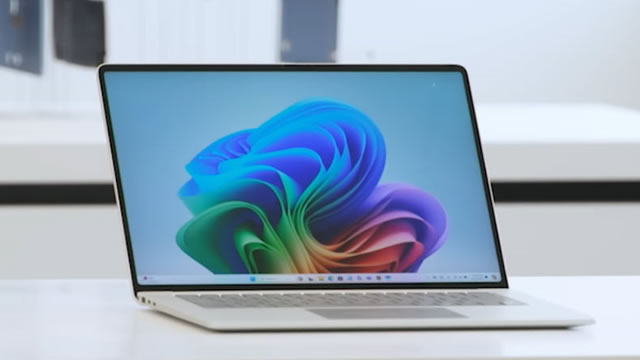
Microsoft's stock got slammed after the company slightly missed expectations in its latest quarter.After Microsoft (MSFT +0.72%) reported its fiscal 2026 second-quarter results on Jan. 28, its stock crashed by 10%. That was a significant tumble for the world's fourth-largest company. However, the question investors must ask now is whether that pullback was warranted or not.As of Monday afternoon, Microsoft's stock sits almost 22% below its all-time high. That discount may look enticing, but is it a trap? Mi ...

How the Largest IPO of 2025 Could Be Healthy for Your Portfolio
The Motley Fool· 2026-02-05 06:15
Company Overview - Medline is the largest provider of medical-surgical products and supply chain solutions, offering 335,000 products and operating 33 manufacturing facilities in over 100 countries [2][3] - The company provides next-day delivery to 95% of its U.S. customers, positioning itself similarly to Amazon in the medical supply sector [2] Financial Performance - Medline has demonstrated impressive sales growth, with an average annual growth rate of 18% since its founding in 1966 and 50 consecutive years of net sales growth [8] - Sales are projected to reach around $30 billion for the full year 2026, up from $17.5 billion in 2020 [6][9] - Analysts expect earnings of $1.17 per share for 2025, with a nearly 20% increase to $1.52 per share in 2026 [9] Market Position and Competitive Advantage - Medline's competitive edge includes its private label products, which enhance margins by eliminating the need for third-party resellers [3] - The company is significantly more profitable than its key rivals, with a gross margin of approximately 27.4%, compared to much lower margins for competitors like McKesson and Cardinal Health [12] Growth Potential - The total addressable market for Medline is estimated at $375 billion, indicating substantial growth potential [9] - Free cash flow projections are robust, with expectations of $1.5 billion for 2025 and at least $2.1 billion for 2026, driven by debt reduction from IPO proceeds [10] Recent Developments - Medline recently went public with an IPO priced at $29 per share, raising $6.3 billion to pay down debt, which stood at $16.5 billion prior to the IPO [5][7] - The company was previously taken private in a $34 billion buyout in 2021, during which it expanded its manufacturing capabilities significantly [5][6] Investment Considerations - The company has a high P/E multiple of 28, and approximately 70% of its sales come from hospitals, which may present a concentration risk [13] - Private equity owners retain 60% of voting control, which could be a concern if fundamentals deteriorate, but their management has been effective [14]

Should You Put $1,000 Into This High-Risk, High-Reward Stock Right Now?
The Motley Fool· 2026-02-05 05:00
Core Viewpoint - IonQ is identified as a high-risk, high-reward stock in the quantum computing sector, which is considered to have game-changing technology potential [1][2]. Company Overview - IonQ's current stock price is $35.38, with a market capitalization of $13 billion. The stock has experienced a daily change of -8.04% [3]. - The company has a gross margin of -747.41%, indicating significant challenges in profitability [3]. Technology and Performance - IonQ utilizes a trapped-ion approach for quantum computing, which employs actual atoms for qubits, leading to higher stability compared to competitors using man-made qubits [4]. - The company has achieved a 99.99% two-qubit gate fidelity rate, positioning it as a leader in accuracy within the quantum computing industry [4]. - Despite the challenges of developing a fault-tolerant quantum computer, IonQ is advancing towards reducing error rates through software and other solutions [4]. Strategic Acquisitions - IonQ is proactive in making acquisitions to control the quantum ecosystem, such as acquiring Oxford Ionics, which improved its technology by integrating microwave electronics into its chips [5]. - The recent acquisition of SkyWater Technology, a semiconductor foundry, will provide IonQ with priority access to advanced fabrication technology for quantum chips and control over its supply chain [6]. Investment Consideration - IonQ is recommended as a speculative investment opportunity for those looking to invest in the long-term potential of quantum computing [7].


Nvidia CEO Jensen Huang Just Said AI Won't Replace Software. 3 Beaten-Down SaaS Stocks To Buy Now
The Motley Fool· 2026-02-05 04:30
Core Viewpoint - The software industry is experiencing significant stock declines due to fears that AI will disrupt traditional software, although some industry leaders believe this concern is exaggerated [1][2][3]. Group 1: Software Industry Overview - Software stocks have dropped sharply, with the iShares Expanded Tech-Software ETF down 21% year-to-date, primarily in the last week [2]. - Nvidia CEO Jensen Huang argues that AI will enhance rather than replace existing software, suggesting that the software industry is not in decline [3]. Group 2: Company Analysis Microsoft - Microsoft has a strong presence in enterprise software and its Azure cloud infrastructure is growing rapidly, with a 39% revenue increase in the latest quarter [5]. - Despite its financial strength, Microsoft stock has fallen 25% from its peak in the last three months due to concerns over rising capital expenditures for AI initiatives [6][8]. - The stock is currently trading at a price-to-earnings discount compared to the S&P 500, presenting a potential buying opportunity [8]. Shopify - Shopify has seen a 38% decline from its peak at the end of October, but it remains a leader in e-commerce software [9]. - The company reported a 32% revenue increase to $2.8 billion in its most recent quarter, indicating strong growth potential [12]. - Shopify is integrating AI into its platform, which may help it maintain its competitive edge [10]. Figma - Figma's stock has dropped about 85% from its peak, despite being a leader in design software and having a history of GAAP profitability [13][15]. - The company is actively incorporating AI into its product offerings, which may enhance its market position [15]. - Figma's skills are in high demand, indicating a competitive advantage in the job market [15].


Here's 1 AI Stock Down About 25% Already in 2026. Is It a Buy?
The Motley Fool· 2026-02-05 03:31
Core Viewpoint - The stock of Snowflake, an AI data cloud specialist, is experiencing a decline in momentum despite its rapid growth and potential in the AI sector, raising questions about its future performance [1][2]. Financial Performance - Snowflake's fiscal Q3 revenue reached $1.21 billion, reflecting a 29% year-over-year increase, primarily driven by a 29% growth in product revenue, which amounted to $1.16 billion [3]. - The company reported a non-GAAP product gross margin of 76% in fiscal Q3 and an adjusted operating income of $131.3 million, up from $58.9 million in the previous year [8]. - Snowflake's adjusted free cash flow increased from $86.8 million in the year-ago quarter to $136.4 million [8]. Customer Metrics - The company ended fiscal Q3 with 688 customers contributing over $1 million in trailing-12-month product revenue, marking a 29% increase year-over-year [3]. - Snowflake's net revenue retention rate was 125% at the end of the period, indicating strong customer loyalty and usage [4]. - Remaining performance obligations (RPO) totaled $7.88 billion, up 37% year-over-year, suggesting growing customer demand for Snowflake's platform [5]. Demand Trends - The company has observed strong momentum in key metrics, particularly with the adoption of its enterprise AI agent, Snowflake Intelligence, which experienced the fastest ramp in product adoption in the company's history [6]. Profitability Concerns - Despite strong revenue growth, Snowflake faces challenges with profitability, reporting a net loss of over $1 billion for the trailing nine months, which is worse than the $963 million net loss in the same period last year [9]. - The stock-based compensation is significantly impacting GAAP profitability, contributing to investor concerns [9]. Market Capitalization and Outlook - The current market capitalization of Snowflake is approximately $57 billion, which raises questions about whether its growth and profitability profile justifies this valuation [10]. - For a positive reassessment of the stock, significant acceleration in top-line growth and a clear path to substantial GAAP profits would be necessary, though the latter appears unlikely in the near term [10].


Reeling From Software Stock Losses? Alphabet Investors Have Some Advice For You
The Motley Fool· 2026-02-05 03:15
Core Viewpoint - The software sector is experiencing a significant downturn, with the iShares Expanded Tech-Software Sector ETF down 22% year-to-date due to investor fears that AI innovations could disrupt established software-as-a-service (SaaS) models [2] Group 1: Market Reaction to AI Innovations - The market's response to AI fears is not unprecedented, as the first sell-off occurred shortly after the launch of OpenAI's ChatGPT [3] - Alphabet recognized the disruptive potential of ChatGPT, leading to a "code red" response and the introduction of its own chatbot, Bard, which initially faced issues that caused Alphabet's stock to drop by 8% in one session [4][5] - Despite initial setbacks, Alphabet regrouped and launched Gemini, a new large language model (LLM), which has been perceived as superior to ChatGPT's latest model, contributing to a resurgence in its stock price [8] Group 2: Investment Insights - Historical trends suggest that buying stocks during a dip, especially when the decline is not based on fundamental changes, can be beneficial, as seen with Alphabet's stock performance [9] - The threat posed by new technologies is often overstated, and it typically takes time for industries to undergo significant disruption and for consumer behavior to change [9] - A sector-wide sell-off exceeding 20% driven by AI fears may be excessive, indicating potential investment opportunities in undervalued software stocks [10]


Starbucks Is Back, but Is It a Buy?
The Motley Fool· 2026-02-05 02:07
分组1: Starbucks Performance - Starbucks reported a mixed performance for the quarter, with global and US comparable store sales increasing by 4% year over year, driven by a 3% increase in traffic [2][3] - Net revenue rose approximately 6% year over year, with same store sales in China growing by 7%, indicating a turnaround in a previously struggling market [2] - The company is prioritizing long-term growth over immediate profit, investing in wages and technology, and transitioning to a licensing model in China to reduce direct stakes [2][4] 分组2: Market Sentiment and Valuation - Despite some positive indicators, there is skepticism about the sustainability of growth, with concerns that a 3% revenue growth may not justify high valuation multiples, which are around 60 on a trailing basis and 36 on a forward basis [7][11] - Analysts express caution regarding the stock's attractiveness, noting that while operational improvements are evident, the price may not be compelling for investors seeking high growth [11][10] - The market reacted positively to the earnings report, with stocks up about 4% early in trading, reflecting some investor optimism [12] 分组3: General Motors Performance - General Motors reported a net income of approximately $2.7 billion for the fiscal year, down from $6 billion the previous year, largely due to a net loss in Q4 driven by special charges related to EV capacity realignment [15][17] - Revenue for the fiscal year was about $185 billion, with growth primarily from internal combustion engine vehicles, particularly large trucks and SUVs, rather than electric vehicles [17] - GM is maintaining a strong position in the US AV market and is focusing on cost efficiencies while navigating fluctuating demand [17] 分组4: Autonomy and Buybacks - GM announced plans for Level 3 autonomy in their Cadillac Escalade by 2028, integrating advanced technology for improved safety and performance [22][19] - The company initiated a new $6 billion stock buyback program, following a $10 billion accelerated share repurchase, which has reduced the number of outstanding shares and boosted earnings per share [23][21] - Analysts note that while buybacks and dividends are positive for shareholders, the overall growth profile may not be compelling enough for new investments [24][23] 分组5: Silver and Market Dynamics - The recent interest in silver is attributed to a weak dollar, with central banks and institutional investors diversifying away from dollar-dominated assets, making precious metals cheaper for foreign investors [29][27] - There is a notable influx of retail investors in silver, leading to speculative behavior reminiscent of meme stocks, which raises concerns about potential corrections [29][30] - The dynamics of the global forex market and geopolitical factors are influencing the demand for silver, with a focus on the long-term implications of a weaker dollar [28][27]