思宇MedTech

Search documents
高管交接!波科心律管理与诊断业务
思宇MedTech· 2025-12-25 08:58
Core Viewpoint - Boston Scientific is undergoing a planned management transition in its Cardiac Rhythm Management & Diagnostics (CRMDx) business, with Scott Olson retiring at the end of 2025 and Angelo De Rosa taking over in early 2026 [2][3][11]. Group 1: Management Transition - Scott Olson has served as the Senior Vice President and President of the CRMDx business for 27 years and will retire at the end of 2025 [5][7]. - Angelo De Rosa, who joined Boston Scientific in 2014, will assume the role of CRMDx business leader in 2026. He has previously led the Watchman left atrial appendage closure business [8][10]. Group 2: CRMDx Business Overview - The CRMDx business focuses on cardiac rhythm management and related diagnostic solutions, including pacemakers and implantable cardioverter-defibrillators (ICDs), and is a crucial part of Boston Scientific's cardiovascular device portfolio [4]. - This business addresses core clinical needs related to arrhythmias and has a stable market foundation and strategic position within the company's overall business structure [4]. Group 3: Leadership Insights - Olson emphasized the importance of teamwork and patient-centered values during his tenure and expressed gratitude for his long-term collaboration with the internal team [7]. - De Rosa views his transition to CRMDx as a return to his roots, having previously worked in the cardiac rhythm management field early in his career [10].



冲刺IPO!国产血管介入龙头拟募资17亿
思宇MedTech· 2025-12-25 08:58
Core Viewpoint - The article discusses the upcoming IPO of Guangdong Boma Medical Technology Co., Ltd., which aims to raise 1.7 billion yuan for various projects, indicating a clear transition from core product development to a systematic expansion in R&D, manufacturing, and market presence [2][19]. Business Model and Product Focus - Boma Medical is positioned as a specialized vascular intervention device company, focusing on high-performance medical devices for complex vascular diseases, rather than a platform-type enterprise [4]. - The product line primarily includes interventional catheters and balloons, covering various applications such as coronary, peripheral, and neuro interventions, with a strong foundation in vascular intervention balloon catheters [4][5]. Product Evolution - The company has evolved from basic consumables like balloon catheters to more complex interventional devices, expanding its product line to accommodate various vascular conditions and intervention pathways [5][7]. - This evolution is characterized by a "vertical deepening" strategy, enhancing product performance and indications within similar clinical procedures, which explains the sustained high R&D investment despite revenue growth [7][10]. Financial Performance - Boma Medical's revenue has shown stable growth from 207 million yuan in 2022 to 335 million yuan in 2023, and projected 460 million yuan in 2024, with net profit turning positive in 2023 [9][10]. - The company reported a net profit of 35.65 million yuan in the first half of 2025, continuing its growth trend, with a significant increase in R&D investment as a percentage of revenue [9][10]. Fundraising Purpose - The 1.7 billion yuan raised from the IPO will be allocated to several projects aimed at enhancing the company's capabilities, including the establishment of a global headquarters, production base upgrades, R&D for interventional devices, and marketing network development [11][13]. - Key allocations include 900 million yuan for the global headquarters project, 160 million yuan for production upgrades, and 450 million yuan for R&D, emphasizing a collaborative expansion strategy rather than aggressive diversification [15]. Management and Governance - The actual controller of Boma Medical, Chairman and General Manager Li Bin, has a strong background in medical device manufacturing and management, aligning with the company's focus on manufacturing and product capabilities [18]. - The company's ownership structure remains relatively concentrated, which supports continuity in technical direction and product strategy [18]. Conclusion - Boma Medical is entering a systematic expansion phase, having established core products and profitability, with a focus on leveraging R&D for new interventional products and enhancing manufacturing efficiency and market coverage post-IPO [19][20].

最新!2款创新器械获批上市!
思宇MedTech· 2025-12-25 08:58
Core Medical: Interventional Left Ventricular Assist System - The National Medical Products Administration (NMPA) has approved the interventional left ventricular assist device and the interventional left ventricular assist catheter pump kit from Shenzhen Core Medical Technology Co., Ltd. [2] - This interventional left ventricular assist system is designed to provide short-term left ventricular support during high-risk percutaneous coronary intervention (PCI) for adult patients with severe coronary artery disease and reduced left ventricular ejection fraction [7]. - The system utilizes self-developed axial magnetic flux multi-drive technology, achieving high flow output and stable performance with a smaller outer diameter, which helps reduce blood damage risk and supports longer clinical use [7][8]. Antai Kangcheng: Tumor Electric Field Therapy Device - The tumor electric field therapy device from Hunan Antai Kangcheng Biotechnology Co., Ltd. has also been approved by the NMPA [2]. - This device consists of a main unit, distribution box, disposable electrode pads, power adapter, lithium-ion battery, and charging dock, and is intended for treating patients aged 22 and older diagnosed with supratentorial glioblastoma [10]. - The device is to be used in conjunction with temozolomide (TMZ) after surgical and radiotherapy treatments [10][11]. Industry Overview - As of now, a total of 391 innovative medical devices have been approved for listing in China [3].

最新!18款医疗器械进入创新通道
思宇MedTech· 2025-12-24 09:59
Core Insights - The article discusses the recent approval of 18 innovative medical devices by the National Medical Products Administration (NMPA) in China, highlighting the advancements in the medical technology sector and the companies involved in these innovations. Group 1: Company Highlights - Suzhou Xinling Maide Medical Technology Co., Ltd. focuses on cardiovascular innovation, with core products including the pVAD and PoliaValve®, the first polymer aortic valve in China to enter clinical registration [2]. - Medtronic, a global leader in medical technology, has a diverse portfolio across cardiovascular, surgical, neurological, and diabetes sectors, with cardiovascular being the largest segment [2]. - Hangzhou Yuannang Biotechnology Co., Ltd. specializes in regenerative medicine materials, with its core product "Bone 02 Fracture Adhesive" currently in clinical trials for treating complex fractures [4]. - Jiangsu Dazi Biomedical Technology Co., Ltd. and Shanghai Shendun Medical Technology Co., Ltd. are also highlighted for their innovative products in the medical device space [5][8]. Group 2: Product Innovations - The article lists various innovative products, including: - A gene testing kit for tumor origin detection by Nanjing Shihe Medical Devices Co., Ltd., which focuses on high-throughput sequencing for cancer diagnostics [9]. - A minimally invasive laser balloon for intracranial procedures by Hangzhou Juzheng Medical Technology Co., Ltd., which is in clinical follow-up stages [10]. - A pulse ablation system for chronic obstructive pulmonary disease (COPD) by Ronghe Medical Technology (Zhejiang) Co., Ltd., which aims to transform treatment approaches [12]. - A self-expanding aneurysm embolization device by Tongqiao Medical Technology Co., Ltd., which has received multiple regulatory approvals [12][14]. Group 3: Market Trends - The article indicates a growing trend in the medical device industry towards innovative solutions for chronic diseases, with companies focusing on minimally invasive techniques and advanced materials [2][12]. - The approval of multiple products by NMPA reflects a robust pipeline of medical innovations aimed at improving patient outcomes and addressing unmet medical needs [1][19].


第100台商业化装机落地,国产腔镜机器人订单超过160台!
思宇MedTech· 2025-12-24 09:59
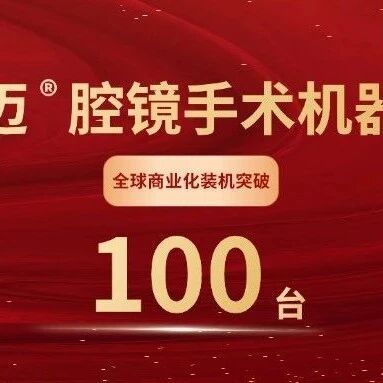
Core Viewpoint - The article highlights the successful commercialization and global expansion of the TUMAI® robotic surgical system, marking a significant milestone in China's medical technology innovation and its role in global healthcare [2][4]. Group 1: Commercialization Milestones - The TUMAI® robotic surgical system has officially landed in Brazil at Hospital Unimed Foz do Iguaçu, marking the 100th commercial installation globally, with over 160 cumulative orders to date [2][10]. - The rapid growth in orders from October to December 2025, from over 100 to 160+, showcases the unprecedented commercialization speed of the TUMAI® system [10]. - The TUMAI® robot has achieved a significant market presence, becoming the first domestic laparoscopic surgical robot to reach 100 commercial installations, indicating its reliability and clinical stability [2][10]. Group 2: Strategic Partnerships and Market Integration - Hospital Unimed Foz do Iguaçu represents a key part of Brazil's Unimed healthcare system, the largest cooperative healthcare system in Brazil, indicating TUMAI®'s deep integration capabilities within established healthcare frameworks [8]. - The successful installation at this flagship hospital demonstrates TUMAI®'s ability to align with procurement models, maintenance costs, and training systems, enhancing its market expansion potential in Brazil and Latin America [8][10]. - The TUMAI® robot's entry into various international markets, including partnerships with top medical institutions in countries like Belgium, Italy, and India, reflects its growing global footprint and acceptance [25][29]. Group 3: Ecosystem Development and Technological Advancements - A multi-layered robotic surgical ecosystem is forming, integrating top experts, regional medical centers, and grassroots hospitals, facilitating the widespread adoption of robotic surgery [32]. - The TUMAI® system has enabled remote surgical capabilities across various regions, including successful cross-border surgeries in the Middle East and Europe, enhancing the accessibility of high-quality surgical resources [34][41]. - The article emphasizes the importance of TUMAI®'s technological advancements and its ability to adapt to diverse regulatory and clinical environments, establishing a competitive edge in the global market [42].
高管变动!前美敦力副总裁履新
思宇MedTech· 2025-12-24 09:59
Core Viewpoint - The appointment of Greg Smith, former Vice President of Medtronic, to Walgreens Boots Alliance signifies a strategic move to enhance the company's healthcare services and transition towards a more integrated healthcare platform [1][8]. Group 1: Greg Smith's Background - Greg Smith has extensive experience in the medical device industry, having held key management positions at Medtronic, including Executive Vice President [2]. - During his tenure at Medtronic, he was responsible for critical business operations, management, and strategic execution, overseeing the entire lifecycle of medical device products from R&D to commercialization [4]. - Smith is recognized for his ability to enhance business collaboration and operational efficiency across multiple product lines rather than focusing on a single line [4]. Group 2: Walgreens' Strategic Shift - Walgreens is undergoing a structural transformation, moving beyond traditional pharmacy retail to expand its healthcare-related services, including primary care, prescription management, and chronic disease follow-up [5][7]. - The company is actively recruiting management talent with healthcare industry backgrounds to improve its capabilities in healthcare compliance, service design, and system integration [7]. - The hiring of Greg Smith aligns with Walgreens' ongoing efforts to professionalize its healthcare business and reflects the company's demand for industry expertise and management skills [8].


2.3亿收购!三家创新械企合并
思宇MedTech· 2025-12-23 04:09
近日, Affluent Medical 宣布,已分别与 Caranx Medical 和 Artedrone 达成收购协议。交易完成后,Affluent 计划将三家公司整合为一家全新的心血管与神经介入 技术平台公司—— Carvolix 。 根据披露信息,Affluent Medical 将以约 1660 万欧元 (约合人民币1.38亿) 收购 Caranx Medical,以约 1140 万欧元 (约合人民币 9436万) 收购 Artedrone,两笔交 易均采用 以发行新股支付的方式(cashless transaction) ,并附带与未来进展挂钩的对赌条款。交易预计将在 2026 年初 完成,并需经股东大会批准。 从结构与节奏看,这像是 Truffle Capital 体系下,一次高度"设计过"的平台级重组。 # 交易结构:拼 公司 能力 首先需要澄清的是,此次交易中: 也就是说,Affluent 并非收购某一项技术或单一产品,而是一次性整合 三家在不同介入场景中已完成早期验证的技术公司 ,并在交易完成后,通过品牌与组织层面 的重构,形成一个新的统一平台——Carvolix。 在支付方式上,Aff ...

医疗器械品牌传播,为何难以形成效果?活动报名
思宇MedTech· 2025-12-23 04:09
Core Viewpoint - The marketing and branding departments in medical device companies face significant challenges in demonstrating their value and achieving consensus on communication objectives within the organization [2][3]. Group 1: Communication Challenges - There is a lack of consensus within companies regarding what issues the communication should address, leading to ineffective marketing strategies [3]. - Marketing efforts are often misjudged as mere promotional activities, evaluated based on exposure metrics, and expected to yield direct conversions without clear responsibilities or collaborative mechanisms [4]. - Concerns have been raised about tightening budgets for the upcoming year, increasing anxiety about achieving effective results [4]. Group 2: Key Discussion Points for Improvement - The communication goals for medical device companies need to be clearly defined to support business development effectively [5]. - It is essential to establish which content the branding department should be responsible for and what should not fall under their purview [5]. - Effective upward communication and cross-department collaboration are crucial for achieving tangible results in branding efforts [5]. Group 3: Framework for Effective Communication - A framework for identifying common misalignments in communication strategies within medical device companies will be shared, helping to discern useful communication from ineffective ones [5]. - Different stakeholders, such as doctors, distributors, and investors, require tailored information structures to meet their specific needs [5]. - Responsibilities and collaborative boundaries among branding, medical, and sales departments must be clearly defined to create a cohesive communication strategy [5].

正式启动!第六批高值医用耗材“国采”
思宇MedTech· 2025-12-23 04:09
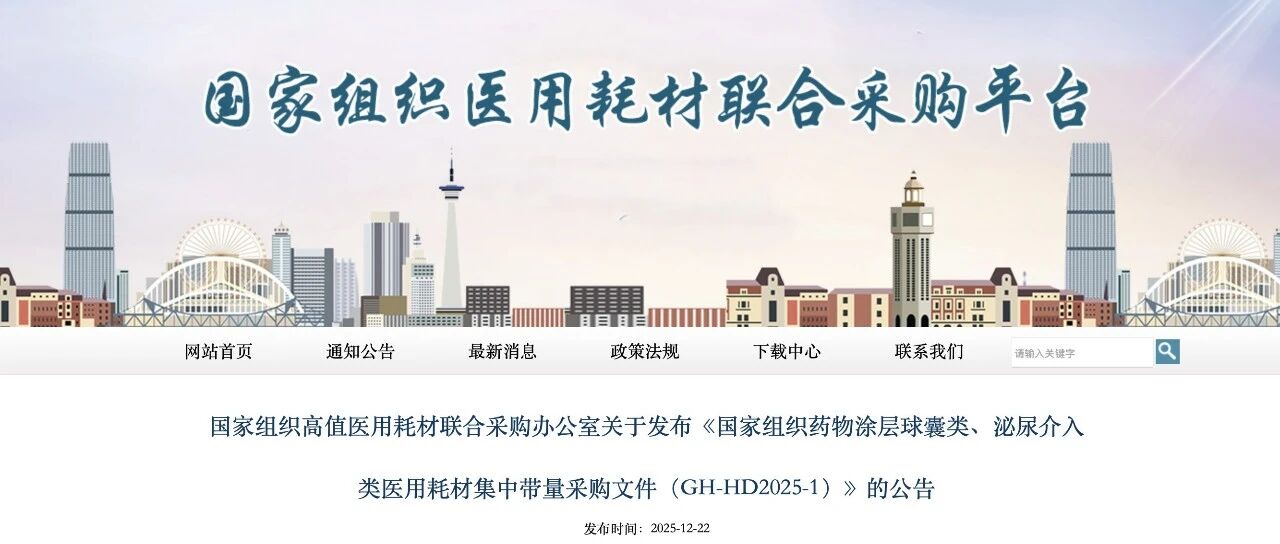
Core Viewpoint - The official announcement of the sixth batch of high-value medical consumables centralized procurement marks the start of a new phase in the procurement process, focusing on structured competition and stable supply rather than merely price reduction [2][18]. Procurement Scope and Demand Scale - The procurement covers two main categories: drug-coated balloons and urological interventional consumables. The drug-coated balloons are further divided into coronary and peripheral categories, with specific applications detailed for each [6][11]. - The annual demand structure for drug-coated balloons includes: - Coronary drug-coated balloons: 614,778 units - Peripheral arteriovenous fistula drug-coated balloons: 6,884 units - Peripheral upper knee drug-coated balloons: 61,434 units - Peripheral lower knee drug-coated balloons: 7,002 units [10][11]. Grouping Mechanism - The bidding organization will continue to use a unit-based bidding approach, with A/B group logic based on actual demand structure rather than the number of companies. Group A will cater to mainstream clinical needs, while Group B will follow [12][20]. Proposed Selection Rules - Three differentiated proposed selection rules are established for products based on their competitive status, clearly defining price formation and re-bidding space [13][14]. - For products that are selected, they must meet three conditions, establishing a price constraint to avoid price distortion [14][21]. Secondary Bidding Rules - For products that are included but not selected, a secondary bidding opportunity is allowed under specific conditions, maintaining a ceiling on price increases to prevent strategic high pricing [15][21]. - For products not included, stricter conditions apply for re-bidding, indicating a higher difficulty level for selection compared to included products [16][21]. Policy Signals - The procurement process is shifting from a focus on price suppression to a more refined competitive structure, emphasizing sustainable pricing and allowing smaller companies to participate while maintaining overall price discipline [17][18]. Conclusion - The release of the procurement document indicates a transition to a more structured and refined competitive bidding process for high-value medical consumables, where the focus shifts from price advantages to comprehensive evaluations of cost control, product structure, and supply stability [18][19].
报名!医工交叉加速成果转化专场 | 未来产业创新研讨会
思宇MedTech· 2025-12-22 09:10
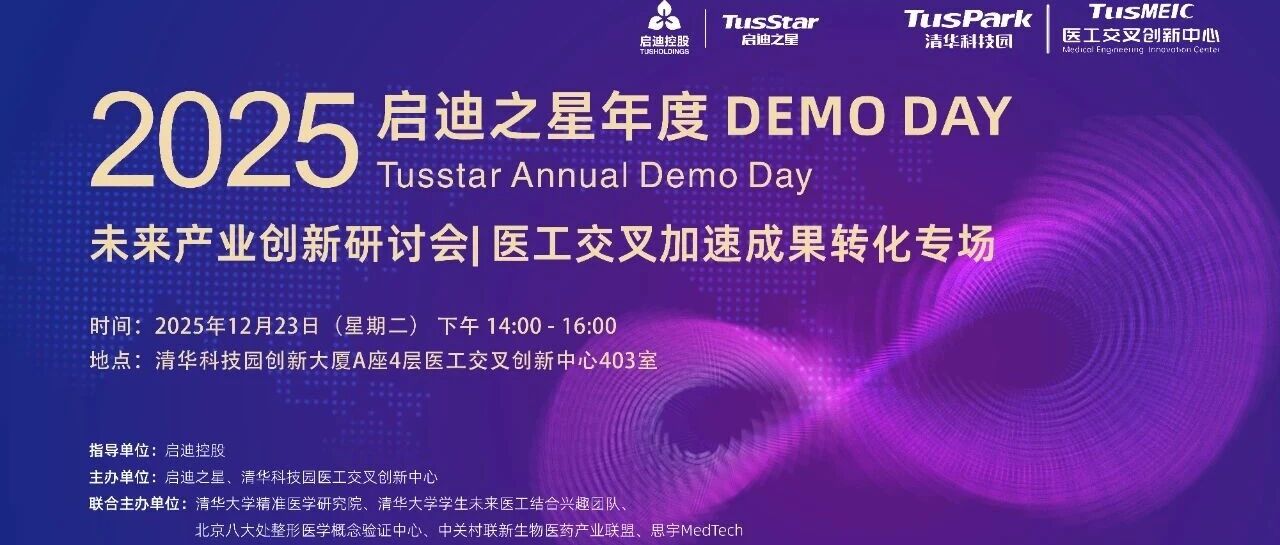
Core Viewpoint - The event aims to promote the integration of medical and engineering fields, focusing on technological innovation and the deep integration of the medical industry, while providing a platform for collaboration among experts, investors, and innovative enterprises [1]. Event Details - The Future Industry Innovation Seminar on Medical-Engineering Cross-Integration will be held on December 23, 2025, at Tsinghua Science Park Medical-Engineering Cross-Innovation Center [1]. - The event is part of the "2025 Tsinghua Star Annual DEMO DAY" series, gathering clinical experts, investment institutions, industry associations, and innovative companies [1]. - The agenda includes registration, opening remarks, mentor awarding, platform introduction, keynote speeches, and networking opportunities [2][3]. Keynote Topics - Topic 1: "Promoting Results Transformation and Iteration from Technology to Artificial Joints in Total Knee Replacement" presented by a professor from Tsinghua University [3]. - Topic 2: "Exploration of Trends in China's Biopharmaceutical Industry and Investment Development" by the General Manager of a medical fund [3]. - Topic 3: "Medical-Engineering Cross-Validation Platform Supporting Medical Technology Results Transformation" by the head of a validation center [3]. - Topic 4: "Global Medical Technology Innovation Ecosystem" by the editor-in-chief of a medical technology media matrix [3]. Organizing Entities - The event is organized by Tsinghua Holdings, Tsinghua Star, and Tsinghua Science Park Medical-Engineering Cross-Innovation Center, with support from various academic and industry organizations [2].