思宇MedTech

Search documents
超6亿融资!AI医疗技术公司完成B轮
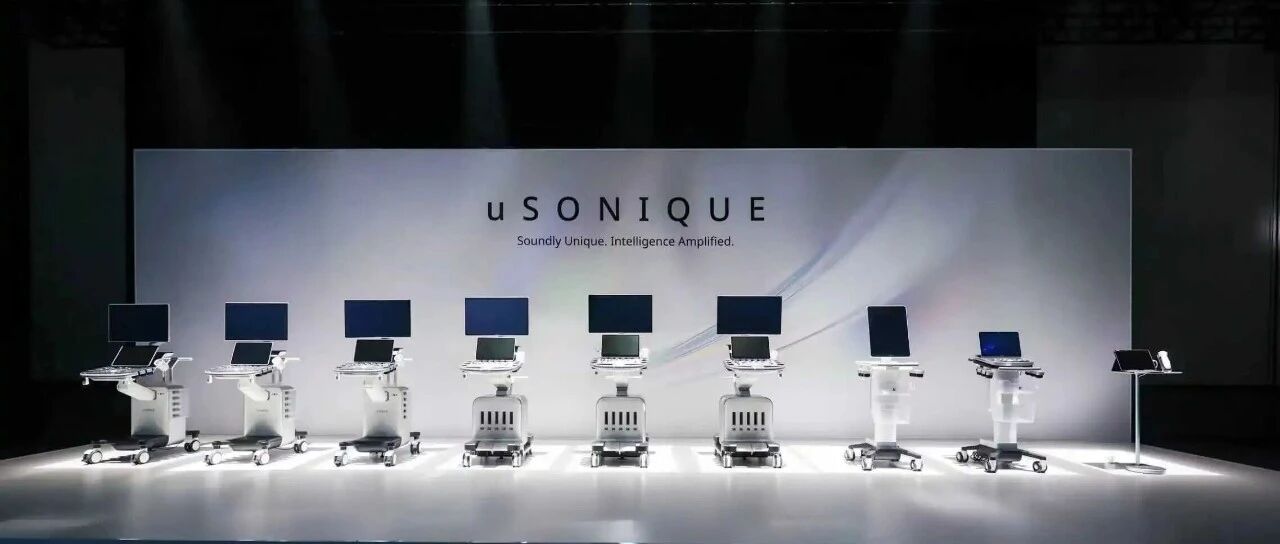
思宇MedTech· 2025-11-18 04:10
Core Insights - Beacon Biosignals completed a $86 million Series B funding round, bringing total funding to over $121 million, highlighting significant investor interest in brain health technology [1][4] - The focus of investment is not merely on EEG technology but on establishing a comprehensive "brain function measurement system" that integrates wearable EEG devices, real-world data, and AI models for diagnostics and drug development [1][3] Group 1: Changes in Measurement Approaches - The financing event underscores a shift in measuring brain function, moving from episodic assessments to continuous monitoring, allowing for a dynamic understanding of brain activity [3][5] - Traditional EEG has been limited to short, controlled environments; Beacon aims to extend EEG applications into home settings, enabling long-term data collection [6][8] - This transition allows for the first time a time dimension in brain function measurement, capturing disease evolution and emotional fluctuations over extended periods [8][10] Group 2: AI and Data Integration - Beacon's strength lies in its foundational AI model trained on millions of hours of EEG data, which aims to redefine the understanding of normal and abnormal brain activity [12][14] - The integration of AI transforms EEG from a visualization tool into a quantifiable variable, providing physiological evidence for drug development in CNS disorders [15][19] - This shift indicates that future competition in brain health will depend more on data structure, model capabilities, and depth of real-world application rather than just device performance [19][21] Group 3: Implications for Drug Development - The ability to objectively measure drug effects through EEG changes can enhance clinical trial efficiency by identifying patient subtypes likely to respond to treatments [17][19] - Beacon's approach provides a new observational entry point for understanding and treating neurological and psychiatric conditions, which is strategically significant for the industry [19][22]


千万级天使轮!国产妇科微创设备再获资本加码
思宇MedTech· 2025-11-18 04:10
近日, 广东安欣医疗科技有限公司(以下简称"安欣医疗") 宣布完成千万级人民币天使轮融资, 本轮由海愿资本领 投,东科创资本跟投,江畔资本担任独家长期财务顾问。 据悉,本轮资金将主要用于公司核心产品的注册报批、生产体系与经销商网络升级,以及专家推广体系建设,进一步巩 固公司在妇科微创诊疗领域的竞争优势。 # 市场背景 :女性健康的"结构性空 白" 在全球医疗器械产业转型的大背景下,女性大健康正成为一个被重新定义的赛道。 据估算, 我国妇产科年门诊量已高达5–6亿人次, 几乎覆盖全部适龄女性人群。随着女性健康意识提升、育龄结构变化 与慢性病管理需求增长,妇科诊疗正从"被动就医"走向"主动预防与精准治疗"。 然而,与庞大需求相比,国内妇科诊疗设备的供给结构长期存在失衡。高端宫腔镜、能量治疗设备等核心产品仍以进口 品牌为主导,价格昂贵、维护成本高、临床适配性不足。许多基层医院即便具备患者基础,也因设备成本与操作复杂度 而无法普及微创技术。 从政策层面看,国家已将女性健康上升为重要民生议题。2025年9月,国务院新闻办公室发布的《新时代中国推进妇女 全面发展的实践与成就》白皮书指出,要将妇幼健康作为妇女全面发展的核心 ...

14亿融资!脑机接口明星公司完成D轮
思宇MedTech· 2025-11-17 06:28
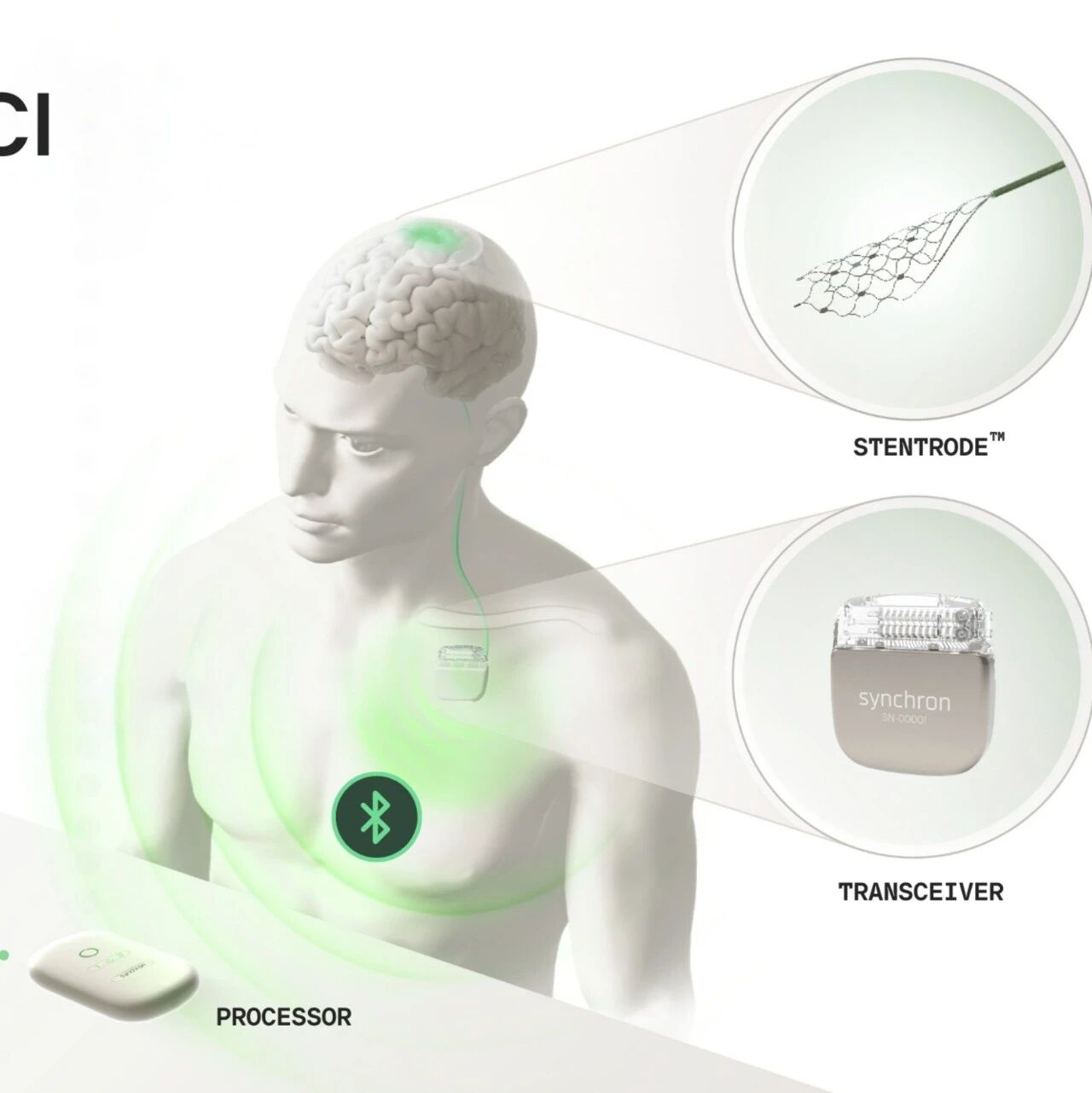
近日,美国神经科技公司 Synchron 宣布完成 2 亿美元(约合人民币14亿) D 轮融资 ,由 Double Point Ventures 领投,ARCH Ventures、Khosla Ventures、Bezos Expeditions 等多家知名机构参投。 这是脑机接口(Brain-Computer Interface,BCI)领域迄今规模最大的单轮融资之一。公司表示,本轮资金将用于加速其核心产品 Stentrode 系统 的商业化进程,包 括注册申报、制造能力建设以及下一代高通道脑接口的开发。 这一消息引发全球医疗器械界的高度关注。长期以来,BCI 技术主要停留在科研与神经康复阶段,而 Synchron 率先进入"可植入、可量产、可使用"的临床化阶段, 标志着该赛道进入实质性产业化周期。 # 公司简介 Synchron 成立于 2016 年,总部位于纽约,是 全球首批专注于 "经血管植入"脑机接口 的医疗器械公司之一。 不同于传统 BCI 需要开颅植入电极,Synchron 通过导管从颈静脉进入脑血管,将电极阵列部署在靠近运动皮层的血管壁上,实现神经信号的采集与传输。 这一非开颅路径的创新使其系 ...
【津企耀津门】磐石生物膝开启表面生物固定新时代
思宇MedTech· 2025-11-17 06:28
文章来源: 嘉思特医疗 转载要求:可以直接转载,请在文首注明来源 嘉思特医疗磐石自加压3D分区骨小梁生物型膝关节假体凭借四大创新设计,开启膝关节表面生物固定新时 代: 创新点一: 自加压机械稳定技术 : 提供主动机械锁定,实现超越传统压配的即刻稳定(微动<100um),为骨整 合奠定基础。 2025年11月14日12时28分, 国家重点小巨人企业嘉思特医疗器材(天津)股份有限公司 获批的 国家创新医疗 器械 产品"磐石自加压3D分区骨小梁生物型膝关节假体"在 天津 国家会展中心举办的第17届COA学术大会荣耀 上市! 行业21位头部专家亲临现场,共同启动新品上市发布仪式,他们分别是: 西安交通大学第二附属医院 王坤 正教授 , 天津医院 马信龙教授 , 新疆医科大学第一附属医院 曹力教授 , 浙江大学医学院附属第一医院 胡懿郃教授 , 福建医科大学附属第一医院 张文明教授 , 四川大学华西医院 周宗科教授 , 重庆医科大学 附属第一医院 黄伟教授 , 北京大学第三医院 田华教授 , 浙江大学医学院附属第二医院 严世贵教授 ,哈 尔滨医科大学附属第二医院 吕松岑教授 ,辽宁省人民医院 白希壮教授 ,中国医科大学 ...

聊一聊手术机器人“融资小能手”
思宇MedTech· 2025-11-15 05:20
Core Insights - Cornerstone Robotics has successfully completed an oversubscribed financing round of approximately $200 million, with undisclosed investors including Medtronic [2][4] - The investment from Medtronic is strategic, as the company seeks to enhance its presence in the laparoscopic surgical robot market, particularly in China where Cornerstone's multi-port laparoscopic surgical robot is already on the market [7][9] - The investment signifies a recognition of Cornerstone's capabilities in delivering a scalable and replicable robotic surgical system, marking a pivotal moment in the Chinese surgical robot industry [9][10] Group 1: Investment Rationale - Medtronic requires an immediately deployable option in the laparoscopic surgical robot sector, as its own Hugo robot has not yet received NMPA approval in China [7] - Cornerstone Robotics has a clear international development strategy and has demonstrated industrial-grade delivery capabilities, which align with Medtronic's global expansion timeline [7][9] - The investment reflects confidence not only in Cornerstone's technology but also in its ability to create a sustainable and globally applicable robotic surgical system [9][10] Group 2: Middle East Investment Dynamics - Middle Eastern sovereign wealth funds are increasingly focused on building regional medical capabilities and view investments in surgical robotics as key to enhancing healthcare standards [14][15] - The investment strategy involves co-building systems that enhance surgical standards, training, and data management, which are crucial for improving regional healthcare [16][17] - Cornerstone's emphasis on replicability and local applicability makes it a fitting candidate for such long-term capital investments aimed at healthcare capacity building [19][21] Group 3: Market Positioning - The Chinese laparoscopic robot market has seen significant commercialization, with expanding surgical applications and clearer reimbursement pathways [12] - Cornerstone's technology is positioned to withstand long-term operational demands in surgical environments, ensuring sustainable iterations over the next 3-5 years [13] - The company has been recognized for its innovation, winning the Surgical Robot Technology Innovation Award at the Global Surgical Robot Conference [20]

开学倒计时!上海交大医健未来第十期,还有最后三个名额!
思宇MedTech· 2025-11-14 10:03
Core Insights - The article emphasizes the importance of innovation in the medical technology sector, particularly in China, and aims to connect clinical practices, capital, channels, and regulations to drive high-quality development in the industry [1]. Group 1: Educational Programs and Ecosystem - The Shanghai Jiao Tong University School of Medicine is launching a new entrepreneurial investment fund to support alumni in the medical technology sector, facilitating early investments and innovation [8]. - The program aims to cultivate entrepreneurial thinking among participants, enabling them to navigate complex market environments and make informed strategic decisions [15][11]. - The curriculum focuses on understanding industry trends, challenges, and innovations, helping participants grasp the development trajectory and strategic layout of the medical industry [13]. Group 2: Methodologies and Frameworks - The article introduces the "Value Engine Methodology," which emphasizes collaborative efforts between academia and industry to foster strategic thinking, innovation capabilities, and leadership skills among entrepreneurs [9][16]. - It highlights the need for a comprehensive understanding of market dynamics to identify opportunities and mitigate risks, thereby promoting sustainable growth for enterprises [14]. Group 3: Industry Trends and Challenges - The content discusses the evolving landscape of the medical industry, including the integration of technology and healthcare, and the emergence of new business models in sectors like elderly care and consumer healthcare [22]. - It addresses the challenges posed by economic uncertainties and the necessity for businesses to adapt their strategies accordingly [15][21]. Group 4: Networking and Resource Sharing - The program facilitates numerous networking opportunities, including annual conferences and international study tours, to connect participants with industry leaders and academic experts [29][30]. - It aims to create a robust ecosystem that integrates research, education, and industry collaboration, enhancing the overall impact of the medical technology sector [23].
一条“懂医生”的机械臂,揭开骨科机器人的新阶段
思宇MedTech· 2025-11-14 10:03
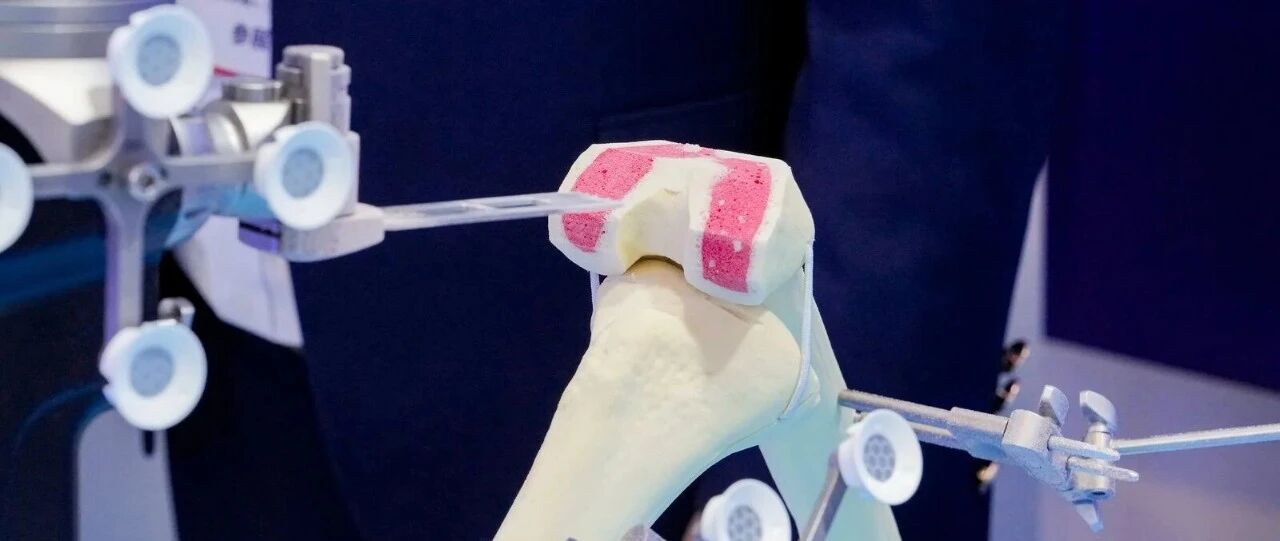
Core Viewpoint - The article highlights the advancements in domestic orthopedic surgical robots, particularly focusing on Yuanhua Intelligent's new "special arm" designed for orthopedic surgeries, marking a significant shift from reliance on imported components to self-research and development in core execution structures [2][4][24]. Group 1: Product Development and Innovation - Yuanhua Intelligent showcased the world's first "five-in-one" orthopedic surgical robot at the COA 2025, demonstrating its capability to perform five major surgical procedures with one system [7]. - The company has made significant progress in expanding its product offerings from single surgical modules to multi-surgical capabilities within a short span of four years [7][8]. - The new "special arm" is designed specifically for orthopedic surgery, addressing the mechanical needs and operational logic unique to this field, thus redefining the structure of surgical robots [12][14]. Group 2: Technical Advancements - The mechanical arm's design incorporates high-precision zero-gravity compensation systems, allowing surgeons to operate with minimal resistance, enhancing the overall surgical experience [14][16]. - Yuanhua Intelligent has developed key technologies such as control algorithms, zero-gravity compensation, and tactile feedback, achieving a true "customized closed-loop" system [25][28]. - The robotic arm's ability to understand and respond to the surgeon's movements creates a seamless interaction, enhancing the trust and reliability of the surgical process [10][29]. Group 3: Clinical Value and Impact - The robotic system offers sub-millimeter positioning accuracy and high-precision servo control, significantly improving stability during orthopedic surgeries, which is crucial for prosthetic matching and bone preservation [18][20]. - The system's safety features, including real-time monitoring and automatic stopping in case of unexpected collisions, foster a trustworthy partnership between the surgeon and the robot [20][23]. - The standardized operational logic of the system allows for a shorter learning curve for younger surgeons, increasing the efficiency of robotic-assisted surgeries [21][22]. Group 4: Industry Trends and Future Outlook - The article notes a shift in the orthopedic surgical robot industry from system integration to structural self-research, indicating a maturation of the industry [24][26]. - Yuanhua Intelligent's approach to independently defining the mechanical arm's structure and control modes positions it as a leader in the domestic orthopedic robot market [27][28]. - The advancements in robotic technology signify a critical turning point in the integration of manufacturing, medical technology, and intelligent algorithms, paving the way for a more reliable and controllable future in surgical robotics [30].
强生老兵跳槽!巨头拆分后的“骨科一代”去向何方?
思宇MedTech· 2025-11-14 10:03
Core Insights - The appointment of Aldo Denti to Imricor Medical Systems signifies a strategic shift in the medical technology landscape, particularly as Johnson & Johnson is in the process of spinning off its orthopedic business [2][3][5] - Johnson & Johnson's decision to separate its DePuy Synthes orthopedic division is part of a broader restructuring strategy aimed at focusing on high-growth areas such as oncology, immunology, and cardiovascular health [3][4][10] - The migration of experienced leaders like Denti from orthopedic to cardiac intervention reflects a trend of knowledge and resource redistribution within the industry, as companies seek to innovate in new technological domains [6][9][12] Group 1: Corporate Restructuring - Johnson & Johnson announced plans to spin off its DePuy Synthes orthopedic business, which generates approximately $9.2 billion in annual revenue, representing about 10% of the company's total revenue [3][4] - The spin-off is expected to be completed within 18 to 24 months, with a target for the new entity to be operational by mid-2027 [3] - This restructuring follows the earlier divestment of its consumer health business, Kenvue, indicating a strategic pivot towards six high-growth sectors [3][10] Group 2: Talent Migration - Aldo Denti's transition from Johnson & Johnson to Imricor exemplifies the movement of talent from traditional orthopedic sectors to emerging fields like cardiac intervention [6][9] - Denti's extensive experience in orthopedic management and innovation positions him as a valuable asset for Imricor, which focuses on MRI-guided electrophysiological procedures [8][12] - The shift in leadership reflects a broader trend where expertise in surgical engineering and global business is becoming a scarce resource in new technology companies [9][12] Group 3: Technological and Growth Logic - The healthcare technology sector is witnessing a shift from mechanical and material innovations to advancements in soft tissue, neural systems, and minimally invasive interventions [9][10] - Companies like Imricor are at a critical juncture, moving from research validation to global commercialization, with Denti's role expected to enhance market access and clinical education [12] - The overarching narrative suggests that the future of medical technology will be defined more by technological logic than by product lines, as the industry transitions from orthopedic to cardiac and from mechanical to intelligent solutions [13][14]


路演报名:医疗科技项目融资路演活动
思宇MedTech· 2025-11-13 04:29
Core Points - The article discusses an upcoming investment roadshow organized by the Zhongguancun Lianxin Biomedicine Industry Alliance and Siyu MedTech, scheduled for November 27, 2025, at Tsinghua Science Park [4][6] - The roadshow aims to connect investors with projects in the biomedicine, medical devices, and medical aesthetics sectors, allowing projects from angel to Series C funding stages to participate [4][6] - Participation is free for alliance members, but projects must undergo a review process to be accepted [6] Group 1: Event Details - The roadshow will be held both online via Tencent Meeting and in-person [4] - The event will feature projects led by founders with backgrounds in research, medicine, and large enterprises, ensuring a high level of expertise [4] - A list of vetted investment institutions will be notified about the roadshow, including notable names such as Sequoia Capital and IDG [7] Group 2: Participation Criteria - Projects eligible for the roadshow must be in the financing stages from angel round to Series C [4] - The sectors of interest include biomedicine, medical devices, and medical aesthetics [4] - Interested projects can apply by filling out a registration form linked in the article [5][6]

联影超声发布,六年研发补上“大影像生态”最后一块拼图
思宇MedTech· 2025-11-13 04:29
Core Viewpoint - The article highlights the significant milestone achieved by United Imaging Healthcare with the approval and launch of its uSONIQUE series of color Doppler ultrasound diagnostic systems, marking a transition from high-end imaging equipment manufacturing to a comprehensive intelligent diagnostic platform [1][5][25]. Summary by Sections Product Approval and Launch - On November 11, 2025, United Imaging's subsidiary received three medical device registration certificates from the National Medical Products Administration (NMPA) for its self-developed color Doppler ultrasound diagnostic systems [1][5]. - The subsequent global ultrasound product launch occurred on November 12, showcasing the uSONIQUE series, which took six years to develop [1][5]. Product Range and Market Coverage - The approved ultrasound systems include three series: uSONIQUE Pulse (ultra-high-end), uSONIQUE Genesis (high-end), and uSONIQUE Venus (mid-range/economic), creating a complete market coverage matrix [3][5]. - These products are applicable in various clinical scenarios, including cardiology, obstetrics, and emergency care [3]. Technological Innovations - The uSONIQUE series is built on the uEDGETEC intelligent perception technology platform, integrating AI throughout the hardware and algorithmic processes [8]. - Key innovations include the AIClear real-time intelligent noise reduction algorithm, which significantly improves imaging quality for challenging patients [12]. - The AIStream workflow automates the entire process from probe activation to report generation, reducing scan time by approximately 88% [14]. Strategic Significance - The launch of the ultrasound business is seen as a crucial addition to United Imaging's "imaging-diagnosis integration ecosystem," completing its portfolio that already includes CT, MRI, and PET technologies [20][22]. - The company aims to enhance its international competitiveness and fill the gap in the high-frequency, high-resolution imaging market, where domestic market penetration is currently low [23][24]. Global Expansion Plans - United Imaging plans to unveil the global version of the uSONIQUE series at the 2025 RSNA conference, accelerating its FDA certification and market expansion in Europe and the U.S. [24]. - The company leverages its established global brand and channel resources to lead the domestic high-end ultrasound market [23].