中关村储能产业技术联盟

Search documents
2GWh!国内单体容量最大独立新型储能电站建成投运
中关村储能产业技术联盟· 2025-12-01 07:49
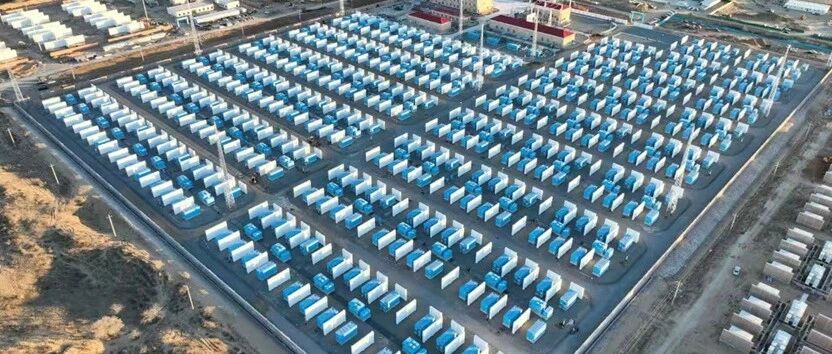
Core Viewpoint - The article highlights the successful commissioning of the 500MW/2000MWh independent energy storage station in Tongliao, Inner Mongolia, which is the largest single-capacity energy storage station in China, built by Tongliao Conch New Energy Co., Ltd. using CATL's 5MWh storage system [2][4]. Group 1: Project Overview - The Tongliao energy storage station commenced construction on June 28 and was completed and operational by November 28, one month ahead of schedule [4]. - The project aims to alleviate the pressure of large-scale renewable energy consumption in the surrounding areas, enhancing the stability of the regional power system and increasing the utilization of clean energy [4]. Group 2: Technology and Reliability - The energy storage station utilizes 100 sets of 5MW/20MWh storage units, totaling nearly 2 million battery cells, featuring CATL's 5MWh containerized storage system known for its high safety, reliability, and low degradation [4][5]. - CATL's battery cells have demonstrated a 3%-5% improvement in total lifecycle discharge compared to similar products, alongside lower maintenance costs, which significantly reduces operational expenses for the energy station [5]. Group 3: Market Impact and Future Prospects - After connecting to the grid, the energy storage station is expected to participate in the eastern Inner Mongolia electricity market, achieving full charge and discharge cycles daily, with an annual throughput exceeding 600 million kWh [5]. - The integration of CATL's technology is projected to enhance the operational efficiency and return on investment for the Tongliao energy storage station [5].


远景储能冠名B4未来生态馆!解锁储能多场景应用商机
中关村储能产业技术联盟· 2025-12-01 03:56
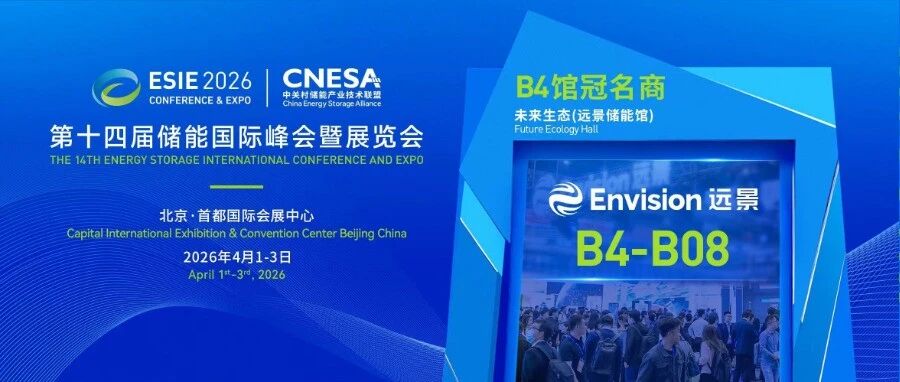
由中关村储能产业技术联盟、中国能源研究会、中国科学院工程热物理研究所主办 的 第十四届储能国际峰会暨展览会ESIE 2026 将于2026年4月1 - 3日在北京·首都国际会 展 中 心 举 办 。 本 届 峰 会 展 览 面 积 达 160000 平 米 , 开 设 六 大 主 题 展 馆 , 将 汇 聚 1 000+ 展商/赞助商、 5000+ 产业链上下游企业,吸引专业观众 200000+ 人次。 六大展馆冠名席位全部锁定 远景储能 冠名 「B4未来生态馆」 远景储能 是全球领先的储能系统集成商,具备全栈的技术能力,从电芯、PCS、BMS、 EMS到SCADA系统全部实现自研自制,拥有从工厂到储能电站的全产业链能力,以及全 生命 周 期资 产管 理 能 力 。 截 至25年 中,远 景 储 能在 全 球 参 与 超 过3 0 0 个 项 目 , 出 货 量 超 3 0GWh,在手订单超5 0GWh。 B4未来生态(远景储能馆 ) 以 "布局储能未来生态,全栈技术驱动多场景价值落地" 为核 心,致力于打造"前沿技术突破+多场景创新应用"的高端平台。 「B4未来生态(远景储能馆 ) 」是ESIE 2026紧 ...
走进未来科学城:新形势下新能源与储能协同创新发展沙龙成功举办
中关村储能产业技术联盟· 2025-11-30 03:46
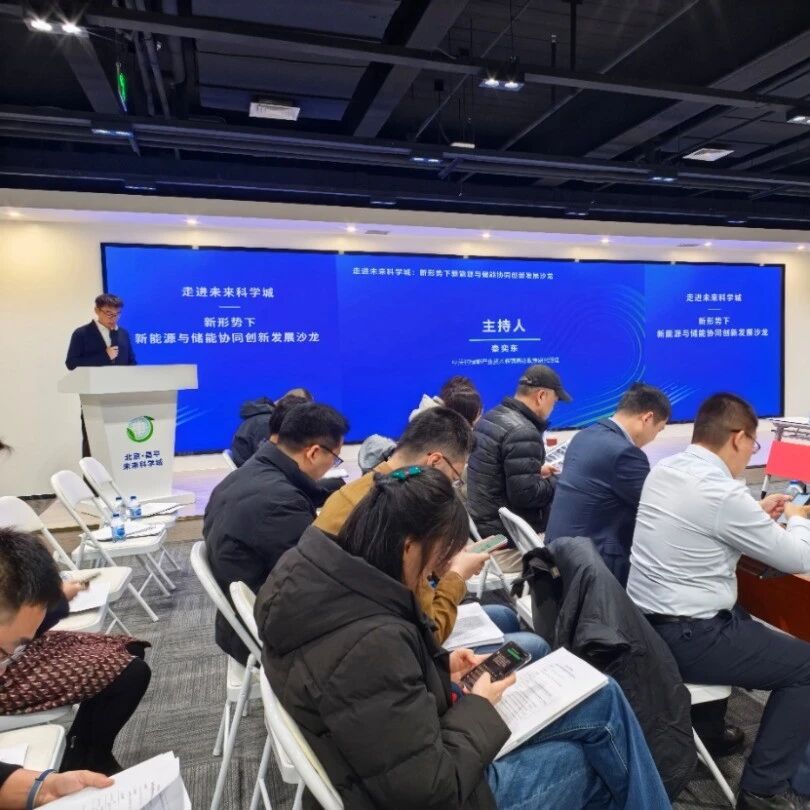
Core Viewpoint - The article discusses the transition of the energy storage industry from mandatory storage requirements to market-driven models following the release of the "Document 136" in 2025, highlighting both challenges and opportunities for new energy storage development [2]. Group 1: Event Overview - The "Future Science City: Collaborative Innovation Development of New Energy and Energy Storage" salon was held on November 28, focusing on policy implementation and market changes post "Document 136" [2]. - The event aimed to facilitate deep discussions among grid companies, energy generation groups, and energy storage enterprises to promote the successful transition of the energy storage industry from "mandatory storage" to "market-driven" models [2]. Group 2: Key Initiatives - Three initiatives were proposed by Cui Chao, Deputy Director of the Advanced Energy Industry Department of the Beijing Future Science City Management Committee: 1. Establishing a talent cultivation base in collaboration with universities to align training with market needs [4]. 2. Building a technology innovation platform to address critical issues in energy storage safety and enhance collaboration between industry and academia [4]. 3. Fostering a cluster of energy storage industry development by inviting quality enterprises and research teams to settle in Changping [4]. Group 3: Technological Insights - The State Grid Energy Research Institute emphasized the shift of new energy storage from "mandatory" to "market-driven," identifying long-duration and grid-forming storage technologies as key development areas [9]. - The National Energy Group presented advancements in molten salt storage technology coupled with coal power, addressing challenges in flexible transformation [12]. - Huawei introduced intelligent solutions for integrating solar and storage systems, aimed at overcoming large-scale grid connection challenges [13]. - JinFeng Zero Carbon showcased its achievements in smart storage and carbon-neutral projects, delivering over 15 GWh of storage products [15]. - ChuNeng New Energy discussed breakthroughs in lithium supplementation technology to extend the lifecycle of energy storage cells [17]. - XiQing Energy highlighted the use of AI for enhancing safety operations in energy storage stations, focusing on early fault warning systems [19]. Group 4: Collaborative Efforts - The salon provided a platform for industry leaders and enterprises to share insights on technological breakthroughs, market progress, and safety practices in the new energy and storage sectors [25]. - The Zhongguancun Energy Storage Industry Technology Alliance aims to strengthen resource connections and empower the energy storage industry for high-quality development, contributing to the achievement of carbon neutrality goals [25].
12月电网代购电分析:23省价差同比收窄,天津、河北南网、四川有所上涨
中关村储能产业技术联盟· 2025-11-30 03:46
Core Insights - The article discusses the implementation of peak electricity prices across various regions in China as the country enters the winter peak demand period in December 2025, with significant price differences observed in multiple provinces [3][4]. Pricing Trends - In December, peak electricity prices are being executed in regions such as Guangdong, Shandong, Hunan, and others, with only Shandong and Hebei South Network implementing valley prices [3]. - A total of 22 regions have a maximum peak-valley price difference exceeding 0.6 yuan/kWh, while 17 regions have a peak-to-flat price difference exceeding 0.3 yuan/kWh [3]. - Guangdong maintains the highest peak-valley price difference at 1.298 yuan/kWh, a year-on-year increase of 0.2%, followed by Hunan at 1.065 yuan/kWh and Shandong at 0.985 yuan/kWh [3][4]. Year-on-Year Comparison - Compared to the same period last year, 23 provinces show a trend of decreasing maximum price differences, while 12 provinces exhibit an increasing trend [3]. - The most significant year-on-year increases in maximum price differences exceeding 0.6 yuan/kWh are observed in Tianjin (10%), Hebei South Network (9.1%), and Sichuan (5.4%) [3]. Regional Pricing Details - The article provides detailed pricing tables for various provinces, including the electricity prices for commercial users in Guangdong, Hunan, and other regions, highlighting the differences in peak, flat, and valley pricing [4][5][10][20]. - For instance, the peak price in Guangdong's Pearl River Delta is 1.6084 yuan/kWh, while the valley price is 0.3104 yuan/kWh, resulting in a peak-valley price difference of 1.2980 yuan/kWh [4]. Impact on Energy Storage - The changes in time-of-use pricing policies significantly affect the profitability of user-side energy storage, with ongoing monitoring of price trends by CNESA [4].

工信部:依法依规治理动力和储能电池产业非理性竞争
中关村储能产业技术联盟· 2025-11-28 12:23
Core Viewpoint - The meeting organized by the Ministry of Industry and Information Technology emphasizes the importance of the power and energy storage battery industry, aiming to promote high-quality development and address challenges within the sector [2][4]. Group 1: Industry Development - The power and energy storage battery industry in China has rapidly developed, achieving global competitive advantages in market scale, innovation capability, and industrial system [4]. - Despite the growth, the industry faces significant challenges, necessitating a comprehensive understanding of the development situation and the implementation of targeted policies to address irrational competition [4]. Group 2: Policy and Regulation - The Ministry plans to enhance capacity monitoring, early warning, and regulation, as well as strengthen product quality supervision and intellectual property rights protection [4]. - There is a call for industry enterprises to resist irrational competition and to foster a healthy market environment through collaboration and innovation [4]. Group 3: Future Directions - The Ministry will scientifically formulate the "14th Five-Year" industrial development plan, increase support for technological innovation, and improve the modernization of industry governance [4]. - Industry associations are encouraged to deepen research on industry development and promote self-discipline to create a collaborative and win-win industrial ecosystem [4].
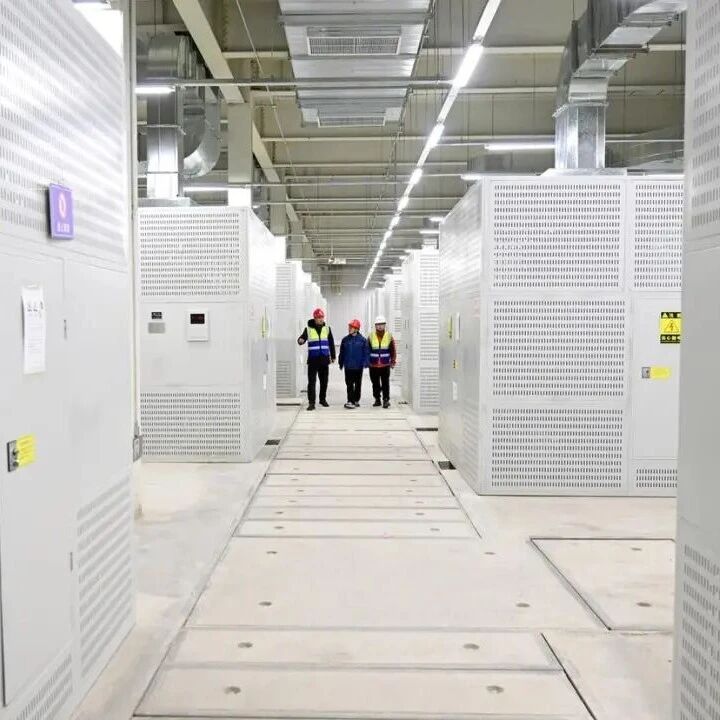
国内规模最大电网侧铅碳储能电站并网投运
中关村储能产业技术联盟· 2025-11-28 12:23
预定展位详情咨询: 曹先生 1 3552 71 21 89 王先生 1 3581 88 55 20 李先生 1 3581 74 16 80 赵先生 1 8210 18 87 71 柏女士 1 8031 45 10 07 相关阅读 文 | 工人日报 11月26日,宁夏银川市吉洋绿储 200 兆瓦 / 400 兆瓦时共享储能电站项目 —— 典农第一储能电站电池仓首次带电成功 ,国内规模 最大电网侧铅碳储能电站成功并网投运。 该电站位于银川市西夏区核心能源走廊,占地 55.4 亩,投资 6.2 亿元, 刷新规模和功率两项纪录,配套 80 套定制化铅碳储能一体舱 ,系统循环寿命优势明显, 全生命周期成本低于锂电池。 其并网对银川储能与清洁能源配套产业一体化发展意义重大,可提升电网调节与新能源消纳能力,缓解高峰供电压力,为 "源网荷储" 一体化和多能互补提供示范。 ESIE 2026 储能产业发展的风向标 全版日程+参会指南发布 | 2025中国储能CEO峰会倒计时5天 730亿!配储4.8GWh!国家电投19.44GW沙戈荒大基地项目开工 新型储能不得计入输配电定价成本!国家发改委印发修订版输配电成本监审和定价办法发 ...
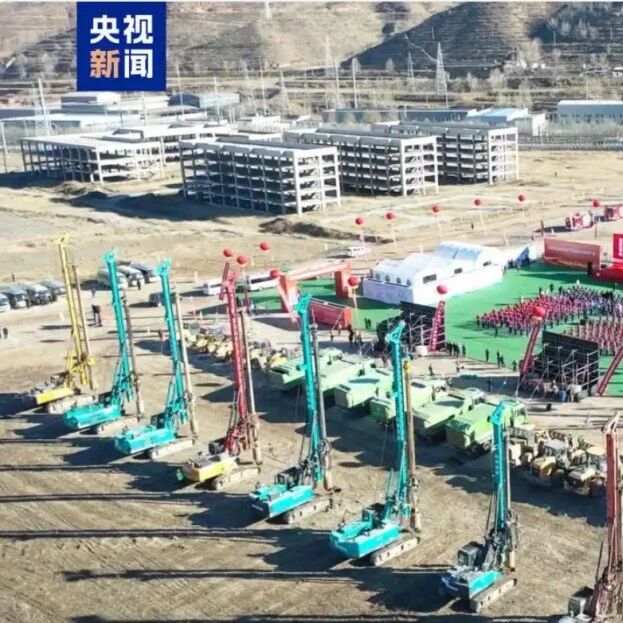
730亿!配储4.8GWh!国家电投19.44GW沙戈荒大基地项目开工
中关村储能产业技术联盟· 2025-11-28 10:10
Core Viewpoint - The Qinghai Hainan Clean Energy Delivery Base project, the largest power generation project in China with the highest proportion of renewable energy, has officially commenced construction, highlighting the country's commitment to clean energy development [2][4]. Group 1: Project Overview - The project, known as "Shagehuang," is located in areas rich in wind and solar resources, with a total investment of nearly 73 billion yuan [4]. - The planned total power generation capacity of the base is 19.44 million kilowatts, with renewable energy accounting for 86.4%, including 9.6 million kilowatts of solar power, 6 million kilowatts of wind power, 2.64 million kilowatts of coal power, and 1.2 million kilowatts of electrochemical energy storage [4]. Group 2: Environmental Impact - Upon completion, the project is expected to generate an average annual electricity output of 36 billion kilowatt-hours, equivalent to saving approximately 10 million tons of standard coal and reducing carbon emissions by about 23.5 million tons [6]. - The project will annually deliver 36 billion kilowatt-hours to the Guangdong-Hong Kong-Macao Greater Bay Area, playing a significant strategic role in optimizing the national energy layout and supporting high-quality development in the eastern region [6].

全版日程+参会指南发布 | 2025中国储能CEO峰会倒计时5天
中关村储能产业技术联盟· 2025-11-28 10:10
Core Viewpoint - The 2025 China Energy Storage CEO Summit will be held from December 3-5, 2025, in Xiamen, Fujian, focusing on the globalization of the energy storage industry and gathering leaders and experts to discuss international hotspots and emerging markets in energy storage [2]. Event Details - The summit will feature a series of keynote speeches and discussions on topics such as green low-carbon development opportunities and challenges, planning for green power systems in overseas scenarios, and innovative strategies for reshaping the global energy storage landscape [8][10]. - The event will include a CEO roundtable discussion aimed at aligning China's energy storage industry with global industrial ecosystems by 2030 [8]. Organizing Institutions - The summit is organized by the Zhongguancun Energy Storage Industry Technology Alliance, in collaboration with Xiamen University and Xiamen Kehua Data Co., Ltd., among others [17]. Registration and Accommodation - Pre-registration is required for attendance, and various hotels in Xiamen are offering special rates for participants [25][18][20]. Transportation - The main conference hotel is located approximately 7.2 km from Xiamen Gaoqi Airport, with convenient access to local transportation [18].


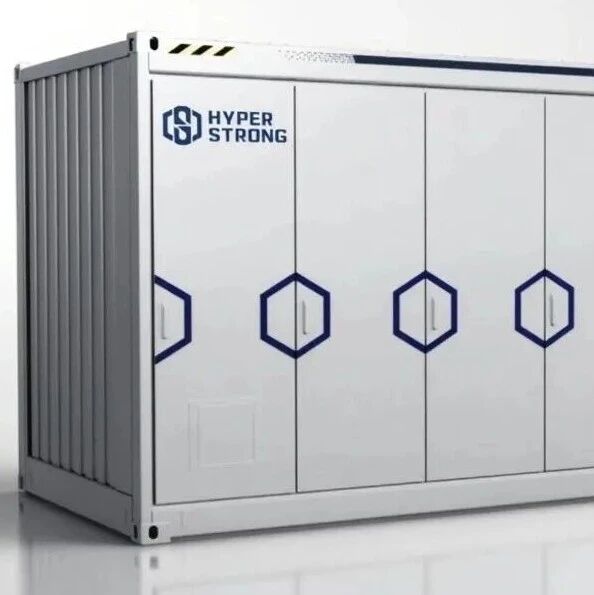
关键突破!海博思创成功交付美国420+MWh储能项目
中关村储能产业技术联盟· 2025-11-28 10:10
Core Viewpoint - Beijing Haibo Technology Co., Ltd. has achieved a significant breakthrough in the U.S. market by partnering with several companies, including a well-known Independent Power Producer (IPP), to provide energy storage solutions for projects in California and Georgia, marking an important milestone in the company's international strategy [2]. Group 1: Project Achievements - The company has successfully delivered over 420 MWh of energy storage products for the projects, which have now entered the commercial operation phase [2]. - The deployed HyperBlock III 5MWh liquid-cooled energy storage system will focus on energy dispatch needs, providing peak shaving and frequency regulation services, thereby alleviating local grid supply-demand fluctuations and optimizing renewable energy consumption efficiency [2]. Group 2: Service Commitment - Haibo Technology will continue to provide long-term warranties and comprehensive localized after-sales services, ensuring continuous optimization of equipment performance through system monitoring and regular maintenance [2]. Group 3: Industry Leadership - As a global leader in the energy storage industry, Haibo Technology has participated in over 400 energy storage projects, achieving a cumulative scale of over 45 GWh [4]. - The company has established a localized service network across major markets, providing 24/7 technical support to ensure stable and efficient operation of energy storage projects [4]. Group 4: Future Outlook - Looking ahead, Haibo Technology aims to leverage its technological research and global operations to deepen international cooperation and accelerate the layout of comprehensive energy services, contributing to the global transition to a green and low-carbon energy structure [4].

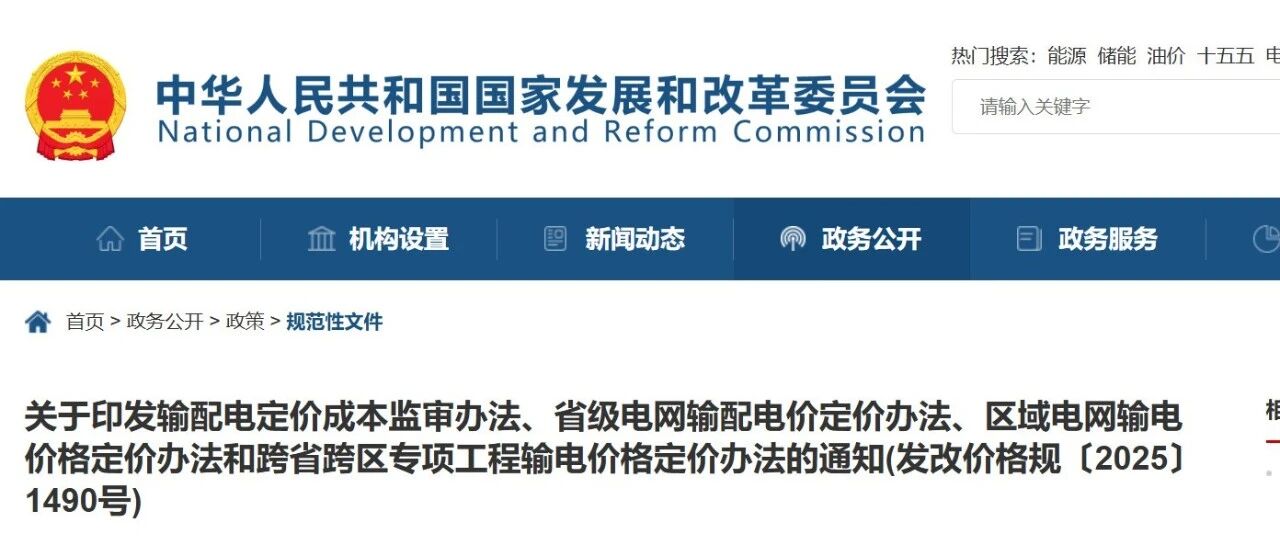
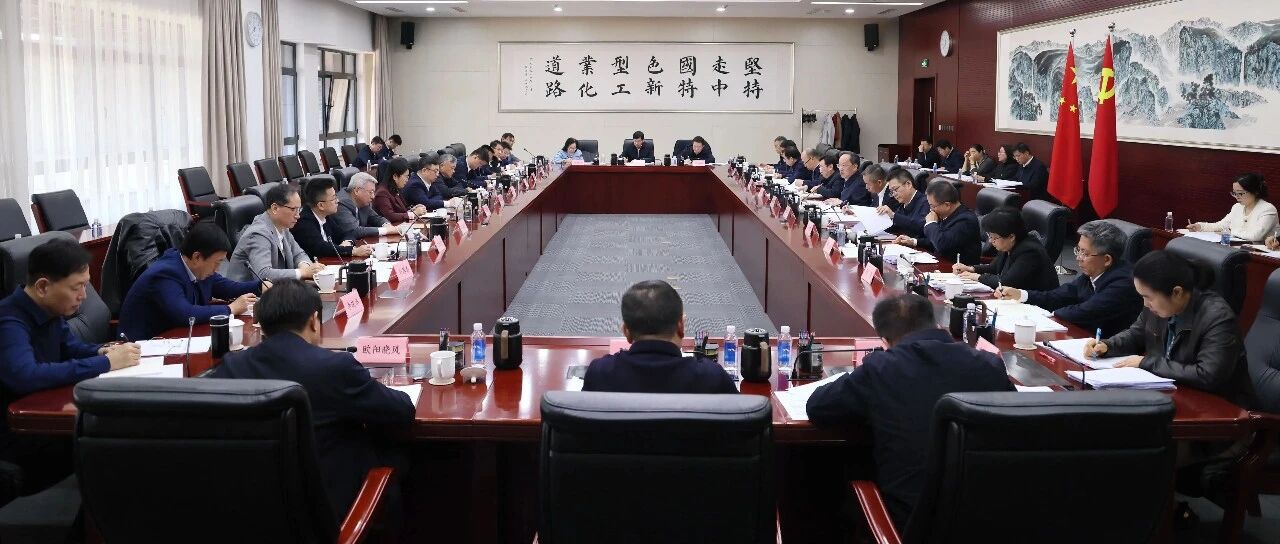
新型储能不得计入输配电定价成本!国家发改委印发修订版输配电成本监审和定价办法发布
中关村储能产业技术联盟· 2025-11-27 10:38
Core Viewpoint - The National Development and Reform Commission (NDRC) has revised the pricing and cost supervision methods for electricity transmission and distribution, aiming to promote the consumption of renewable energy, enhance power supply security, and improve the efficiency of grid enterprises [7][8]. Group 1: Promotion of Renewable Energy Utilization - The revised methods introduce a capacity mechanism in the transmission and distribution pricing to facilitate the local consumption of renewable energy and reduce transaction costs for renewable energy [7][8]. - A single capacity pricing system will be implemented for new energy generation that focuses on local consumption, while cross-regional projects primarily transmitting clean energy will explore two-part or single capacity pricing systems [2][7]. Group 2: Enhancing Power Supply Security - The pricing mechanism for cross-regional projects will support the construction of mutual assistance channels in the grid, enhancing the national power load shifting, mutual assistance, and emergency support capabilities [8]. Group 3: Improving Efficiency of Grid Enterprises - The revisions aim to optimize certain cost parameters, encouraging grid enterprises to strengthen internal management and reduce costs [8]. - The NDRC will conduct cost supervision and price determination for provincial grids, regional grids, and cross-regional projects based on the revised methods [7][8]. Group 4: Implementation Timeline - The four revised documents will take effect from January 1, 2026, and will be valid for ten years [4].