中关村储能产业技术联盟

Search documents
目标17GW、鼓励4小时以上长时储能!湖北印发《湖北省储能体系建设方案(2025—2030年)》
中关村储能产业技术联盟· 2025-11-27 08:36
Core Viewpoint - The article discusses the "Hubei Province Energy Storage System Construction Plan (2025-2030)", which aims to establish a phased development path for energy storage in Hubei, targeting a total installed capacity of 17GW by 2030, positioning the province as a significant power regulation center in the country [1][13]. Phase-wise Installed Capacity Goals - By 2027, the total installed energy storage capacity in Hubei is expected to reach 8 million kilowatts (8000MW) [2]. - New energy storage will primarily consist of new types of storage, targeting 5 million kilowatts [3]. - Pumped storage will reach 2.87 million kilowatts, focusing on small and medium-sized power stations [4]. - By 2030, the total installed capacity will increase to 17 million kilowatts, with new energy storage reaching 8 million kilowatts [5]. - Pumped storage capacity will expand to 9.12 million kilowatts, emphasizing large power stations [6]. Integration of New Energy Storage with Power Systems - The plan emphasizes the integration of new energy storage with the power system, encouraging the construction of "system-friendly" renewable energy power stations and the use of various storage technologies [8]. - It promotes the deployment of long-duration energy storage systems, such as compressed air and flow batteries, to replace some transmission and distribution facilities [8]. Diverse Technology and Industry Cluster Development - The plan outlines a detailed approach to diversify new energy storage technologies, including solid-state batteries, sodium-ion batteries, and compressed air storage, while also encouraging the application of advanced technologies like gravity storage and hydrogen storage [9]. - It aims to establish a distinctive energy storage industry cluster in Hubei, focusing on the development of lithium battery industrial parks and the construction of a super energy storage factory [9]. Capacity Compensation and Market Mechanisms - The plan proposes exploring a capacity compensation mechanism for grid-side energy storage, integrating capacity fees into system operating costs to stabilize revenue expectations for energy storage stations [10]. - It also aims to optimize time-of-use pricing mechanisms and gradually improve the pricing policies for pumped storage [10]. Management and Service Mechanisms for Energy Storage - The plan emphasizes the establishment of a management system for energy storage that aligns with the needs of sustainable development, including optimizing market and pricing mechanisms [20]. - It encourages the participation of new energy storage in market transactions and the development of a collaborative optimization model for energy sources, networks, loads, and storage [21].


新型储能容量电价机制破局:各省政策盘点与发展趋势前瞻
中关村储能产业技术联盟· 2025-11-27 08:36
Core Viewpoint - The article emphasizes the urgent need to establish a new capacity pricing mechanism for energy storage in China to support the growing demand for renewable energy and ensure grid stability [2][8]. Group 1: New Energy Storage Capacity Support - The construction of a new power system in China is accelerating under the "dual carbon" goals, with significant increases in installed capacity for wind and solar energy. However, the intermittent and volatile nature of these energy sources poses challenges for grid capacity during peak load periods [6][8]. - In 2023, the State Grid's summer peak demand for new energy storage reached a maximum discharge capacity of 44.53 GW, equivalent to nearly three Three Gorges hydropower stations, providing substantial support during evening peak electricity usage [7]. Group 2: Need for Capacity Mechanism - The previous revenue models for independent energy storage included energy market revenue, ancillary service market revenue, capacity leasing revenue, and compensation revenue in some regions. However, recent policy changes have significantly impacted the demand and pricing space for capacity leasing, making it difficult for independent storage projects to cover their investment and operational costs [9]. - The current market rules do not fully reflect the value of new energy storage capacity, which could deter social capital investment and affect the stability of electricity supply and grid operations [9]. Group 3: Provincial Capacity Compensation Policies - Multiple provinces in China have begun to implement capacity compensation policies for new energy storage to address the lack of revenue mechanisms. These policies primarily adopt capacity compensation mechanisms, transitioning towards capacity market mechanisms in the future [12]. - Compensation methods vary across provinces, including: 1. **Discharge Volume Compensation**: Inner Mongolia has set a compensation standard of 0.35 CNY/kWh for 2025, while Xinjiang's compensation starts at 0.2 CNY/kWh in 2023, decreasing annually [13][14]. 2. **Capacity Compensation**: Hebei has established a capacity price of 100 CNY/kW for projects connected to the grid by May 31, 2024, with a gradual reduction thereafter [14]. 3. **Mixed Compensation**: Shandong and Gansu have implemented compensation mechanisms that consider both discharge and capacity [15][16]. Group 4: Summary and Outlook - The ongoing exploration of capacity compensation policies across various provinces is accumulating valuable practical experience for establishing a unified national capacity pricing mechanism. However, significant differences in compensation forms and fee structures exist, and many provinces have yet to implement such policies [17]. - It is recommended to adopt a phased and regional approach to policy implementation, considering local power supply and demand characteristics, to lay the groundwork for future market-based capacity trading [17].

河北南网电力市场“1+7”规则体系:储能容量租赁、现货交易及辅助服务重点梳理
中关村储能产业技术联盟· 2025-11-27 08:36
Core Viewpoint - The article discusses the release of the "1+7" rule system (V4.0 version) for the Hebei Southern Power Grid electricity market, detailing revisions in market structure, spot trading, capacity leasing, ancillary services, and settlement mechanisms [2]. Market Structure and Participant Access - The Hebei Southern Power Grid electricity market includes three main trading segments: energy trading, ancillary service trading, and capacity trading. Energy trading is further divided into medium-long term and spot trading, while ancillary services include frequency regulation, ramping, and backup services [2]. - The scope of market participants has been expanded to include new entities such as energy storage companies, virtual power plants, aggregators, and smart microgrids. Specific technical parameters have been set for participation, such as a minimum independent storage charging power of 10 MW for frequency regulation [3]. Spot Market Trading Mechanism - The spot market operates on a model where generation side reports quantity and pricing, while the user side only reports quantity. The goal is to minimize system generation costs through centralized optimization [4]. - Pricing mechanisms involve node electricity prices for the generation side and a unified settlement point price for the user side. New entities must submit operational discharge curves for day-ahead market participation [4]. Medium-Long Term and Capacity Leasing Trading - Medium-long term trading requires segmented time periods, forming 24-hour segmented electricity and pricing, categorized into segmented trading and curve trading [5]. - Capacity trading is managed under the medium-long term market, with independent storage companies as lessors and renewable energy companies as lessees. Lessees must meet specific charging and discharging power and duration requirements [5]. Ancillary Services Market Operation - Currently, the Hebei Southern Power Grid primarily conducts frequency regulation auxiliary services and plans to establish a backup market. The frequency regulation market is organized after determining the day-ahead generation unit combination, using centralized bidding and marginal clearing [6]. - New market participants must declare parameters such as adjustment rate and rated power, with restrictions on their share of total frequency regulation rate demand set at a factor of k, currently defined as 0.3 [6]. Retail and Settlement Management - The retail market adopts a package system, divided into public and private packages, with various pricing methods including market linkage, fixed prices, or profit-sharing [7]. - Settlement for spot trading participants generally follows a "daily clearing, monthly settlement" model, with green electricity trading separating energy and environmental value settlements [8].
ESIE 2026观众预登记开启!全球1000+储能企业,50+国际市场资源,与您4月相约北京
中关村储能产业技术联盟· 2025-11-26 10:17
Core Insights - The 14th Energy Storage International Summit and Exhibition (ESIE 2026) will take place from April 1-3, 2026, at the Beijing Capital International Exhibition Center, organized by key industry alliances and research institutions [2][4][29]. Group 1: Event Scale and Participation - ESIE 2026 will feature over 160,000 square meters of exhibition space, with more than 1,000 exhibitors and sponsors, and is expected to attract over 200,000 professional visitors [4][10]. - The event will include over 40 thematic forums covering policies, technologies, and market trends, with participation from more than 400 speakers, including leaders from government, academia, and industry [4][18]. Group 2: Industry Ecosystem - The exhibition aims to build a comprehensive "wind-solar-electric-hydrogen" smart energy ecosystem, showcasing advancements in energy storage technologies and applications across various sectors [12]. - Key industry players such as CRRC Zhuzhou Institute, Sungrow, and CATL will participate, representing the entire energy storage value chain from R&D to engineering services [10][11]. Group 3: International Collaboration - The event will facilitate international resource connections, with support from over 50 countries and participation from various international energy organizations and embassies [22][23]. - Special activities will include international business matchmaking sessions and policy forums to enhance cross-border cooperation and business opportunities [23][24]. Group 4: Financial Empowerment - ESIE 2026 will address the full cycle of financing needs in the energy storage sector, from seed to operational phases, ensuring effective resource and capital matching [27].


阳光电源拿下智利储能大单,服务全球最大铜企
中关村储能产业技术联盟· 2025-11-26 10:17
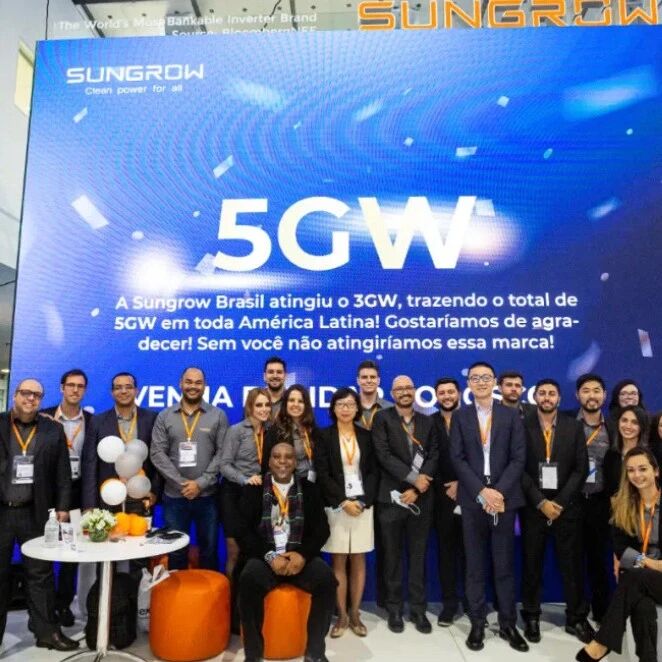
Core Insights - The Dune Plus energy storage project in Antofagasta, Chile, has been officially launched by AME and EDF Energy Solutions, with Sungrow securing the engineering procurement and construction (EPC) contract [2][4] - The total investment for the project is $6.29 billion, which will add 509MW/2036MWh of storage capacity to Chile's largest photovoltaic power station [4][5] - A 15-year power purchase agreement has been signed, ensuring that the generated renewable energy will be supplied to Codelco, the world's largest copper mining company, at a rate of 1TWh per year [4][5] Project Details - The project is located in María Elena and consists of two main technology units: a 333MW/1334MWh Dune battery storage system and a hybrid energy facility integrating a 186MW solar power station with a 175MW/702MWh battery storage system [5][6] - The Dune battery storage system is designed as a standalone 4-hour storage project and will be deployed alongside the CEME1 photovoltaic power station, which is expected to be operational in 2024 [5][6] Industry Events - Sungrow has confirmed participation in the 14th International Energy Storage Industry Exhibition (ESIE 2026), scheduled for April 2026 [7]
2.4GWh!宁德获日本储能大单
中关村储能产业技术联盟· 2025-11-26 10:17
Group 1 - The core viewpoint of the article highlights the collaboration between CATL and Marubeni Corporation's subsidiary, Sun Village, to develop a grid-level energy storage project in Japan with a total scale of 2.4 GWh [2][4] - Sun Village will be responsible for the development and construction of the energy storage project, while CATL will provide energy storage battery products and hold partial ownership of the power station. Marubeni will manage the operation of the storage facilities [4] - The three parties aim to integrate their core strengths to expedite the commercialization and large-scale implementation of the project [4] Group 2 - CATL has confirmed participation in the 14th International Energy Storage Summit and Exhibition (ESIE 2026), scheduled for April 2026 [4][5] - The event is positioned as a barometer for the development of the energy storage industry [5]
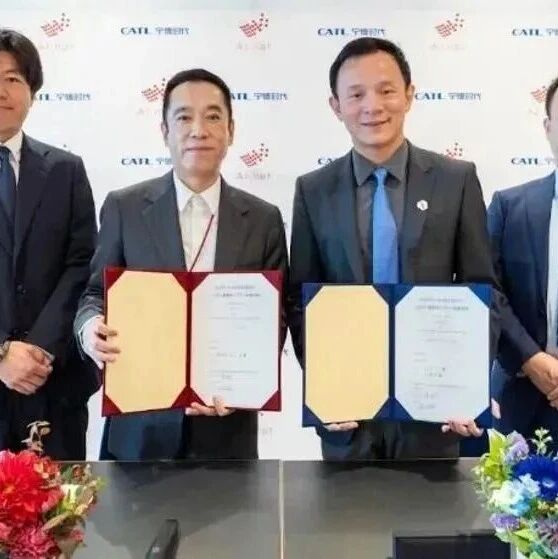
宁德时代赋能五粮液,开启“光储+物流”全方位合作
中关村储能产业技术联盟· 2025-11-25 06:22
Core Viewpoint - CATL has established a strategic partnership with Wuliangye Group to integrate traditional liquor production with new energy technology, focusing on zero-carbon transformation and green development in Yibin [2][4]. Group 1: Strategic Collaboration - The collaboration will focus on three main areas: project co-construction, capital cooperation, and supply chain integration [2]. - Both companies aim to create a zero-carbon park, utilizing CATL's expertise in photovoltaic power stations and energy storage systems to upgrade green energy infrastructure [2]. Group 2: Electric Transportation and Logistics - The partnership will promote the electrification of Wuliangye's own vehicles and those of its suppliers, prioritizing the use of CATL's battery products [4]. - There will be an exploration of establishing battery swap demonstration routes to enhance logistics efficiency [4]. Group 3: Battery Business Synergy - The collaboration will deepen the synergy in battery business, focusing on the development of battery pack composite structural components and new product categories [4]. - Leveraging Wuliangye's technology in high-end packaging and anti-counterfeiting, the partnership aims to create high-standard and efficient battery packaging solutions [4].

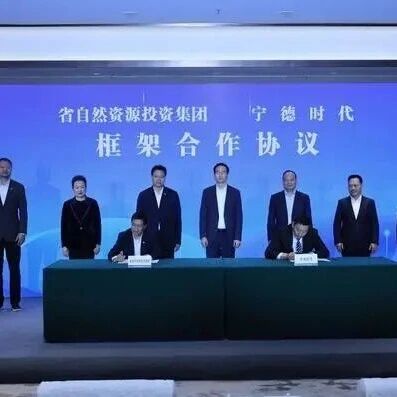
楚能新能源与龙蟠科技签署补充协议:正极材料采购量增至130万吨,总金额超450亿元
中关村储能产业技术联盟· 2025-11-25 06:22
相关阅读 单月90项!10月储能政策风向标:多省更新补贴与市场规则 10月用户侧储能:装机量同比升、环比降,传统强省备案数同比下降41% 新型储能飙涨超3000%!中国储能在海外市场集中爆发 11月24日龙蟠科技(603906)公告称,公司控股子公司常州锂源及控股孙公司南京锂源与 楚能新能源全资子公司武汉楚能、孝感 楚能及宜昌楚能 共同签署了《之补充协议二》,对原协议相关条款进行补充与修订。 此次签约标志着双方合作在半年内实现了量级上的巨大跨越: 协议将原定未来5年的15万吨采购量大幅提升至130万吨,预估合 同总金额也从超50亿元暴增至超450亿元。 ESIE 2026 储能产业发展的风向标 文 | 证券时报 预定展位详情咨询: 曹先生 135 52712 189 王先生 135 81885 520 李先生 135 81741 680 赵先生 182 10188 771 柏女士 180 31451 007 联盟官微 关注政策、项目、企业、市场活动 联盟官方小秘书 入会、入群、产业交流、活动对接 ...


英伟达800V架构重塑AI数据中心:31家产业链核心企业大起底
中关村储能产业技术联盟· 2025-11-25 06:22
Core Insights - The article discusses the significant energy demands of AI data centers, which can consume as much electricity as a small city, and highlights the need for advanced energy storage systems to manage power fluctuations effectively [2][4] - NVIDIA's recent release of the 800V DC architecture white paper indicates a shift towards integrating rapid-response energy storage systems in AI data centers, suggesting a potential explosive growth opportunity for the energy storage industry driven by AI [4][10] Group 1: Energy Architecture Evolution - The industry leaders, led by NVIDIA, have outlined a clear three-step evolution plan towards the 800V DC architecture for AI data centers [6] - The first step involves a transitional solution using "side-mounted power cabinets" to physically separate power modules from core computing areas [6] - The second step focuses on transitioning from a "distributed" to a "centralized" architecture [7] - The final step aims for a direct conversion from 10kV medium voltage AC to 800V DC using Solid State Transformers (SST) [9] Group 2: Hybrid Energy Storage Systems - To effectively manage power fluctuations, "hybrid energy storage" is identified as a necessary technological core, combining supercapacitors, high-rate batteries, and large-scale energy storage systems [10] - The new architecture requires advanced semiconductor technologies, such as silicon carbide (SiC) and gallium nitride (GaN), to meet the stringent demands of 800V high voltage [11] Group 3: Market Dynamics and Key Players - The surge in energy demand from AI and data centers has led to strategic competition among energy storage companies, including UPS suppliers and thermal management solution providers [16] - Major players in the energy storage market include: - **Sungrow Power Supply**: Actively developing power solutions for AI data centers, with plans to launch products by 2026 [19] - **Huawei**: Emphasizing energy digitalization for AI data centers, aiming for a secure, reliable, and low-carbon future [20] - **Kehua Data**: Focused on building data centers and HVDC solutions, with significant market presence [21][23] - **DuanDeng Co.**: Recognized as a "hidden champion" in data center energy storage, leading in battery shipments [24] - **Zhongtian Technology**: Engaged in lithium battery storage systems, with a strong production capacity [25] Group 4: Technological Innovations - The introduction of Solid State Transformers (SST) is highlighted as a revolutionary product that efficiently converts medium voltage AC to 800V DC, significantly reducing energy loss and saving substantial electricity annually for large data centers [11][12] - SSTs improve power quality and reduce the footprint of power systems, allowing for better space utilization in data centers [15] Group 5: Future Trends and Strategic Directions - The competition in the energy storage sector is shifting from hardware specifications to the intelligence of energy management systems, emphasizing the need for predictive capabilities and smart coordination among different energy storage units [15] - The article anticipates a transformation in business models, where the winners will be those who can provide integrated smart energy solutions rather than just hardware [15]

海外户储军团,要不要争抢国内储能大市场?
中关村储能产业技术联盟· 2025-11-24 10:16
Core Viewpoint - Chinese energy storage companies are at a strategic crossroads, deciding whether to continue focusing on overseas markets or to compete in the rapidly growing domestic energy storage market as the overseas market becomes increasingly competitive [2][20]. Group 1: Overseas Market Performance - The household energy storage market is primarily focused on high electricity price countries, with significant growth in Europe, the US, Japan, and Australia, and is expanding into emerging regions [2]. - Companies like Pylontech reported a revenue of 1.149 billion yuan in the first half of 2025, a year-on-year increase of 33.75%, with a sales volume of 1328 MWh, up 132.57% [2]. - GoodWe achieved a revenue of 4.086 billion yuan, a 29.80% increase year-on-year, with inverter sales of approximately 399,500 units, including 33,200 energy storage inverters [3]. - Deye reported a revenue of 5.535 billion yuan, a 16.58% increase, with a net profit of 1.522 billion yuan, up 23.18% [6]. - Aiko Energy's revenue reached 1.807 billion yuan, a 14.09% increase, with a net profit growth of 37.65% [7]. Group 2: Risks in Overseas Market - Despite strong performance, risks associated with focusing solely on the overseas household storage market are significant, particularly due to market fluctuations and increased competition [9][10]. - The industry faced a "winter" in 2023, with a sudden drop in household storage demand as European market inventories rose and energy crises eased [9]. - Risks include market cyclicality, intensified competition leading to price wars, and a singular business model that lacks resilience against market changes [11]. Group 3: Diversification Strategies - Companies are diversifying their markets from a focus on Europe and the US to a more global approach, with examples like Sigen Energy, which has established a presence in over 60 countries [11][13]. - Product and scenario diversification is also evident, with companies like Wotai Energy expanding from household storage to commercial and industrial applications [14]. - Strategic investments in capacity and technology are being made to prepare for future growth, with companies like Pylontech and Aiko Energy investing in new production lines and projects [17][19]. Group 4: Domestic Market Opportunities - China has become the largest energy storage market globally, with cumulative installed capacity exceeding 101.3 GW, accounting for over 40% of the global total [21]. - The application scenarios for energy storage in China are expanding rapidly, covering various industries and services, indicating a robust market potential [22]. - The shift in regulatory frameworks, such as the end of mandatory energy storage for new renewable projects, emphasizes the need for energy storage to demonstrate actual application value [24]. Group 5: Future Directions - Companies must enhance their capabilities from merely manufacturing products to delivering reliable energy solutions, focusing on system design and integration [26]. - Strategic positioning within the domestic ecosystem is crucial, whether as a leader in specific technologies or as part of a larger enterprise [26]. - The competition in the energy storage sector will increasingly hinge on the ability to create value for customers, regardless of market choice [29].