歸藏的AI工具箱

Search documents
太猛了!终于有人来管管 AI 视频的语音和表演了:GAGA AI 实测
歸藏的AI工具箱· 2025-10-10 10:03
Core Viewpoint - The article discusses the capabilities of the GAGA-1 model developed by Sand.ai, highlighting its advanced performance in character dialogue and expression, surpassing previous models like Sora2 in nuanced facial expressions and voice synchronization [1][2][15]. Performance Testing - Initial tests showed GAGA-1's ability to generate detailed facial expressions and voice synchronization, particularly in nuanced scenarios [2][5]. - The model demonstrated clear lip movements and voice output, even in complex scenarios involving environmental sounds [4][6]. - GAGA-1 supports multilingual output, performing well in English, Japanese, and Spanish, with accurate lip synchronization and expression [8][16]. Emotional Expression - The model effectively conveyed complex emotions, such as shame and desperation, with natural voice modulation and facial expressions [9][10]. - In a dual-character scenario, GAGA-1 maintained emotional intensity and expression accuracy, even under challenging conditions [14][15]. Usage Guidelines - Suggestions for optimal use include specifying emotional changes in prompts and limiting complex body movements to avoid performance issues [16]. - The model currently supports a 16:9 aspect ratio, with plans for future vertical format support [16]. Industry Implications - The development of GAGA-1 signifies a shift in AI video models towards enhanced emotional expression and multimodal output, moving beyond basic content generation [16][17]. - The model's advancements suggest a need for industry professionals to adapt to the evolving capabilities of AI in video production [17].

Sora 2 中国首测?Open AI 这次真成了!
歸藏的AI工具箱· 2025-09-30 20:32
Core Viewpoint - Sora 2 is presented as the world's most advanced video generation model, capable of creating high-quality videos with minimal input, including voice cloning and multi-language support, and it features a social app for collaborative video creation [1][17]. Group 1: Model Features - Sora 2 allows users to generate videos by simply recording three numbers, showcasing its advanced voice and video synthesis capabilities [1]. - The model can maintain character consistency while changing backgrounds and scenarios, demonstrating its versatility in video generation [6][7]. - It incorporates automatic camera cuts and scene changes, reflecting an understanding of video composition and storytelling logic [8][11]. Group 2: User Interaction - Users can remix videos by providing simple prompts, allowing for creative alterations to existing content [5]. - The platform supports image uploads for scene generation, enhancing the customization options for users [6]. - Sora 2 includes a social aspect where users can invite friends to collaborate on video projects, resembling a social media experience [1][17]. Group 3: Content Limitations - The model has strict copyright restrictions, preventing the generation of copyrighted content, although it appears to allow some exceptions [11]. - There are challenges with maintaining consistency in certain product representations, indicating areas for improvement in commercial applications [9]. Group 4: Overall Impact - Sora 2 is positioned as a groundbreaking tool for end-users, combining audio, visual, and narrative elements to create complete videos from minimal input [17]. - The model's capabilities suggest a significant advancement in video generation technology, potentially transforming user engagement in content creation [17].
告别抽卡!全能&高度可控|藏师傅教你用即梦数字人 1.5
歸藏的AI工具箱· 2025-09-29 10:10
Core Viewpoint - The article discusses the launch of the Omnihuman 1.5 version by the company, highlighting its enhanced capabilities in generating dynamic videos with lip-syncing and improved control over character actions and emotions, making it a powerful tool for creating engaging content [1][30]. Group 1: Features and Enhancements - The Omnihuman 1.5 version allows users to define character performances and movements, significantly improving the quality of AI-generated videos compared to the previous version [1][4]. - The update introduces a feature for action description input, expanding the use cases for digital humans, making it highly customizable [2][4]. - The model now supports natural lip-syncing for non-human characters and various styles, enhancing the overall visual appeal [5][8]. Group 2: User Experience and Functionality - Users can control multiple characters in a scene, allowing for more complex dialogues and interactions, which increases the model's usability [7][8]. - The system requires three main components to create a video: an initial image, audio, and corresponding action/emotion prompts, which can be organized in a structured format for better results [9][12]. - The article provides a detailed tutorial on how to prepare materials and utilize the platform effectively, emphasizing the importance of clear and specific prompts [16][19]. Group 3: Market Position and Future Developments - The advancements in Omnihuman 1.5 position it as a sophisticated tool for content creators, transforming the creative process from an unpredictable art form into a more structured engineering task [30]. - The new model is set to be available on mobile platforms by September 30, further broadening its accessibility and user base [30].
Figma MCP + GPT-Codex:新的 Vibe Coding 之王
歸藏的AI工具箱· 2025-09-25 10:25
Core Viewpoint - The article discusses the recent updates to Figma's remote MCP service and how it enhances the integration with AI tools like GPT-5 Codex, improving design and coding efficiency. Group 1: Figma MCP Service Update - The new Figma remote MCP service eliminates the need for complex installation processes and local clients, streamlining user experience [5][21] - Users can easily set up the MCP by copying a JSON code into the Cursor settings, simplifying the connection process [6][7] - The service requires a subscription, and alternative access methods are mentioned [8] Group 2: Integration with AI Tools - The integration with AI IDEs like Cursor allows for direct usage of GPT-5 Codex, enhancing design capabilities [5][9] - Users can utilize commands in Claude Code to access Figma MCP, facilitating the design process [10] - The AI can generate web pages from design drafts, but the quality of the output depends on the original design's structure [15][16] Group 3: Design and Development Process - The article emphasizes the importance of using high-quality design drafts to ensure effective AI output [15][16] - It suggests a step-by-step approach for complex designs, allowing the AI to handle components incrementally [15] - The article provides specific design guidelines for creating a visually appealing web page, including color schemes and layout styles [19][20] Group 4: Future Implications - The update indicates significant growth potential for Vibe Coding infrastructure, enhancing efficiency in design and coding [21] - The integration of AI does not eliminate the need for design skills; rather, it enhances productivity while maintaining the necessity for aesthetic judgment and foundational knowledge [21]
可灵2.5Turbo实测|顶尖AI视频模型,真能打平CG吗?
歸藏的AI工具箱· 2025-09-23 10:37
Core Viewpoint - The release of Kling 2.5 Turbo marks significant advancements in AI video generation, showcasing improved understanding of complex prompts and dynamic video stability, while offering competitive pricing for high-quality outputs [1][17]. Group 1: Performance Improvements - The model demonstrates enhanced comprehension of complex prompts, particularly those involving intricate causal and temporal relationships [1][17]. - Video generation stability has improved, especially in high-speed dynamic scenarios, maintaining consistent style throughout the video [1][17]. - The cost for generating a 5-second high-quality video has decreased from 35 points in the previous model to 25 points in the new version [1]. Group 2: Testing and Comparisons - Various tests were conducted to evaluate the model's performance, including scenes with complex actions and dynamic camera movements, which were executed smoothly without distortion [2][3][7]. - The model successfully generated videos in different artistic styles while maintaining consistency across the outputs, showcasing its versatility [6][7]. - Comparisons with top CG works from the World Rendering Competition indicate that Kling 2.5 Turbo can compete with high-quality CG productions in specific scenarios [10][11][17]. Group 3: Understanding of Motion and Physics - The AI model exhibits a deeper understanding of the underlying physics of motion, as evidenced by its ability to incorporate realistic movements and transitions, such as the gradual unfolding of a princess dress [17][18]. - The model's ability to add natural movements, like staggering after dodging an attack, reflects its comprehension of physical logic beyond simple prompt adherence [17][18]. - The synchronization of visual effects with character movements, such as the transformation of a warrior into a wolf, indicates an advanced level of cognitive processing in the AI's creative approach [18].
Notion 3.0 |AI转型最成功的互联网产品是怎么做的?
歸藏的AI工具箱· 2025-09-19 13:26
Core Viewpoint - Notion has successfully transformed into a versatile AI-driven tool with the release of Notion 3.0, integrating advanced AI capabilities to enhance user experience and productivity [2][30]. AI Capabilities - Notion AI now supports top models like GPT-5 and Claude 4.1, allowing users to add context through file uploads and database selections [2][4]. - Users can link Notion with other software like Gmail and GitHub to enrich the context for AI tasks [4][9]. - The AI can assist in generating and modifying database formats, creating visual representations like bar charts based on user requests [9][10]. Meeting and Writing Enhancements - Notion AI includes features for real-time transcription and summarization of meetings, making it easier to create meeting records [13]. - Users can customize AI prompts for specific tasks, allowing for collaborative input and visibility of AI-generated content [14][15]. - The AI can refine selected text, enhancing the writing process [16]. Custom Agent Features - Notion 3.0 introduces customizable Agents, allowing users to define their names, icons, and interaction styles, enhancing personalization [18][20]. - Agents can be designed to automate tasks, such as summarizing reports and generating discussion frameworks for meetings, significantly reducing workload [25][28]. - The ability to publish Agent templates on Notion's marketplace provides monetization opportunities for creators [22]. Integration and Functionality - The updated Notion MCP can now not only query information but also modify and write content, improving integration with other AI tools [27][28]. - Users can leverage AI to create complex functions in tables using natural language, simplifying the process of function creation [30]. Market Position and Strategy - Notion's transformation highlights the importance of context and supportive features in maximizing AI capabilities [31]. - The combination of strong template distribution and monetization strategies positions Notion favorably in the competitive landscape of AI tools [32].

藏师傅教你用 Lovart x Seedream4.0 搞定终极自媒体神器
歸藏的AI工具箱· 2025-09-13 03:54
Core Viewpoint - Lovart has rapidly integrated the Seedream 4.0 model, offering significant promotional activities to attract users, emphasizing that providing benefits to users is an effective marketing strategy [2][3]. Group 1: Product Features and Innovations - Lovart and Seedream 4.0 allow users to convert long texts and documents into visually appealing images suitable for platforms like Xiaohongshu, enhancing content creation efficiency [3][6]. - The Seedream 4.0 model can generate modern, flat design infographics based on academic papers, providing a structured visual representation of the content [9][10]. - Users can adjust prompts to optimize the output, with Lovart's system automatically refining requests to improve results [12][14]. Group 2: User Experience and Customization - The Magic Canvas feature enables users to provide feedback directly on generated images, allowing for real-time modifications and improvements [16][18]. - Users can create visually consistent and engaging content quickly, significantly reducing the time required for traditional design processes [21][22]. Group 3: Educational Applications - Lovart's capabilities extend to generating educational materials, such as visual representations of classical Chinese literature, aiding in student comprehension [24][25]. - The platform can also compile information on historical figures, like Su Shi, into a series of informative cards, showcasing key life events and contributions [29][32]. Group 4: Creative Content Generation - Lovart allows for the creation of themed content, such as transforming scientific biographies into a fantasy narrative style, appealing to diverse audience interests [34][36]. - The platform supports various content styles and themes, enabling users to mix and match elements for unique outputs [38][39].
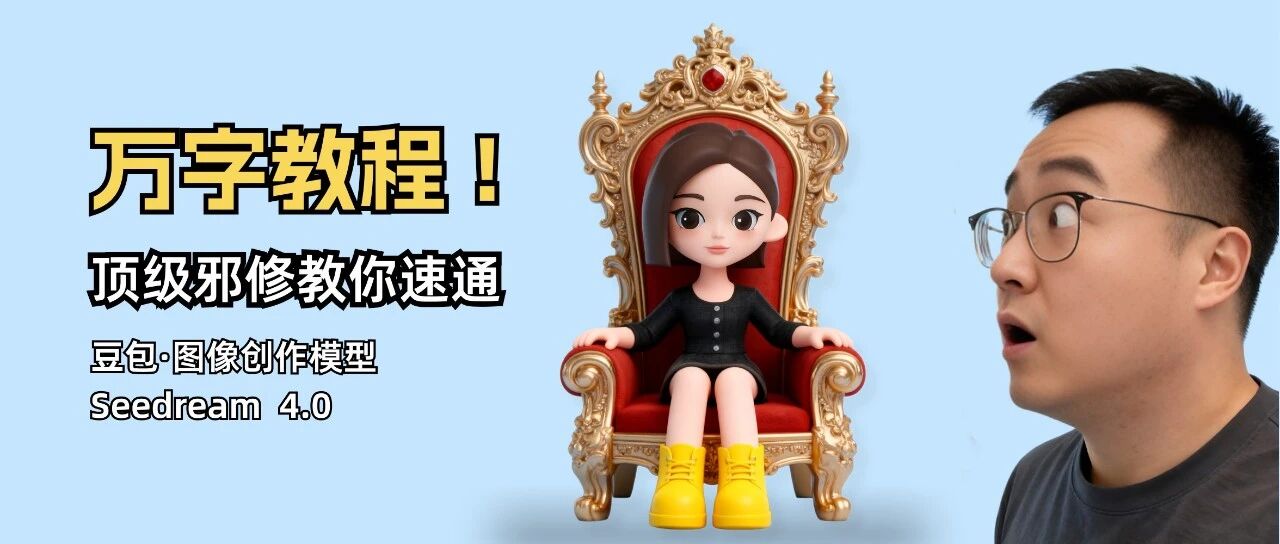
顶级邪修|万字教程|教你速通豆包・图像创作模型 Seedream 4.0
歸藏的AI工具箱· 2025-09-09 07:47
Core Viewpoint - The article discusses the launch of Seedream 4.0 by Huoshan Engine, a versatile image creation model that supports image generation, continuous image editing, and multi-image referencing, highlighting its capabilities for high-quality aesthetic output and user customization [2][3]. Group 1: Product Features - Seedream 4.0 offers advanced image generation capabilities, including the ability to produce 4K images, excellent aesthetic performance, and precise editing features, making it a top-tier model for Chinese users [2][3]. - The model allows users to customize generation ratios and supports seamless integration into the Huoshan Engine MaaS platform for enterprise clients [3]. - Personal users can access Seedream 4.0 through the Doubao and Jimeng apps, with the 4K version available for public use [3]. Group 2: Use Cases and Applications - Users can utilize Seedream 4.0 for various creative applications, such as generating personalized avatars, creating thematic mouse pads, and transforming photos into artistic representations [51][56]. - The model can generate continuous storyboard images for characters, maintaining facial identity across multiple frames, which is beneficial for content creators [22][27]. - It allows for the transformation of any photo into a glass-like icon, enhancing social media sharing [46]. Group 3: User Interaction and Customization - Users can input simple prompts to modify images, such as adjusting lighting effects or applying filters, showcasing the model's intuitive design [5][8]. - The model can respond to detailed makeup and hairstyle prompts, demonstrating its capability to handle intricate requests [11][17]. - Users can create diary-style images by uploading photos and providing context, allowing for personalized storytelling [73][76]. Group 4: Market Potential and Trends - The introduction of Seedream 4.0 is expected to lower the barriers for creating beauty applications, enabling users to explore new business opportunities [20]. - The model's ability to generate high-quality images and videos has the potential to disrupt the AI PPT industry, offering a new way to create visually appealing presentations [45][107]. - The article emphasizes the shift towards using everyday fragments of life as creative inputs, suggesting a new paradigm in content creation where personal experiences can be transformed into marketable products [109][110].
量大管饱!让藏师傅疯狂涨粉的 Nano Banana 玩法合集 02
歸藏的AI工具箱· 2025-09-05 09:12
Core Insights - The article discusses the rising popularity of Nano Banana, highlighting its widespread use and the innovative applications being explored by users [1][3]. Group 1: AI Applications - The article introduces the concept of creating AI-generated dance videos using calligraphy as a reference, showcasing the creative potential of Nano Banana [4][10]. - It details the process of converting architectural floor plans into 3D renderings, emphasizing the versatility of Nano Banana in architectural visualization [17][20]. - The article explains how to generate exaggerated visual effects for video thumbnails, enhancing engagement through creative imagery [33][35]. Group 2: User Engagement and Community - The article notes the significant increase in user engagement across platforms like Twitter, Xiaohongshu, and Douyin, indicating a growing community around Nano Banana [1]. - It highlights the collaborative nature of the community, where users share tutorials and innovative uses of Nano Banana, fostering a culture of creativity and experimentation [1][3]. Group 3: Technical Guidance - The article provides detailed instructions on generating videos using specific AI models, emphasizing the importance of prompt engineering for desired outcomes [12][16]. - It outlines the steps for creating 3D models from 2D images, showcasing the technical capabilities of Nano Banana in transforming visual content [24][30]. - The article discusses the integration of various software tools to enhance the functionality of Nano Banana, indicating a trend towards multi-software workflows in creative projects [28][32].
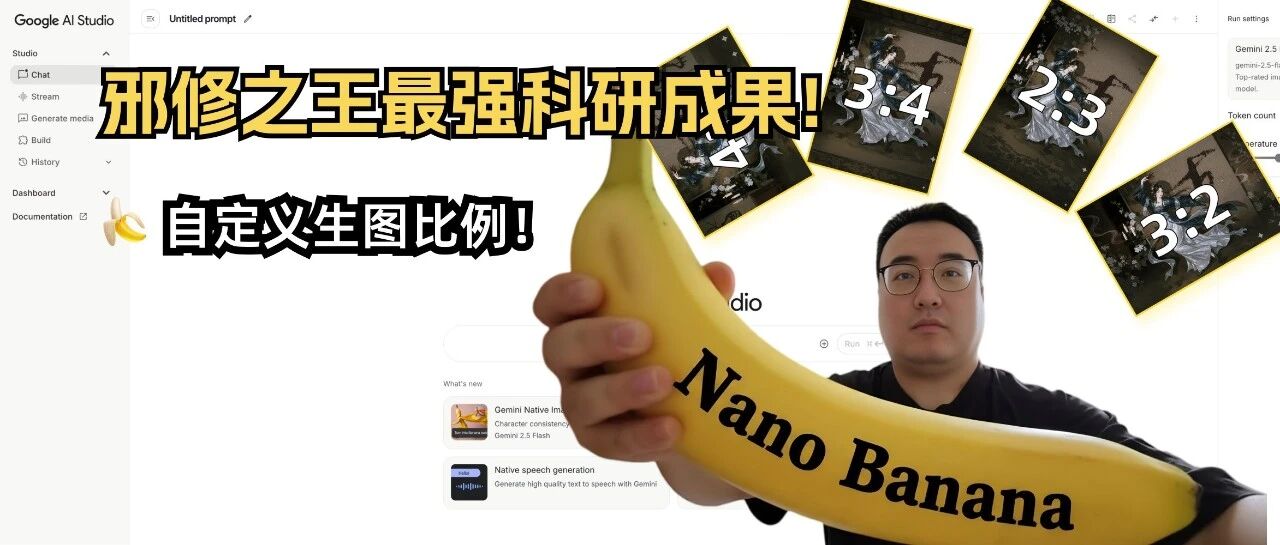
Nano Banana 邪修之王最强科研成果!教你自定义生图比例!
歸藏的AI工具箱· 2025-09-02 04:59
Core Viewpoint - The article discusses a method to solve the issue of aspect ratio control in images generated by Nano Banana, allowing users to modify existing images to fit desired proportions [2][4][12]. Group 1: Problem Identification - Users of Nano Banana face two main issues: low resolution of generated images and uncontrollable aspect ratios, making it difficult to use images in production [2][4]. - The output image's aspect ratio is determined by one of the input images, leading to inconsistency when multiple images are used [4][12]. Group 2: Proposed Solution - The solution involves using a reference image to control the aspect ratio of the generated images, allowing for modifications to both new and existing images [4][8]. - Users need two images: the original generated image and a reference image that defines the desired aspect ratio [6][16]. Group 3: Implementation Steps - The process requires inputting a specific prompt to instruct Nano Banana to redraw the content of the original image onto the reference image while maintaining the aspect ratio [13][15]. - The order of images is crucial: the image to be modified should be first, followed by the reference image to avoid errors [16]. Group 4: Additional Insights - The article mentions that using the Gemini2.5 Pro model in the Gemini APP yields better results compared to AI Studio when calling Nano Banana [15]. - A link is provided for users to download various aspect ratio templates for convenience [18].