傅里叶的猫

Search documents
RTX 5090的市场调研
傅里叶的猫· 2025-04-29 14:48
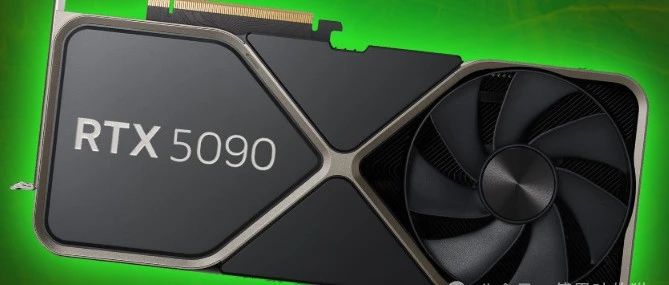
Core Viewpoint - The RTX 5090 series is experiencing high demand and prices, while facing supply constraints and regulatory challenges in the Chinese market [5] Group 1: Market Demand and Supply - NVIDIA has ceased production of the RTX 4090 and shifted focus to the RTX 5090 series to meet strong market demand [1] - The overall manufacturing capacity is limited, and even a 25% increase in production may not fully satisfy demand, leading to a persistent supply shortage and high premiums in the market [1] - The market price for the RTX 5090 in Hong Kong is approximately 35,000 RMB, while prices in mainland China have seen a slight decline but remain high due to strong demand [1] Group 2: RTX 5090D Model and Pricing - The RTX 5090D model, specifically launched for the Chinese market, targets internet companies, with channel prices around 15,000 RMB and potential further declines to about 14,000 RMB [2] - For large AI clients, the average procurement price is around 15,000 RMB, but strong negotiators may secure prices as low as 10,000 RMB per chip [2] - NVIDIA has set a minimum suggested retail price (SRP) to maintain market order, prohibiting sales below this price [2] Group 3: Regulatory Challenges and Product Adjustments - The RTX 5090D has been classified as a non-compliant product due to exceeding the U.S. export control bandwidth limit, leading NVIDIA to suspend shipments to mainland China [3] - NVIDIA is exploring solutions to modify the 5090D and H20 models to comply with regulations, including reducing memory clock frequency [3] - The suspension of 5090D supply is expected to have a limited short-term impact on the domestic market, as prior procurement volumes were not substantial [3] Group 4: Supply Chain and Manufacturer Impact - Global manufacturers like ASUS, MSI, and Gigabyte benefit from the current high-price environment, while local firms like Colorful face more limited profit margins [4] - Major tech companies in China, such as Alibaba and Tencent, primarily acquire computing power through direct purchases from NVIDIA or by sourcing consumer-grade graphics cards [4] - NVIDIA intentionally limits the supply of the 5090 chip to prevent it from being widely used in data centers, thereby protecting the sales strategy and market share of its higher-margin professional AI computing cards [4]


外资顶尖投行研报分享
傅里叶的猫· 2025-04-26 11:15
星球中每日还会更新Seeking Alpha、Substack的精选付费文章, 现在星球中领券后只需要340元,即可 每天都能看到上百篇外资顶尖投行科技行业的分析报告和每天的精选报告,无论是我们自己做投资,还 是对行业有更深入的研究,都是非常值得的。 想要看外资研报的同学,给大家推荐一个星球,在星球中每天都会上传几百篇外资顶尖投行的原文研 报:大摩、小摩、UBS、高盛、Jefferies、HSBC、花旗、BARCLAYS 等。 还有专注于半导体行业分析的SemiAnalysis的全部分析报告: ...

GPU租赁价格调研
傅里叶的猫· 2025-04-26 11:15
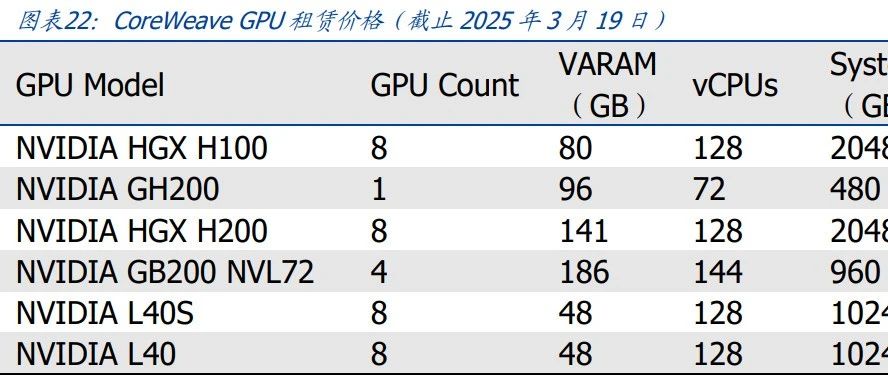
Industry Trends Overview - The synergy between AI and cloud computing has created a tight feedback loop driven by technological iteration, application expansion, and computing power demand [3] - The rapid enhancement of AI large model capabilities is pushing AI from being an auxiliary tool to a core productivity driver, heavily relying on cloud service providers for continuous upgrades in computing power, storage, and operations [3] - For instance, Alibaba Cloud's ninth-generation ECS instance has seen a 20% increase in computing power while prices have decreased by 5%, lowering the AI development threshold for enterprises [3] Cloud Service Providers' Technological Upgrades and Competitive Landscape - Cloud service providers are engaged in intense competition centered around AI computing power demands, with leading firms building competitive advantages through differentiated technological paths [5] - Alibaba Cloud focuses on end-to-end optimization, achieving a 20% improvement in AI preprocessing efficiency and a 92% reduction in response time for its PAI platform [5][6] - Huawei Cloud emphasizes architectural innovation, with its CloudMatrix 384 super node achieving three times the GPU density of traditional servers, addressing enterprise needs for customized AI solutions [6] AI Model Progress and Multimodal Breakthroughs - The current phase of AI model iteration is driven by "multimodal + deep thinking," with significant breakthroughs transitioning from laboratories to commercial applications [7] - Upcoming releases like Qwen3 and Llama4 are expected to enhance logical reasoning and voice interaction capabilities, while Alibaba's Qwen2.5-Omni demonstrates end-to-end processing across four modalities [7][8] - The competition among AI models is intensifying, with Google’s Gemini 2.5 Pro showcasing its potential in complex reasoning tasks, while GPT-4o aims to improve image generation precision for enterprise needs [7] Computing Power Demand Surge and Price Transmission in the Industry Chain - The explosive growth of AI technology is leading to a significant surge in computing power demand, creating a structural shortage on the supply side [9] - For example, the price of H100 calls has jumped 22% within two weeks, reflecting the scarcity of computing resources [11] - In North America, IDC rents have increased by over 60% due to high demand and limited supply, while in China, the upgrade of AI-specific data centers has raised unit cabinet costs [15][16] Rise of Computing Power Leasing Models - The emergence of computing power leasing models is becoming a new variable to balance supply and demand contradictions, with companies like CoreWeave reducing marginal costs [17] - However, the sustainability of this business model depends on the downstream application side's ability to pay, as some startups face losses due to high inference costs [17] - Overall, the price transmission in the computing power industry chain is shifting from short-term spikes to long-term structural inflation, reinforcing the barriers for leading firms while posing risks for smaller players [17]