具身智能之心

Search documents
具身领域LLM结合强化学习与世界模型工作汇总
具身智能之心· 2025-07-29 06:15
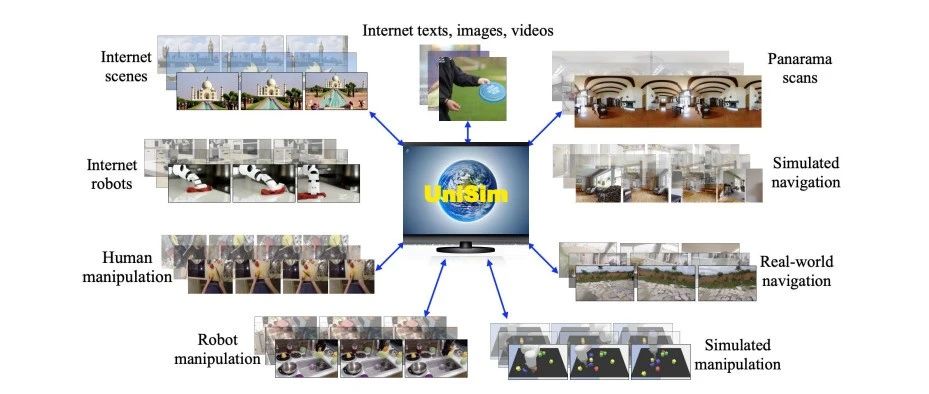
Core Viewpoint - The article discusses recent advancements in the field of embodied intelligence, particularly focusing on the integration of large language models (LLMs) with reinforcement learning and world models, highlighting several notable research papers from 2024 [2][3]. Group 1: UniSim - UniSim aims to learn general real-world interactive simulators through generative modeling, revealing that natural datasets can provide diverse advantages for learning simulators [3]. - The research demonstrates that integrating various datasets allows for the simulation of high-level commands and low-level controls, enabling zero-shot application in real-world scenarios [3]. Group 2: Robust Agents - The study from Google DeepMind asserts that causal reasoning is essential for robust and general AI, concluding that agents capable of satisfying regret bounds must learn approximate causal models [5]. - This finding has significant implications for transfer learning and causal inference [5]. Group 3: MAMBA - MAMBA introduces an efficient world model approach for meta-reinforcement learning, addressing sample efficiency issues prevalent in current methods [8]. - The framework shows a remarkable improvement in sample efficiency, achieving up to 15 times better performance in high-dimensional tasks [8]. Group 4: EMMA - EMMA leverages LLMs trained in text-based worlds to guide the training of visual world agents, enhancing their ability to interact with dynamic environments [10]. - The approach results in a significant success rate improvement of 20%-70% in diverse tasks compared to existing VLM agents [10]. Group 5: Text2Reward - The Text2Reward framework automates the generation of dense reward functions using LLMs, addressing the challenges of reward function design in reinforcement learning [13][14]. - The method demonstrates superior performance in 13 out of 17 tasks, achieving over 94% success in new motion behaviors [14]. Group 6: Online Continual Learning - The research proposes two frameworks for continuous learning in interactive instruction-following agents, emphasizing the need for agents to learn incrementally as they explore their environments [17][18]. - A confidence-aware moving average mechanism is introduced to update parameters without relying on task boundary information [18]. Group 7: AMAGO - AMAGO is a scalable contextual reinforcement learning framework that addresses challenges in generalization, long-term memory, and meta-learning [21]. - The framework allows for parallel training of long-sequence transformers, enhancing scalability and performance in complex tasks [21]. Group 8: PDDL-based Planning - The study presents a novel paradigm for task planning using pre-trained LLMs, focusing on building explicit world models through PDDL [22][23]. - The framework significantly reduces the need for human intervention by allowing LLMs to convert between PDDL and natural language, facilitating efficient model correction [23].

ERMV框架:针对操作任务的数据增强,显著提升VLA模型跨场景成功率
具身智能之心· 2025-07-28 13:19
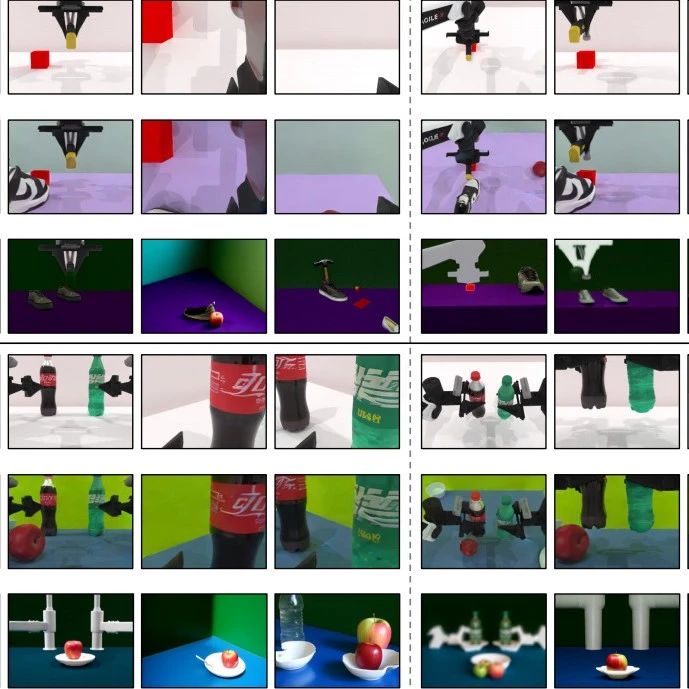
Core Insights - The article discusses the limitations of current data collection methods for robotic imitation learning, particularly the scarcity and high cost of high-quality 4D multi-view sequence images, which restrict the generalization and application of embodied intelligence strategies like visual-language-action (VLA) [4] - A new data augmentation framework called ERMV (Editing Robotic Multi-View 4D data) is introduced, which efficiently edits entire multi-view sequences based on single-frame editing and robot state conditions, addressing key challenges in the field [6] Research Background - The reliance on high-quality 4D multi-view sequence images for robotic imitation learning is highlighted, with existing data augmentation methods being inadequate for the needs of VLA models [4] Core Challenges and Solutions - ERMV addresses three main challenges: ensuring geometric and appearance consistency over dynamic views and long time ranges, expanding the working window under low computational costs, and maintaining semantic integrity of key objects like robotic arms [6] Visual Guidance Condition - ERMV employs a visual guidance strategy to overcome ambiguities in text prompts for image editing, using a globally informative frame as a visual blueprint to ensure consistent editing across all views and time steps [7] Robotic and Camera State Injection - The framework injects explicit state information to accurately render scenes from the robot's camera perspective, enhancing the model's performance [9] Sparse Spatio-Temporal Module (SST) - SST reduces computational costs by transforming the long sequence problem into a single-frame multi-view problem through sparse sampling, allowing the model to handle wider time ranges within fixed computational budgets [10] Epipolar Motion-Aware Attention (EMA-Attn) - EMA-Attn addresses the challenge of maintaining geometric consistency in sparse frames by learning motion-induced pixel offsets, ensuring robust cross-view correspondence in dynamic scenes [14] Feedback Intervention Mechanism - ERMV introduces a feedback intervention mechanism to mitigate quality degradation in long sequence editing due to error accumulation, utilizing a multi-modal large language model for consistency checks [21] Experimental Validation - ERMV demonstrates significant improvements in editing performance over traditional methods in simulation environments, with metrics such as SSIM, PSNR, and LPIPS showing superior results [25] - In real-world experiments, ERMV enhances the success rates of robotic tasks, indicating its robustness and effectiveness in practical applications [30] Extended Capabilities - The framework can predict and generate corresponding multi-view spatiotemporal image sequences based on initial images and action sequences, serving as a low-cost strategy validation tool [35] - ERMV effectively bridges the sim-to-real gap by editing simulation images to generate "pseudo-real" 4D trajectories, reducing reliance on high-fidelity physical simulations [37] Ablation Studies - The necessity of motion information injection is validated through experiments showing that removing motion dynamic conditions leads to a failure in generating realistic motion blur [39] - SST's ability to expand the working window while reducing GPU memory requirements is confirmed, enhancing model performance [41]
近2000人了!这个具身领域的黄埔军校做了哪些事情?
具身智能之心· 2025-07-28 13:19
Core Viewpoint - The article emphasizes the importance of creating an engaging learning environment through AI and embodied intelligence education, aiming to support students in various fields such as industry, academia, and job searching [1]. Group 1: Community and Resources - The community provides cutting-edge academic content, expert roundtables, open-source code solutions, and timely job information, facilitating a comprehensive learning experience [2]. - The platform has established a job referral mechanism with multiple embodied intelligence companies, allowing members to submit their resumes directly to desired companies [2]. - A collection of over 30 technical routes has been organized to assist beginners in finding benchmarks, reviews, and learning pathways, significantly reducing search time [2][3]. Group 2: Target Audience - For newcomers, the community offers various technical stacks and routes to help them get started in the field [3]. - For those already engaged in related research, valuable industry frameworks and project proposals are provided to enhance their knowledge and skills [5]. Group 3: Community Composition - The community consists of members from renowned universities and leading companies in the field of embodied intelligence, including institutions like Stanford University, Tsinghua University, and companies such as Xiaomi and Fourier Robotics [9]. Group 4: Learning and Development - The community has compiled nearly 40 open-source projects and 60 datasets related to embodied intelligence, along with mainstream simulation platforms and various technical learning routes [9]. - Regular sharing and discussion sessions are held to address common questions and challenges faced by members in their learning journey [11]. Group 5: Benefits of Joining - Members gain access to exclusive learning videos, job recommendations, and opportunities to connect with industry peers, enhancing their professional network [12][14]. - The community provides a supportive environment for members to ask questions and receive guidance on career choices and research directions [69].
AI Lab发布『书生』具身全栈引擎,推动机器人大脑进入量产时代
具身智能之心· 2025-07-28 13:19
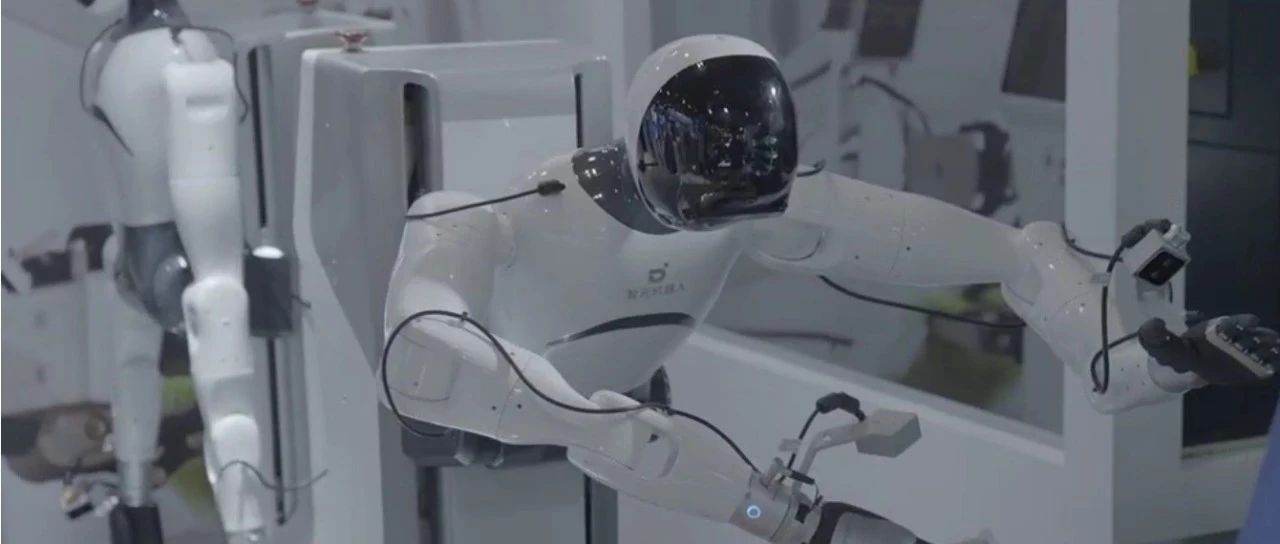
Core Viewpoint - Shanghai AI Laboratory has launched the "Intern-Robotics" embodied full-stack engine, addressing key challenges in the embodied intelligence sector and promoting a shift from fragmented development to full-stack mass production [3][4][9]. Group 1: Technological Innovations - Intern-Robotics integrates virtual simulation modeling, real-virtual data connectivity, and training-testing integration, creating a comprehensive solution for the entire chain of embodied intelligence from data collection to application [4][10]. - The engine allows for the development of a single model that can adapt to over 10 types of robotic forms, significantly enhancing the efficiency of model training and deployment across different robot types [6][9]. - Data collection costs have been reduced to 0.06% compared to previous solutions, thanks to the integration of real machine data and virtual synthesized data [6][10]. Group 2: Addressing Industry Challenges - The embodied intelligence field faces three main bottlenecks: lack of unified standards, high data costs, and long R&D cycles. Intern-Robotics provides systematic solutions to these issues [9][10]. - The engine supports six major tasks and over 20 datasets, enabling efficient training and evaluation, thus significantly shortening the development cycle [10][11]. Group 3: Collaborative Initiatives - The "Embodied Intelligence Photosynthesis Plan" has been initiated to empower training centers, robotic companies, and developer communities, fostering innovation and technology breakthroughs [5][20]. - The plan has already attracted 15 organizations, including leading robotics companies, to collaborate on the development and training using Intern-Robotics [5][20]. Group 4: Engine Components - Intern-Robotics consists of three core engines: simulation, data, and training-testing, which together meet the full-stack production needs of embodied intelligence [11][14]. - The simulation engine allows for easy switching of scenarios, robots, and evaluation metrics, significantly lowering the learning curve for developers [13][14]. - The data engine combines physical simulation and generative AI to create high-quality, low-cost data, enhancing the diversity and quality of training datasets [14][15].
找不到合适的公司与岗位?具身智能之心求职交流群来啦!!!
具身智能之心· 2025-07-28 07:14
Group 1 - The article announces the formal operation of a job-seeking community focused on the embodiment industry, responding to requests from fans [1] - The community will primarily discuss topics related to the embodiment industry, including companies, product development, job seeking, and career transitions [1] - The article encourages individuals interested in networking with industry peers and staying updated on the industry to join the community [1]

从今年的WAIC25看具身智能的发展方向!
具身智能之心· 2025-07-28 07:14
Core Insights - The article highlights the development direction of embodied intelligence showcased at the World Artificial Intelligence Conference (WAIC) 2025, with a particular focus on embodied intelligence and autonomous driving, noting a significant increase in the number of participating companies and diverse product forms [1][8]. Group 1: Embodied Intelligence Developments - The event featured various applications of mobile operations, including service and industrial robots, although challenges in cognitive recognition under human intervention were noted [3]. - Companies like Lingxin and Aoyi Technology showcased their dexterous hands, indicating a positive overall shipment performance and standardization of tactile and force control solutions [7]. - Many humanoid robots demonstrated remote control operations, with claims of achieving autonomous navigation and decision-making still lacking stability [8]. Group 2: Industry Trends and Community Engagement - The transition from demo showcases to a more integrated industrial model was observed, with companies focusing on a full-stack process from data to strategy and system deployment, enhancing commercialization efforts [8]. - The article introduces the "Embodied Intelligence Heart Knowledge Planet," a community aimed at facilitating technical exchanges among nearly 200 companies and institutions in the field [10][20]. - The community offers resources such as technical routes, open-source projects, and job sharing, catering to both newcomers and experienced researchers in embodied intelligence [15][19][21]. Group 3: Educational and Research Resources - The community has compiled a comprehensive list of over 30 technical routes and various resources for learning and research in embodied intelligence, including data sets and simulation platforms [21][22]. - Regular discussions and roundtables are organized to address common questions and share insights on the latest advancements in the field [23][24]. Group 4: Job Opportunities and Networking - The community provides job recommendations and networking opportunities, connecting members with industry leaders and potential employers [24][19]. - Members can freely ask questions regarding career choices and research directions, fostering a supportive environment for professional growth [77].

准备扩大具身团队了,拉一些人搞点事.......
具身智能之心· 2025-07-28 07:14
Core Viewpoint - The rapid development of embodied intelligence is acknowledged, with several leading companies preparing for IPOs, emphasizing the importance of collaboration and communication within the industry [1] Group 1: Collaboration and Industry Development - The company encourages active communication among industry players to overcome technological isolation and foster overall industry growth [1] - A platform is being developed to gather talent from the entire industry, aiming to invite influential figures to join in advancing the sector [1] Group 2: Project Collaboration - The company is establishing project research teams in major cities including Beijing, Shanghai, Shenzhen, Guangzhou, Hangzhou, and Wuhan, with opportunities for part-time involvement [3] - Each city aims to recruit around 10 individuals with over 2 years of experience in embodied algorithms and robotics research [4] Group 3: Education and Consulting Services - The company invites industry experts to create online courses and consulting services in the field of embodied intelligence [5] - Specific areas of interest include large models, multi-modal models, reinforcement learning, and robot motion planning, among others [5][6] Group 4: Compensation and Recruitment - The company offers significant profit-sharing and resource sharing across the industry, with options for both part-time and full-time positions [7] - A preference for candidates with a PhD or equivalent experience in the industry is stated [6]

清华大学具身智能多传感器融合感知综述
具身智能之心· 2025-07-27 09:37
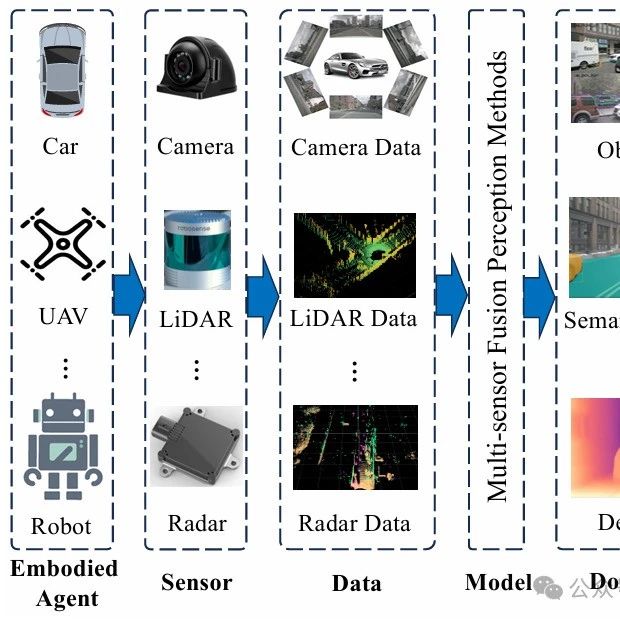
Group 1 - The core viewpoint of the article emphasizes the significance of multi-sensor fusion perception (MSFP) in embodied AI, highlighting its role in enhancing perception capabilities and decision-making accuracy [5][6][66] - Embodied AI is defined as an intelligent form that utilizes physical entities as carriers to achieve autonomous decision-making and action capabilities in dynamic environments, with applications in autonomous driving and robotic clusters [6][7] - The article discusses the necessity of multi-sensor fusion due to the varying performance of different sensors under different environmental conditions, which can lead to more robust perception and accurate decision-making [7][8] Group 2 - The article outlines the limitations of current research, noting that existing surveys often focus on single tasks or fields, making it difficult for researchers in other related tasks to benefit [12][13] - It identifies challenges at the data level, model level, and application level, including data heterogeneity, temporal asynchrony, and sensor failures [12][66] - The article presents various types of sensor data, including camera data, LiDAR data, and mmWave radar data, detailing their characteristics and limitations [11][13] Group 3 - Multi-modal fusion methods are highlighted as a key area of research, aiming to integrate data from different sensors to reduce perception blind spots and achieve comprehensive environmental awareness [19][20] - The article categorizes fusion methods into point-level, voxel-level, region-level, and multi-level fusion, each with specific techniques and applications [21][29] - Multi-agent fusion methods are discussed, emphasizing the advantages of collaborative perception among multiple agents to enhance robustness and accuracy in complex environments [33][36] Group 4 - Time series fusion is identified as a critical component of MSFP systems, enhancing perception continuity and spatiotemporal consistency by integrating multi-frame data [49][51] - The article introduces query-based time series fusion methods, which have become mainstream due to the rise of transformer architectures in computer vision [53][54] - Multi-modal large language models (MM-LLM) are explored for their role in processing and integrating data from various sources, although challenges remain in their practical application [58][59] Group 5 - The article concludes by addressing the challenges faced by MSFP systems, including data quality, model fusion strategies, and real-world adaptability [76][77] - Future work is suggested to focus on developing high-quality datasets, effective fusion strategies, and adaptive algorithms to improve the performance of MSFP systems in dynamic environments [77][68]
通用全身机器人操控更进一步!学习现实世界全身操控任务的统一框架
具身智能之心· 2025-07-27 09:37
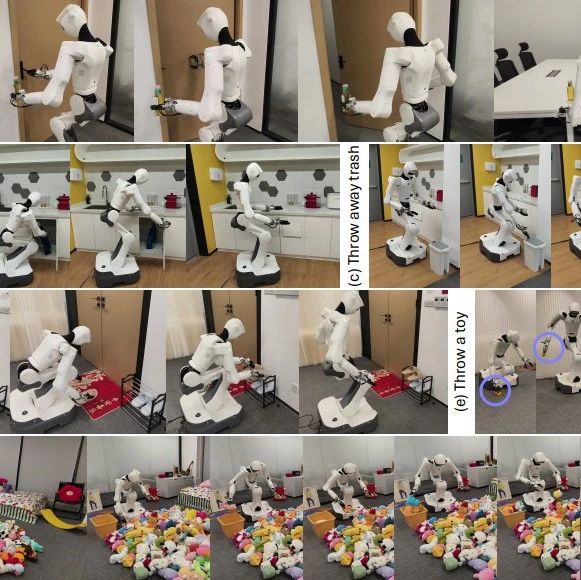
Core Viewpoint - The article discusses the development of a general-purpose intelligent robot, emphasizing the importance of mimicking human evolution through continuous interaction with the environment and learning from human behavior, while addressing challenges in hardware design, intuitive data collection interfaces, and learning algorithms [4][7]. Group 1: Introduction and Challenges - The goal of creating intelligent robots that can coexist with humans and assist in daily life has been a long-standing vision, requiring learning from fine interactions with the physical world [7]. - Three fundamental challenges are identified: designing safe and capable robot hardware, developing intuitive data collection interfaces, and creating learning models that can handle the complexity of whole-body control [7][8]. Group 2: Astribot Suite Overview - The Astribot Suite is introduced as a unified framework to address the challenges of whole-body manipulation, consisting of a high-performance robot platform, an intuitive remote operation interface, and a learning algorithm for whole-body visual-motion strategies [4][28]. - The robot platform, Astribot S1, features dual 7-degree-of-freedom arms, a flexible torso, and a mobile base designed for high mobility and accessibility in daily tasks [10][12]. Group 3: Hardware Components - The Astribot S1 robot is equipped with various onboard sensors for robust scene understanding and manipulation, including RGB cameras and LiDAR for spatial perception [12][13]. - The remote operation system utilizes a Meta Quest 3S VR headset for intuitive control, allowing operators to perform tasks with high precision and low latency [14][16]. Group 4: Learning Methodology - The DuoCore-WB algorithm is presented as a simple yet effective method for learning coordinated whole-body actions from demonstration data, emphasizing compatibility with large-scale pre-training [17][19]. - The algorithm utilizes a transformer-based model to learn actions in the end-effector space, reducing error accumulation and enhancing robustness to large viewpoint changes [19][21]. Group 5: Experimental Analysis - The effectiveness of the Astribot Suite is evaluated through six representative tasks, demonstrating an average success rate of 80% for the DuoCore-WB algorithm, with the highest success rate reaching 100% [26][27]. - The remote operation interface is shown to be efficient and intuitive, allowing users to generate smooth and accurate robot actions with a high replay success rate [25][26]. Group 6: Future Directions - Future plans include enhancing robot hardware for improved capabilities and safety, iterating on more intuitive human-robot interaction methods, and optimizing model and system scalability for broader deployment [28].
港科大等提出LOVON:足式机器人开放世界全域目标追踪新范式!
具身智能之心· 2025-07-27 09:37
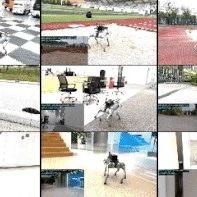
Core Viewpoint - The article introduces the LOVON framework, which integrates large language models, open vocabulary visual detection, and precise language-motion mapping to enhance the navigation capabilities of legged robots in dynamic and unstructured environments [4][6][23]. Group 1: LOVON Framework Overview - LOVON addresses the challenges of long-range multi-target navigation for legged robots in complex environments, overcoming limitations of traditional methods that struggle with real-time visual disturbances and target loss [3][6]. - The framework combines task planning capabilities of large language models with open vocabulary visual detection, enabling robots to efficiently navigate and track dynamic targets in open-world scenarios [4][6][10]. Group 2: Key Features of LOVON - LOVON consists of three core modules that create a closed loop of language, vision, and motion, enhancing the robot's ability to perform complex tasks [10]. - The framework employs Laplacian variance filtering technology to stabilize visual processing, improving the detection frame rate by 25% during robot movement [12][13]. - An adaptive execution logic allows robots to respond to unexpected situations, such as target loss or external interference, by switching to search mode or seamlessly executing new commands [14][16]. Group 3: Performance Metrics - In simulated environments, LOVON achieved a success rate (SR) of 1.00, significantly outperforming traditional methods like EVT, which had an SR of 0.94 [19]. - The training efficiency of LOVON is remarkable, requiring only 1.5 hours to complete training, compared to 360 hours for the best competing model, TrackVLA, representing a 240-fold improvement [19][20]. Group 4: Practical Applications - LOVON's "plug-and-play" feature allows easy deployment on various mainstream legged robot platforms, supporting applications in home services, industrial inspections, and field research [21][24]. - The framework demonstrates exceptional capabilities in open-world adaptation, multi-target long-range tracking, robustness in dynamic environments, and resistance to interference, making it suitable for diverse real-world scenarios [24].