自动驾驶之心

Search documents
突破SAM局限!中山大学X-SAM:统一框架横扫20+分割基准
自动驾驶之心· 2025-08-12 10:37
Core Insights - The article discusses the introduction of X-SAM, a new segmentation framework that overcomes the limitations of the Segment Anything Model (SAM) by enabling multi-task processing and integrating multi-modal understanding capabilities [3][4][5]. Group 1: Limitations of SAM - SAM was initially seen as a universal solution for visual segmentation but has significant limitations, including its inability to handle multiple tasks simultaneously and its lack of understanding of textual instructions [2][5][6]. - SAM is designed for single-object segmentation based on visual prompts and cannot perform complex tasks like semantic, instance, or panoptic segmentation [6]. - The gap between visual segmentation and multi-modal understanding is highlighted, where existing models can either understand images or perform pixel-level segmentation but not both effectively [5][6]. Group 2: Innovations of X-SAM - X-SAM is designed to fill the gap left by SAM, providing a unified segmentation framework that can handle various tasks and input types [7][8]. - The architecture of X-SAM includes a dual-encoder system that processes both visual and textual inputs, allowing for a comprehensive understanding of images and instructions [12][14]. - X-SAM introduces a unified input format that standardizes how different segmentation tasks are processed, enabling the model to understand both textual and visual prompts [13][15]. Group 3: Performance and Testing - X-SAM has been tested across over 20 segmentation datasets and 7 core tasks, outperforming existing models in all categories [4][27]. - The model's performance metrics include achieving an average precision (AP) of 47.9 to 49.7 in visual grounding segmentation (VGD), significantly surpassing previous models [26][35]. - In specific tasks, X-SAM achieved a panorama quality (PQ) of 54.7 in COCO panoptic segmentation, demonstrating its robustness in foundational segmentation tasks [31]. Group 4: Training Methodology - X-SAM employs a multi-stage training strategy that includes fine-tuning the segmenter, pre-training for alignment, and mixed fine-tuning across various datasets [21][23]. - The training process incorporates a data balancing resampling strategy to ensure smaller datasets are not overshadowed by larger ones, optimizing overall model performance [24]. - The model's architecture allows for simultaneous training on multiple tasks, enhancing its generalization capabilities [37]. Group 5: Future Directions - The research team plans to extend X-SAM's capabilities to video segmentation and dynamic scenes, aiming to bridge the gap between static image understanding and video comprehension [43].


打算升级下技术社区,跟大家汇报一下......
自动驾驶之心· 2025-08-12 10:37
Core Viewpoint - The article highlights the evolution and growth of the company over the past year, emphasizing its transition from pure online education to a comprehensive service platform that includes hardware, offline training, and job placement services. The focus is on the advancements in the autonomous driving sector, particularly the impact of large models on new intelligent driving solutions [1]. Group 1: Business Development - The company has expanded its offerings to include hardware business, paper tutoring, and job placement services, marking a significant shift from its original online education model [1]. - The establishment of the "Autonomous Driving Heart Knowledge Planet" has been a major investment, creating a platform for industry, academia, and job-seeking interactions [1][3]. Group 2: Community Engagement - The company has successfully built a community that includes members from renowned universities and leading companies in the autonomous driving field, facilitating knowledge exchange and collaboration [14]. - Plans for future community engagement include hosting roundtable discussions with industry leaders and launching online sessions to address members' real-world challenges [1]. Group 3: Technical Resources - The company has compiled over 40 technical routes and invited numerous industry experts to provide insights and answer questions, significantly reducing the time needed for members to find relevant information [3]. - A comprehensive entry-level technical stack and roadmap have been developed for newcomers, while valuable industry frameworks and project plans are available for those already engaged in research [8][10]. Group 4: Job Opportunities - The community continuously shares job openings and career advice, aiming to create a complete ecosystem for autonomous driving [12]. - Members can freely ask questions regarding career choices and research directions, receiving guidance from experienced professionals [78].
端到端盛行的当下,轨迹预测这个方向还有研究价值吗?
自动驾驶之心· 2025-08-12 08:05
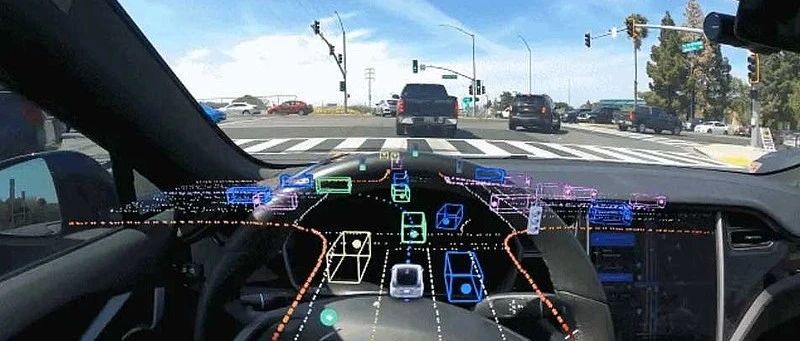
Core Viewpoint - The article discusses the ongoing relevance of trajectory prediction in the context of end-to-end models, highlighting that many companies still utilize layered approaches where trajectory prediction remains a key algorithmic focus. The article emphasizes the significance of multi-agent trajectory prediction methods based on diffusion models, which are gaining traction in various applications such as autonomous driving and intelligent monitoring [1][2]. Group 1: Trajectory Prediction Research - Despite the rise of end-to-end models, trajectory prediction continues to be a hot research area, with significant output in conferences and journals [1]. - Multi-agent trajectory prediction aims to forecast future movements based on historical trajectories of multiple interacting agents, which is crucial in fields like autonomous driving and robotics [1]. - Traditional methods often struggle with the uncertainty and multimodality of human behavior, while generative models like GANs and CVAEs, although capable of simulating multimodal distributions, lack efficiency [1]. Group 2: Diffusion Models - Diffusion models have emerged as a new class of models that achieve complex distribution generation through gradual denoising, showing significant breakthroughs in image generation and other fields [2]. - The Leapfrog Diffusion Model (LED) enhances real-time prediction by reducing denoising steps, achieving a 19-30 times speedup while improving accuracy on various datasets [2]. - Mixed Gaussian Flow (MGF) and Pattern Memory-based Diffusion Model (MPMNet) are also highlighted for their advanced performance in trajectory prediction by better matching multimodal distributions and utilizing human motion patterns, respectively [2]. Group 3: Course Objectives and Structure - The course aims to provide a systematic understanding of trajectory prediction and diffusion models, helping students integrate theoretical knowledge with practical coding skills [6]. - It addresses common challenges faced by students, such as lack of direction and difficulties in reproducing research papers, by offering a structured approach to model development and academic writing [6]. - The course includes a comprehensive curriculum that covers classic and cutting-edge papers, coding implementations, and writing methodologies, ultimately guiding students to produce a draft of a research paper [6][9]. Group 4: Target Audience and Requirements - The course is designed for graduate students and professionals in trajectory prediction and autonomous driving, aiming to enhance their research capabilities and resume value [8]. - Participants are expected to have a foundational understanding of deep learning and familiarity with Python and PyTorch [10]. - The course emphasizes the importance of academic integrity and active participation, with specific requirements for attendance and assignment completion [15]. Group 5: Course Highlights and Outcomes - The program features a "2+1" teaching model with experienced instructors providing comprehensive support throughout the learning process [16][17]. - Students will gain access to datasets, baseline codes, and essential papers, facilitating a deeper understanding of the subject matter [20][21]. - Upon completion, students will have produced a research paper draft, a project completion certificate, and potentially a recommendation letter based on their performance [19].
自驾与AI方向研究生不断扩招,但顶会好像越来越普遍......
自动驾驶之心· 2025-08-12 08:05
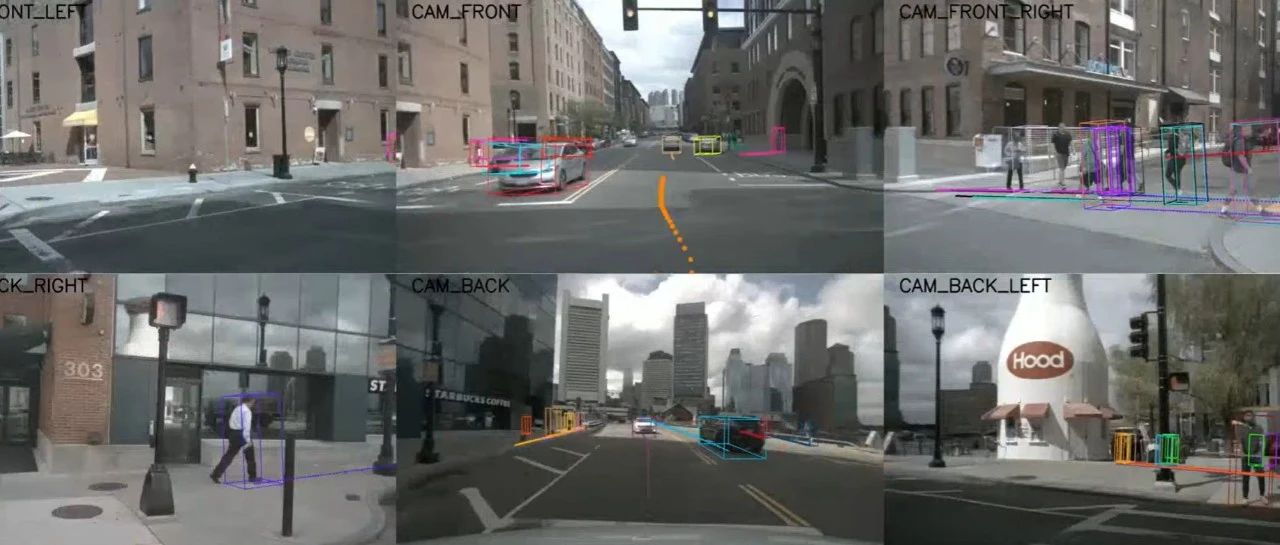
Group 1 - The article highlights the ongoing expansion of master's and doctoral programs in domestic universities, particularly in engineering fields like autonomous driving and artificial intelligence, with enrollment increases exceeding 30% [1] - It addresses the challenges faced by students, including uncertainty in job prospects, graduation timelines, and publication outcomes, leading to increased competition and pressure [1][2] - The root causes of these challenges are identified as insufficient personal capabilities and limited attention from advisors, creating a cycle that students need to break to achieve high-quality publications [2] Group 2 - A structured approach to research paper writing is proposed, which includes defining needs, selecting topics, designing innovative methods, conducting rigorous experiments, and iterating through feedback [3] - The service offers personalized guidance, real-time interaction with mentors, and comprehensive support from topic selection to publication, catering to various academic goals [9][12] - The program claims a high success rate, with over 400 students receiving guidance and a manuscript acceptance rate of 96% in the past three years [2]
理想VLA的实质 | 强化学习占主导的下一个action token预测
自动驾驶之心· 2025-08-11 23:33
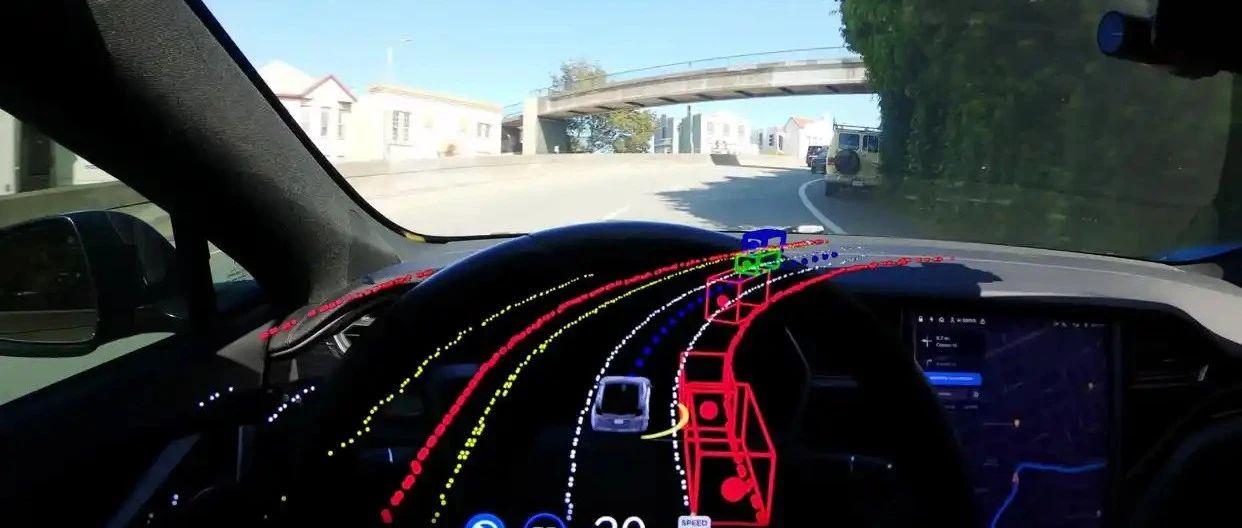
Core Insights - The article discusses the potential and understanding of AI, particularly focusing on the concept of "predicting the next token" and its implications for AI capabilities and consciousness [2][3][18]. Group 1: Understanding AI and Token Prediction - Different interpretations of "predicting the next token" reflect varying understandings of the potential and essence of LLM (Large Language Models) and AI [2]. - Those who view "predicting the next token" as more than just a statistical distribution are more likely to recognize the significant potential of LLMs and AI [2][18]. - The article argues that the contributions of companies like 理想 (Li Auto) in AI development are often underestimated due to a lack of deep understanding of AI's capabilities [2][19]. Group 2: Ilya's Contributions and Perspectives - Ilya, a prominent figure in AI, has been instrumental in several key advancements in the field, including deep learning and reinforcement learning [4][5][6]. - His views on "predicting the next token" challenge the notion that it cannot surpass human performance, suggesting that a sufficiently advanced neural network could extrapolate behaviors of hypothetical individuals with superior capabilities [8][9][18]. Group 3: Li Auto's VLA and AI Integration - 理想's VLA (Vehicle Learning Architecture) operates by continuously predicting the next action token based on sensor inputs, which is a more profound understanding of the physical world rather than mere statistical analysis [19][20]. - The reasoning process of 理想's VLA is likened to consciousness, differing from traditional chatbots, as it operates in real-time and ceases when the system is turned off [21][22]. - The article posits that the integration of AI software and hardware in 理想's approach is at a high level, which is often overlooked by those in the industry [29]. Group 4: Reinforcement Learning in AI Applications - The article asserts that assisted driving is more suitable for reinforcement learning compared to chatbots, as the reward functions in driving are clearer and more defined [24][26]. - The differences in the underlying capabilities required for AI software and hardware development are significant, with software allowing for rapid iteration and testing, unlike hardware [28].

自动驾驶之心实习生招聘来了!
自动驾驶之心· 2025-08-11 23:33
Core Viewpoint - The article emphasizes the importance of connecting academia and industry through technology content, focusing on cutting-edge fields such as autonomous driving, embodied intelligence, and large models [3]. Group 1: Company Mission and Vision - The company aims to bridge the gap between academia and industry, facilitating communication among enterprises, schools, and AI developers [3]. - The team is dedicated to providing the latest and most authoritative technical information across various platforms, including WeChat, Zhihu, and Bilibili [3]. Group 2: Collaboration and Community Engagement - The company has established deep collaborations with leading companies and relevant universities in the fields of autonomous driving and embodied intelligence, with rapid development in the large model sector [3]. - The organization encourages community engagement and co-creation in the AI field, sharing the joy of cognitive growth with its audience [3]. Group 3: Internship Opportunities - The company is seeking interns with a background in autonomous driving, large models, or embodied intelligence, preferably at the master's level [6]. - Intern responsibilities include academic paper selection, interpretation, and summarization in relevant fields, as well as the creation of original video content [6]. - The internship offers benefits such as a stipend, one-on-one mentorship, and industry resource recommendations [8].
通用障碍物漏检,得升级下Occ自动标注模型了。。。
自动驾驶之心· 2025-08-11 23:33
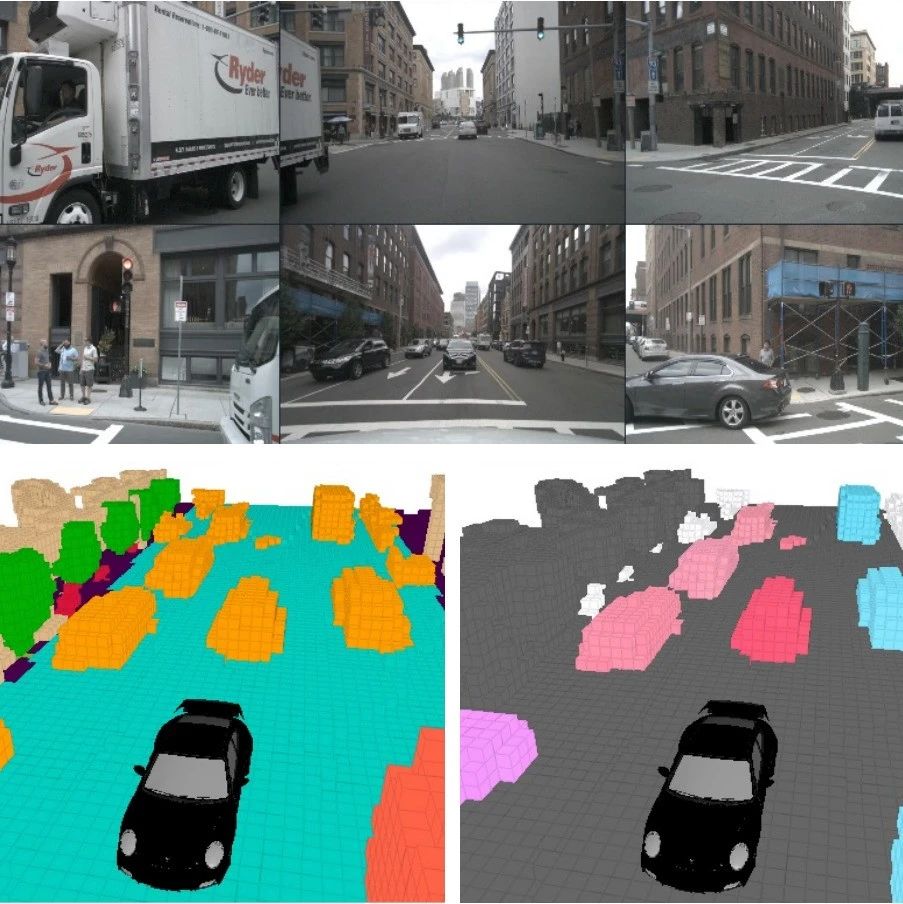
Core Viewpoint - The article discusses the challenges and methodologies related to the automation of occupancy network (OCC) data labeling in the context of autonomous driving, emphasizing the need for high-quality training data to improve model generalization and safety. Group 1: OCC Data Labeling Challenges - The need for high-quality training data is highlighted due to incidents caused by undetected obstacles, such as fallen tree branches during adverse weather conditions [2]. - The OCC network is essential for modeling irregular obstacles and background elements, which increases the demand for accurate data labeling [5]. - The automation of OCC data labeling is being pursued by many companies to enhance model performance and reduce costs associated with manual labeling [2][10]. Group 2: Automation Techniques - The common process for generating OCC training ground truth involves three main methods: 2D-3D object detection consistency, comparison with edge models, and manual intervention for quality control [9]. - High-quality automated labeling data can be used for both vehicle model training and cloud model optimization, facilitating continuous iteration [10]. Group 3: 4D Automated Labeling Course - A course is introduced that covers the entire process of 4D automated labeling, including dynamic and static object detection, and the challenges faced in real-world applications [10][12]. - The course aims to address the difficulties in learning and advancing in the field of automated driving data labeling, providing a comprehensive understanding of core algorithms and practical applications [10][11]. Group 4: Key Learning Outcomes - Participants will gain knowledge of the entire 4D automated labeling process, including dynamic obstacle detection, SLAM reconstruction, and the generation of end-to-end ground truth [12][20]. - The course also focuses on the practical implementation of algorithms and the resolution of common issues encountered in the industry [15][22]. Group 5: Target Audience - The course is designed for various groups, including researchers, students, and professionals looking to transition into the field of data closure in autonomous driving [26][31].
闭环碰撞率爆降50%!DistillDrive:异构多模态蒸馏端到端新方案
自动驾驶之心· 2025-08-11 23:33
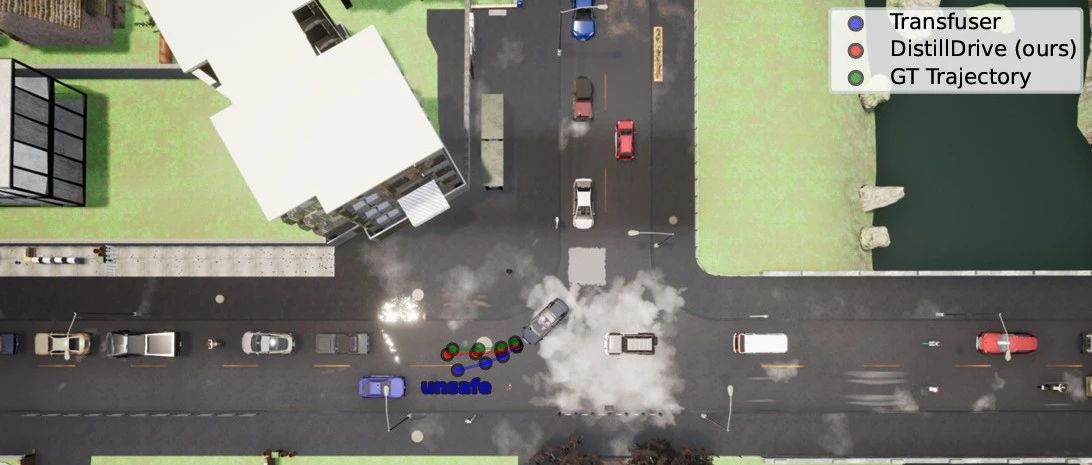
Core Insights - The article discusses the development of DistillDrive, an end-to-end autonomous driving model that significantly reduces collision rates by 50% and improves closed-loop performance by 3 percentage points compared to baseline models [2][7]. Group 1: Model Overview - DistillDrive utilizes a knowledge distillation framework to enhance multi-modal motion feature learning, addressing the limitations of existing models that overly focus on ego-vehicle status [2][6]. - The model incorporates a structured scene representation as a teacher model, leveraging diverse planning instances for multi-objective learning [2][6]. - Reinforcement learning is introduced to optimize the mapping from states to decisions, while generative modeling is used to construct planning-oriented instances [2][6]. Group 2: Experimental Validation - The model was validated on the nuScenes and NAVSIM datasets, demonstrating a 50% reduction in collision rates and a 3-point improvement in performance metrics [7][37]. - The nuScenes dataset consists of 1,000 driving scenes, while the NAVSIM dataset enhances perception capabilities with high-quality annotations and complex scenarios [33][36]. Group 3: Performance Metrics - DistillDrive outperformed existing models, achieving lower collision rates and reduced L2 error compared to SparseDrive, indicating the effectiveness of diversified imitation learning [37][38]. - The teacher model exhibited superior performance, confirming the effectiveness of reinforcement learning in optimizing state space [37][39]. Group 4: Future Directions - Future work aims to integrate world models with language models to further enhance planning performance and employ more effective reinforcement learning methods [54][55].
本来决定去具身,现在有点犹豫了。。。
自动驾驶之心· 2025-08-11 12:17
Core Insights - Embodied intelligence is a hot topic this year, transitioning from previous years' silence to last year's frenzy, and now gradually cooling down as the industry realizes that embodied robots are far from being productive [1] Group 1: Industry Trends - The demand for multi-sensor fusion and positioning in robotics is significant, with a focus on SLAM and ROS technologies [3] - Many robotics companies are rapidly developing and have secured considerable funding, indicating a promising future for the sector [3] - Traditional robotics remains the main product line, despite the excitement around embodied intelligence [3] Group 2: Community and Resources - The community has established a closed loop across various fields including industry, academia, and job seeking, aiming to create a valuable exchange platform [4][6] - The community offers access to over 40 technical routes and invites industry leaders for discussions, enhancing learning and networking opportunities [6][20] - Members can freely ask questions regarding job choices or research directions, receiving guidance from experienced professionals [83] Group 3: Educational Content - Comprehensive resources for beginners and advanced learners are available, including technical stacks and learning roadmaps for autonomous driving and robotics [13][16] - The community has compiled a list of notable domestic and international research labs and companies in the autonomous driving and robotics sectors, aiding members in their academic and career pursuits [27][29]
世界机器人大会引爆3D视觉革命,空间智能成焦点~
自动驾驶之心· 2025-08-11 05:45
Core Viewpoint - The 2025 World Robot Conference (WRC) in Beijing highlights 3D perception technology as a key focus, showcasing advancements in spatial memory modules and multi-modal sensors that enhance robotic capabilities in various industries [2][4]. Group 1: 3D Reconstruction Technology - The ultimate goal of 3D reconstruction technology is to enable robots to understand, navigate, and operate in any environment [4]. - The latest handheld laser scanner, D-H100, achieves centimeter-level precision scanning at a distance of 120 meters, significantly improving efficiency by 300% in complex environments [4]. - The integration of laser scanning capabilities with robots can facilitate real-time mapping of disaster areas and enhance operational efficiency in industrial settings [4][5]. Group 2: GeoScan S1 Laser Scanner - GeoScan S1 is presented as the most cost-effective handheld 3D laser scanner in China, featuring a lightweight design and easy one-button operation for efficient 3D solutions [7][12]. - The device supports real-time reconstruction of 3D scenes with centimeter-level accuracy and can cover areas exceeding 200,000 square meters [7][25]. - It integrates multiple sensors and offers high bandwidth connectivity, making it suitable for various research and industrial applications [7][9]. Group 3: Technical Specifications and Features - GeoScan S1 operates on Ubuntu 20.04 and supports various data export formats, including PCD, LAS, and PLY, with relative accuracy better than 3 cm and absolute accuracy better than 5 cm [25][28]. - The scanner features a compact design with dimensions of 14.2 cm x 9.5 cm x 45 cm and weighs 1.3 kg without the battery, providing a battery life of approximately 3 to 4 hours [25][27]. - It includes advanced synchronization technology for multi-sensor data, ensuring precise mapping in complex indoor and outdoor environments [33][34]. Group 4: Market Position and Pricing - The GeoScan S1 is available in multiple versions, with prices starting at 19,800 yuan for the basic model and going up to 67,800 yuan for the offline version [60]. - The product is backed by extensive research and validation from teams at Tongji University and Northwestern Polytechnical University, ensuring reliability and performance [14][18]. - The scanner is designed for cross-platform integration, making it compatible with drones, unmanned vehicles, and humanoid robots for automated operations [45][48].