自动驾驶之心

Search documents
高保真实景还原!最强性价比3D激光扫描仪~
自动驾驶之心· 2025-07-31 23:33
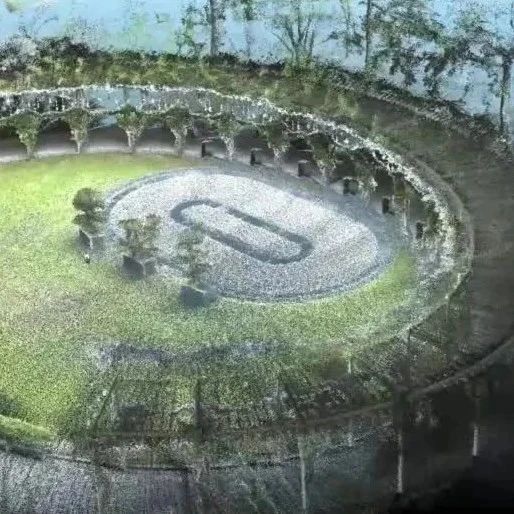
Core Viewpoint - GeoScan S1 is presented as the most cost-effective handheld 3D laser scanner in China, featuring lightweight design, easy one-button operation, and high efficiency in 3D scene reconstruction with centimeter-level accuracy [1][4]. Group 1: Product Features - The GeoScan S1 can generate point clouds at a rate of 200,000 points per second, with a maximum measurement distance of 70 meters and 360° coverage, supporting large scenes over 200,000 square meters [1][24]. - It integrates multiple sensors and supports cross-platform integration, providing flexibility for scientific research and development [1][39]. - The device is equipped with a handheld Ubuntu system and various sensor devices, allowing for easy power supply and operation [1][4]. Group 2: Performance and Specifications - The system supports real-time 3D point cloud mapping, color fusion, and real-time preview, with relative accuracy better than 3 cm and absolute accuracy better than 5 cm [17]. - The device dimensions are 14.2 cm x 9.5 cm x 45 cm, weighing 1.3 kg without the battery and 1.9 kg with the battery, with a battery capacity of 88.8 Wh providing approximately 3 to 4 hours of operation [17][18]. - It features a microsecond-level synchronization for multi-sensor data, ensuring high precision in complex indoor and outdoor environments [29][30]. Group 3: Market Position and Pricing - The initial launch price for the GeoScan S1 starts at 19,800 yuan, with various versions available to meet different user needs, including basic, depth camera, and 3DGS versions [4][53]. - The product is positioned as offering the best price-performance ratio in the industry, integrating multiple sensors and advanced technology [2][53]. Group 4: Applications and Use Cases - GeoScan S1 is suitable for various applications, including urban planning, construction monitoring, and environmental surveying, capable of accurately constructing 3D scene maps in diverse settings such as office buildings, industrial parks, and tunnels [33][42]. - The device supports high-fidelity real-world restoration through an optional 3D Gaussian data collection module, allowing for complete digital replication of real-world environments [46].

从今年的WAIC25看具身智能的发展方向!
自动驾驶之心· 2025-07-31 10:00
Core Viewpoint - The article highlights the development direction of embodied intelligence showcased at the World Artificial Intelligence Conference (WAIC) 2025, emphasizing the increasing diversity of products and companies in the field, particularly in embodied intelligence and autonomous driving [1]. Summary by Sections Embodied Intelligence Showcase - The event featured a significant number of companies and diverse product forms related to embodied intelligence, with a notable demonstration of a robot named "Iron Fist King" showcasing agility and stability [1]. - Many service and industrial robots were displayed, indicating a growing trend in mobile operations, although challenges in cognitive recognition under human intervention were noted [3]. Technological Advancements - Companies are transitioning from merely showcasing demos to establishing industrial closed-loop models, indicating progress in commercializing embodied intelligence technologies [8]. - A focus on integrating data, strategy, and system deployment into a cohesive process is emerging, with many companies now prioritizing a unified model approach [8]. Community and Knowledge Sharing - The article introduces the "Embodied Intelligence Heart" knowledge community, which aims to facilitate technical exchanges among nearly 200 companies and institutions in the field [10]. - The community offers resources such as technical routes, project solutions, and access to industry experts, enhancing learning and collaboration opportunities [10][21]. Job Opportunities and Industry Insights - The community provides job sharing and recruitment opportunities, connecting members with potential employers in the embodied intelligence sector [20][25]. - It also compiles various resources, including research reports, open-source projects, and datasets relevant to embodied intelligence, aiding members in their professional development [30][41].

科研论文这件小事,总是开窍后已太晚......
自动驾驶之心· 2025-07-31 10:00
Core Viewpoint - The article emphasizes the importance of early action in academic research, particularly for master's students, to avoid delays in thesis completion and potential extensions of study periods [1][2]. Group 1: Types of Delays - "Waiting for Guidance" Type: Students feel lost without clear direction from their advisors and passively wait for instructions, leading to wasted time [2]. - "Perfectionist" Type: Students aim to master all knowledge and achieve perfect results before starting their papers, resulting in endless delays [2]. - "Procrastinator" Type: Students avoid the daunting tasks of literature review and writing, distracting themselves with other activities [2]. - "Underestimating Time" Type: Students mistakenly believe that the process from idea to publication is quick, not accounting for the lengthy review cycles [2]. Group 2: Importance of Early Action - The core message is to establish a "paper awareness" from the first semester of graduate studies, treating paper writing as a continuous goal rather than a last-minute task [4]. - Starting research during the summer after the first year provides nearly two years to refine 1-2 high-quality papers, while waiting until the second year leaves less than a year with high pressure from other commitments [3]. Group 3: Actionable Guidelines - Set clear goals regarding graduation requirements and familiarize oneself with key journals and conferences in the field from the start [4]. - Engage proactively with advisors to discuss research directions, even if ideas are still vague, to capitalize on the summer after the first year as a critical time for research initiation [4]. Group 4: Iterative Research Approach - Embrace an iterative research process by completing initial drafts and refining them over time, rather than striving for a perfect final product from the outset [5]. - Quick iterations and early submissions to workshops or lower-tier conferences can provide valuable feedback and enhance research and writing skills [5].
4000人了,死磕技术的自动驾驶黄埔军校到底做了哪些事情?
自动驾驶之心· 2025-07-31 06:19
Core Viewpoint - The article emphasizes the importance of creating an engaging learning environment in the field of autonomous driving and AI, aiming to bridge the gap between industry and academia while providing valuable resources for students and professionals [1]. Group 1: Community and Resources - The community has established a closed loop across various fields including industry, academia, job seeking, and Q&A exchanges, focusing on what type of community is needed [1][2]. - The platform offers cutting-edge academic content, industry roundtables, open-source code solutions, and timely job information, streamlining the search for resources [2][3]. - A comprehensive technical roadmap with over 40 technical routes has been organized, catering to various interests from consulting applications to the latest VLA benchmarks [2][14]. Group 2: Educational Content - The community provides a series of original live courses and video tutorials covering topics such as automatic labeling, data processing, and simulation engineering [4][10]. - Various learning paths are available for beginners, as well as advanced resources for those already engaged in research, ensuring a supportive environment for all levels [8][10]. - The community has compiled a wealth of open-source projects and datasets related to autonomous driving, facilitating quick access to essential materials [25][27]. Group 3: Job Opportunities and Networking - The platform has established a job referral mechanism with multiple autonomous driving companies, allowing members to submit their resumes directly to desired employers [4][11]. - Continuous job sharing and position updates are provided, contributing to a complete ecosystem for autonomous driving professionals [11][14]. - Members can freely ask questions regarding career choices and research directions, receiving guidance from industry experts [75]. Group 4: Technical Focus Areas - The community covers a wide range of technical focus areas including perception, simulation, planning, and control, with detailed learning routes for each [15][29]. - Specific topics such as 3D target detection, BEV perception, and online high-precision mapping are thoroughly organized, reflecting current industry trends and research hotspots [42][48]. - The platform also addresses emerging technologies like visual language models (VLM) and diffusion models, providing insights into their applications in autonomous driving [35][40].
Qcnet->SmartRefine->Donut:Argoverse v2上SOTA的进化之路~
自动驾驶之心· 2025-07-31 06:19
Core Viewpoint - The article discusses advancements in trajectory prediction models, specifically focusing on three papers: "Query-Centric Trajectory Prediction," "SmartRefine," and "DONUT," highlighting their methodologies and improvements over previous models [1]. Summary of Related Papers Query-Centric Trajectory Prediction - Introduces a query-centric scene encoding paradigm that allows the model to learn representations independent of global spatiotemporal coordinates, enabling reuse of past computations without re-normalization [2][3]. - Proposes a two-stage trajectory decoding paradigm, where an anchor-free query generates trajectory proposals, which are then refined using a refiner based on anchor points [2][3]. SmartRefine - Enhances the refinement process in trajectory prediction by introducing adaptive anchor selection and context range acquisition, allowing for more efficient computation by segmenting future trajectory points [28][30]. - Implements anchor-centric context encoding, transforming surrounding context features into the corresponding anchor point's coordinate system to capture more relevant scene information [34]. - Adopts a recurrent and multi-iteration refinement approach, where each trajectory is divided into segments, and each segment undergoes refinement iteratively, improving overall prediction quality [35][37]. DONUT - Builds upon the QCNet architecture, introducing a proposer and refiner module along with an overprediction mechanism to enhance trajectory prediction accuracy [40][41]. - The model segments trajectories into sub-trajectories, predicting future segments based on previous predictions and adjusting reference points for refinement [41][46]. - Achieves state-of-the-art performance in single-agent trajectory prediction on the Argoverse v2 dataset, demonstrating significant improvements over previous models [48].
ICCV 2025!首个自动驾驶RGB和Lidar紧耦合逆渲染框架InvRGB+L,直接SOTA~
自动驾驶之心· 2025-07-30 23:33
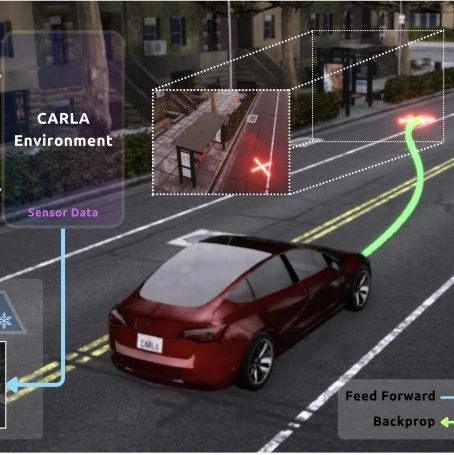
Core Insights - The article discusses the introduction of InvRGB+L, a novel inverse rendering model that integrates LiDAR intensity for reconstructing large-scale, relightable dynamic scenes from RGB+LiDAR sequences [4][26]. Group 1: Introduction of InvRGB+L - InvRGB+L is the first model to apply LiDAR intensity in inverse rendering, enhancing material estimation under varying lighting conditions [4]. - Traditional methods primarily rely on RGB inputs, often leading to inaccurate material estimates due to visible light interference [4]. Group 2: Key Innovations - The model introduces two key innovations: a physics-based LiDAR shading model and RGB-LiDAR material consistency loss, which improve the rendering results of complex scenes [4][7]. - The physics-based LiDAR shading model accurately models the relationship between LiDAR intensity values and surface material properties [7]. Group 3: Framework Components - The inverse rendering framework includes a relightable scene representation that supports decoupled and joint modeling of geometry, material, and lighting [10]. - It utilizes 3D Gaussian splats to represent scene geometry and color, incorporating physical material properties for realistic lighting interactions [13]. Group 4: Experimental Results - Quantitative results show that InvRGB+L significantly outperforms existing methods like UrbanIR in relighting tasks on the Waymo dataset, achieving a PSNR of 30.42 compared to UrbanIR's 28.84 [17][18]. - The model also demonstrates effective LiDAR intensity modeling, achieving an average intensity-RMSE of 0.063, outperforming other methods [19][20]. Group 5: Qualitative Results - Qualitative comparisons reveal that InvRGB+L effectively separates shadows from reflectance, resulting in smoother reflectance estimates compared to UrbanIR and FEGR [22]. - The model showcases versatility in scene editing, including relighting and object insertion, with seamless integration of inserted elements into the environment [23]. Group 6: Limitations and Future Work - Despite its advancements, InvRGB+L has limitations, such as potential inaccuracies in shadow rendering due to the opaque nature of Gaussian splats and insufficient handling of complex nighttime environments [26].
老师让我搭建一台自驾科研平台,看到了这个就不想动手了......
自动驾驶之心· 2025-07-30 23:33
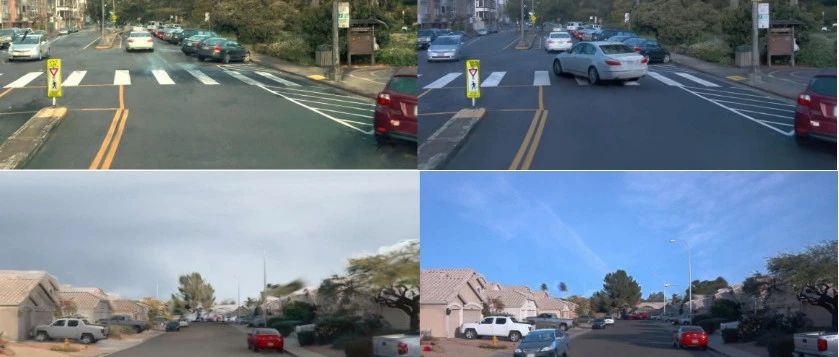
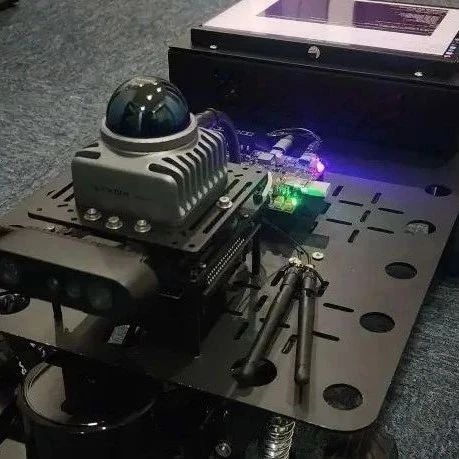
Core Insights - The article introduces the "Black Warrior 001," a lightweight solution for autonomous driving research and education, which supports various functionalities including perception, localization, fusion, navigation, and planning [1][2]. Group 1: Product Overview - The Black Warrior 001 is designed for both research and educational purposes, allowing for secondary development and modification with numerous installation positions and interfaces for additional sensors like cameras and millimeter-wave radars [2]. - The product was officially launched three months ago, priced at 36,999 yuan, and includes three complimentary courses upon purchase [1]. Group 2: Functional Capabilities - The Black Warrior 001 has been tested in various environments, including indoor, outdoor, and parking garage scenarios, demonstrating its capabilities in perception, localization, fusion, and navigation planning [2][4]. - It supports a range of applications, such as undergraduate learning, graduate research, and as teaching tools in educational institutions [4]. Group 3: Hardware Specifications - Key hardware components include: - 3D LiDAR: Mid 360 - 2D LiDAR: Lidar from Raytheon - Depth Camera: Orbbec with IMU - Main Control Chip: Nvidia Orin NX 16G - Chassis System: Ackermann chassis [8][10]. - The vehicle weighs 30 kg, has a battery power of 50W, and offers a runtime of over 4 hours [10]. Group 4: Software and Development - The software framework includes ROS, C++, and Python, providing a one-click startup and a development environment [12]. - The system supports various SLAM techniques, including 2D and 3D SLAM, and offers functionalities for vehicle navigation and obstacle avoidance [13]. Group 5: After-Sales Support - The company provides one year of after-sales support for non-human damage, with free repairs for damages caused by operational errors or code modifications during the warranty period [35].
端到端/大模型/世界模型秋招怎么准备?我们建了一个求职交流群...
自动驾驶之心· 2025-07-30 23:33
Core Viewpoint - There is a growing gap between academic knowledge and practical skills required in the workplace, particularly for job seekers preparing for campus recruitment [1] Group 1: Industry Observations - Many individuals with work experience are exploring opportunities in large models and world models, indicating a shift in industry focus [1] - Traditional regulatory frameworks are being reconsidered as the industry moves towards more embodied approaches [1] Group 2: Community Building - The company aims to create a comprehensive platform that connects talent across the industry, facilitating growth and collaboration [1] - A new community has been established to discuss industry-related topics, including company developments, product research, and job seeking [1] - The community encourages networking among industry peers and aims to provide timely insights into industry trends [1]
关于理想VLA司机大模型的22个QA
自动驾驶之心· 2025-07-30 23:33
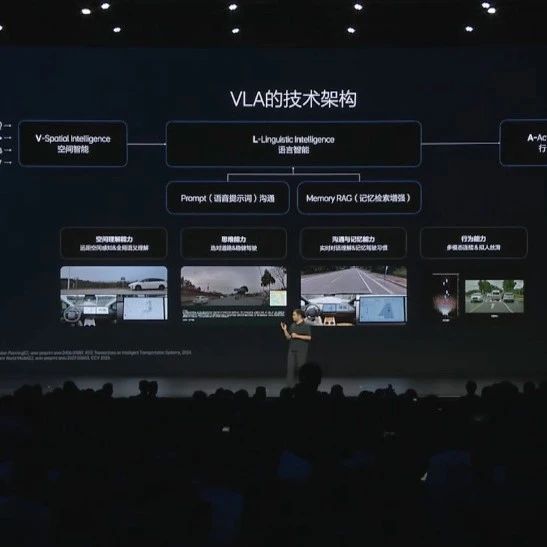
Core Viewpoint - The article discusses the potential of the VLA (Vision-Language-Action) architecture in autonomous driving, emphasizing its long-term viability and alignment with human cognitive processes [2][12]. Summary by Sections VLA Architecture and Technical Potential - VLA has strong technical potential, transitioning from manual to AI-driven autonomous driving, and is expected to support urban driving scenarios [2]. - The architecture is inspired by robotics and embodied intelligence, suggesting it will remain relevant even after the proliferation of robots [2]. Performance Metrics and Chip Capabilities - The Thor-U chip currently operates at 10Hz, with potential upgrades to 20Hz or 30Hz through optimizations [2]. - The VLA model is designed to be platform-agnostic, ensuring consistent performance across different hardware [2]. Language Integration and Cognitive Abilities - Language understanding is crucial for advanced autonomous driving capabilities, enhancing the model's ability to handle complex scenarios [2]. - VLA's ability to generalize and learn from experiences is likened to human learning, allowing it to adapt to new situations without repeated failures [2]. Model Upgrade and Iteration - The 3.2B MoE vehicle model has a structured upgrade cycle, focusing on both pre-training and post-training updates to enhance various capabilities [3]. User Experience and Trust - The article highlights the importance of user trust and experience, noting that different user groups will gradually accept the technology [2]. - Future iterations aim to improve driving speed and responsiveness, addressing current limitations in specific scenarios [5][12]. Competitive Landscape and Differentiation - The company is closely monitoring competitors like Tesla, aiming to differentiate its approach through gradual iterations and a focus on full-scene autonomous driving [12]. - VLA's architecture is designed to support unique product experiences, setting it apart from competitors [13]. Safety Mechanisms - The AEB (Automatic Emergency Braking) function is emphasized as a critical safety feature, ensuring high frame rates for emergency scenarios [14].


自动驾驶论文速递 | GS-Occ3D、BEV-LLM、协同感知、强化学习等~
自动驾驶之心· 2025-07-30 03:01
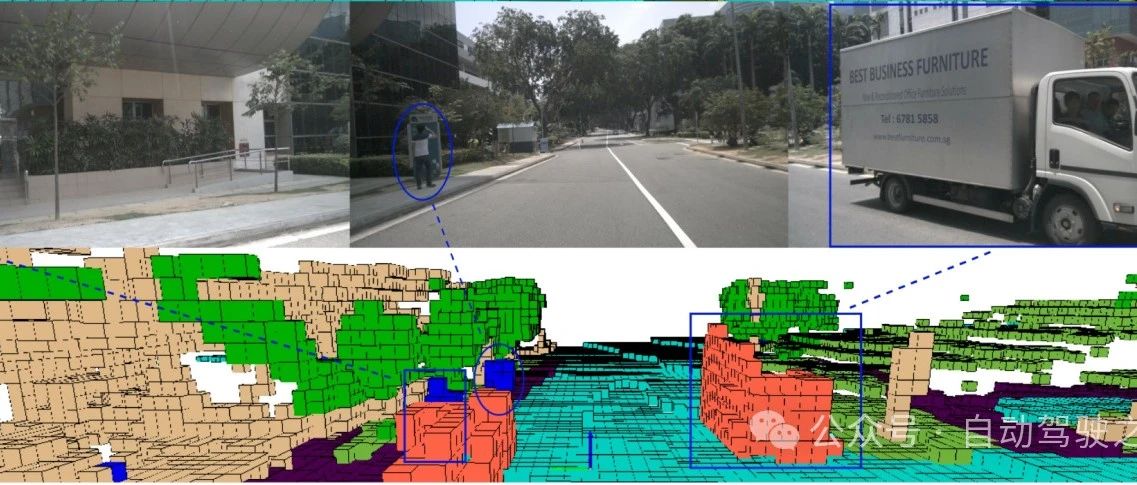
Group 1 - The article discusses recent advancements in autonomous driving technologies, highlighting several innovative frameworks and models [3][9][21][33][45] - GS-Occ3D achieves state-of-the-art (SOTA) geometric accuracy with a 0.56 corner distance (CD) on the Waymo dataset, demonstrating superior performance over LiDAR-based methods [3][5] - BEV-LLM introduces a lightweight multimodal scene description model that outperforms existing models by 5% in BLEU-4 score, showcasing the integration of LiDAR and multi-view images [9][10] - CoopTrack presents an end-to-end cooperative perception framework that sets new SOTA performance on the V2X-Seq dataset with 39.0% mAP and 32.8% AMOTA [21][22] - The Diffusion-FS model achieves a 0.7767 IoU in free-space prediction, marking a significant improvement in multimodal driving channel prediction [45][48] Group 2 - GS-Occ3D's contributions include a scalable visual occupancy label generation pipeline that eliminates reliance on LiDAR annotations, enhancing the training efficiency for downstream models [5][6] - BEV-LLM utilizes BEVFusion to combine 360-degree panoramic images with LiDAR point clouds, improving the accuracy of scene descriptions [10][12] - CoopTrack's innovative instance-level end-to-end framework integrates cooperative tracking and perception, enhancing the learning capabilities across agents [22][26] - The ContourDiff model introduces a novel self-supervised method for generating free-space samples, reducing dependency on dense annotated data [48][49]