ZTE(00763)

Search documents
中兴通讯的前世今生:2025年三季度营收1005.2亿行业居首,净利润53.45亿排名第三
Xin Lang Zheng Quan· 2025-10-31 13:47
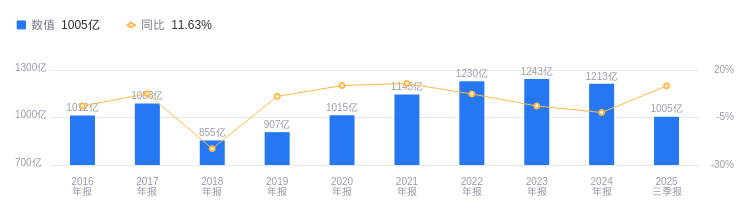
Core Viewpoint - ZTE Corporation is a leading player in the global 5G technology research and standard-setting, focusing on communication network equipment and components, with a strong technical foundation and full industry chain advantages [1] Group 1: Business Performance - In Q3 2025, ZTE's revenue reached 100.52 billion yuan, ranking first among 36 companies in the industry, significantly surpassing the second-ranked Zhongji Xuchuang at 25.005 billion yuan [2] - The net profit for the same period was 5.345 billion yuan, ranking third in the industry, with Zhongji Xuchuang leading at 7.57 billion yuan and Xinyi Sheng at 6.327 billion yuan [2] - ZTE's revenue grew by 11.63% year-on-year, while the net profit decreased by 32.69% due to a decline in operator network business revenue and changes in business structure [6] Group 2: Financial Ratios - As of Q3 2025, ZTE's debt-to-asset ratio was 64.88%, higher than the previous year's 63.63% and significantly above the industry average of 38.12% [3] - The gross profit margin for Q3 2025 was 30.55%, down from 40.43% in the previous year but slightly above the industry average of 30.08% [3] Group 3: Shareholder Information - As of September 30, 2025, the number of A-share shareholders decreased by 0.88% to 442,600, while the average number of circulating A-shares held per shareholder increased by 0.89% to 9,100.06 [5] - Major shareholders, including Hong Kong Central Clearing Limited and various ETFs, saw a reduction in their holdings compared to the previous period [5] Group 4: Executive Compensation - The chairman, Fang Rong, received a salary of 200,000 yuan in 2024, unchanged from 2023, while the president, Xu Ziyang, earned 9.8 million yuan, a decrease of 1.48 million yuan from the previous year [4] Group 5: Future Outlook - ZTE's computing power business saw a significant growth of 180% year-on-year, with strong collaboration with major internet companies and expansion into emerging overseas markets [6] - The company is expected to achieve net profits of 7.76 billion yuan, 9 billion yuan, and 10.3 billion yuan from 2025 to 2027, maintaining a "buy" rating [6]


摩根大通增持中兴通讯约179.39万股 每股作价约39.95港元
智通财经网· 2025-10-31 13:09
Core Insights - Morgan Stanley increased its stake in ZTE Corporation (00763) by acquiring 1,793,946 shares at a price of HKD 39.9459 per share, totaling approximately HKD 71.66 million [1] - Following this acquisition, Morgan Stanley's total shareholding in ZTE Corporation reached approximately 53,810,800 shares, representing a 7.12% ownership stake [1]

摩根大通增持中兴通讯(00763)约179.39万股 每股作价约39.95港元
智通财经网· 2025-10-31 12:10
Group 1 - Morgan Stanley increased its stake in ZTE Corporation (00763) by 1,793,946 shares at a price of HKD 39.9459 per share, totaling approximately HKD 71.66 million [1] - Following the increase, Morgan Stanley's total shareholding in ZTE Corporation is approximately 53,810,800 shares, representing a holding percentage of 7.12% [1]
资金动向 | 北水狂抛腾讯超12亿港元,连续3日加仓小米、美团
Ge Long Hui· 2025-10-31 11:05
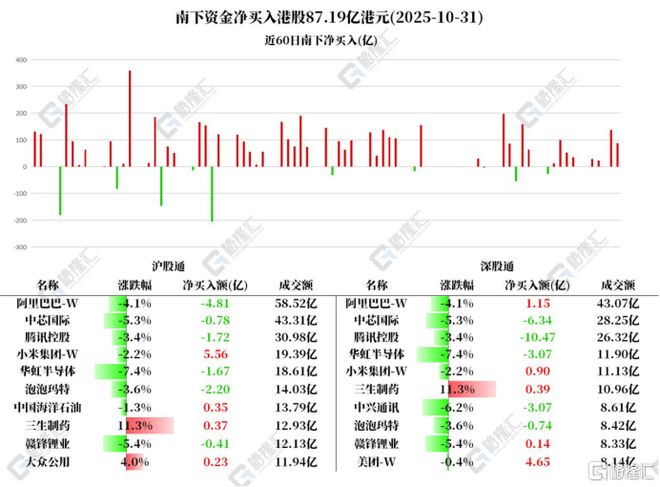
Group 1 - Southbound funds net bought Hong Kong stocks worth 8.719 billion HKD on October 31 [1] - Notable net purchases included Xiaomi Group at 646 million HKD and Meituan at 464 million HKD [2] - Significant net sales included Tencent Holdings at 1.219 billion HKD and SMIC at 711 million HKD [2] Group 2 - Southbound funds have net bought Xiaomi for three consecutive days, totaling 883.69 million HKD, and Meituan for three consecutive days, totaling 1.43718 billion HKD [4] - Southbound funds have net sold ZTE for three consecutive days, totaling 717.69 million HKD, and Tencent for three consecutive days, totaling 1.8394 billion HKD [4] Group 3 - Hua Hong Semiconductor announced progress on an asset acquisition and fundraising transaction, with audit and evaluation work ongoing [5] - Meituan upgraded its "Smart Store Manager" AI phone reception capabilities, resulting in a 44% month-on-month increase in AI reception volume for restaurants [5] - SMIC's registered capital increased from 5.25 billion USD to 5.95 billion USD, a growth of approximately 13% [5] - Pop Mart's new "Vacation Mode" series of the popular IP CRYBABY sold out immediately, with a significant price increase for the hidden variant [5]




智通港股通活跃成交|10月31日
智通财经网· 2025-10-31 11:04
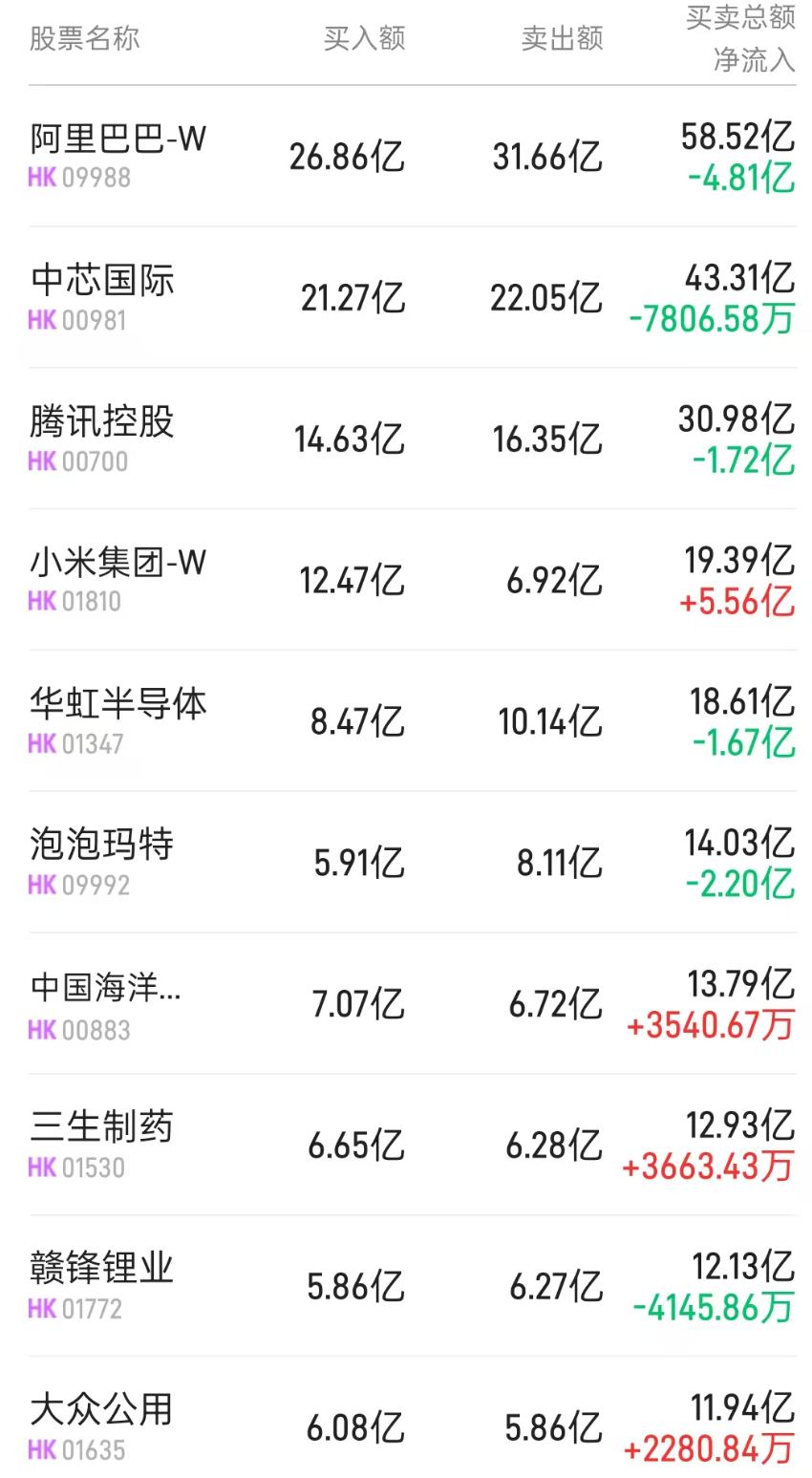
Core Insights - On October 31, 2025, Alibaba-W (09988), SMIC (00981), and Tencent Holdings (00700) ranked as the top three companies by trading volume in the southbound trading of the Stock Connect, with trading volumes of 58.52 billion, 43.31 billion, and 30.98 billion respectively [1][2] - In the southbound trading of the Shenzhen-Hong Kong Stock Connect, Alibaba-W (09988), SMIC (00981), and Tencent Holdings (00700) also held the top three positions, with trading volumes of 43.07 billion, 28.25 billion, and 26.32 billion respectively [1][2] Southbound Trading Highlights - **Top Active Companies in Southbound Trading (Hong Kong Stock Connect)** - Alibaba-W (09988): Trading amount of 58.52 billion, net buy of -4.81 billion [2] - SMIC (00981): Trading amount of 43.31 billion, net buy of -78.06 million [2] - Tencent Holdings (00700): Trading amount of 30.98 billion, net buy of -1.72 billion [2] - Xiaomi Group-W (01810): Trading amount of 19.39 billion, net buy of +5.56 billion [2] - Huahong Semiconductor (01347): Trading amount of 18.61 billion, net buy of -1.67 billion [2] - **Top Active Companies in Southbound Trading (Shenzhen-Hong Kong Stock Connect)** - Alibaba-W (09988): Trading amount of 43.07 billion, net buy of +1.15 billion [2] - SMIC (00981): Trading amount of 28.25 billion, net buy of -6.34 billion [2] - Tencent Holdings (00700): Trading amount of 26.32 billion, net buy of -10.47 billion [2] - Huahong Semiconductor (01347): Trading amount of 11.90 billion, net buy of -3.07 billion [2] - Xiaomi Group-W (01810): Trading amount of 11.13 billion, net buy of +904.39 million [2]

智通港股空仓持单统计|10月31日
智通财经网· 2025-10-31 10:32
Core Insights - The top three companies with the highest short positions as of October 24 are ZTE Corporation (00763), Vanke Enterprises (02202), and COSCO Shipping Holdings (01919), with short ratios of 15.82%, 15.47%, and 15.42% respectively [1][2] - The companies with the largest increase in short positions are InnoCare Pharma-B (09606), Sanhua Intelligent Controls (02050), and Giant Biogene (02367), with increases of 2.41%, 2.04%, and 1.06% respectively [1][2] - The companies with the largest decrease in short positions are Junshi Biosciences (01877), Mingyuan Cloud (00909), and Shandong Gold (01787), with decreases of -0.95%, -0.94%, and -0.93% respectively [1][3] Top 10 Short Positions - The top 10 companies with the highest short ratios include: - ZTE Corporation (00763): 15.82% - Vanke Enterprises (02202): 15.47% - COSCO Shipping Holdings (01919): 15.42% - Contemporary Amperex Technology Co., Ltd. (03750): 13.88% - Ganfeng Lithium (01772): 13.55% - Ping An Insurance (02318): 13.03% - Fuyao Glass (06865): 12.01% - Zijin Mining (02899): 11.94% - Heng Rui Medicine (01276): 11.05% - MicroPort Medical (00853): 10.94% [2] Largest Increases in Short Positions - The companies with the largest increases in short ratios are: - InnoCare Pharma-B (09606): from 1.39% to 3.80% - Sanhua Intelligent Controls (02050): from 8.14% to 10.18% - Giant Biogene (02367): from 7.56% to 8.62% - Pop Mart International (09992): from 3.91% to 4.88% - GCL-Poly Energy Holdings (03800): from 7.92% to 8.77% - Fourth Paradigm (06682): from 1.20% to 1.96% - Yidu Tech (02158): from 2.64% to 3.38% - Yanzhou Coal Mining Company (01171): from 7.52% to 8.24% - Laopu Gold (06181): from 2.35% to 3.02% - Aluminum Corporation of China (02600): from 5.85% to 6.48% [2] Largest Decreases in Short Positions - The companies with the largest decreases in short ratios are: - Junshi Biosciences (01877): from 5.50% to 4.55% - Mingyuan Cloud (00909): from 4.52% to 3.58% - Shandong Gold (01787): from 8.17% to 7.24% - Kelaiying (06821): from 9.14% to 8.23% - Ganfeng Lithium (01772): from 14.32% to 13.55% - Zijin Mining (02899): from 12.62% to 11.94% - Luoyang Molybdenum (03993): from 6.20% to 5.53% - Yiming Anke-B (01541): from 1.13% to 0.49% - Innovent Biologics (09969): from 6.38% to 5.80% - ZhongAn Online (06060): from 7.11% to 6.57% [3][4]

北水动向|北水成交净买入87.19亿 北水抛售芯片股及科网股 全天减持腾讯(00700)超12亿港元
智通财经网· 2025-10-31 10:06
Core Insights - The Hong Kong stock market saw a net inflow of 87.19 billion HKD from northbound trading on October 31, with 57.72 billion HKD from the Shanghai Stock Connect and 29.47 billion HKD from the Shenzhen Stock Connect [1] Group 1: Net Inflows and Outflows - The most bought stocks included Xiaomi Group-W (01810), Meituan-W (03690), and Sanofi Pharmaceutical (01530) [1] - The most sold stocks included Tencent (00700), SMIC (00981), and Hua Hong Semiconductor (01347) [1] Group 2: Stock Performance Details - Xiaomi Group-W (01810) had a net inflow of 6.46 billion HKD, supported by optimistic forecasts for its smartphone and electric vehicle businesses [5] - Meituan-W (03690) received a net inflow of 4.64 billion HKD, with news of its international food delivery brand Keeta launching operations in Brazil [5] - Sanofi Pharmaceutical (01530) saw a net inflow of 754.6 million HKD, following the registration of a new cancer treatment in clinical trials [5] Group 3: Notable Sell-offs - Tencent (00700) experienced a net outflow of 12.19 billion HKD, amid increased short-selling activities in the market [7] - SMIC (00981) faced a net outflow of 7.11 billion HKD, as the semiconductor sector reacted to potential changes in AI chip export policies [8] - Hua Hong Semiconductor (01347) had a net outflow of 4.73 billion HKD, reflecting broader trends in the chip industry [8]

小摩:在中兴通讯的持股比例升至7.12%
Ge Long Hui· 2025-10-31 09:32
Group 1 - JPMorgan's stake in ZTE Corporation's H-shares increased from 6.88% to 7.12% as of October 28 [1] - The average purchase price for the shares was HKD 39.9459 [1]
中兴通讯陈志萍:聚焦用户需求破局“功能堆砌”,以亿级家端产品实力领跑AI家庭赛道
Huan Qiu Wang· 2025-10-31 08:09
Core Viewpoint - ZTE Corporation emphasizes the integration of AI technology into family life, aiming to make AI a warm companion rather than a cold technology, through innovation and practical applications [1][3]. Group 1: AI Family Experience Day - The event showcased four experience zones: Safety, Care, Joy, and Convenience, reflecting ZTE's core philosophy of "AI Transparency, Technology for All" [3][4]. - ZTE's "All in AI" strategy incorporates AI across various sectors, including network computing and personal products, promoting the idea of "AI for all" through collaboration with partners [3][4]. Group 2: Product Features and Innovations - In the Safety zone, products like AI screens monitor health and detect gas leaks, while AI phones block scam calls, establishing a "hidden defense line" for family safety [4]. - The Care zone features AI that learns family habits and provides emotional support through AI pets, enhancing emotional connections within the family [4]. - The Joy zone offers AI fitness guidance and gaming experiences, transforming homes into interactive spaces [4]. - The Convenience zone includes user-friendly products that optimize home networking, reinforcing ZTE's market leadership in home WiFi solutions [4]. Group 3: Market Position and Strategy - ZTE aims to ship over 100 million home products in 2024, maintaining its position as the global market leader for four consecutive years [5]. - The company boasts a 44.5% market share in cloud terminals in China, serving over 10 million cloud computer users, which supports the implementation of AI in family settings [6]. - ZTE's commitment to user-centric development involves extensive research on the needs of families, particularly the elderly and children, ensuring products align with real-life requirements [5][6]. Group 4: Alignment with National Initiatives - ZTE's AI family strategy aligns with the national "Artificial Intelligence +" initiative, focusing on foundational algorithms and product applications [6]. - The company integrates advanced technologies such as industrial robotics and 5G/6G into its family products, enhancing the overall user experience [6].

AI牛市,开始“去伪存真”
3 6 Ke· 2025-10-31 03:55
Core Viewpoint - ZTE Corporation's Q3 2025 financial report reveals a significant decline in net profit despite a modest revenue increase, raising concerns about its future performance and market sentiment [1][4][10]. Revenue Performance - In Q3 2025, ZTE achieved revenue of 28.97 billion yuan, a year-on-year increase of 5.1%, but below market expectations; cumulative revenue for the first three quarters reached 100.52 billion yuan, up 11.6% [1][2]. - The company's revenue breakdown shows network, government enterprise, and consumer businesses contributing 50%, 25%, and 25% respectively [2]. Business Transition - ZTE is undergoing a strategic transformation focusing on AI servers, data centers, and consumer electronics, shifting from a "connectivity" model to a "connectivity + computing" model [3]. - The government enterprise business has seen rapid growth, with a 130% increase in the first three quarters, while computing business revenue grew by 180% [3]. Profitability Concerns - The net profit for Q3 2025 was only 260 million yuan, a drastic decline of 87.8%, with a non-recurring net profit dropping to -230 million yuan [4][5]. - The decline in profitability is attributed to a shift in business structure leading to lower overall gross margins, with computing business margins around 8% compared to over 50% for traditional operator business [5][6]. Market Reaction - Following the disappointing earnings report, ZTE's stock price fell by 6.5% on October 29 and continued to decline by 3% the next day, reflecting negative market sentiment [1][10]. - The stock had previously surged over 40% since August, driven by significant orders and strategic shifts, but the recent earnings drop has led to a reevaluation of its valuation [9][10]. Future Outlook - The company's ability to maintain its AI narrative hinges on technological breakthroughs and commercialization in its chip subsidiary, which are crucial for overcoming current profitability challenges [11][12]. - The market is increasingly focused on short-term performance and profitability, moving away from speculative narratives, which places additional pressure on ZTE's AI transition [11][13].