Workflow
CNCB(00998)
icon
Search documents
中信银行新乡分行:以茶为媒提升服务客户水平
转自:新华财经 近日,由中信银行新乡分行主办的"品茶论道·臻享人生"沙龙活动落幕。活动以"财富管理+文化传承"为 双主线,为客户搭建深度交流平台,展现了金融服务与传统文化融合的价值。 编辑:穆皓 活动中,中信银行郑州分行的投资顾问解读家族财富传承核心逻辑,结合宏观经济趋势与市场动态为客 户提供资产配置方案,传递了"稳健增值、责任传承"的理念。该行为客户提供的全生命周期综合金融服 务方案,积极引导财富的合理配置,助力金融资源向实体经济流动。此外,活动中国家级茶艺师带领客 户品鉴"六大茶类",详细讲解了从茶叶产地生态保护到传统工艺的匠心传承、从冲泡技法的文化内涵到 品饮哲学的相关知识,让客户在茶香中感受优秀传统文化的魅力。 此次沙龙活动以金融为"脉"、文化为"根",为客户提供了高质量的财富管理服务。(李丝雨) ...
头部银行集体布局A股开户潮
21世纪经济报道· 2025-08-25 10:42
Group 1 - The core viewpoint of the article highlights the current bullish sentiment in the A-share market, with the Shanghai Composite Index surpassing 3800 points and a significant increase in new account openings [1][3][6] - Major banks are actively promoting securities account openings through their mobile apps, indicating a strategic shift towards integrating banking and brokerage services [4][5] - The increase in new account openings is accompanied by a rise in trading activities, with daily new account openings for several brokerage firms showing a month-on-month increase of 15% to 35% [6][8] Group 2 - Institutions are optimistic about the market's future, suggesting that the trend of "deposit migration" will continue to drive market growth [7][8] - The analysis of market cycles indicates that the current phase is characterized by an influx of incremental capital, suggesting a transition into a new bull market phase [8][9] - The growth of the ChiNext Composite Index reflects strong performance in high-tech sectors, with a focus on themes such as carbon reduction, energy revolution, and advancements in AI and big data [9][10]
恒生指数收涨0.93% 碧桂园、金山软件涨超3%
Jin Tou Wang· 2025-08-25 08:42
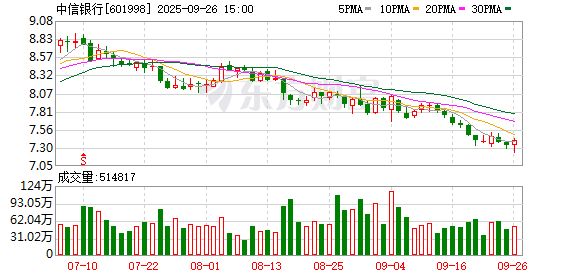
知名港股跌幅榜前十: | 序号 | 代码 | 名称 | 最新价 | 涨跌幅 | 今开 | 最高 | 最低 | 昨收 | | --- | --- | --- | --- | --- | --- | --- | --- | --- | | 1 | 06969 | 思摩尔国际 | 22.200 | -5.37% | 23.500 | 23.880 | 21.600 | 23.460 | | 2 | 09626 | 哔哩哔哩-W | 186.600 | -5.18% | 187.000 | 188.100 | 181.500 | 196.800 | | 3 | 00753 | 中国国航 | 5.190 | -4.95% | 5.460 | 5.470 | 5.060 | 5.460 | | 4 | 00998 | 中信银行 | 7.150 | -2.32% | 7.350 | 7.360 | 7.140 | 7.320 | | 5 | 00728 | 中国电信 | 6.160 | -1.75% | 6.270 | 6.300 | 6.160 | 6.270 | | 6 | 09698 | 万国数据-SW | 31.3 ...
多家银行紧急提醒:信用卡这么用后果“很严重”
3 6 Ke· 2025-08-25 00:16
Core Viewpoint - Recent announcements from multiple banks emphasize that credit card funds cannot be used for investment purposes, aiming to prevent financial risks associated with credit funds flowing into the stock market as investor enthusiasm rises [1][5]. Summary by Sections Credit Card Usage Regulations - Several banks, including Ping An Bank and CITIC Bank, have reiterated that credit card funds, including cash advances, must not be used for investment activities such as purchasing stocks, funds, futures, and other financial products [3][4]. - Banks have implemented stricter regulations on cash advances, stating that these funds cannot be used for any non-consumption activities, including investments [4][6]. Market Context - The A-share market has shown strong performance recently, leading to increased investor interest, which may tempt some cardholders to use credit cards for stock investments [5][10]. - The People's Bank of China and the former China Banking and Insurance Regulatory Commission issued guidelines in 2022 that explicitly prohibit the use of credit card funds for investment, and recent bank announcements reflect a deeper implementation of these regulations [4][10]. Risks of Using Credit Cards for Investments - Using credit card funds for stock trading can lead to severe consequences, including transaction failures and potential criminal charges for malicious overdraft [6][8]. - The high-interest rates associated with credit card cash advances can amplify investment risks, leading to significant financial pressure if investments do not perform well [10][11]. Recommendations for Investors - Experts advise investors to strictly adhere to the intended use of credit card funds for daily consumption and to avoid any attempts to circumvent regulations through indirect methods [11]. - Maintaining credit health by making timely repayments and understanding the risks associated with using credit cards as investment leverage is crucial [11].
中信银行股份有限公司深圳福南支行迁址更名公告
Sou Hu Cai Jing· 2025-08-24 23:22
Group 1 - CITIC Bank Shenzhen Funnan Branch will relocate to a new address in Futian District, Shenzhen on August 12, 2025, and will be renamed CITIC Bank Shenzhen Hetao Technology Branch [1] - The new address is located at 2 Shihua Road, Hetao Science and Technology Center, E Building, 1st Floor, Units 01-03, and A Building, Unit 501-1 [1] - The original location will cease operations simultaneously [1] Group 2 - The bank's business scope includes handling foreign exchange and RMB deposits, foreign exchange trading, currency exchange, remittances, interbank business, issuance and agency issuance of securities, financing leasing, trust, guarantee, consulting, and investment safety insurance services [1] - The announcement expresses gratitude to customers for their continued support and emphasizes the commitment to providing quality services [1] - A contact number for inquiries is provided: 0755-83936636 [1]
金融加力服务“三农”
Jing Ji Ri Bao· 2025-08-24 21:54
Group 1 - The National Financial Regulatory Administration reported that the balance of inclusive agricultural loans reached 13.9 trillion yuan, an increase of 1.1 trillion yuan since the beginning of the year, emphasizing the focus on enhancing financial support for key agricultural areas [1] - Agricultural Development Bank is actively securing credit funds to ensure grain procurement, with 8 billion yuan allocated for summer grain purchasing [1] - China CITIC Bank has launched the "Grain Farmer Loan" product, benefiting over 3,000 farmers and achieving a cumulative loan amount of 1.562 billion yuan, with agricultural loans nearing 500 billion yuan [2] Group 2 - Rural commercial banks are enhancing financial services for grain production, with Zhejiang Rural Commercial Bank issuing over 16.4 billion yuan in agricultural loans, including 1.525 billion yuan for new agricultural loans [2] - The role of agricultural insurance is being emphasized, with the application of modern technologies like IoT and AI in insurance services, and Chongqing's agricultural insurance premium income reaching 1.75 billion yuan, a year-on-year increase of 17.71% [3] - The establishment of a digital map for agricultural insurance aims to improve the accuracy of insurance coverage and claims, ensuring the authenticity of land, rights, and individuals involved [3]
转债周度专题:临期转债“百态”-20250824
Tianfeng Securities· 2025-08-24 07:42
1. Report Industry Investment Rating No relevant content provided. 2. Core Viewpoints of the Report - The A-share market is currently experiencing a valuation recovery. Measures such as large-scale equipment upgrades and consumer goods trade-ins are expected to boost domestic demand, while export growth may decline. A weak resonance between the domestic economic fundamentals and capital flows is expected to gradually emerge [30]. - Considering the impact of refinancing policies, the subsequent issuance pressure of convertible bonds is not expected to be high. As the stock market recovers, the inflow of incremental funds into convertible bonds has driven the valuation to a relatively high level in history. Attention should be paid to the risk of valuation correction. In terms of terms and conditions, it is recommended to continue to focus on the space for lower revision games, be vigilant against the risk of early redemption, and appropriately pay attention to short-term game opportunities for near-maturity convertible bonds [31]. - Industries worthy of attention include popular themes such as AI computing power, humanoid robots, intelligent driving, low-altitude economy, data elements, and satellite Internet of Things; repair opportunities in low-position science and technology growth sectors such as semiconductors and innovative drugs; pro-cyclical and domestic demand sectors such as real estate, chemicals, and consumer electronics whose prosperity is gradually recovering; industries with both export advantages and domestic demand growth potential such as automobiles, home appliances, and engineering machinery; central state-owned enterprises represented by "China-headquartered" companies, the "Belt and Road" theme, and high-dividend sectors such as public utilities, petrochemicals, and precious metals under the Chinese characteristic valuation system; and the military industry driven by the resonance of hedging demand and industrial demand cycles [31]. 3. Summary by Relevant Catalogs 3.1. Convertible Bond Weekly Special and Outlook 3.1.1. The "Diverse States" of Near-Maturity Convertible Bonds - As of August 22, 2025, 82 convertible bonds have been delisted this year, including 20 that have reached maturity. Among the matured and delisted convertible bonds, 6 have an actual maturity payment ratio of less than 1%, 3 have a payment ratio of over 90% (Nuclear Construction Convertible Bond, Haoke Convertible Bond, and Intelligent Convertible Bond), and the rest have a maturity payment ratio concentrated between 20% - 60% [10]. - The paths of promoting conversion and maturity payment of convertible bonds that have reached maturity this year vary. For example, the issuance amount of CITIC Convertible Bond is 40 billion yuan, but the final payment ratio is less than 1%. Its methods of promoting conversion are diverse, including the controlling shareholder's premium conversion and conversion during periods of negative premium rate due to the positive stock's "abnormal movement." Since December 2024, with the continuous rise of bank stocks, the conversion value of CITIC Convertible Bond has been significantly higher than the maturity value, accelerating the conversion process [13][14]. - In contrast, the Nuclear Construction Convertible Bond, a large central enterprise convertible bond, has a maturity payment ratio as high as 99.27%. The company's main business has a stable profit margin, and it has a relatively weak willingness to promote conversion, resulting in a smooth maturity payment [19]. - Most private enterprise convertible bonds (11 out of 18) have proposed to lower the conversion price during their tenure. However, due to factors such as weak performance and poor stock price performance of the underlying stocks, large-scale conversion has not been achieved. For example, Dafeng Convertible Bond achieved a large-scale conversion through a high negative premium rate before maturity, alleviating the payment pressure to some extent [21]. - As of August 22, there are still 14 convertible bonds approaching maturity this year. Some companies have a strong willingness to promote conversion, such as Jinneng Convertible Bond, which recently lowered its conversion price. It is recommended to analyze the company's willingness to promote conversion based on factors such as company attributes, debt repayment pressure, and research and communication, and pay attention to negative premium rate conversion and lower revision games during the conversion promotion process [28]. 3.1.2. Weekly Review and Market Outlook - This week, the A-share market showed an overall upward trend with active trading, and technology sectors led the market. The Shanghai Composite Index, Shenzhen Component Index, and ChiNext Index all rose to varying degrees, with the ChiNext Index performing particularly well. Sectors such as communication, comprehensive, and computer led the gains, while real estate and petrochemical sectors declined slightly [29]. - In the convertible bond market, considering the impact of refinancing policies, the subsequent issuance pressure is not expected to be high. As the stock market recovers, the inflow of incremental funds has driven the valuation to a relatively high level in history. Attention should be paid to the risk of valuation correction. It is recommended to continue to focus on the space for lower revision games, be vigilant against the risk of early redemption, and appropriately pay attention to short-term game opportunities for near-maturity convertible bonds [31]. 3.2. Weekly Tracking of the Convertible Bond Market 3.2.1. The Equity Market Rose, with Communication, Electronics, and Comprehensive Sectors Leading - This week, major equity market indices rose. The Wind All A Index rose 3.87%, the Shanghai Composite Index rose 3.49%, the Shenzhen Component Index rose 4.57%, and the ChiNext Index rose 5.85%. The market style was more inclined towards large-cap growth stocks. Among small-cap indices, the CSI 1000 Index rose 3.45%, and the STAR 50 Index rose 13.31% [35]. - All 31 Shenwan industry indices rose this week, with communication, electronics, and comprehensive sectors leading the market with increases of 10.84%, 8.95%, and 8.25% respectively [38]. 3.2.2. The Convertible Bond Market Rose Significantly, and the Median of the 100-yuan Premium Rate Increased - This week, the convertible bond market rose. The CSI Convertible Bond Index rose 2.83%, the Shanghai Convertible Bond Index rose 2.77%, the Shenzhen Convertible Bond Index rose 2.96%, the Wind Convertible Bond Equal-Weighted Index rose 3.20%, and the Wind Convertible Bond Weighted Index rose 2.86%. The average daily trading volume of convertible bonds increased, with an average daily trading volume of 94.06 billion yuan, an increase of 0.975 billion yuan compared to last week, and a total weekly trading volume of 470.3 billion yuan [40]. - At the industry level of convertible bonds, 29 industries rose, with the social services, beauty care, and computer industries ranking among the top three in terms of gains, with increases of 9.16%, 7.01%, and 5.28% respectively. At the corresponding underlying stock level, 26 industries rose, and 3 industries fell. The computer, electronics, and food and beverage industries led the gains, with increases of 10.14%, 8.92%, and 7.29% respectively [43]. - Most individual convertible bonds rose this week (414 out of 450). After excluding the closing data of newly listed convertible bonds, the top five convertible bonds in terms of weekly gains were Dongshi Convertible Bond (social services, 90.12%), Jintong Convertible Bond (non-ferrous metals, 22.92%), Huayi Convertible Bond (pharmaceutical biology, 19.84%), Weice Convertible Bond (electronics, 18.48%), and Dongjie Convertible Bond (machinery and equipment, 17.05%). The top five in terms of weekly trading volume were Outong Convertible Bond (power equipment, 23.791 billion yuan), Dayuan Convertible Bond (machinery and equipment, 23.686 billion yuan), Saili Convertible Bond (pharmaceutical biology, 12.55 billion yuan), Dongjie Convertible Bond (machinery and equipment, 12.492 billion yuan), and Huahong Convertible Bond (environmental protection, 11.35 billion yuan) [45]. - In terms of price, the number of absolute low-price convertible bonds decreased, and the median price of convertible bonds increased significantly. The number of convertible bonds with an absolute price of less than 110 yuan decreased by 3 compared to last week, the number in the 110 - 130 yuan range decreased by 40, the number in the 130 - 150 yuan range increased by 17, the number in the 150 - 200 yuan range increased by 14, and the number of those with a price greater than 200 yuan increased by 6. As of this Friday, the median price of the entire market's convertible bonds closed at 135.19 yuan, an increase of 3.03 yuan compared to last weekend [47]. - This week, the weighted conversion value of the entire market increased, and the premium rate decreased. The weighted average conversion value of the entire market based on the remaining bond balance was 102.18 yuan, an increase of 3.03 yuan compared to last weekend. The weighted conversion premium rate of the entire market was 40.64%, a decrease of 1.05 percentage points compared to last weekend. The 100-yuan parity premium rate (weighted average) was 29.42%, an increase of 4.92 percentage points compared to last weekend, and the median was 33.05%, an increase of 2.50 percentage points compared to last weekend. Currently, the 100-yuan parity premium rate is above the 50th percentile since 2017. The median implied volatility of the entire market was 41.78%, an increase of 3.91 percentage points compared to last weekend, and the pure bond premium rate of debt-biased convertible bonds was 14.50%, an increase of 3.55 percentage points compared to last weekend [51]. 3.2.3. High-Frequency Tracking of Different Types of Convertible Bonds 3.2.3.1. Classification Valuation Changes - This week, the valuation of balanced convertible bonds slightly declined, while that of equity-biased convertible bonds increased significantly. The valuation of convertible bonds with a parity of 110 - 120 yuan decreased, while the valuation of other parity convertible bonds increased, with those in the 0 - 80 yuan and 100 - 110 yuan ranges increasing more significantly. The valuation of AAA, A+, and A and below convertible bonds increased, while that of AA+, AA, and AA- convertible bonds decreased. The valuation of small-cap and small - medium-cap convertible bonds increased, while that of medium-cap and large-cap convertible bonds decreased [59]. - Since the beginning of 2024, the conversion premium rates of equity-biased and balanced convertible bonds have both rebounded from their lows. As of this Friday, the conversion premium rate of equity-biased convertible bonds is above the 35th percentile since 2017, and that of balanced convertible bonds is below the 50th percentile since 2017 [59]. 3.2.3.2. Market Index Performance - This week, all convertible bonds of different ratings rose. AAA convertible bonds rose 1.77%, AA+ convertible bonds rose 3.57%, AA convertible bonds rose 3.67%, AA- convertible bonds rose 2.69%, A+ convertible bonds rose 3.67%, and A and below convertible bonds rose 2.55%. Since 2023, AAA convertible bonds have recorded a 22.35% return, AA+ convertible bonds 15.24%, AA convertible bonds 21.33%, AA- convertible bonds 29.60%, A+ convertible bonds 32.92%, and A and below convertible bonds 34.83%. Historically, high-rated AAA convertible bonds have shown stable performance, while low-rated convertible bonds have shown weaker downside resistance and greater rebound strength [74]. - This week, all convertible bonds of different scales rose. Small-cap convertible bonds rose 2.84%, small - medium-cap convertible bonds rose 2.66%, medium-cap convertible bonds rose 3.86%, and large-cap convertible bonds rose 2.29%. Since 2023, small-cap convertible bonds have recorded a 34.82% return, small - medium-cap convertible bonds 29.29%, medium-cap convertible bonds 26.30%, and large-cap convertible bonds 19.79% [74]. 3.3. Tracking of Convertible Bond Supply and Terms 3.3.1. This Week's Primary Market Issuance Plans - This week, there were no newly listed convertible bonds, and there were 3 convertible bonds that had been issued but not yet listed. Among the convertible bonds to be listed, Weidao Convertible Bond and Jinwei Convertible Bond both have a scale of over 1 billion yuan. This week, there were 12 primary approvals (from August 18 to August 23, 2025), with no convertible bonds approved for registration by the CSRC. Three convertible bonds, including Dingjie Shuzhi (828 million yuan), Lianrui Xincai (720 million yuan), and Jinpan Technology (1.672 billion yuan), were accepted by the exchange [80]. - From the beginning of 2023 to August 22, 2025, the total number of planned convertible bonds was 93, with a total scale of 150.36 billion yuan. Among them, the number of convertible bonds approved by the board of directors was 19, with a total scale of 28.493 billion yuan; the number approved by the general meeting of shareholders was 36, with a total scale of 64.672 billion yuan; the number accepted by the exchange was 30, with a total scale of 41.847 billion yuan; the number approved by the listing committee was 4, with a total scale of 8.979 billion yuan; and the number approved for registration by the CSRC was 4, with a total scale of 6.37 billion yuan [81]. 3.3.2. Lower Revision and Redemption Clauses - This week, 8 convertible bonds announced that they were expected to trigger a lower revision, 4 convertible bonds announced that they would not be revised downward, and Qifan Convertible Bond proposed a lower revision, with no convertible bonds announcing the result of the lower revision [84][87]. - This week, 12 convertible bonds announced that they were expected to trigger early redemption, 7 convertible bonds announced that they would not be redeemed early, and 6 convertible bonds, including Chongda Zhuan 2, Dayuan Convertible Bond, Haitai Convertible Bond, Sheyan Convertible Bond, Dongjie Convertible Bond, and Rongtai Convertible Bond, announced early redemption [86][88][89]. - As of the end of this week, there was 1 convertible bond still in the put option declaration period and 9 convertible bonds still in the company's capital reduction and settlement declaration period. Attention should be paid to the price changes of convertible bonds and the marginal changes in the company's tendency for lower revision [91].
好太太:关于使用部分闲置自有资金购买理财产品到期赎回的公告
Zheng Quan Ri Bao· 2025-08-22 16:10
Core Viewpoint - The company, Hao Tai Tai, announced the purchase of a financial product from CITIC Bank using idle funds, with a total investment of 100 million yuan, and the product has matured with a reported yield of 498,100 yuan [2] Summary by Relevant Sections - **Investment Details** - The company invested 100 million yuan in a structured deposit product named "Co-win Hui Xin Exchange Rate Linked RMB Structured Deposit A04838" [2] - The investment period was from May 24, 2025, to August 22, 2025 [2] - **Financial Outcome** - The actual yield from the investment upon maturity was 498,100 yuan [2]
中证香港上市可交易内地银行指数报1183.60点,前十大权重包含中国银行等
Jin Rong Jie· 2025-08-22 15:00
Core Viewpoint - The China Securities Index for Hong Kong-listed tradable mainland banks has shown a mixed performance, with a recent decline over the past month but an overall increase year-to-date [1]. Group 1: Index Performance - The HKT Mainland Bank Index is reported at 1183.60 points, having decreased by 4.99% over the past month, increased by 4.64% over the past three months, and risen by 17.74% year-to-date [1]. - The index is part of a series that includes HKT Hong Kong Real Estate, HKT Mainland Consumption, and HKT Mainland Banks, reflecting the overall performance of related securities in the Hong Kong market [1]. Group 2: Index Composition - The top ten holdings in the HKT Mainland Bank Index are as follows: China Construction Bank (31.15%), Industrial and Commercial Bank of China (24.07%), Bank of China (17.23%), China Merchants Bank (10.32%), Agricultural Bank of China (7.87%), CITIC Bank (3.5%), Postal Savings Bank of China (2.56%), Minsheng Bank (1.4%), Chongqing Rural Commercial Bank (0.71%), and China Everbright Bank (0.64%) [1]. - The index is exclusively composed of financial sector stocks, with a 100% representation from this industry [3]. Group 3: Index Adjustment Mechanism - The index samples are adjusted semi-annually, with adjustments occurring on the next trading day following the second Friday of June and December each year [3]. - Weight factors are generally fixed until the next scheduled adjustment, with special circumstances allowing for temporary adjustments [3].
A股“苏醒”
经济观察报· 2025-08-22 13:49
Core Viewpoint - The A-share market is experiencing a significant rally, surpassing 3800 points, driven by substantial inflows of long-term capital, particularly from insurance funds and foreign investments [2][3][4]. Group 1: Market Performance - On August 22, the semiconductor sector surged, leading the Shanghai Composite Index to reach a 10-year high of over 3800 points, with trading volumes exceeding 2 trillion yuan for eight consecutive days [2][3]. - The A-share market has seen a 14.69% increase over nearly 100 trading days, rebounding over 25% from its lowest point [8]. - The total market capitalization of A-shares has surpassed 100 trillion yuan [2]. Group 2: Capital Inflows - Insurance funds have injected over 640 billion yuan into the market in the first half of the year, significantly exceeding the total for the previous year and marking a historical high [3][10]. - In the first half of 2025, foreign capital net purchases of domestic stocks and funds reached 10.1 billion USD, reversing a two-year trend of net selling [12]. - The shift of household deposits to non-bank sectors indicates a trend of retail investors moving funds into the stock market [13]. Group 3: Sector Analysis - The banking sector has seen a remarkable recovery, with Agricultural Bank of China's stock price reaching a historical high, supported by institutional investments [15][16]. - Insurance funds have made significant investments in the banking sector, with 12 out of 30 notable stakes being in banks, highlighting their preference for high dividend yields in a low-interest-rate environment [16][18]. Group 4: Economic Factors - The A-share market's rise is supported by improving economic fundamentals, including a recovery in corporate earnings and consumer price index (CPI) trends [21][23]. - Recent government policies aimed at curbing excessive competition and optimizing supply structures are seen as key drivers for the current market rally [21][22]. Group 5: Investment Trends - Financial institutions are actively researching A-share companies, with a notable increase in foreign institutional interest [26]. - Fund managers are shifting focus towards undervalued stocks with clear recovery trajectories, indicating a strategic repositioning in response to market dynamics [29].