
NCI(01336)

Search documents
新华保险(601336.SH):1-7月累计原保险保费收入1378.06亿元 同比增长23%
Ge Long Hui· 2025-08-18 11:07
Core Viewpoint - Xinhua Insurance (601336.SH) reported a cumulative original insurance premium income of RMB 137.806 billion from January 1, 2025, to July 31, 2025, representing a year-on-year growth of 23% [1] Group 1: Business Strategy - The company adheres to a "customer-centric" approach, focusing on professional, market-oriented, and systematic reforms [1] - Xinhua Insurance is transitioning from traditional marketing models to modern marketing models, continuously optimizing its business structure [1] - The company is enhancing its basic management, strengthening channel construction, and building its marketing team [1] Group 2: Operational Improvement - Xinhua Insurance is committed to creating a service empowerment system to improve operational and service capabilities [1] - The company aims to enhance the quality and efficiency of its management practices [1]
新华保险前7月保费收入1378.06亿元 同比增长23%
Zhong Guo Jing Ji Wang· 2025-08-18 10:26
Core Viewpoint - Xinhua Insurance (601336.SH) reported a significant increase in original insurance premium income for the period from January 1, 2025, to July 31, 2025, amounting to RMB 13,780,627 million, representing a year-on-year growth of 23% [1] Group 1 - The total original insurance premium income for Xinhua Insurance during the specified period is RMB 13,780,627 million [1] - The year-on-year growth rate of 23% indicates a strong performance in the insurance sector [1] - The reported data is unaudited, which may affect the reliability of the figures [1]
新华保险(601336.SH)前7个月累计原保险保费收入1378.06亿元 同比增长23%
智通财经网· 2025-08-18 10:20
Group 1 - The core point of the article is that Xinhua Insurance (601336.SH) reported a significant increase in its premium income for the first half of 2025, with a total original insurance premium income of 137.806 billion yuan, representing a year-on-year growth of 23% [1]
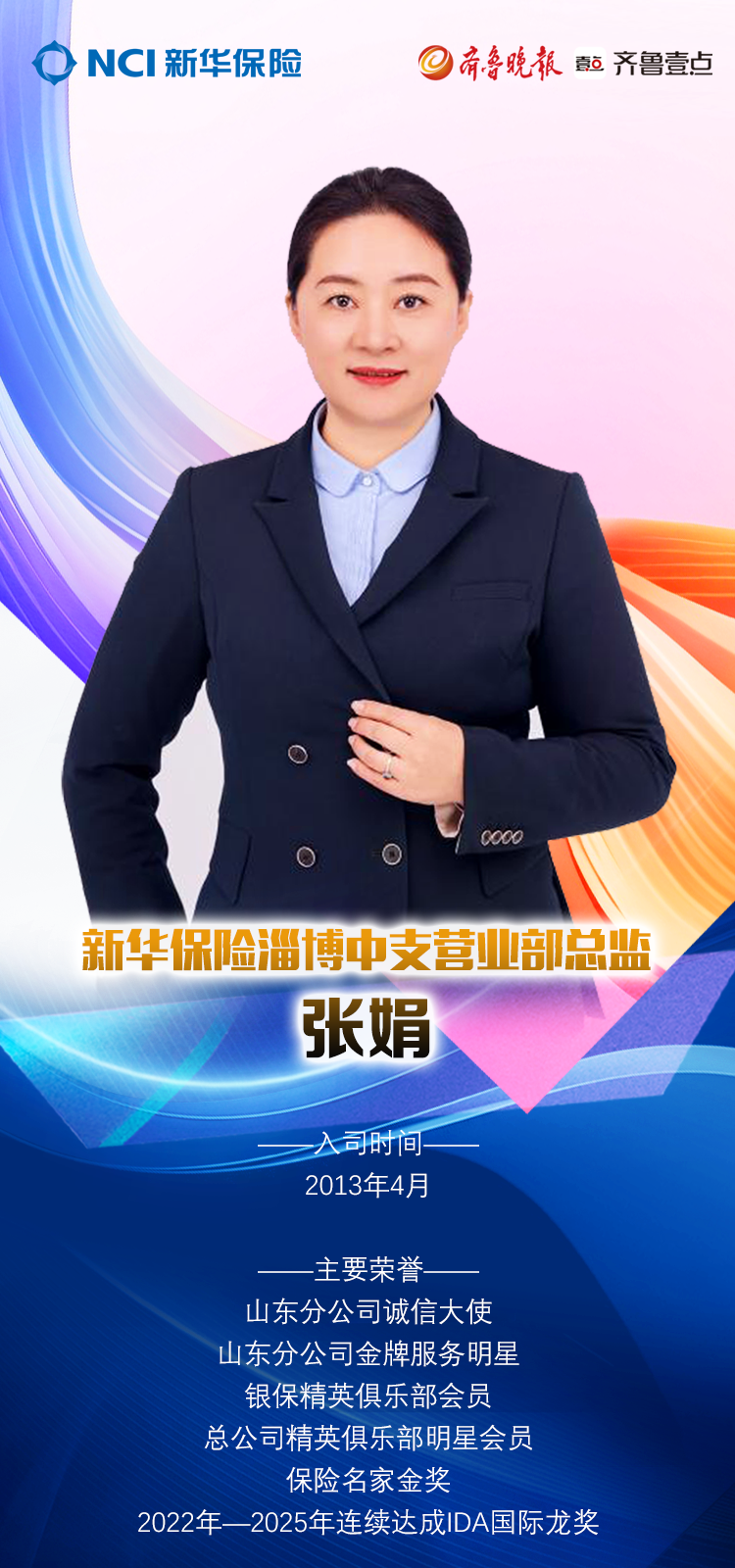
新华保险淄博中支营业部总监张娟:贴心服务 专业制胜
Qi Lu Wan Bao· 2025-08-18 10:00
Core Viewpoint - The article highlights the dedication and professionalism of Zhang Juan, a director at Xinhua Insurance, who has built strong relationships with clients through personalized service and a deep understanding of their needs [1][4][5]. Group 1: Professional Development - Zhang Juan has been in the insurance industry since 2013, focusing on enhancing her professional skills and optimizing customer service [4]. - She consistently engages in training and keeps updated with the latest insurance policies and industry trends, which has contributed to her success in achieving multiple awards [4][6]. Group 2: Client Relationships - Over twelve years, Zhang Juan has served over 800 clients and tailored risk protection plans for more than 500 families, demonstrating her commitment to understanding and addressing their specific needs [4][5]. - She emphasizes the importance of building trust with clients, often stating that the most valuable recognition comes from clients feeling secure and cared for [4][5]. Group 3: Claims Assistance - Zhang Juan provides ongoing support to clients, including regular follow-ups and assistance during claims processes, which has proven crucial during difficult times [5][6]. - Her proactive approach in helping clients navigate claims has resulted in timely disbursement of significant amounts, such as over 240,000 yuan in critical illness claims for a client facing multiple hardships [5][6]. Group 4: Future Aspirations - Zhang Juan aims to continue her client-centered approach, focusing on professional growth and service optimization to help more families in need [6].

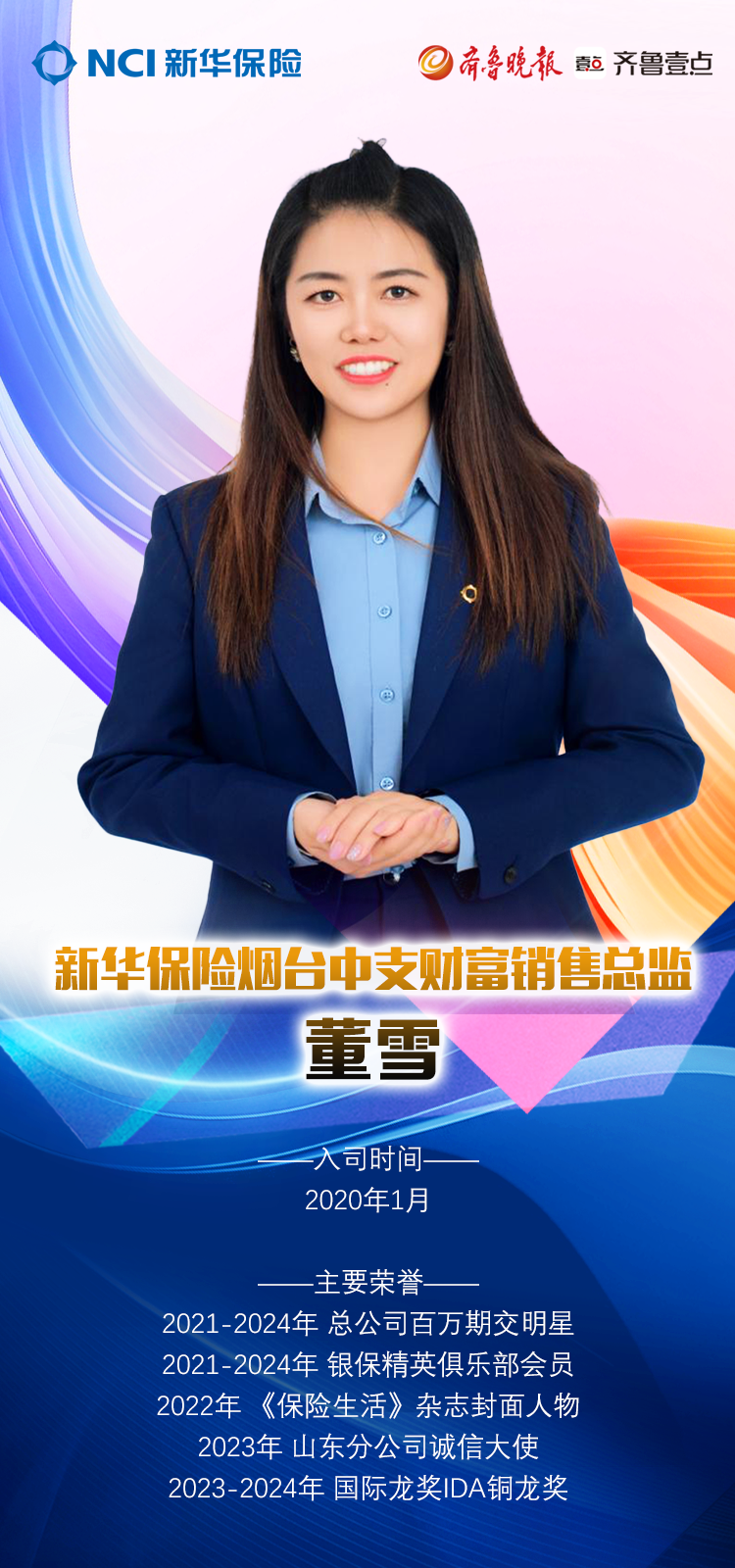
新华保险烟台中支财富销售总监董雪:“三心”服务铸品牌 专业制胜赢未来
Qi Lu Wan Bao· 2025-08-18 10:00
Core Viewpoint - The article highlights the journey of Dong Xue, an insurance consultant at Xinhua Insurance, who has transformed from a novice to a leading figure in her team through dedication to professional development and exceptional customer service [1][6]. Group 1: Professional Development - Dong Xue joined the insurance industry at the end of 2019 and quickly recognized the importance of professional knowledge after an initial oversight led to a missed opportunity with a client [6]. - She actively pursued learning opportunities, including courses from Dr. Zheng Ronglu, and committed to staying updated on industry trends and product details to better serve her clients [6][9]. - Through meticulous service and understanding of client needs, she successfully designed comprehensive wealth protection plans, leading to her first significant policy of 100,000 [6]. Group 2: Customer-Centric Service - Dong Xue developed a "Three Hearts" service system: sincerity, dedication, and attention to detail, which has significantly enhanced her client relationships [8]. - She provided compassionate support to clients in distress, such as assisting a grieving client with claims and offering emotional support, which fostered deep trust and loyalty [8]. - Many of her clients have become personal friends, and over half of her new clients come from referrals by satisfied customers, demonstrating the effectiveness of her relationship-building approach [9]. Group 3: Recognition and Future Aspirations - Dong Xue received the 2025 IDA Copper Dragon Award, recognizing her outstanding service and performance, making her the only insurance consultant in Laiyang to achieve this honor [1][6]. - Despite her achievements, she remains committed to continuous improvement and client engagement, emphasizing the importance of being a reliable presence in her clients' lives [9]. - Dong Xue views her role in the insurance industry as one of love and responsibility, aiming to create more value for both her company and society in the future [9].
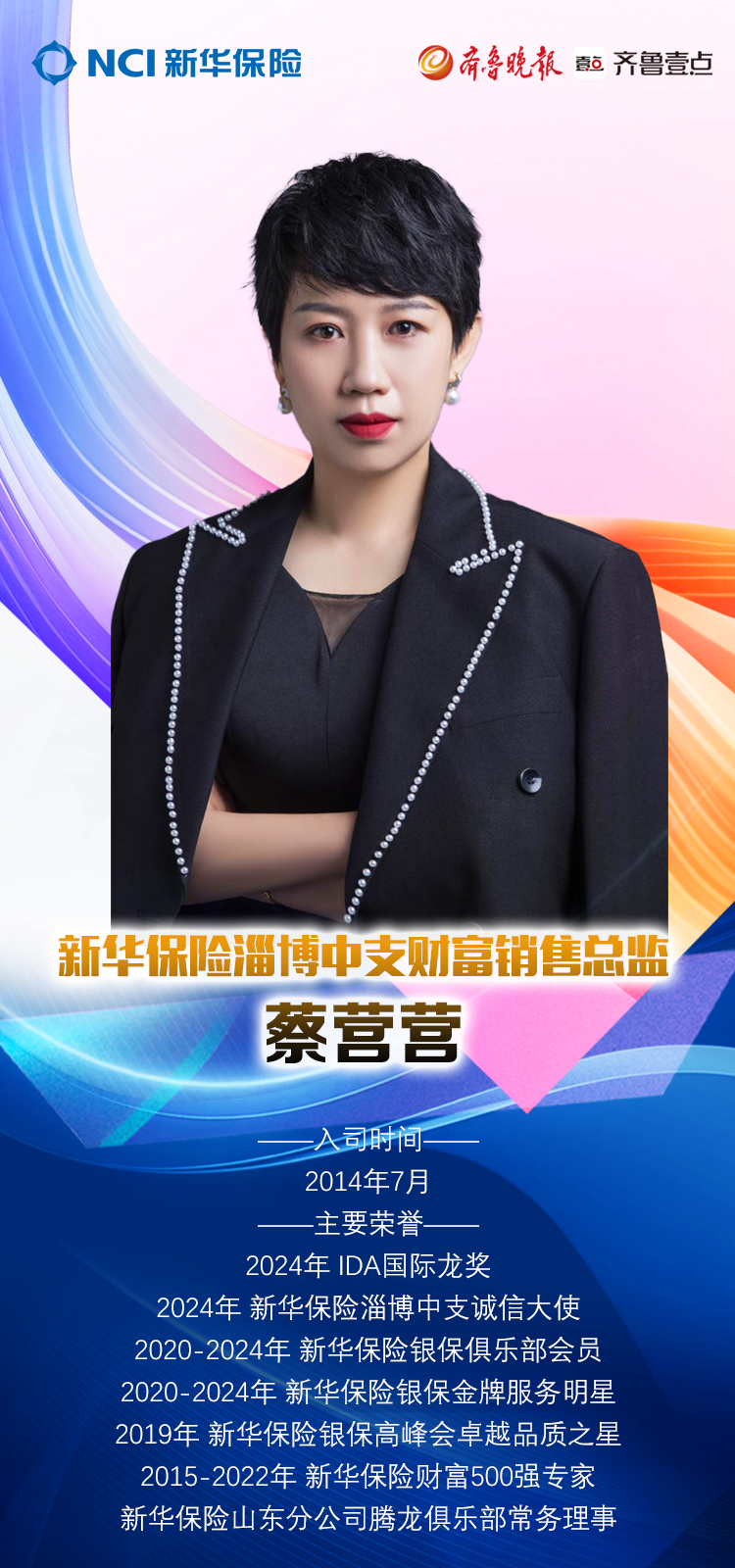
新华保险淄博中支财富销售总监蔡营营:初心如磐 守护有温度
Qi Lu Wan Bao· 2025-08-18 09:46
Core Viewpoint - The article highlights the journey of Cai Yingying, a wealth sales director at Xinhua Insurance, emphasizing her dedication to customer service and professional growth within the insurance industry over the past ten years [1][5][10]. Group 1: Professional Growth and Learning - Cai Yingying joined Xinhua Insurance in July 2014, attracted by the brand's strength, development potential, and opportunities for continuous learning [5]. - The company provides a rich learning environment, allowing employees to enhance their professional skills in insurance knowledge, communication, and financial planning [5][10]. - Over ten years, she transformed from a newcomer to a professional consultant capable of offering comprehensive wealth planning [5][10]. Group 2: Customer-Centric Service - Cai emphasizes that insurance is not just a contract but a responsibility that provides peace of mind to clients [7]. - Two significant claims experiences deepened her understanding of this responsibility, showcasing the real-life impact of insurance on clients' lives [7][8]. - A notable case involved a client who received 1.2 times the insured amount after a family member's death, illustrating the financial support insurance can provide during difficult times [7]. - Another case highlighted the leverage of insurance, where a client paid 4,000 yuan in premiums and received a 100,000 yuan payout after a cancer diagnosis [8]. Group 3: Commitment to the Industry - Cai maintains a strong passion for learning and actively participates in company training to better serve clients [10]. - She focuses on understanding client needs and providing tailored insurance solutions, whether for young families or elderly clients [10]. - The company aims to continue fostering a culture of professionalism and warmth, ensuring that more families understand the significance of insurance [10].
新华保险(601336) - 新华保险H股公告
2025-08-18 09:30
承董事會命 新華人壽保險股份有限公司 楊玉成 董事長 董事會會議通告 新華人壽保險股份有限公司(「本公司」)董事會(「董事會」)謹此宣佈, 本公司將於二零二五年八月二十八日(星期四)舉行董事會會議,藉以(其中包 括)考慮及批准本公司及其附屬公司截至二零二五年六月三十日止六個月之中期 業績及其發佈,並考慮派發中期股息,以及處理其他事項。 香港交易及結算所有限公司及香港聯合交易所有限公司對本通告之內容概不負責,對其準確性 或完整性亦不發表任何聲明,並明確表示,概不對因本通告全部或任何部分內容而產生或因倚 賴該等內容而引致之任何損失承擔任何責任。 中國北京,二零二五年八月十八日 於本通告日期,本公司董事長、執行董事為楊玉成;執行董事為龔興峰;非執 行董事為楊雪、毛思雪、胡愛民和張曉東;及獨立非執行董事為馬耀添、賴觀 榮、徐徐、郭永清和卓志。 ...
新华保险(01336.HK)拟8月28日举行董事会会议以审批中期业绩
Ge Long Hui A P P· 2025-08-18 09:16
格隆汇8月18日丨新华保险(01336.HK)公告,公司将于2025年8月28日(星期四)举行董事会会议,藉以(其 中包括)考虑及批准公司及其附属公司截至2025年6月30日止6个月中期业绩及其发布,并考虑派发中期 股息,以及处理其他事项。 ...
新华保险(601336) - 新华保险保费收入公告
2025-08-18 09:15
新华人寿保险股份有限公司董事会及全体董事保证本公告内容不存 在任何虚假记载、误导性陈述或者重大遗漏,并对其内容的真实性、准 确性和完整性承担法律责任。 新华人寿保险股份有限公司董事会 根据中华人民共和国财政部《企业会计准则第 25 号——原保险合同》(财 会〔2006〕3 号)及《保险合同相关会计处理规定》(财会〔2009〕15 号),新华 人寿保险股份有限公司(以下简称"公司")于 2025 年 1 月 1 日至 2025 年 7 月 31 日期间累计原保险保费收入为人民币 13,780,627 万元,同比增长 23%。公司 坚持"以客户为中心"的专业化、市场化、体系化改革,推动传统营销模式向现 代营销模式转型升级,持续优化业务结构,强化基础管理,不断加强渠道建设和 营销队伍建设,全面打造服务赋能体系,提升经营与服务能力,促进经营管理提 质增效。 2025 年 8 月 18 日 | A股证券代码:601336 | | A股证券简称:新华保险 编号:2025-045号 | | --- | --- | --- | | H股证券代码: | 01336 | H股证券简称:新华保险 | 上述原保险保费收入数据未经审计 ...
新华保险(601336) - 新华保险关于召开2025年中期业绩发布会的公告
2025-08-18 09:15
新华人寿保险股份有限公司董事会及全体董事保证本公告内容不存 在任何虚假记载、误导性陈述或者重大遗漏,并对其内容的真实性、准 确性和完整性承担法律责任。 重要内容提示: A股证券代码:601336 A股证券简称:新华保险 编号:2025-046号 H股证券代码: 01336 H股证券简称:新华保险 新华人寿保险股份有限公司 关于召开2025年中期业绩发布会的公告 投资者可于 2025 年 8 月 27 日(星期三)23:59 前将相关问题通过电子邮 件的形式发送至新华人寿保险股份有限公司(以下简称"本公司")投资者 关系邮箱:ir@newchinalife.com。 一、业绩发布会类型 本公司拟于 2025 年 8 月 29 日在上海证券交易所网站(www.sse.com.cn)披 露本公司 2025 年半年度报告。为了便于广大投资者更全面深入地了解本公司 2025 年中期业绩和经营情况,本公司拟于 2025 年 8 月 29 日 15:00-16:30 通过网 络直播的方式召开业绩发布会,就投资者普遍关心的问题进行交流。 二、业绩发布会召开的时间、地点 (一)会议召开时间:2025 年 8 月 29 日(星期 ...