
PSBC(01658)

Search documents
邮储银行山东省分行:“抢烘战” 不能卡在 “钱” 上,备耕忙也要“资”持到底
Qi Lu Wan Bao· 2025-10-16 09:27
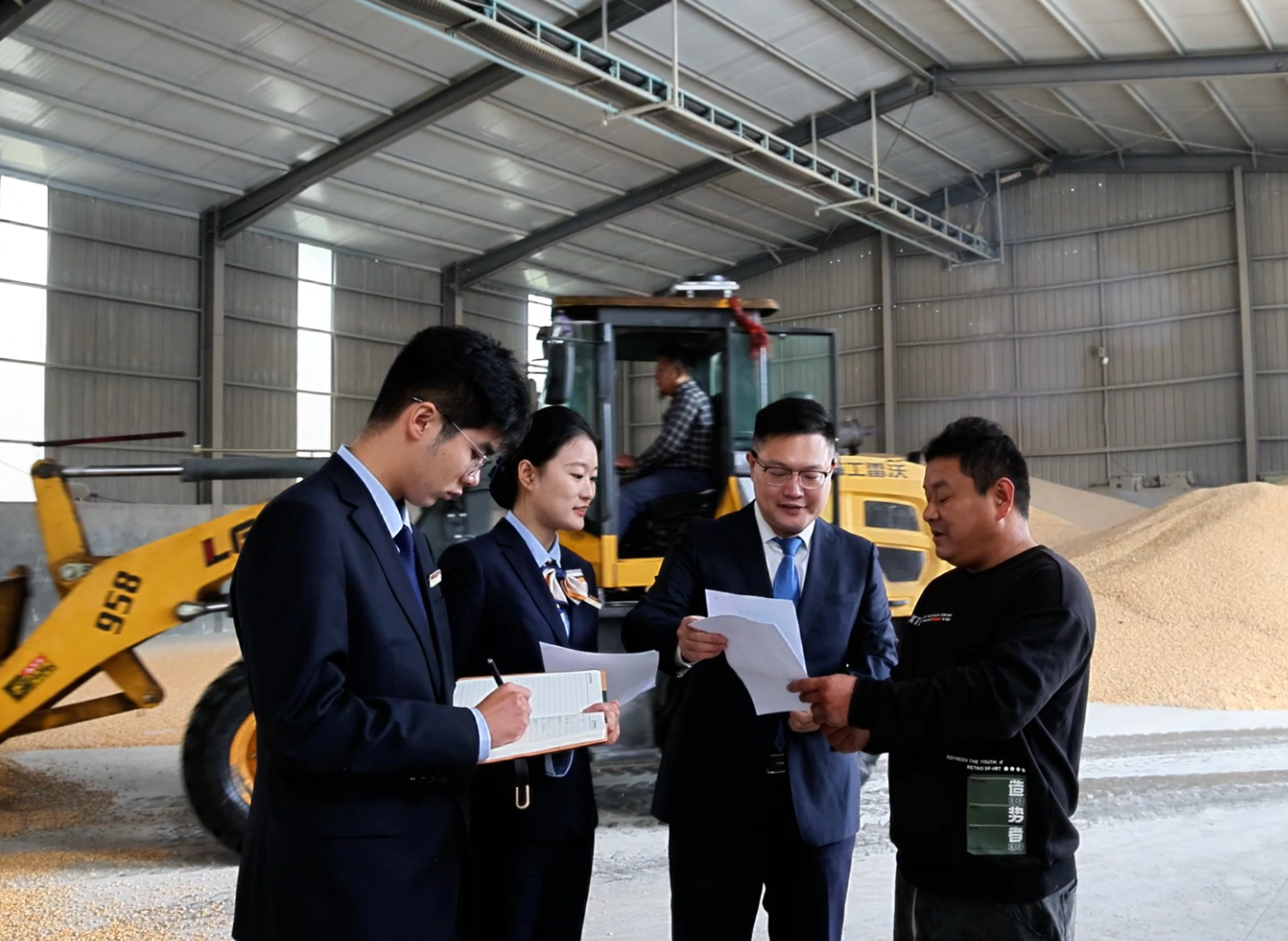
Group 1 - Postal Savings Bank of China (PSBC) Shandong Branch is actively supporting the "Three Autumns" production by leveraging its resources in a major grain-producing province, focusing on early deployment and comprehensive financial support [1] - The bank has established a customer database for grain clients and created a grid marketing team to address financial service needs through direct engagement [1] - PSBC has implemented a fast-track loan approval process to meet the urgent financing needs of grain clients, utilizing mobile technology to facilitate on-site credit services [1] Group 2 - Shandong Youbang Fertilizer Technology Co., Ltd. has developed new fertilizer formulations suitable for wet soil conditions due to continuous rainfall, leading to increased orders [2] - The company faced cash flow pressures for raw material procurement, prompting PSBC to provide a quick loan of 10 million yuan through its online "Micro Loan" service [2] - The financial support has enabled the company to maintain production and fulfill existing and new orders, contributing to the stability of grain supply and economic development [2]

“抢烘”“备耕”不愁“等贷”,邮储“资”持历久弥新
Qi Lu Wan Bao· 2025-10-16 08:17
Core Insights - The article highlights the challenges faced by farmers in Shandong due to continuous rainfall during the autumn harvest, which has delayed grain collection and created difficulties in grain processing [1] - The timely financial support from banks, particularly Postal Savings Bank, is crucial in addressing the urgent needs of farmers and ensuring food security [2] Group 1: Financial Support and Solutions - Postal Savings Bank has been actively providing loans to farmers and agricultural cooperatives to facilitate the purchase of essential equipment like high-end drying machines, which are critical for preventing grain spoilage [3][4] - The bank's quick loan approval process, exemplified by a 10-minute online loan application that provided 500,000 yuan, demonstrates its commitment to supporting farmers during this critical period [3] - In total, Postal Savings Bank's branches in Shandong have issued over 1.83 billion yuan in agricultural loans this autumn, benefiting nearly 765 entities involved in grain collection and processing [10] Group 2: Impact on Local Agriculture - The establishment of drying facilities, such as those operated by Guosheng Agricultural Technology Company, has significantly improved the efficiency of grain processing, allowing for the drying of up to 1,000 tons of grain daily [7] - The drying services provided by these facilities have alleviated the anxiety of farmers regarding grain spoilage due to adverse weather conditions, ensuring that their harvest can be safely stored [7][8] - The proactive measures taken by Postal Savings Bank, including the introduction of credit loans without collateral, have enabled agricultural enterprises to scale up their operations and meet the urgent demands of the harvest season [12][14]


邮储银行涨1.05%,成交额10.90亿元,近3日主力净流入-3534.72万
Xin Lang Cai Jing· 2025-10-16 07:42
Core Viewpoint - Postal Savings Bank of China (PSBC) shows a stable performance with a recent stock price increase of 1.05% and a market capitalization of 690.547 billion yuan, indicating investor interest in the bank's stock [1] Financial Performance - PSBC's dividend yields over the past three years were 5.58%, 6.00%, and 4.61%, reflecting a consistent return to shareholders [2] - For the first half of 2025, PSBC reported a net profit of 49.228 billion yuan, a year-on-year increase of 0.85% [7] Shareholder Information - As of June 30, 2025, the number of PSBC shareholders was 164,100, a decrease of 10.31% from the previous period, while the average number of shares held per shareholder increased by 11.66% to 415,086 shares [7] Ownership Structure - PSBC is a state-owned enterprise controlled by China Post Group Corporation, which influences its operational strategies and market positioning [2] Market Activity - The stock experienced a net outflow of 16.8346 million yuan today, with a lack of clear trends in major shareholder activity, indicating a dispersed ownership structure [3][4] - The average trading cost of PSBC shares is 5.09 yuan, with the stock currently near a resistance level of 5.86 yuan, suggesting potential for upward movement if this level is surpassed [5] Business Overview - PSBC primarily operates in personal banking (65.15% of revenue), corporate banking (22.71%), and funding operations (12.10%), providing a diverse range of financial services [6]
精准洞察需求,邮储银行鱼台支行为乡村振兴注入金融动能
Qi Lu Wan Bao· 2025-10-16 07:40
Core Viewpoint - Continuous heavy rainfall in Jining has significantly impacted local rice harvesting and storage, prompting financial institutions to provide urgent support to grain enterprises to ensure food security and stabilize farmers' incomes [1][2]. Financial Support for Grain Enterprises - Jining Chenglong Rice Industry Co., Ltd. faces substantial cash flow pressure due to the need for continuous rice procurement and equipment operation amid heavy rainfall, with an annual processing capacity of 100,000 tons [2]. - China Postal Savings Bank's Yutai Branch quickly responded to the financial needs of local grain enterprises, providing a tailored online loan product "Micro e-loan" with a credit of 5 million yuan, which was disbursed within two working days [2]. - The Yutai Branch has issued a total of 82.5 million yuan in grain loans, with credit limits for five existing clients increased from 3 million to 5 million yuan [2]. Support for Farmers - The Yutai Branch also addresses the needs of large-scale grain farmers, such as Li Junsheng, who received 1.5 million yuan in funding for purchasing drying equipment, enhancing his confidence in expanding his farming operations [3]. - Individual grain processors like Ma Panfeng have seen their credit limits raised from 2 million to 5 million yuan, enabling timely payments to farmers for rice procurement [4]. Agricultural Financing Products - The Yutai Branch launched the "Grain Purchase Industry Loan," designed specifically for autumn grain procurement, with credit limits increased from 3 million to 5 million yuan, ensuring rapid approval and disbursement of funds [4]. - The bank emphasizes on-site service for clients applying for loans, establishing a special loan leadership group to facilitate quick processing of applications [4]. Contribution to Rural Revitalization - The Yutai Branch actively supports rural revitalization by injecting financial resources into local agricultural industries, having provided over 1.1 billion yuan in credit to various agricultural enterprises and individual farmers [5]. - The bank has established partnerships with local governments to enhance financial services for rural development, signing cooperation agreements to support the agricultural economy [6]. Future Directions - The Yutai Branch plans to deepen its integration of party building and business operations, focusing on innovative financial products and services tailored to local agricultural needs [7]. - The bank aims to enhance its role in supporting county economic development by providing customized financing solutions for local enterprises [7].
内银股逆势上扬 农业银行涨超2%
Mei Ri Jing Ji Xin Wen· 2025-10-16 06:21
每经AI快讯,内银股逆势上扬,截至发稿,重庆农村商业银行(03618.HK)涨3.45%,报6.6港元;农业银 行(01288.HK)涨2.23%,报5.49港元;中信银行(00998.HK)涨2.12%,报7.23港元;邮储银行(01658.HK) 涨1.7%,报5.39港元;工商银行(01398.HK)涨1.56%,报5.85港元。 ...


港股异动 | 内银股逆势上扬 重庆农村商业银行(03618)涨超3% 农业银行(01288)涨超2%
智通财经网· 2025-10-16 06:12
Core Viewpoint - The banking sector is experiencing a rebound despite market volatility, driven by stable fundamentals and attractive dividend yields, which are expected to attract long-term capital [1] Group 1: Stock Performance - Chongqing Rural Commercial Bank (03618) increased by 3.45% to HKD 6.6 - Agricultural Bank (01288) rose by 2.23% to HKD 5.49 - CITIC Bank (00998) gained 2.12% to HKD 7.23 - Postal Savings Bank (01658) went up by 1.7% to HKD 5.39 - Industrial and Commercial Bank (01398) climbed 1.56% to HKD 5.85 [1] Group 2: Market Analysis - Dongxing Securities noted that the banking sector has been adjusting since July due to increased market risk appetite and a shift in funding styles, but the sector's fundamentals remain robust [1] - The firm anticipates that as mid-term dividends begin to unfold, the attractiveness of bank dividends will continue to rise, providing support for long-term capital allocation [1] - The banking sector is expected to see a valuation recovery in the fourth quarter as market styles rebalance [1] Group 3: Investment Opportunities - Galaxy Securities highlighted that increased uncertainty in tariffs is causing global asset price fluctuations, creating a demand for defensive allocations, which presents opportunities for bank investments [1] - The stability of bank dividends, combined with a recent period of adjustment, has improved the attractiveness of dividend yields, likely drawing in risk-averse capital [1] - Kaiyuan Securities pointed out that after adjustments influenced by market styles, the dividend yield of the banking sector has regained its appeal, with H-shares outperforming A-shares in terms of cost-effectiveness [1]
2025年前三季度并购报告和排行榜
Refinitiv路孚特· 2025-10-16 06:02
Core Insights - The total M&A transaction value in mainland China reached $340.2 billion in the first three quarters of 2025, representing a year-on-year increase of 80.3% but a quarter-on-quarter decline of 29.9% [2] - The number of announced transactions was 3,791, which is a 10.5% increase year-on-year and a 9.3% increase quarter-on-quarter [2] Cross-Border M&A - The total value of outbound M&A from mainland China was $18.1 billion, marking a year-on-year increase of 29.6% [5] - Foreign acquisitions of mainland Chinese companies totaled $11.6 billion, a decrease of 28.2% compared to the previous year [5] - Domestic M&A transactions dominated with a scale of $300.5 billion, showing a significant year-on-year growth of 106.3% [5] Industry Distribution - The financial sector led the M&A market in mainland China with a market share of 25.7% and a total transaction value of $87.4 billion, reflecting a year-on-year increase of 270.2% [8] - The energy and power sector held a market share of 17.5%, with a year-on-year growth of 193.4% [8] - The high-tech sector followed closely with a market share of 16.1% ($54.9 billion), experiencing a year-on-year increase of 108% [8] Financial Advisor Rankings - CICC ranked first among financial advisors with a market share of 16.1% (involved in transactions worth $54.8 billion) in the first three quarters of 2025 [11] - CITIC Securities held the second position with a market share of 15.1%, while Goldman Sachs ranked third with a market share of 12.2% [11] - In terms of transaction volume, CICC, ICBC, and CITIC Securities were the top three [11] Legal Advisor Rankings - The top three law firms by transaction value in the first three quarters of 2025 were Yingke Law Firm, King & Wood Mallesons, and JY Law Firm [13] - In terms of transaction volume, Fangda Partners, King & Wood Mallesons, and JunHe Law Firm led the rankings [13]




中国平安增持招行、邮储,年内耗资千亿港元加仓银行H股!银行AH优选ETF(517900)盘中涨近1%
2 1 Shi Ji Jing Ji Bao Dao· 2025-10-16 03:00
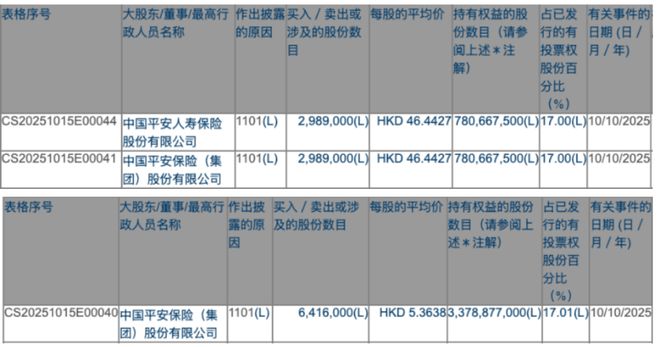
Core Viewpoint - The banking sector is experiencing a rally, with significant increases in stock prices for various banks, driven by insurance capital increasing their holdings in Hong Kong bank stocks, particularly by China Ping An [1][2]. Group 1: Investment Activities - China Ping An's subsidiary, Ping An Life, increased its holdings in China Merchants Bank (CMB) by 2.989 million H-shares, raising its total to 781 million shares, which represents 17% of CMB's H-shares [2]. - On the same day, China Ping An purchased 641,600 H-shares of Postal Savings Bank, increasing its stake to 17.01% [2]. - Since the beginning of the year, China Ping An has significantly increased its investments in H-shares of banks, including Agricultural Bank and Industrial and Commercial Bank, with total expenditures exceeding 100 billion Hong Kong dollars [4]. Group 2: Market Trends - The banking sector has seen a net inflow of nearly 100 million yuan into the Bank AH Preferred ETF (517900) over four consecutive days, indicating strong investor interest [7]. - The insurance sector's stock holdings have increased by 26.69% since the beginning of the year, with banks consistently representing the highest proportion of these holdings, reaching 47.2% by mid-2025 [4][6]. Group 3: Performance Metrics - The China Banking Index has experienced a cumulative decline of 15.21% from July 11 to October 9, while the CSI 300 Index rose by 17.44% during the same period [9]. - Since the launch of the Bank AH Total Return Index on December 6, 2017, it has achieved a cumulative return of 82.26%, outperforming the China Banking Total Return Index by 21.49% [9][11].


多家银行提高购金门槛并提示风险 部分购买起点提至1000元
Cai Jing Wang· 2025-10-16 01:45
受访人士表示,商业银行此次集中调整黄金积存业务门槛、密集释放风险提示,核心动因在于当前黄金 价格波动幅度加大、投资风险显著上升。这一系列举措既是为投资者敲响风险警钟,也能引导其结合自 身情况合理配置黄金资产,避免盲目入场。 购买起点提高至1000元 10月14日,中国银行发布公告称,将于10月15日起调整积存金产品的购买条件:按金额购买积存金产品 或创建积存定投计划时,最小购买金额由850元调整为950元,追加购买金额维持200元整数倍不变。 本报记者 彭妍 10月份以来,国际金价仍持续攀升,在市场风险加剧的背景下,多家银行近期密集调整个人贵金属业务 规则:一方面集中上调黄金积存业务起购门槛,部分银行已将起购门槛提升至1000元;另一方面同步发 布风险提示,引导投资者警惕贵金属价格波动可能带来的投资风险。 警惕技术面回调压力 进入10月份,国际金价延续9月涨势。伦敦现货黄金价格呈阶梯式突破,截至北京时间10月15日记者发 稿,伦敦现货黄金报价达4200.21美元/盎司,短期内连续刷新阶段新高。 对于金价持续上涨的原因,中信证券首席经济学家明明在接受《证券日报》记者采访时表示,美国长期 高通胀与其财政持续扩张的 ...



A股定增一览:10家公司披露定增进展
Xin Lang Cai Jing· 2025-10-15 23:56
Core Insights - On October 16, a total of 10 companies in the A-share market announced plans related to private placements [1] - Three companies disclosed new private placement proposals, six companies had their proposals approved by shareholders, and one company's proposal was halted [1] Group 1: Private Placement Proposals - The companies with the highest proposed fundraising amounts are Junpu Intelligent, Digital Government, and Delixi Shares, with proposed amounts of up to 1.161 billion, 1.05 billion, and 720 million respectively [1] - A total of 114 companies have announced completed private placement plans this year, with 55 companies raising over 1 billion [1] Group 2: Major Fundraising Amounts - The highest fundraising amounts from private placements were reported by China Bank, Postal Savings Bank, and Transportation Bank, with total fundraising amounts of 165 billion, 130 billion, and 120 billion respectively [1]


