PSBC(01658)

Search documents
汇率政策组合拳如何影响流动性?
GF SECURITIES· 2026-03-02 03:26
Investment Rating - The industry investment rating is "Buy" [2] Core Insights - The central theme of the report discusses the impact of recent currency policies on liquidity, specifically focusing on the People's Bank of China's (PBOC) measures to adjust the foreign exchange risk reserve ratio and its implications for cross-border liquidity [13][22] - The report highlights that the PBOC's recent policies aim to stabilize the RMB's exchange rate and enhance the liquidity of the offshore RMB market, which is expected to support the internationalization of the RMB [16][22] Summary by Sections 1. Current Observations: How Currency Policies Affect Liquidity - The PBOC introduced two key policies: a notification regarding RMB cross-border interbank financing and a reduction of the foreign exchange risk reserve ratio for forward foreign exchange transactions from 20% to 0% [13][18] - RMB cross-border interbank financing is crucial for providing RMB liquidity to offshore markets, with the potential net outflow limit estimated at approximately 1.79 trillion CNY, significantly higher than the current balance of about 1,942 billion CNY [16][17] 2. Forward Foreign Exchange Business - The adjustment of the foreign exchange risk reserve ratio is designed to lower the costs associated with forward foreign exchange transactions, thereby increasing demand in the forward market and countering expectations of RMB appreciation [18][19] 3. Outlook on Cross-Border Liquidity - The report anticipates that while speculative inflows may slow down, the demand for foreign investment in RMB-denominated assets will remain robust, driven by fundamentals, returns, and safety differentials [22][23] - It is expected that the increase in interbank lending will tighten liquidity in the banking sector, prompting the PBOC to potentially implement additional liquidity measures through government bond transactions and open market operations [23]




银行资负跟踪20260302:月末票据利率反弹,大行净买入同比增量回落
GF SECURITIES· 2026-03-02 03:06
Investment Rating - The industry investment rating is "Buy" [2] Core Views - The report highlights a rebound in month-end bill rates, with a significant decrease in net purchases by major banks year-on-year [1][14] - The central bank's operations included a total of CNY 16,410 billion in 7-day reverse repos at a rate of 1.40%, with a net withdrawal of CNY 4,614 billion [14] - The report anticipates continued flexibility in central bank operations to stabilize liquidity fluctuations, especially with important meetings approaching [14][21] Summary by Sections Section 1: Month-End Bill Rate Rebound - The overall liquidity in the market is balanced due to post-holiday fund recovery and tax payments [14] - Major banks' net purchases of bills have significantly decreased, with only an increase of approximately CNY 320 billion year-on-year as of February 27 [17] Section 2: Central Bank Dynamics and Market Rates - The central bank's MLF (Medium-term Lending Facility) increased by CNY 6,000 billion, continuing to inject long-term liquidity into the market [14] - The end-of-period rates for DR001 and DR007 were 1.32% and 1.50%, reflecting increases of 0.68bp and 18.23bp respectively [15] Section 3: Bank Financing Tracking - The total outstanding amount of interbank certificates of deposit (NCD) reached CNY 18.77 trillion, with a weighted average issuance rate of 1.59% [19] - The issuance of interbank certificates of deposit for the period was CNY 4,545 billion, with a completion rate of 93.3% [19]
流动性观察第 122 期:当同业存款定价再自律
EBSCN· 2026-03-01 10:58
Investment Rating - The report maintains a "Buy" rating for the banking industry, indicating an expected investment return exceeding the market benchmark index by over 15% in the next 6-12 months [1]. Core Insights - The report discusses the implementation of a self-regulatory mechanism for interbank deposit pricing, which aims to manage liquidity and stabilize the banking sector's cost of liabilities. The focus has shifted from merely controlling the scale of interbank liabilities to regulating pricing behavior [4][5][6]. - The introduction of self-regulation for non-bank interbank demand deposit rates is expected to enhance the efficiency of monetary policy transmission and alleviate pressure on bank interest margins [6][9]. - The report highlights the historical evolution of interbank liability management, emphasizing the transition from risk prevention to cost control, and outlines the regulatory framework established over the past decade [4][5][6]. Summary by Sections Regulatory History Review - The regulatory framework for interbank liabilities has evolved through three main phases: establishing a risk prevention framework, deepening regulation to reduce leverage and prevent fund turnover, and focusing on cost control through pricing management [4][5][6]. Cost Management of Interbank Liabilities - The report notes that the cost of interbank liabilities remains relatively high, with significant room for further reduction. The average cost of interbank liabilities for state-owned banks was reported at 2.01%, compared to 1.52% for deposits, indicating a 48 basis point spread [13][20]. - The report emphasizes the need for enhanced management of interbank deposit pricing, particularly for time deposits, which currently do not fall under self-regulatory constraints [20][21]. Future Pathways for Self-Regulation - The report suggests that future regulatory measures may include setting upper limits on the scale of interbank demand deposits priced above self-regulatory levels and implementing self-regulation for time deposit rates [22][25]. - Preliminary estimates indicate that the self-regulation of interbank time deposits could lead to a reduction in interest expenses for banks, improving net interest margins by approximately 2 basis points [25][29]. Impact on Wealth Management Products - The report assesses the impact of interbank deposit self-regulation on wealth management products, indicating that the influence on net asset values is relatively limited due to the diverse nature of interbank deposit configurations [34][37]. - It highlights that wealth management products will continue to maintain a strong allocation to deposit-like assets, with expected fluctuations in allocation ratios [34][37].


邮储银行扬州市分行获评“服务成效突出的银行机构”
Sou Hu Cai Jing· 2026-02-27 09:21
Core Viewpoint - Postal Savings Bank of China Yangzhou Branch is committed to serving the real economy by enhancing collaboration among government, banks, and enterprises, and improving the inclusive financial service system, focusing on key sectors such as technology, foreign trade, and cultural tourism [1] Financial Performance - The bank aims to achieve a net increase of 1.41 billion yuan in inclusive loans by 2025, with a year-on-year growth rate of 16.3%, effectively alleviating the financing difficulties faced by local small and micro enterprises [1] - The bank has been recognized by the National Financial Supervision and Administration Bureau Yangzhou Branch for its outstanding service effectiveness [1] Future Outlook - Looking ahead, the bank will continue to optimize its inclusive financial service model, providing more precise credit allocation, convenient financial services, and favorable financing costs to support small and micro enterprises, manufacturing, and technology innovation enterprises in Yangzhou [1]

“降费”难敌“波动”,银行理财打响“费率价格战”,投资者买账吗?
Zhong Guo Zheng Quan Bao· 2026-02-26 15:13
Core Viewpoint - The banking wealth management market is experiencing pressure on product yields due to market volatility, prompting institutions to launch special products and reduce fees to attract customers [1][2][3]. Group 1: Special Wealth Management Products - Many banks are introducing special wealth management products, such as "Lantern Festival Exclusive" offerings, to attract customers during the post-Spring Festival period when individuals typically manage idle funds [2]. - For instance, Zhejiang Hecheng Rural Commercial Bank launched a closed-end net value wealth management product with a risk level of R2, available for subscription from February 26 to March 4, with a term of 3 to 6 months [2]. - Hunan Bank also introduced a net value wealth management product with a risk level of R2, available for subscription from February 25 to March 3, with a term of 1 to 3 years [2]. Group 2: Fee Reduction Trend - The banking wealth management industry is undergoing a "fee reduction wave," with several institutions, including Bank of China Wealth Management and Postal Savings Bank of China, lowering management and service fees for their products [3]. - For example, from March 1 to April 1, 招银理财 plans to reduce the fixed investment management fee from 0.3% to 0.02% for one of its cash management products [3]. - 中银理财 announced fee reductions for its products from March 5 to June 5, lowering the fixed management fee from 0.20% to 0.05% [3]. Group 3: Investor Sentiment and Market Dynamics - Despite the fee reductions, many investors remain focused on the stability and actual returns of wealth management products rather than fee adjustments [4][5]. - Research indicates that the fee reductions primarily serve as a "price subsidy" for existing customers rather than attracting new clients, as investors prioritize institutional credibility and product stability [4]. - The bottom line for management fees is tied to covering operational costs, with larger institutions able to dilute costs through scale, while smaller institutions face operational pressures if fees remain below breakeven [5].
银行业2025年四季度监管数据总结:利润增速回正,息差连续两季度企稳
GF SECURITIES· 2026-02-26 14:05
Investment Rating - The industry investment rating is "Buy" [2] Core Viewpoints - The banking industry has shown a recovery in profit growth, with net profit for commercial banks increasing by 2.33% year-on-year in 2025, reflecting a quarter-on-quarter improvement of 2.35 percentage points [13][14] - The overall asset growth of commercial banks continued, with total assets increasing by 9.01% year-on-year as of Q4 2025, while loan growth slightly decreased to 7.26% year-on-year [29][30] - Net interest margin stabilized for two consecutive quarters at 1.42%, with expectations for a gradual recovery in 2026 [54] Summary by Sections Performance - The net profit of commercial banks increased by 2.33% year-on-year in 2025, with state-owned banks, joint-stock banks, city commercial banks, and rural commercial banks showing growth rates of 2.25%, -2.84%, 12.87%, and 4.57% respectively [13][14] - The return on equity (ROE) and return on assets (ROA) for commercial banks were 7.78% and 0.60%, reflecting a year-on-year decline of 0.33 percentage points and 0.03 percentage points respectively [13] Scale - Total assets of commercial banks grew by 9.01% year-on-year as of Q4 2025, with state-owned banks showing a growth rate of 10.78% [29][30] - Loan growth for commercial banks was 7.26% year-on-year, with city commercial banks experiencing a counter-cyclical increase in loan growth [29][30] Interest Margin - The net interest margin for commercial banks was stable at 1.42%, with a year-on-year decline of 10.50 basis points [54] - Expectations for 2026 indicate potential downward pressure on net interest margins in Q1, but a gradual recovery is anticipated thereafter [54] Asset Quality - The non-performing loan ratio for commercial banks was 1.50%, showing a quarter-on-quarter decrease of 2.00 basis points, while the provision coverage ratio was 205.21% [54] Capital - The core Tier 1 capital adequacy ratio for commercial banks was 10.92%, reflecting a quarter-on-quarter increase of 0.05 percentage points [54]


邮储银行滨州市分行:金融“惠民生”促“消费”双向激活市场活力
Qi Lu Wan Bao· 2026-02-26 13:39
Core Viewpoint - Postal Savings Bank of China (PSBC) is enhancing financial services to integrate deeply into people's livelihood security and consumption upgrades, focusing on four key initiatives to empower both "benefiting people's livelihood" and "promoting consumption" for sustained local economic development [1][2] Group 1: Livelihood Security - The bank is focusing on housing security by supporting urban renovation projects since 2016, improving living conditions for low-income groups, with a current balance of housing loans reaching 909 million yuan [1] - The bank has partnered with local employment agencies to offer "re-employment entrepreneurship guarantee loans" with a 2% interest subsidy, and tailored credit loans for veterans, resulting in a balance of 40.72 million yuan in such loans [1] Group 2: Consumption Support - PSBC is expanding its consumer finance offerings by collaborating with various departments to create a comprehensive service system, launching a new consumer loan product "Postal Enjoy Loan" with online processing, covering diverse customer needs with loan terms up to 5 years and credit limits of up to 1 million yuan [1] - The bank is also focusing on the elderly care and health sectors by introducing specialized loan products, with a maximum single credit loan of 500,000 yuan and a guarantee loan of 3 million yuan, aiming to meet the financial needs of the elderly care industry [2] Group 3: Future Plans - The bank plans to continue deepening the integration of financial benefits and consumption promotion, dynamically optimizing product services to better meet the needs of the public and activate consumption potential [2]
从“卡脖子”到“走出去”,邮储银行助力国产喷油器闯荡全球市场
Qi Lu Wan Bao· 2026-02-26 08:43
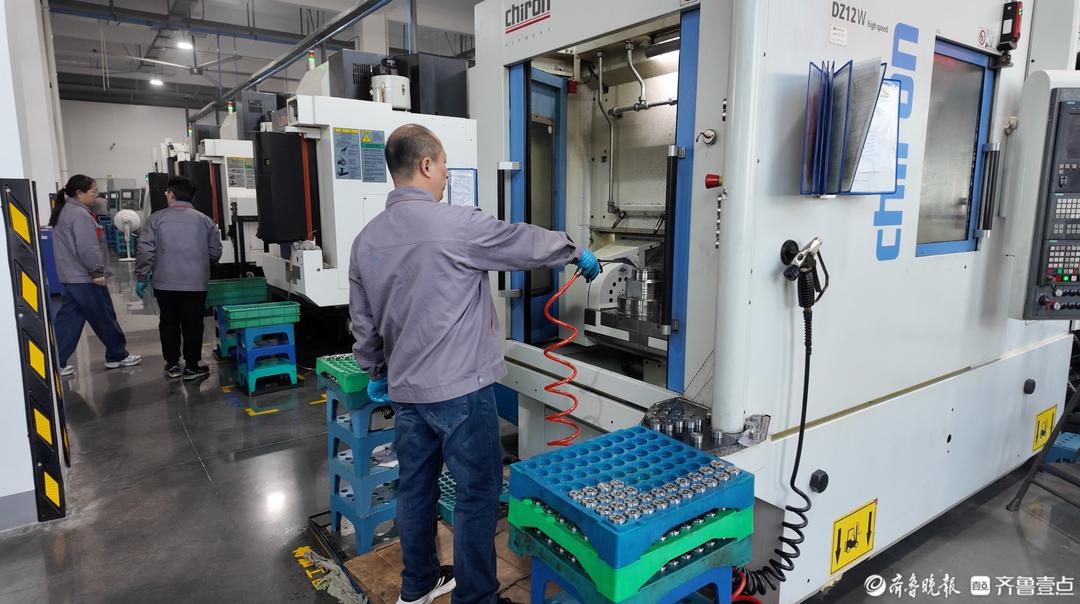
Core Insights - The article highlights the collaboration between Shandong Xinya Green Power Fuel System Co., Ltd. and Postal Savings Bank of China, emphasizing how financial support is accelerating the company's growth in the domestic substitution market [1][3]. Company Overview - Shandong Xinya Green Power Fuel System Co., Ltd. was established in 2017 and specializes in the research, production, and sales of high-pressure common rail injectors for internal combustion engines [3]. - The company's products are widely used in heavy trucks and engineering machinery, serving well-known domestic manufacturers such as China National Heavy Duty Truck Group, Weichai Power, and FAW Jiefang [3]. - The company aims to replace imports with its cost-effective products, which have successfully penetrated markets in Southeast Asia, the Middle East, and Africa [3]. Financial Collaboration - The partnership with Postal Savings Bank began in 2023, focusing on various business areas including small enterprise credit, payroll services, and cash settlement [3][5]. - A loan of 10 million yuan from Postal Savings Bank has significantly supported the company's steady development, enhancing its financing channels and optimizing cash flow management [3][5]. Business Performance - The company projects nearly 200 million yuan in revenue for 2024, with tax contributions of 15 million yuan and the creation of over 200 jobs [5]. - The diesel engine electronic control high-pressure common rail technology developed by the company is recognized as one of the 35 critical technologies in China, receiving national support [5]. Strategic Focus - Postal Savings Bank emphasizes its commitment to supporting "specialized, refined, distinctive, and innovative" enterprises like Shandong Xinya, aiming to be a growth partner throughout the company's lifecycle [7]. - The collaboration exemplifies the synergy between finance and technology, showcasing the bank's role in facilitating the company's international market expansion and technological advancements [7].

邮储银行登封市支行积极开展反假货币宣传
Huan Qiu Wang· 2026-02-26 04:21
Core Viewpoint - The article highlights the efforts of Postal Savings Bank's Dengfeng branch to combat counterfeit currency during the busy Spring Festival period by conducting comprehensive anti-counterfeiting campaigns aimed at educating the public on recognizing fake banknotes [1][2] Group 1: Anti-Counterfeiting Campaign - The Dengfeng branch organized a promotional team to engage with the public in crowded areas such as farmers' markets and shopping centers, focusing on vulnerable groups like the elderly and small merchants who frequently deal in cash [1] - Staff provided hands-on demonstrations comparing real and counterfeit banknotes, addressing the issues of low identification skills and insufficient awareness among key demographics [1] Group 2: Innovative Promotion Strategies - The branch adopted a combined "on-site promotion + centralized lectures" and "online + offline" approach to enhance the reach and effectiveness of the campaign, incorporating local cultural elements into the promotional activities [2] - Interactive promotional areas were set up in business outlets, featuring anti-counterfeiting brochures and posters, while staff actively engaged with customers to disseminate knowledge and answer questions [2] Group 3: Community Engagement and Future Plans - A fun activity was introduced where participants could answer questions about the anti-counterfeiting features of the fifth set of RMB to win Spring Festival couplets, merging anti-counterfeiting education with cultural festivities [2] - The branch plans to establish a long-term mechanism for anti-counterfeiting education, ensuring ongoing targeted promotions to protect public financial security and contribute to financial stability during festive periods [2]
银行业为新春消费保驾护航
Jin Rong Shi Bao· 2026-02-26 02:44
Core Insights - The Chinese consumer market experienced a surge in demand during the Spring Festival, with significant increases in spending on goods, gifts, and travel, highlighting the importance of merchants in connecting consumption and production [1][7] - Banks have proactively supported merchants by offering tailored financial solutions, including credit support and payment conveniences, to ensure a smooth operation during the festive season [1][4] Financial Support for Merchants - Merchants faced increased financial pressure due to a surge in orders during the Spring Festival, exemplified by a toy seller who received a loan of 350,000 yuan to manage cash flow and fulfill orders on time [3] - Banks have adapted their credit offerings to meet the urgent and frequent funding needs of merchants, simplifying approval processes and reducing financing costs to ensure quick access to funds [4][6] Innovative Services - Companies like Sa Li Qing Food Co. have significantly increased their inventory in anticipation of the holiday rush, with stock levels rising to three times the usual amount, supported by bank loans to alleviate pre-holiday financial pressures [5] - Financial institutions are focusing on innovative, scenario-based financial products to meet the diverse needs of consumers and small businesses, enhancing the overall financial experience [6] Economic Impact - The banking sector's efforts to support merchants during the Spring Festival have not only stimulated consumer spending but also reinforced the supply-demand cycle, demonstrating the banking industry's commitment to serving the real economy [7]