
VANKE(02202)

Search documents
港股内房股持续走高,龙光集团(03380.HK)涨超20%,融创中国(01918.HK)涨超10%,碧桂园(02007.HK)、越秀地产(00123.H...
Jin Rong Jie· 2026-02-04 02:40
Core Viewpoint - The Hong Kong property stocks are experiencing a significant rise, with notable increases in share prices for several major companies in the sector [1] Group 1: Stock Performance - Longfor Group (03380.HK) has seen its stock price increase by over 20% [1] - Sunac China (01918.HK) has experienced a rise of more than 10% [1] - Other companies such as Country Garden (02007.HK), Yuexiu Property (00123.HK), China Resources Land (01109.HK), Agile Group (03383.HK), R&F Properties (02777.HK), and Vanke (02202.HK) have also followed suit with price increases [1]



地产债情绪修复到哪里?
Guolian Minsheng Securities· 2026-02-03 06:10
Report Industry Investment Rating - Not provided in the given content Core Views of the Report - In 2026, real estate policies remain "stable". Policies for the resident sector focus on "burden - reduction", while those for real - estate enterprises prioritize risk prevention. The phasing - out of the "Three Red Lines" policy and other measures may have contributed to a certain repair of the trading sentiment of real - estate entities [5][10][12]. - Although real - estate bonds have increased in trading volume and average trading duration, the high - valuation ratio remains above 60%. It is recommended to trade real - estate entities cautiously and choose short - duration state - owned enterprises within 1Y [20]. - The credit bond market is active this week. Considering the possible stable and loose funds and the allocation demand of amortized debt funds, the spreads of each term are likely to remain low and may narrow further. Investment strategies include basic allocation of short - term credit products and enhancing returns by considering 5 - 10Y secondary perpetual bonds or 5Y urban investment and industrial bonds [27]. - Different regions' urban investment platforms have different investment logics. For example, "economic powerhouses" can appropriately extend the duration to 5 years, regions with debt - resolution policies can consider a duration of less than 3 years, and prefecture - level cities with strong industrial bases can choose a 3 - 5Y duration [41][42][43]. Summary by Relevant Catalogs 1. This Week's Real - Estate Hot Events 1.1 The Gradual Exit of the "Three Red Lines" Policy - On January 28, 2026, regulatory authorities no longer required real - estate enterprises to report "Three Red Lines" indicators monthly. The "Three Red Lines" policy was introduced in August 2020, which set standards for real - estate financing and implemented differentiated debt - scale management based on enterprises' "line - crossing" situations [5][8]. 1.2 A Review of Real - Estate - Related Policies Since 2026 - For the resident sector, policies since January 1, 2026, include VAT adjustments for housing sales, tax - refund policies for home - replacement, and interest - rate cuts for existing housing loans. For real - estate enterprises, policies focus on risk prevention, such as loan extensions for projects on the "white list" and the implementation of project - company systems and host - bank systems [10][12]. 2. How Far Has the Sentiment of Real - Estate Bonds Recovered? 2.1 Recent Trading Conditions in the Real - Estate Bond Market - In January 2026, the trading volume of industrial urban investment real - estate bonds gradually increased, while that of urban investment real - estate bonds fluctuated. The high - valuation trading ratio of both industrial and urban investment real - estate entities remained between 60 - 70%. The daily peak trading volume of industrial real - estate bonds was 9.332 billion yuan on January 26, and that of urban investment real - estate bonds was 5.344 billion yuan on January 13. The trading activity of industrial real - estate entities increased significantly within the month [14]. 2.2 How Far Has the Trading Sentiment of Popular Industrial Real - Estate Entities Recovered? - Except for Vanke, the average YTM of popular industrial real - estate entities increased in January 2026. Some entities showed a phenomenon of trading pulling up the duration, which may explain the increase in average trading YTM. However, entities like Cinda Investment and Huafa Co., Ltd. had significant increases in trading yields without a significant increase in average duration at the end of the month, and their trading deviated significantly from the valuation, indicating that there may still be a large number of sell - offs [19][20]. 3. Investment Strategies - The credit bond market is active this week, with the trading volume increasing to about 1.74 trillion yuan. The average trading duration of urban investment bonds and industrial bonds in the secondary market has increased. In the primary market, the issuance of urban investment financial bonds has decreased. Considering the possible stable and loose funds and the allocation demand of amortized debt funds, the spreads of each term are likely to remain low and may narrow further [27]. - Allocation plans include basic allocation of short - term credit products with relatively controllable credit risks and enhancing returns by considering 5 - 10Y secondary perpetual bonds or 5Y urban investment and industrial bonds. Some 5 - 10Y secondary perpetual bonds still show certain relative value, and attention can also be paid to 5Y securities company subordinated bonds and 10Y secondary capital bonds [27][31]. - For urban investment platforms in different regions, different investment logics are proposed. For "economic powerhouses" such as Guangdong, Jiangsu, etc., the duration can be appropriately extended to 5 years; for regions with significant debt - resolution policies, a duration of less than 3 years can be considered; for prefecture - level cities with strong industrial bases, a 3 - 5Y duration is recommended [41][42][43]. 4. Primary Market Tracking - Relevant figures are provided, including this week's credit bond issuance, financial bond issuance, credit bond exchange review and registration, and credit bond association registration completion, but specific data analysis is not elaborated in the summary part [56][59][63][66]. 5. Secondary Market Observation 5.1 The "Volume" of Secondary Market Transactions - Figures show this week's credit bond trading scale and quantity, urban investment bond trading scale by province, industrial bond trading scale by industry, and the weighted trading duration of urban investment and industrial bonds by province [68][72][79][80]. 5.2 The "Price" of Secondary Market Transactions - Figures show this week's urban investment bond yields by term and implied rating, industrial bond yields by enterprise type (state - owned and private enterprises), and financial bond yields by province and variety [81][82][83][84][85].

百强房企再洗牌:7家新面孔杀入
Feng Huang Wang· 2026-02-03 00:41
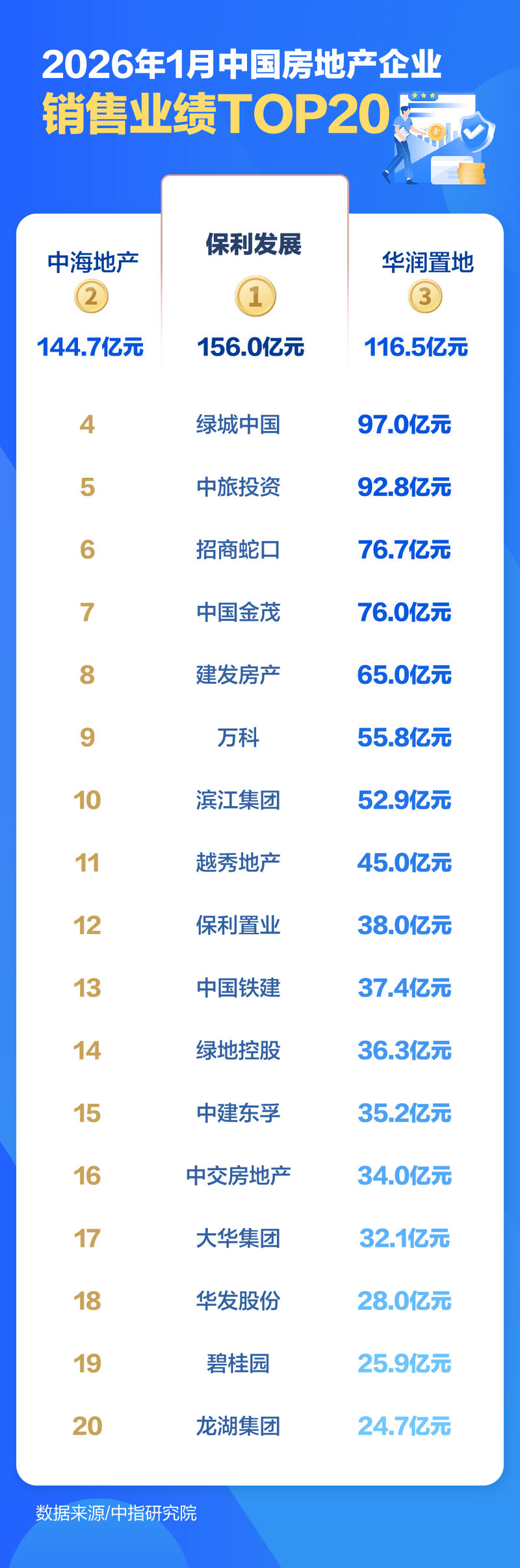
Core Viewpoint - The top 100 real estate companies in China are experiencing a significant reshuffling in their rankings as of January 2026, with a notable decline in overall sales figures compared to the previous year [2][3]. Group 1: Sales Performance - In January 2026, the total sales of the top 100 real estate companies reached 190.52 billion yuan, representing an 18.9% year-on-year decline [2]. - Only three companies achieved sales exceeding 10 billion yuan in January, a decrease of two compared to the same period last year [2]. - The number of companies with sales over 5 billion yuan increased to ten, up by two from the previous year [2]. Group 2: Ranking Changes - The top 10 rankings saw significant changes, with Poly Developments, China Overseas, and China Resources remaining in the top four, while Vanke dropped from fifth to ninth place [3]. - China Travel Investment emerged as a major dark horse, jumping from outside the top 40 to fifth place [3]. - China Jinmao rose from thirteenth to seventh, indicating intensified competition within the top tier [3]. Group 3: Performance of Private Enterprises - Among the 32 companies that experienced year-on-year growth in January, six private enterprises had growth rates exceeding 100% [3]. - Bangtai Group and China Construction Yipin entered the top 20 in sales, benefiting from strategic investments during market lows [3]. Group 4: New Entrants and Market Dynamics - Seven new companies entered the top 100 list in January, with four being small to medium-sized private enterprises [4]. - State-owned enterprises continue to dominate land acquisition, with companies like Yuexiu Property and China Resources maintaining strong investment levels [4]. Group 5: Policy and Market Outlook - The policy environment is shifting towards stabilizing expectations, with measures such as extended tax rebates and loan extensions being implemented [4]. - The market is expected to see a gradual release of demand in March, driven by promotional activities from real estate companies before the Spring Festival [5].


房企开年排位生变:“保中华”格局延续 最大黑马竟是它?
Xin Jing Bao· 2026-02-02 13:33
Core Viewpoint - In January 2026, the sales performance of the top 100 real estate companies in China showed a total sales amount of 190.5 billion yuan, reflecting a year-on-year decline of 18.9%, indicating a stable continuation of the downward trend observed in the previous year [5][10]. Group 1: Sales Performance - The total sales amount for the top 100 real estate companies in January 2026 was 190.5 billion yuan, which is a year-on-year decrease of 18.9%, consistent with the decline observed throughout the previous year [5][10]. - The top three companies in terms of total sales were Poly Developments (15.6 billion yuan), China Overseas Land & Investment (14.47 billion yuan), and China Resources Land (11.65 billion yuan) [5][10]. - The average sales amount for the top 10 companies was 9.33 billion yuan, down 11.6% year-on-year, while the average for companies ranked 11-30 was 2.6 billion yuan, down 25.6% [10]. Group 2: Market Dynamics - The decline in sales is attributed to a high base from January of the previous year, where core city markets were notably active [5][9]. - The new entrant, China Travel Investment, ranked 5th with a sales amount of 9.28 billion yuan, marking a significant rise from previous years [9]. - The sales performance of the top 10 companies remained relatively stable, with three companies showing year-on-year increases, while seven experienced declines [10]. Group 3: Future Outlook - Analysts expect that as the Chinese New Year approaches, real estate companies may increase marketing efforts, which could lead to a temporary boost in market activity [11]. - There is a need for coordinated policy efforts from both demand and supply sides to effectively restore market confidence [11].

万科亏损加剧2025年预亏820亿 68亿债券展期深铁再输血23.6亿驰援
Chang Jiang Shang Bao· 2026-02-02 00:44
Core Viewpoint - Vanke is facing a significant increase in losses, with a projected net loss of approximately 82 billion yuan for 2025, which is a substantial rise from the previous year's loss of 49.48 billion yuan [1][2]. Group 1: Financial Performance - The projected net loss for 2025 is about 82 billion yuan, with a net loss of approximately 80 billion yuan after excluding non-recurring gains and losses, marking a further deterioration compared to the previous year's loss of 49.48 billion yuan [1][2]. - The loss is attributed to four main factors: a significant decline in the scale of project settlements and low gross margins, increased credit and asset impairment provisions, losses in some operational businesses after depreciation, and asset disposal losses due to lower transaction prices in a challenging market [2][3]. Group 2: Operational Achievements - Despite the financial losses, Vanke has made progress in ensuring delivery, cost reduction, and diversification, with 117,000 units delivered in 2025, including 16,000 units delivered 30 days early and about 5,000 units delivered across years [3]. - The company has implemented a "City Delivery" initiative, utilizing smart technologies for construction management and establishing a standardized delivery system [3]. Group 3: Debt Management - Vanke successfully completed the extension of three bonds totaling 6.8 billion yuan, alleviating immediate liquidity pressures and avoiding default risks in the public market [5][6]. - The major shareholder, Shenzhen Metro Group, has provided continued financial support, including a loan of up to 2.36 billion yuan to help repay market debts, with total support exceeding 30 billion yuan since 2025 [6][7]. - Despite these measures, Vanke's liquidity remains under pressure, with cash and cash equivalents at 60.39 billion yuan against short-term borrowings and current liabilities totaling 151.4 billion yuan, resulting in a cash shortfall exceeding 90 billion yuan [6][7]. Group 4: Strategic Direction - Vanke has withdrawn its public REITs application for its logistics subsidiary, which was intended to help liquidate assets and improve cash flow, indicating challenges in asset management [7]. - The company plans to focus on strategic optimization, standardized operations, and technological empowerment to enhance its business layout and risk management [7].
机构研究周报:风格转换成长“轮休”,黄金短空长多
Wind万得· 2026-02-01 22:37
Core Viewpoint - The article discusses the recent volatility in the gold and silver markets, the transition of the equity market from a "structural bull" to a "comprehensive bull," and the implications for various sectors, particularly technology and real estate [1][3][4]. Group 1: Precious Metals - On January 30, gold and silver experienced significant declines, with silver dropping 36% and gold falling over 12%, marking the largest daily declines in history [3]. - Short-term market dynamics indicate that the momentum for gold's correction is still accumulating, while the long-term fundamentals for gold remain solid, suggesting a continued bull market trend [3]. Group 2: Equity Market - According to Franklin Templeton, the domestic asset allocation for 2026 will be driven by three core logic points: a weak dollar benefiting RMB assets, low domestic interest rates leading to increased equity investments, and policy support impacting inflation [4]. - Zhejiang Securities notes that the technology growth sector has entered a phase of high-level consolidation after a strong three-week performance, while the resource sector is experiencing volatility amid global resource price fluctuations [6]. - CICC highlights that the willingness of residents to invest in the stock market remains weak, with the correlation between available funds and stock market performance being low [7]. Group 3: Industry Research - Huatai Securities indicates that the real estate sector is entering a "policy + small spring" window, with improved transaction volumes in core cities and relaxed financing conditions [10]. - China Europe Fund emphasizes a moderate bull market for A-shares in 2026, focusing on structural opportunities in overseas computing power and industrial metals [11]. - China Asset Management points out that the demand for electrical equipment exports is rising due to the urgent need for upgrades in North America's aging power grid [12].

日均预亏5.9亿,万科与千亿巨债竞速,谁赢?
Xin Lang Cai Jing· 2026-02-01 11:09
炒股就看金麒麟分析师研报,权威,专业,及时,全面,助您挖掘潜力主题机会! 来源:野马财经 万科2025年预亏820亿元, 其中第四季度预亏约539.85亿元。 1月30日晚,万科(证券名称:万科A 代码:000002.SZ)发布业绩预告,2025年归母净利润预亏约820 亿元,据此推算,万科2025年第四季度预计亏损约539.85亿元,每天预计亏损约5.9亿元。 此外,万科预亏金额或将刷新A股单年亏损纪录,过去两年,这家曾被视为"稳健典范"的房企近两年已 经累计亏损超1300亿元,接近此前五年的归母净利润总和。 与此同时,万科正与巨额债务"竞速",多笔债券寻求展期。而带领万科多年的掌门人郁亮,也在年初因 退休卸任,近期市场更传出其"失联"消息。万科被认为正面临自成立以来最严峻的考验。 万科公告,2025年归母净利润预亏损约820亿元。据Wind数据显示,2025年前三个季度,万科归母净利 润分别亏损62.46亿元、57亿元、160.69亿元。据此推算,万科2025年第四季度预计亏损约539.85亿元。 以2025年第四季度91天来算,万科每天亏损约5.9亿元。 万科解释称,业绩亏损主要原因包括:房地产开发项目 ...

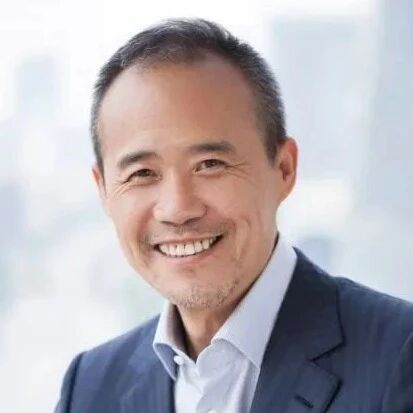
王石发文或为回应失联
21世纪经济报道· 2026-02-01 07:57
Group 1 - Wang Shi updated his social media on January 30, possibly in response to rumors of his disappearance [1] - On the same day, Vanke announced its performance forecast for 2025, expecting to deliver 117,000 homes, which is about 70% of the total delivery volume needed over the past two years [3] - Vanke anticipates a net profit loss of approximately 82 billion yuan for 2025, compared to a loss of about 49.478 billion yuan in the same period last year [3] Group 2 - Vanke aims to improve its operations through strategic focus, standardized operations, and technological empowerment to optimize business layout and structural adjustments [3] - The company is committed to enhancing its development and operational capabilities across multiple scenarios while working to mitigate risks and overcome challenges [3]
王石更新在深圳骑行的视频,还在朋友圈发文,疑回应失联传言
Mei Ri Jing Ji Xin Wen· 2026-02-01 06:58
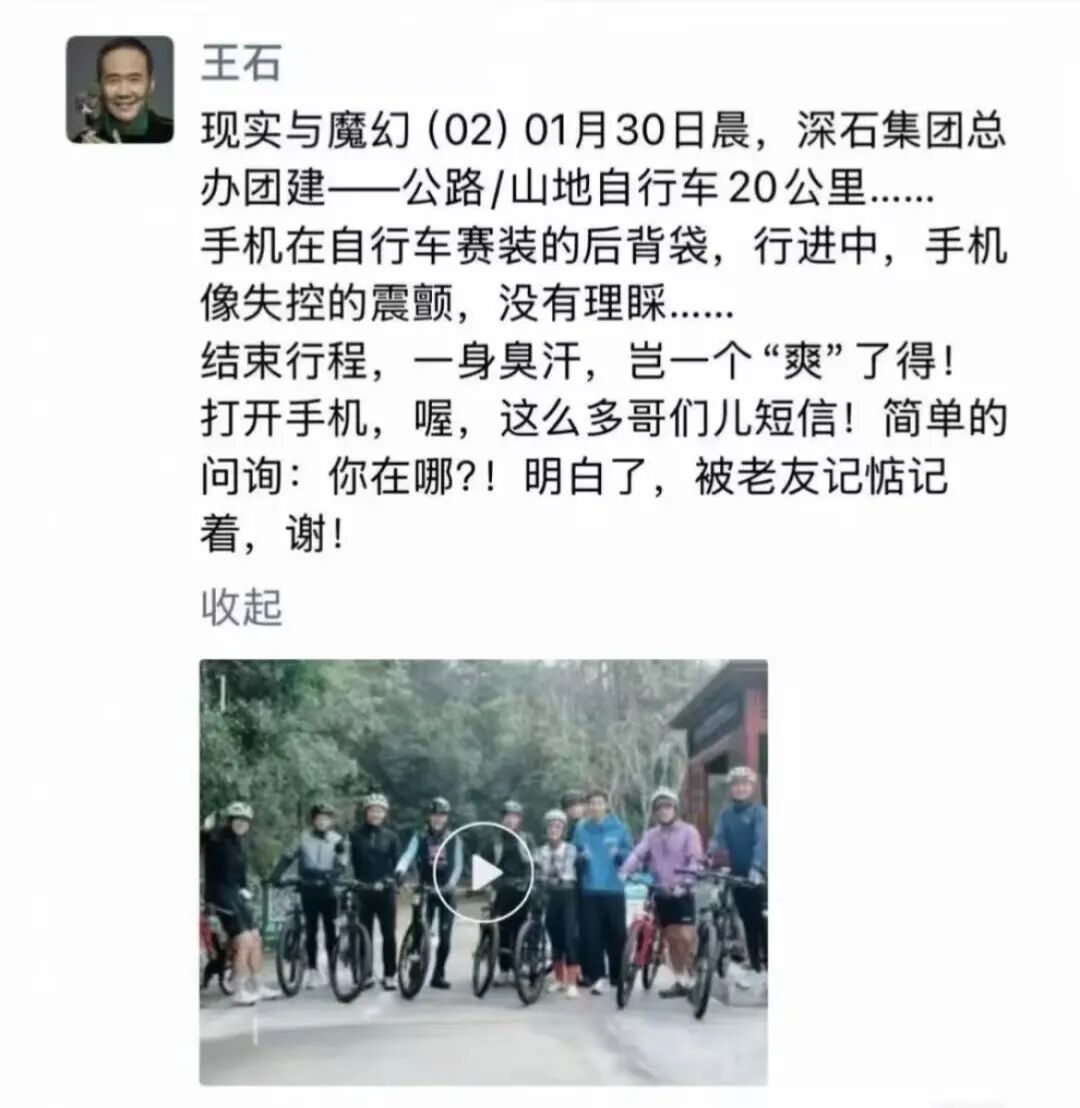
每经记者|黄婉银 每经编辑|程鹏 陈梦妤 向江林 近日,王石在朋友圈和视频主页更新了最新动态,疑似回应失联传闻。 王石在发布的骑行视频中专门标注了时间为1月30日,当日他在深圳马峦山骑行14.44公里,历时两个小时。 就在王石骑行当天,万科发布2025年度业绩预告,预计2025年净利润亏损约820亿元,上年同期亏损约494.78亿元。 记者|黄婉银 编辑|程鹏 陈梦妤 向江林 校对|许绍航 封面图片来源:每经记者 薛辉 摄 |每日经济新闻 nbdnews 原创文章| 他还发布朋友圈:"现实与魔幻(02)01月30日晨,深石集团总办团建——公路/山地自行车20公里⋯⋯手机在自行车赛装的后背袋,行进中,手机像失控的 震颤,没有理睬⋯⋯结束行程,一身臭汗,岂一个'爽'了得!打开手机,喔,这么多哥们儿短信!简单的问询:你在哪?!明白了,被老友记惦记着, 谢!" 未经许可禁止转载、摘编、复制及镜像等使用 ...
从李亚鹏嫣然医院到大企业,可持续公益到底有多难?阿里、腾讯、万科、宁德时代等巨头给出不同模式
Mei Ri Jing Ji Xin Wen· 2026-02-01 05:54
Core Viewpoint - The article discusses the challenges and strategies of corporate philanthropy in China, highlighting the need for sustainable models that integrate social responsibility into business operations. It emphasizes that relying solely on a few individuals for charitable efforts is not sustainable in the long run [1][2]. Group 1: Corporate Philanthropy Models - Five main types of corporate philanthropy are identified among the top 50 companies in China: 1. **Participation by Everyone**: Companies like Tencent encourage public involvement through low-barrier donation options, such as the "Fenfen Donation" program, which has engaged 400 million users by the end of 2024 [2][3]. 2. **Technical or Industrial Support**: Companies like CATL engage in rural revitalization through initiatives that support local agriculture, such as the "I Have an Acre of Land" program, which has reclaimed 280 acres of wasteland [3][4]. 3. **Establishment of Charitable Trusts/Funds**: Many companies, including Vanke, have set up foundations that have collectively invested over 1 billion yuan in various social causes by the end of 2024 [4]. 4. **Creating Charity IPs**: Notable examples include Ping An's Hope Primary Schools, which have supported over 31,000 students and trained over 20,000 rural teachers [4][5]. 5. **Direct Charitable Donations**: This straightforward approach remains a primary method for many companies, although it is seen as less sustainable [4][5]. Group 2: Sustainability of Philanthropic Models - Among the five models, "Technical or Industrial Support" is considered the most sustainable, as it aligns social needs with business capabilities, allowing for a synergy between social and commercial value [5][6]. - Establishing charitable trusts or funds is also viewed as sustainable, as it allows for independent management of social issues, facilitating long-term planning [5][6]. - The "Participation by Everyone" model enhances brand image and is well-suited for platform companies like Tencent, while the "Charity IP" model maximizes brand benefits [5][6]. Group 3: Challenges in Corporate Philanthropy - Companies face significant challenges in creating sustainable philanthropic models, including the need for strategic integration of philanthropy into business operations and the establishment of a culture that promotes ongoing participation [11][12]. - The lack of dedicated personnel in many corporate foundations raises concerns about the effectiveness and management of charitable initiatives [8][9]. - A comprehensive approach to philanthropy is necessary, requiring professional management processes and a clear understanding of social issues to ensure long-term impact [12][13]. Group 4: Financial Contributions and Impact - In 2024, corporate donations accounted for 983 billion yuan, representing 74.21% of total charitable contributions in China, underscoring the critical role of businesses in philanthropy [8]. - Notable large donations include BYD's commitment of 3 billion yuan to education and significant stock donations from individuals supporting educational institutions [8][9]. - The article highlights the diverse forms of donations, including cash, stocks, and services, reflecting a growing trend in corporate philanthropy [8].


