
BOSIDENG(03998)

Search documents
抖音电商助力国货羽绒服“暖经济”升温
Ren Min Wang· 2025-12-06 01:30
Core Insights - The "China Good Down" initiative has led to significant growth for domestic down jacket brands on e-commerce platforms, with overall brand sales increasing by 38% year-on-year and some brands experiencing up to 80% growth [1][2] Group 1: Event and Campaign Performance - The "China Good Down" campaign has generated approximately 7 million video views and over 2.7 billion topic exposures since its launch, with multiple trending topics reaching the top of Douyin's charts [1] - The campaign utilized AIGC technology to create a futuristic display stage for domestic down brands, with the creative topic "IfYouAnnoyMeIWillBecomeDown" achieving over 20 million exposures [2] - The campaign included a live broadcast event in Mohe, showcasing product performance in extreme cold, attracting over 20 million views and 830,000 unique viewers [3] Group 2: Brand and Community Engagement - Brands like Duck Duck, Bosideng, and Tambor have evolved from merely providing warmth to being recognized as aspirational lifestyle choices, leading to a surge in brand visibility and sales [1] - The initiative also involved charitable activities, raising over 300,000 yuan through various fundraising efforts and donating warmth packages valued at 100,000 yuan to local schools [3] - The campaign's content strategy effectively connected with users emotionally, with topics like "SuperChillDomesticDownJacket" and "DownJacketLetsMeExperienceSnowFreedom" trending on Douyin [5]


南海之滨邂逅无界美学,波司登AREAL闪耀2025企业家博鳌论坛
Xin Hua Wang· 2025-12-05 08:52
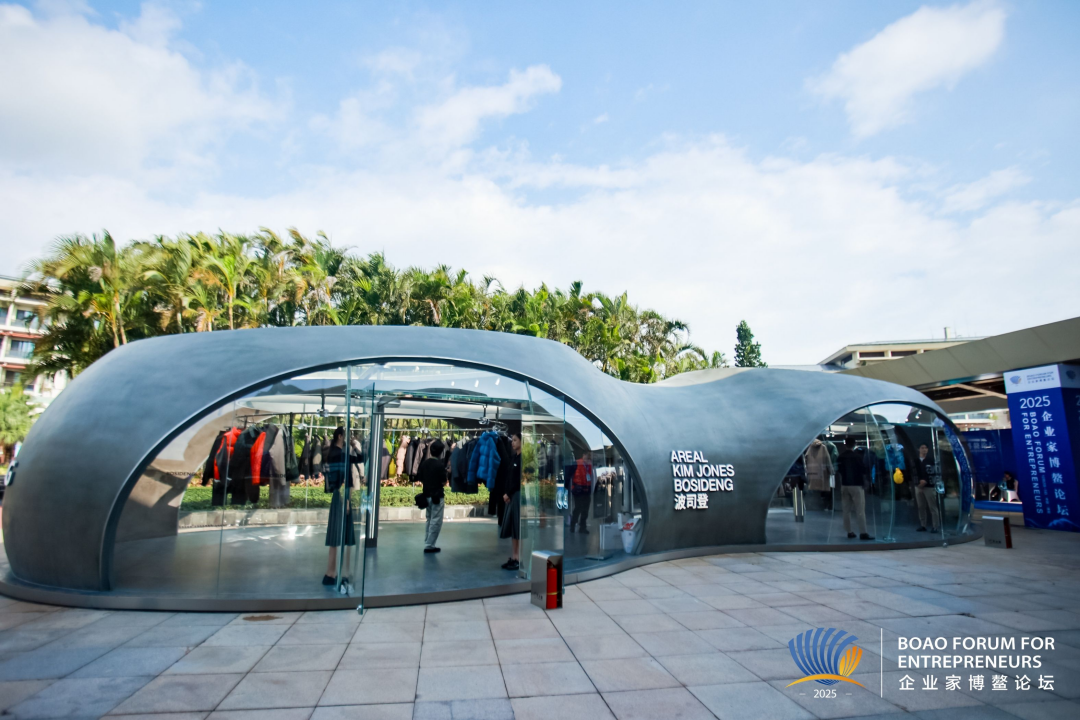
Core Viewpoint - The 2025 Entrepreneur Boao Forum held in Hainan focused on "Linking the World, Leading the Future: New Opportunities in the 14th Five-Year Plan," gathering global business leaders to discuss new opportunities and paths for development [1] Group 1: Company Initiatives - Bosideng showcased its AREAL high-end product line at the forum, integrating fashion aesthetics with modern technology to create an immersive cultural experience [1][6] - The AREAL pop-up store, inspired by the "∞" symbol, emphasizes a "boundary-less" design aesthetic, transforming the space into a three-dimensional expression of the brand's philosophy [2][5] - The pop-up store features a central "8" shaped installation that embodies the core concept of "breaking boundaries and moving forward," aligning with the AREAL series' vision [2][5] Group 2: Product Features - The AREAL line, developed in collaboration with renowned designer Kim Jones, represents a fusion of functionality and fashion, breaking the boundaries between outdoor and urban wear [5][9] - The collection redefines down jackets with a layering system that allows for versatile use across different scenarios, promoting a modern wardrobe that balances functionality and elegance [6][9] - Bosideng utilizes premium wool and custom fabrics in the AREAL line, combining natural materials with high-tech textiles to achieve both comfort and practicality [8] Group 3: Brand Positioning - The pop-up store at Boao signifies a key step in Bosideng's brand upgrade, reflecting the shift from "technology output" to "value output" for Chinese brands [9][11] - Bosideng has positioned itself on a global scale, participating in major international fashion weeks and expanding its international presence, aligning with the Belt and Road Initiative [9][11] - The collaboration with international designers illustrates Bosideng's commitment to finding its voice in the global market, merging Eastern craftsmanship with Western fashion trends [9][11]
“链”上发力!苏州农行精准助推纺织服装特色产业高质量发展
Yang Zi Wan Bao Wang· 2025-12-05 06:56
Core Viewpoint - The traditional manufacturing industry, particularly the textile and apparel sector in Suzhou, is undergoing a transformation towards modernization, supported by financial services from Agricultural Bank of China (ABC) Suzhou branch, enhancing the entire supply chain's efficiency and competitiveness [1][3]. Group 1: Industry Transformation - The textile and apparel industry in Suzhou has evolved from its historical roots in silk weaving to a modern industrial powerhouse, now referred to as "the world's clothing" [1]. - The integration of smart manufacturing technologies, such as AI and big data, has significantly improved production efficiency, reducing the production cycle from 100 days to 72 hours [2]. - The launch of AI-designed products, such as the single-shell jacket, has led to substantial sales, with projected annual sales exceeding 1 billion yuan [2]. Group 2: Financial Support and Innovation - ABC Suzhou has provided nearly 8 billion yuan in group credit to support the digital transformation of companies like Bosideng, addressing supply chain financing challenges [3]. - The bank's innovative financial products, such as "Yin Piao e-Rong," facilitate quick financing for suppliers, ensuring timely procurement of raw materials [3]. - Customized financial solutions for downstream distributors have resulted in a loan balance of 563 million yuan for Bosideng's supply chain [3]. Group 3: Local Industry Development - The wool sweater market in Wujiang District has seen a resurgence, with local businesses adapting to consumer demands for high-quality, stylish products [4]. - Financial support from ABC has enabled small and micro enterprises to secure funding for inventory and expansion, with a loan balance of 167 million yuan across over 460 businesses [5]. - The local wool sweater industry is now characterized by a positive cycle of demand insight, product innovation, and consumption upgrades, contributing to rural revitalization [5]. Group 4: Future Outlook - The textile and apparel industry in Suzhou is expected to continue its growth trajectory, driven by the financial support from ABC, enhancing domestic demand and solidifying the foundation of the real economy [6].
以企兴村 共享发展 波司登传递温暖 书写公益答卷
Xin Hua Wang· 2025-12-05 03:29
在2025企业家博鳌论坛十周年之际,一场以"乘风·成林"为主题的公益之约启幕。作为深耕实业与公 益数十载的代表性企业之一,波司登集团在论坛现场分享了深耕乡土、践行公益的实践经验,通过视频 生动展示了企业的责任与担当。 波司登的公益事业起源于康博村,也植根于康博村。饮水思源,情系桑梓,1999年波司登创始人高 德康当选康博村党支部书记,带领村民走上村企共建、共同致富的道路。系统性参与康博村的整体规划 与建设,对村内土地、道路、住宅、绿化及公共服务等功能区进行全面布局与科学改造,将原来分散的 老旧村庄集中建设,累计出资1.3亿元,为1700多名村民打造了包含427幢别墅在内的现代化农民集中居 住区——康博苑,苑中环境优美,配套服务设施完善,使其成为展现江南水乡新风貌的亮丽风景线。如 今,这里已成为宜居宜业的美丽乡村典范。 以感恩之心反哺家乡、回馈社会,是波司登始终不变的初心。 这份投入早已超越单纯的资金支持,是企业将自身发展与乡村振兴大局深度融合的主动担当。 康博村 有责任、有担当的企业行动,是国家和社会公益行动的重要支持。从常熟乡间的村办缝纫组到全球 知名的羽绒服品牌企业,波司登的成长轨迹始终与康博村的变迁同频 ...

波司登亮相企业家博鳌论坛 以新质生产力领航高质量发展
新华网财经· 2025-12-05 03:17
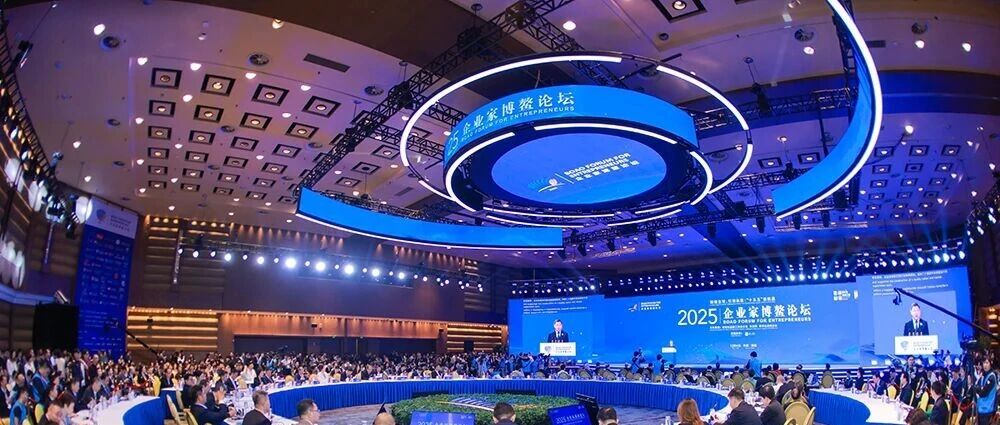
十载博鳌潮涌,共绘时代新章。12月4日,以"链接全球,引领未来:'十五五'新机遇"为主题的2025企业家博鳌论坛主论坛在海南博鳌举行。汇聚众多世 界500强、中国500强企业及行业领军者,共话新时期高质量发展路径。 作为中国羽绒服行业领军者和品牌国际化发展的优秀代表,波司登集团应邀参加本届论坛,并在这场被誉为"企业界年度思想盛宴"的盛会上分享其立足新 时代、把握新机遇,坚定迈向全球领先的战略思考与实践成果,传递出中国品牌深耕实业、链接全球的坚定信念。 本届论坛恰逢"十四五"收官与"十五五"谋篇的关键节点。论坛十年,亦是波司登与时代同频共振的缩影。波司登创业49年来,始终坚守实业报国初心,专 注羽绒服核心主业,从常熟乡间的缝纫组成长为全球知名的羽绒服品牌企业,连续30年中国市场销量领先,产品畅销全球,品牌价值达1180.58亿元,连 续入选世界品牌500强,攀登全球纺织服装价值链中高端的步伐坚实有力。 以品牌为桥,波司登链接全球创新资源迈向价值链中高端。早在上世纪90年代,波司登就率先进入瑞士等欧洲市场,成为中国品牌出海先行者。近年来, 品牌以全球视野高点定位,相继亮相纽约、米兰、伦敦、巴黎国际时装周,响应共建 ...
晨会纪要:2025 年第207期-20251205
Guohai Securities· 2025-12-05 00:40
Group 1: Market Overview - The primary market has seen steady progress with 19 public REITs issued in 2025, a decrease of 5 compared to the same period last year [3] - The secondary market REITs index fell by 0.52% in November, with the total market capitalization of public REITs at 219.885 billion, down by 0.692 billion from the previous month [4] - The industrial park sector experienced the largest decline, with a monthly drop of 2.43%, while the traffic infrastructure sector led with a 0.56% increase [4] Group 2: REITs Performance - The average cash distribution rate for property REITs is 4.65%, while for operating rights REITs, it is 8.21%, indicating a higher yield for the latter [5] - The trading volume for park infrastructure REITs reached 836 million units, leading the monthly transaction scale [5] - The valuation yield for property REITs stands at 4.04%, lower than the 4.28% for operating rights REITs [5] Group 3: Company Performance - Bosideng - Bosideng's revenue for FY2026H1 increased by 1.4% to 8.928 billion, with a net profit growth of 5.3% to 1.189 billion [6] - The main brand's down jacket business saw an 8.3% revenue increase to 6.57 billion, accounting for 73.6% of total revenue [6] - The OEM business faced an 11.7% revenue decline to 2.04 billion due to tariffs and geopolitical factors [6] Group 4: Operational Efficiency - Bosideng optimized its channel structure, reducing the number of stores to 3,140, with a focus on enhancing store profitability and operational efficiency [7] - Online sales for the brand's down jackets grew by 2.4% to 1.38 billion, with strong performance during the "Double Eleven" shopping festival [7] - The company maintained a healthy inventory turnover, with a reduction in inventory turnover days to 178, down by 11 days from the previous year [8] Group 5: Future Outlook - The company is expected to achieve revenues of 28.43 billion, 31.36 billion, and 34.43 billion for FY2026 to FY2028, with net profits projected at 3.92 billion, 4.39 billion, and 4.89 billion respectively [9] - The closing price on December 4, 2025, was 5.06 HKD, corresponding to a PE ratio of 14, 12, and 11 for FY2026 to FY2028 [9] - The company aims to enhance product innovation and channel quality to improve profitability [9]
波司登(03998.HK):持续高质量成长
Ge Long Hui· 2025-12-04 21:50
Core Insights - The company reported a revenue of 8.93 billion and a net profit of 1.19 billion for FY26H1, showing a year-on-year increase of 1.4% and 5.3% respectively [1] - The brand's down jacket revenue reached 6.57 billion, reflecting an 8.3% year-on-year growth [1] - The company plans to distribute an interim dividend of 0.063 HKD per share [1] Brand Leadership - The company is reinforcing its brand image as a "global leader in down jackets" through innovative brand campaigns and comprehensive product promotion [1] - In FY26H1, the company linked its brand to the Everest polar gene and launched the "Master Puff" series at Paris Fashion Week [1] Core Product Development - The company is focusing on its core product categories and expanding its spring and summer offerings [1] - Key product series include down jackets, functional outerwear, and sun protection clothing, with several products winning the ISPO Award for global design [1] Channel Optimization - The company is enhancing its channel operations by expanding top-tier stores and improving single-store performance [1] - Online sales of the brand's down jackets have shown steady growth, with strong performance during the Double Eleven shopping festival [1] Membership Experience Enhancement - The company has established better communication channels with customers, adding approximately 400,000 new members on Tmall and JD platforms [2] - As of September 30, 2025, the total membership on these platforms reached about 21.4 million [2] Financial Forecast - The company maintains its financial forecasts, expecting revenues of 28.4 billion, 31.1 billion, and 34.1 billion for FY26-28, with net profits of 4 billion, 4.4 billion, and 5 billion respectively [2]
波司登(3998.HK):羽绒服业务持续引领增长 期待旺季表现
Ge Long Hui· 2025-12-04 21:50
Core Viewpoint - Bosideng reported a 1.4% year-on-year increase in revenue and a 5.3% increase in net profit for the first half of FY26, with a declared interim dividend of 6.3 HK cents per share, indicating healthy growth despite a challenging market environment [1] Financial Performance - For the first half of FY26, Bosideng's revenue reached 8.928 billion yuan, up 1.4% year-on-year, while net profit attributable to shareholders was 1.189 billion yuan, up 5.3% year-on-year, with a gross margin increase of 0.1 percentage points to 50.0% [1] - The brand's down jacket business saw revenue grow by 8.3% to 6.568 billion yuan, although gross margin declined by 2.0 percentage points to 59.1% [2] Brand Performance - The main brand recorded revenue of 5.719 billion yuan, an increase of 8.3% year-on-year, with new product lines introduced to enhance consumer choice, but the gross margin fell by 1.5 percentage points to 64.8% due to faster growth in distribution channels compared to self-operated channels [2] - The Snow Flying brand focused on high cost-performance strategies, with revenue declining by 3.2% to 378 million yuan and a gross margin decrease of 2.2 percentage points to 47.9% [2] - The Ice Cleansing brand underwent brand repositioning and inventory clearance, resulting in a revenue drop of 26% to 15 million yuan and a significant gross margin decline of 82.5 percentage points to -63.4% [2] OEM Business - The OEM business faced challenges from tariff policies, geopolitical issues, and weak overseas consumer demand, leading to an 11.7% revenue decline to 2.044 billion yuan, but gross margin improved by 0.4 percentage points to 20.5% due to enhanced supply chain management [2] Women's Wear Business - The women's wear segment experienced a decline in revenue by 18.6% to 251 million yuan, with a gross margin decrease of 1.9 percentage points to 59.9% due to a persistently weak market environment [3] Diversification Efforts - Revenue from diversified businesses fell by 45.3% to 64 million yuan, while gross margin improved by 0.2 percentage points to 27.8%, primarily due to a decrease in school uniform revenue by 49.3% [3] Channel Optimization - The company is focusing on optimizing channel quality and enhancing single-store operations, with a net increase of 88 stores in the down jacket business, bringing the total to 3,558 stores [3] Investment Outlook - The company is expected to perform well in the upcoming peak season, with projected EPS for FY26-28 at 0.35, 0.38, and 0.43 yuan respectively, and a target price of 6.0 HK dollars, maintaining a "buy" rating [3]
雪中飞、冰洁加速开店,波司登转型计划有变?
3 6 Ke· 2025-12-04 12:09
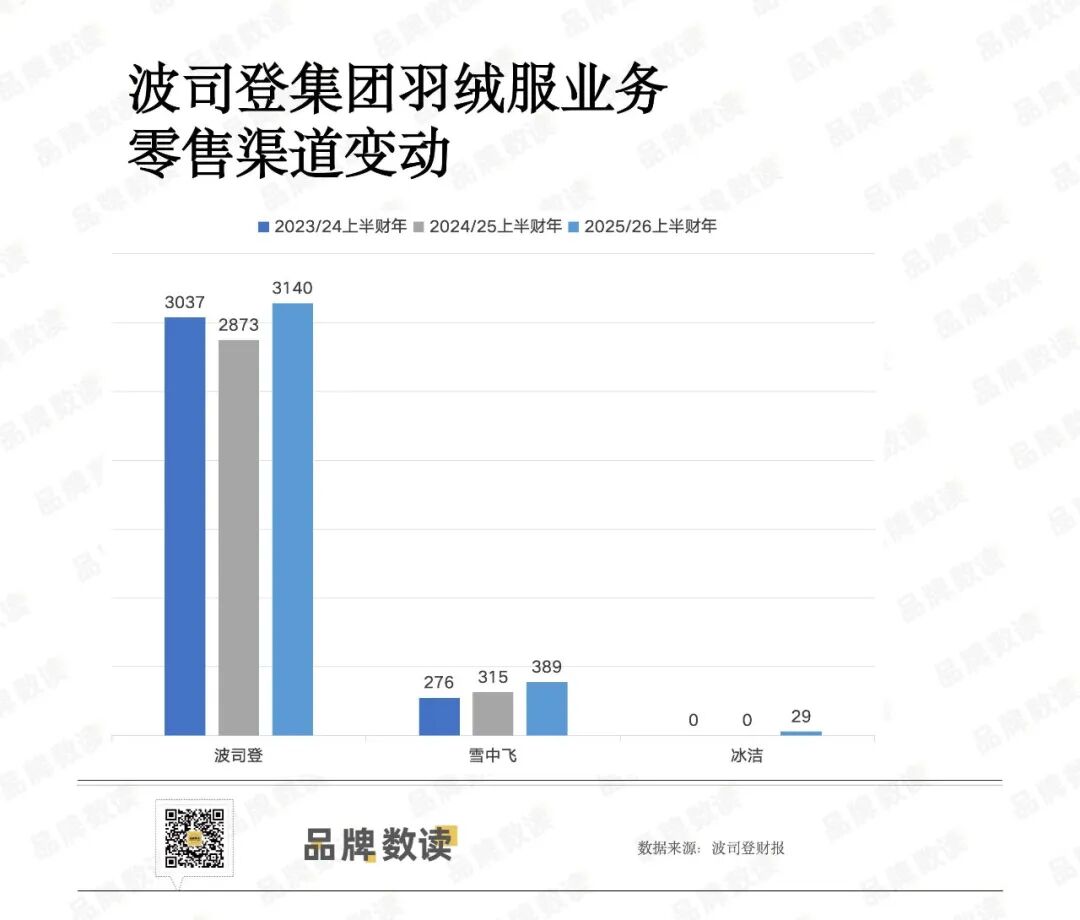
Core Insights - Bosideng reported a revenue of 8.928 billion yuan for the first half of the 2025/26 fiscal year, reflecting a year-on-year growth of 1.4%, while operating profit increased by 3.1% to 1.517 billion yuan [1] - The revenue growth rate for the Bosideng brand has declined compared to previous fiscal years, with an increase of 8.3% this year compared to 19.4% and 25.5% in the first halves of the 2023/24 and 2022/23 fiscal years, respectively [1] Group 1: Market Position and Strategy - The high-end down jacket market is competitive, with both international brands like Moncler and The North Face and local brands like Gaofeng and Kailas [2] - Bosideng has shifted focus to the mass market, emphasizing high cost-performance products, with a net increase of 88 retail outlets in the first half of the fiscal year, all from its budget brands Xuezhongfei and Bingjie [2][3] - The brand's strategy to strengthen its presence in the mass market is seen as a rational return to ensure cash flow and scale, as high-end products primarily serve brand image [2] Group 2: Store Expansion and Brand Positioning - Bingjie has opened 29 new stores, all dedicated retail outlets, after previously closing most offline channels [3][6] - Xuezhongfei's store count increased from 276 to 389, with a significant presence in mid-range shopping malls [7] - The main brand Bosideng, however, has reduced its store count by 67 to 3,140, indicating a strategic shift to optimize channel structure and improve quality [9] Group 3: High-End Product Development - Bosideng is launching high-end product lines to enhance brand image, including the "Dengfeng" series and collaborations with high-profile designers [10][11] - The introduction of the VERTEX concept store aims to reshape consumer perception of Bosideng as a high-end brand [13] - Despite these efforts, the brand's presence in high-end shopping districts remains limited, with only 2.61% of stores located in high-end areas [13] Group 4: Financial Performance and Challenges - Xuezhongfei reported a revenue of approximately 378 million yuan, down 3.2% year-on-year, while Bingjie faced a significant revenue decline of 26% [16] - The management has indicated that investments in brand marketing and product development for Xuezhongfei have increased, leading to a turnaround in revenue growth in recent months [16] - The high-end market for down jackets has seen a rise in competition, with brands like Gaofeng and Moose Knuckles gaining traction [17][19]
品牌开卷,300块的羽绒服为什么好卖?
Xin Lang Cai Jing· 2025-12-04 11:27
Core Viewpoint - The article discusses the surprising popularity of down jackets priced under 300 yuan, despite rising raw material costs, highlighting a shift in consumer behavior towards affordable options in the winter clothing market [1][4]. Group 1: Market Trends - Down jacket raw material prices have reached a 12-year high, yet jackets under 300 yuan are leading in sales on platforms like Taobao and Douyin [1]. - The top-selling down jackets on Taobao include brands like Bosideng and Xuezhongfei, with three out of the top five priced below 300 yuan [1][2]. - The majority of consumers do not require high-end warmth, as about 60% of China's population lives in regions with average winter temperatures above 0°C [4][6]. Group 2: Consumer Behavior - Most consumers lack the expertise to assess down jacket quality, with over 60% unable to judge warmth performance, making price and brand recognition key factors in purchasing decisions [6][9]. - During summer sales, consumers tend to buy higher-priced jackets at discounts, viewing them as investments, while winter purchases focus on basic survival needs, favoring lower-priced options [9][19]. Group 3: Competitive Strategies - Brands competing in the under-300 yuan segment focus on scale rather than high margins, with even a small profit per jacket leading to significant overall earnings through high sales volume [9][13]. - Brands emphasize high fill power and down content in their marketing, often claiming competitive specifications against higher-priced brands [13][14]. - Celebrity endorsements play a crucial role in building trust for affordable down jackets, with brands like Yaya and Xuezhongfei using well-known figures to alleviate concerns about quality [14][19]. Group 4: Product Innovation - The introduction of hybrid products, such as three-in-one jackets that combine down jackets with outer shells, enhances perceived value and versatility for consumers [16]. - Brands like Semir are leveraging unique marketing strategies, such as humorous advertising, to capture attention in the competitive down jacket market [17][19]. Group 5: Conclusion - The discussion around whether genuine down jackets can be purchased for under 300 yuan reflects a broader trend of rational consumer demand, where affordability does not equate to low quality [19].
