
INTEL(04335)

Search documents
开盘:美股周四开盘涨跌不一 英特尔股价飙升
Xin Lang Cai Jing· 2025-09-18 13:39
Core Viewpoint - The U.S. stock market showed mixed performance following the Federal Reserve's interest rate cut, with a notable surge in technology stocks, particularly Intel, which received a $5 billion investment commitment from Nvidia [1][3]. Market Performance - The Dow Jones Industrial Average decreased by 0.52 points to 46,017.80 points, while the Nasdaq Composite rose by 178.01 points, a 0.80% increase, reaching 22,439.336 points. The S&P 500 index increased by 27.23 points, or 0.41%, to 6,627.58 points [3]. - Despite volatility, the S&P 500 and Nasdaq indices are expected to record weekly gains of 0.2% and 0.5%, respectively, marking the sixth week of gains in seven weeks for the S&P 500 and the third consecutive week of gains for the Nasdaq [4]. Federal Reserve Actions - The Federal Reserve lowered its benchmark interest rate by 0.25 percentage points, with expectations of two more rate cuts this year, but only one in 2026. This decision was characterized as "risk management" by Fed Chair Jerome Powell, indicating a cautious approach rather than a shift to a long-term easing policy [3][4]. Company-Specific Developments - Intel's stock surged following Nvidia's announcement of a $5 billion investment aimed at joint development of data center and PC products, positively impacting other semiconductor stocks [3][5]. - Other notable company developments include: - Novo Nordisk's oral weight loss drug showing positive results in phase three clinical trials [5]. - Palantir securing a $750 million contract to expand in the UK market [5]. - Tesla receiving an order for 10,000 Optimus 3+ humanoid robots [5]. - Arvinas and Pfizer transferring commercialization rights for vepdegestrant [6]. - TSMC's stock rising as Apple secures over half of its 2nm capacity for next year [6].


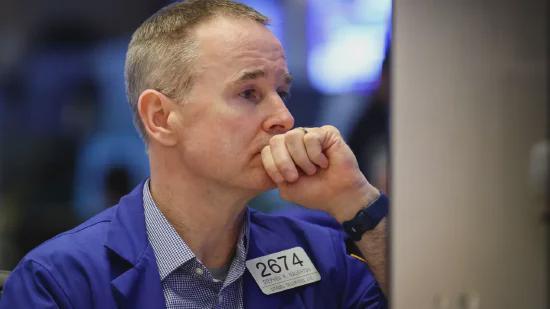
英特尔一个月内“狂吸”160亿美元,美政府成最大赢家?
Xin Lang Cai Jing· 2025-09-18 13:39
来源:视频滚动新闻 1.软银:2025年8月19日,英特尔与日本软银集团联合宣布,软银将向英特尔注资20亿美元。根据协 议,软银将以每股23美元的价格购入英特尔普通股,这笔约占英特尔2%股权的投资将使软银跃居第六 大股东。软银这笔投资不要求董事会席位,不附带购置英特尔芯片的承诺。2.美国政府:2025年8月22 日,英特尔宣布与美国联邦政府达成协议,后者将向英特尔普通股投资89亿美元,以每股20.47美元的 价格收购4.333亿股英特尔普通股,相当于该公司9.9%的股份,成为公司最大股东。政府该部分股权没 有董事会席位/特别治理权。3.英伟达:英伟达周四宣布,将向英特尔普通股投入50亿美元,每股价格 为23.28美元。该协议包含英特尔与英伟达联合开发个人电脑及数据中心芯片的计划。交易并不涉及英 特尔的代工业务。此次交易后,英伟达可能拥有英特尔4%或更多的股份。4.值得一提的是,英伟达此 次收购英特尔普通股的价格高于美国政府,使美国政府上月的投资在不到一个月的时间里理论上升值了 约14%,年化收益率高达168%。 ...

策略师:英特尔借英伟达IP解AI难题 合作是“双赢好棋”
Ge Long Hui A P P· 2025-09-18 13:24
格隆汇9月18日丨财富管理公司Dakota Wealth高级投资组合经理Robert Pavlik表示:"英特尔与英伟达合 作带来的帮助很大,单是能接触到英伟达的知识产权这一点就极具价值。对于一家在研发人工智能所需 产品方面举步维艰的公司(指英特尔)而言,这能起到长远作用——既有助于稳定公司局面,也为这家长 期备受质疑的企业增添了几分可信度。这是一步好棋。英伟达显然有足够的资金来做这件事,既然如 此,何乐而不为呢?为什么不尝试进行这项投资,看看后续会有怎样的发展呢?" ...
英伟达50亿美元入股英特尔,双方达成AI芯片合作
Xin Lang Ke Ji· 2025-09-18 13:08
Core Viewpoint - NVIDIA announced a $5 billion investment in Intel, aiming to strengthen the struggling American chipmaker without providing key manufacturing orders [1] Group 1: Investment Details - NVIDIA will purchase Intel common stock at $23.28 per share, slightly below Intel's closing price of $24.90 on Wednesday [1] - This purchase price is higher than the $20.47 per share that the U.S. government paid for a 10% stake in Intel last month [1] - After the transaction, NVIDIA is expected to become one of Intel's largest shareholders, potentially owning 4% or more of Intel's shares following the issuance of new stock [1] Group 2: Strategic Collaboration - Intel will develop custom x86 CPUs for NVIDIA, which will be integrated into NVIDIA's artificial intelligence infrastructure platform [1] - Additionally, Intel will create a chip system to power NVIDIA's small chips for personal computers [1] - NVIDIA's CEO Jensen Huang stated that this historic collaboration will tightly integrate NVIDIA's AI and accelerated computing stack with Intel's CPUs and extensive x86 ecosystem [1]
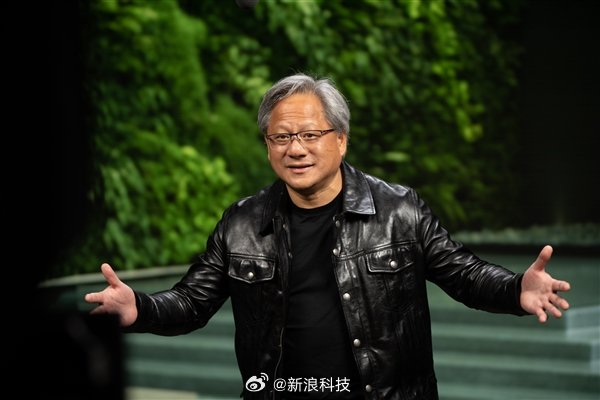
分析:英伟达50亿投英特尔“醉翁之意在影响力” 地缘政治成战略核心
Ge Long Hui A P P· 2025-09-18 13:08
格隆汇9月18日丨Hargreaves Lansdown高级股票分析师Matt Britzman表示:"英伟达向英特尔投资50亿美 元,其核心不在于资金本身,而在于影响力的布局。对英特尔而言,这无论是在财务层面还是战略层 面,都是又一项值得欢迎的助力——它正依靠英伟达维持竞争力。但即便有美国政府与英伟达的支持, 对于其晶圆代工业务而言,这仍未达成'全垒打'(指彻底成功):该业务目前仍难以吸引所需的核心客 户,而要与台积电的强大实力抗衡,核心客户的支持至关重要。对英伟达来说,这笔投资带来的财务影 响微乎其微,但政治层面的收益却十分显著:此举与美国政策方向一致。简而言之,这是一项带有地缘 政治意味的战略联盟,而非单纯的资产负债表层面的交易。" ...
分析师:英伟达入股英特尔 兼顾美国投资多元与政府好感
Ge Long Hui A P P· 2025-09-18 13:08
格隆汇9月18日|伦敦IG集团首席市场分析师Chris Beauchamp表示:能看到这么多公司(股价)出现这样 的波动很有意思,而且这源于英伟达"施展魔力"。这一现象反映出,英伟达在一定程度上希望实现其在 美国境内投资的多元化,同时也想借此给美国政府留下好印象(争取好感)。这能让它继续获得美国政府 的青睐。这既表明英伟达必须扩大自身业务范围,也意味着英特尔正寻求在市场中扮演更重要的角色 (成为更具影响力的参与者)。 ...
百达银行分析师:英伟达50亿美元合作“解渴”英特尔 背后或含美国政治考量
Ge Long Hui A P P· 2025-09-18 13:01
格隆汇9月18日|瑞士百达银行高级分析师Ipek Ozkardeskaya表示:英特尔目前急需一套切实可行的业 务模式,同时要确保客户对其产品感兴趣。因此,英伟达同意斥资高达50亿美元,通过合作开发面向个 人电脑与数据中心的芯片——这对英特尔而言是一则利好新消息。英特尔需要一个合作伙伴,而对一 家'投资者普遍质疑其未来前景、且担忧其在错失人工智能发展机遇后能否重归巅峰的公司来说,英伟 达正是最佳合作伙伴。对英伟达而言,这一决策有可能获得了政治层面的支持。因为美国政府希望这些 企业能在美国本土生产芯片,且政府此前已入股英特尔,目的是推动其建设俄亥俄州工厂——这座工厂 将成为美国境内规模最大的芯片制造工厂之一。 ...
美股盘前丨美联储降息25个基点 英特尔盘前一度涨超34%
Di Yi Cai Jing· 2025-09-18 12:53
【时政新闻】 北京时间周四凌晨,美联储宣布降息25个基点。新任美联储理事斯蒂芬·米兰投出唯一反对票,支持降 息50个基点。美联储预测显示,到年底将再降息50个基点,未来两年每年再降息25个基点; 英国央行维持利率在4%不变; 特朗普:英美关系像"一个和弦中的两个音符"; 热门中概股盘前回调,哔哩哔哩、蔚来跌超3%,小鹏汽车跌超2%,阿里巴巴跌近2%; 量子计算概念股盘前延续昨日涨势,IONQ涨近7%,QUBT涨超4%,RGTI涨3%; 【公司新闻】 英特尔美股盘前股价直线拉升,一度涨超34%,现涨29%。消息面上,英伟达将以每股23.28美元的价格 向英特尔普通股投资50亿美元; 受英特尔大涨带动,部分半导体相关股票盘前拉升。新思科技大涨超12%,阿斯麦盘前涨7%,应用材 料涨近6%; Coinbase盘前涨近2%,瑞穗银行上调公司目标价12%; 英美签署《科技繁荣协议》; 李在明谈美关税:如按照美方要求达成协议,我可能会被弹劾; 【市场动态】 美股三大股指期货齐涨,道指期货涨0.51%,标普500指数期货涨0.77%,纳指期货涨1.14%; 欧洲主要股指上涨,英国富时100指数涨0.17%,法国CAC40指 ...
英特尔盘前一度大涨超30%!英伟达宣布50亿美元入股英特尔 将建立合作关系
Xin Hua Cai Jing· 2025-09-18 12:47
新华财经北京9月18日电 9月18日,英伟达宣布将斥资50亿美元、以每股23.28美元的价格收购英特尔普 通股。英伟达将成为英特尔最大的股东之一,在发行新股以完成交易后,英伟达可能拥有英特尔4%或 更多的股份。 尽管在数据中心和PC领域,基于Arm技术的芯片正在蚕食市场份额,但英特尔的x86架构仍然占据多数 份额。目前,英伟达也在开发基于Arm架构的自研CPU,并表示这一计划不会改变。 值得注意的是,此次合作并不涉及英特尔代工部门为英伟达生产芯片。多数分析师认为,若要生存,英 特尔代工未来必须赢得英伟达、苹果、高通或博通等大客户的订单。 作为硅谷曾经的标杆企业,英特尔正深陷困境,其芯片代工业务近年来持续亏损,拖累了公司经营状 况。与此同时,AI热潮的爆发加剧了其制造工艺领先地位丧失带来的困境。在2022年,英特尔的营收 还超过英伟达两倍。然而,如今华尔街预计,英伟达今年销售额将达到2000亿美元,明年单季度收入可 能超过英特尔全年。 此前,英特尔已经收到来自美国政府和软银的资金支持。据新华社,美国芯片制造商英特尔公司8月22 日宣布与美国联邦政府达成协议,后者将向英特尔普通股投资89亿美元,以每股20.47美 ...
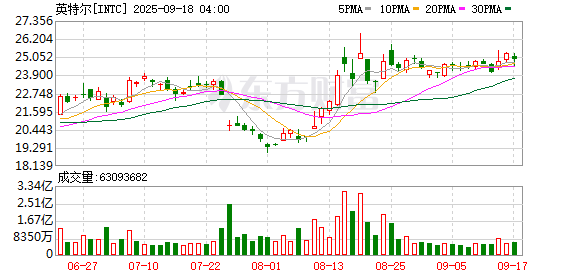
英特尔股价盘前暴升近30% 纳指期货涨超1%
Xin Lang Cai Jing· 2025-09-18 12:35
Market Overview - US stock index futures rose collectively before the market opened, with the Nasdaq futures increasing by over 1% due to strong performance in technology stocks [1] - As of the report, Dow Jones futures rose by 0.47%, S&P 500 futures by 0.75%, and Nasdaq 100 futures by 1.14% [2] Company News - Intel's stock surged over 29% in pre-market trading after Nvidia announced a $5 billion investment in Intel, which will customize x86 CPUs for Nvidia [3] - Nvidia's stock rose nearly 3% following the announcement of the partnership, while AMD's stock fell approximately 4% [3] - Other technology stocks such as Google, Broadcom, Tesla, and Palantir saw increases of over 1%, with ASML rising about 7% and Synopsys increasing over 10% [4] - Novo Nordisk's stock rose by 7.7% after a product manager stated that its semaglutide has significant advantages over competitors [4] - 89bio's stock skyrocketed over 86% after Roche announced plans to acquire the company for up to nearly $3.5 billion [4] Economic Context - Following the Federal Reserve's decision to cut interest rates by 25 basis points, market sentiment shifted positively towards technology stocks [4] - A strategist from Societe Generale indicated that it is time to invest more in the stock market, predicting that the S&P 500 index could reach 7,300 points by the first half of 2026 [4] European Market Performance - European stock markets also showed positive movement, with Germany's DAX index rising by 1.2%, the UK's FTSE 100 increasing by 0.15%, and France's CAC40 up by 1.14% [5] Strategic Partnerships - Nvidia will invest $5 billion in Intel, which will produce customized x86 CPUs for Nvidia's AI infrastructure, marking a significant collaboration between the two companies [6] - Microsoft, Nscale, and Aker have entered a five-year agreement to build next-generation AI infrastructure in Norway, valued at up to $6.2 billion [6] Product Launches - Meta launched AI smart glasses, Meta Ray-Ban Display, featuring a built-in HD display and priced starting at $799 [7] Clinical Research Developments - Eli Lilly announced positive results from a head-to-head study showing that orforglipron outperformed oral semaglutide in controlling blood sugar and weight loss among type 2 diabetes patients [8]
