INTEL(04335)
Search documents
英特尔涨超7%,郭明錤预计苹果可能会发货苹果芯片
Hua Er Jie Jian Wen· 2025-11-28 16:23
Core Viewpoint - The company is expected to start shipping Apple's low-cost M chips, with deliveries anticipated as early as 2027, which could lead to more orders from Apple and other primary customers, positively impacting Intel's long-term outlook [1] Group 1 - Analyst Ming-Chi Kuo from Tianfeng International predicts that Intel will begin shipping Apple's low-cost M chips, with the earliest delivery expected in 2027 [1] - There is potential for Intel to receive more orders from Apple for the 14A node and subsequent versions, as well as increased orders from other primary customers [1] - Following this news, Intel's stock price rose by 7.5%, marking a continuous increase over five trading days, with a total rise of 18% during this period [1]
美股异动 | 英特尔(INTC.US)涨超6.5% 谷歌TPU需求扩张或利好其代工版图
智通财经网· 2025-11-28 15:49
Core Viewpoint - Intel's stock price increased by over 6.5% to $39.24, driven by growing industry interest in custom ASICs in the AI computing era, particularly following Google's success with its self-developed chips [1] Group 1: Company Developments - Google's success with its self-developed chips is drawing attention to the expanding role of custom ASICs in AI computing [1] - TSMC is currently the main manufacturing partner for Google's TPU, indicating a competitive landscape in chip manufacturing [1] - The increasing momentum of custom AI ASICs is expected to benefit Intel's foundry services and product roadmap, potentially enhancing Intel's broader recovery outlook [1] Group 2: Market Implications - The developments in custom ASICs may serve as a breakthrough catalyst for Intel's stock, reinforcing positive market sentiment [1]
美股芯片股大涨,英特尔涨近6%,黄金向上触及4200美元,白银、铜价创新高
2 1 Shi Ji Jing Ji Bao Dao· 2025-11-28 15:41
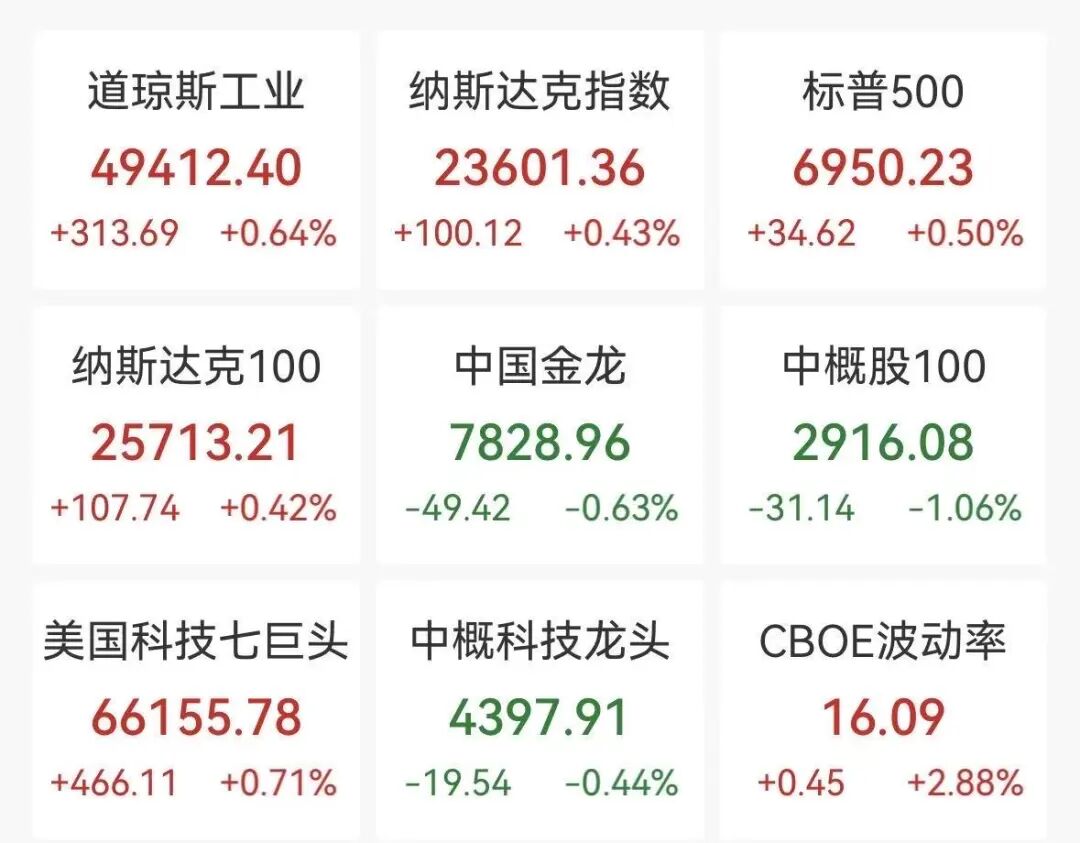
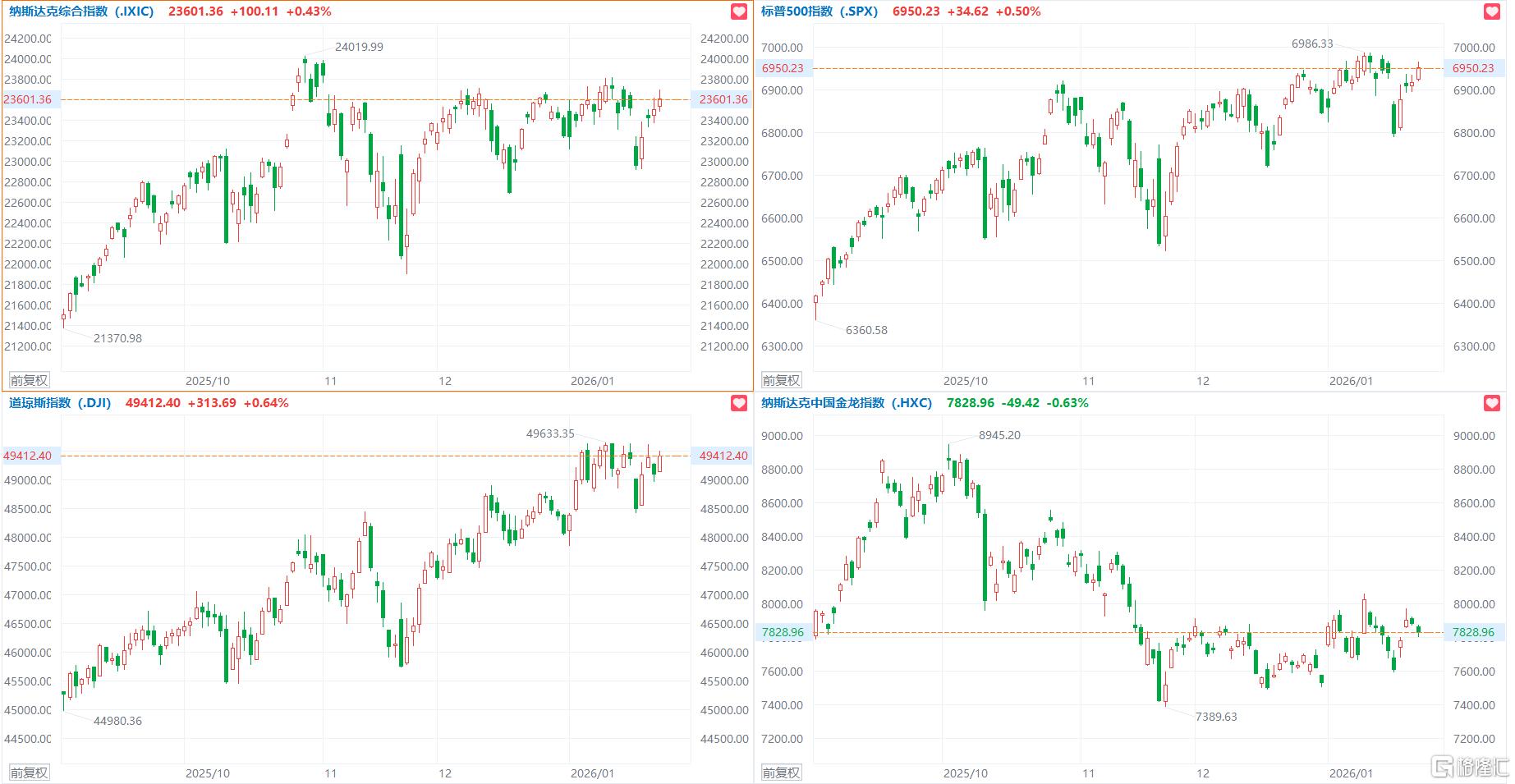
Market Overview - The US stock market indices opened higher on November 28, with the Dow Jones and S&P 500 rising over 0.2% and the Nasdaq increasing over 0.4% due to heightened expectations of a Federal Reserve interest rate cut [1] - Major technology stocks showed mixed performance, with Google and Amazon rising approximately 1%, while Oracle fell over 3% and Nvidia dropped 1.7% [2][3] - The cryptocurrency market saw Bitcoin surpassing $92,000, marking a nearly 1.8% increase in the last 24 hours, while Ethereum rose to over $3,070 with a 2.6% gain [5][6] Precious Metals - Precious metals experienced significant gains, with spot gold reaching $4,200, up about 1%, and silver increasing by nearly 3%, both hitting historical highs [4][5] - Silver mining stocks followed the upward trend, with Hecla Mining rising 4.4% and Endeavour Silver increasing by 6.5% [4] Economic Indicators - The Federal Reserve's Beige Book indicated moderate inflation and weakening economic momentum, providing a rationale for potential interest rate cuts [8] - The probability of a 25 basis point rate cut in December is reported at 86.9%, with a cumulative cut of 50 basis points by January having a probability of 23.1% [8]
英特尔股价上扬5.8%,即将迎来连续第五个交易日上涨
Mei Ri Jing Ji Xin Wen· 2025-11-28 15:15
每经AI快讯,11月28日,英特尔股价上扬5.8%,即将迎来连续第五个交易日上涨。 ...
【美股盘前】数据中心故障导致芝商所交易暂停;甲骨文洽谈380亿美元巨额贷款;苹果就印度反垄断机构380亿美元罚款提起诉讼;台积电起诉前高管窃取机密、转投英特尔
Sou Hu Cai Jing· 2025-11-28 10:07
②【中概股普涨】中概股盘前普涨。截至发稿,拼多多上涨0.69%,京东上涨1.29%,蔚来汽车上涨 1.46%,小鹏汽车上涨1.32%。 每经记者|岳楚鹏 每经编辑|高涵 ①【数据中心故障导致芝商所交易暂停】当地时间11月27日,由于数据中心故障,芝加哥商品交易所的 期货和期权交易出现了暂停,扰乱了股票、外汇、债券和大宗商品市场。此次故障引发了市场参与者的 普遍不满,他们担心会因此损失一个交易日。截至发稿,芝商所并未恢复交易。 ④【甲骨文洽谈380亿美元巨额贷款】当地时间11月28日,据媒体援引知情人士透露,多家银行正在就 一笔高达380亿美元的新贷款事宜,与甲骨文以及数据中心开发商Vantage Data Centers展开洽谈,这笔 贷款将用于为OpenAI扩建更多基础设施。截至发稿,甲骨文下跌1.64%。 ⑤【苹果就印度反垄断机构380亿美元罚款提起诉讼】当地时间11月27日,据媒体报道,由于可能被处 以高达380亿美元的巨额罚单,苹果公司已在德里高等法院提起诉讼。印度反垄断机构正在调查印度初 创企业联盟以及Tinder母公司Match提出的投诉,这些公司指控苹果存在"滥用行为",迫使开发者为应 用内购买 ...
台积电起诉前高管窃密2nm技术叛逃 英特尔CEO回应
Sou Hu Cai Jing· 2025-11-28 07:13
Core Points - TSMC has filed a lawsuit against former senior vice president Luo Wei-ren for allegedly taking confidential 2nm technology to Intel after leaving the company [1] - Luo Wei-ren had signed non-disclosure and non-compete agreements during his tenure at TSMC, promising not to work for competitors after leaving [1] - Intel's CEO Pat Gelsinger has publicly supported Luo, claiming the accusations are baseless and emphasizing Luo's previous contributions to wafer process technology development at Intel [2] Group 1 - TSMC's lawsuit is based on concerns that Luo may use or disclose trade secrets to Intel [1] - Luo Wei-ren's background includes a PhD from UC Berkeley and a long career in semiconductor technology, including roles at both TSMC and Intel [1] - The legal action reflects TSMC's commitment to protecting its intellectual property and competitive advantage in advanced semiconductor manufacturing [1] Group 2 - Intel's response highlights the company's support for Luo and its stance on the allegations, indicating a potential conflict between the two companies [2] - Gelsinger's internal communication to employees reinforces Intel's position on the matter and aims to maintain morale amid the controversy [2] - The situation underscores the competitive dynamics in the semiconductor industry, particularly regarding talent movement and intellectual property [2]
核心技术人才牵动 台积电与英特尔陷“旋转门”
Zhong Guo Jing Ying Bao· 2025-11-28 04:22
Core Viewpoint - The departure of TSMC's former senior vice president, Luo Weiren, to Intel, along with the alleged theft of confidential information, has sparked a legal dispute and raised concerns about intellectual property protection in the semiconductor industry [1][2][4]. Group 1: Legal Actions and Allegations - TSMC has filed a lawsuit against Luo Weiren for violating his employment contract, non-compete agreement, and trade secret laws, claiming he may use or disclose confidential information at Intel [2][4]. - TSMC's legal action follows Luo's abrupt transition to Intel, where he is expected to assume the role of executive vice president [2][3]. - Intel's CEO, Pat Gelsinger, has publicly denied TSMC's allegations, asserting that they are baseless and that Intel respects intellectual property rights [4][5]. Group 2: Background on Luo Weiren - Luo Weiren has nearly 30 years of experience in advanced process and packaging technology, contributing to over 1,500 patents during his tenure at TSMC [1][3]. - He is known for his significant contributions to TSMC, including the "Night Owl Project," which accelerated the development of 10nm technology [3][5]. - Luo's academic background includes a Ph.D. in solid-state physics and surface chemistry from the University of California, Berkeley [3]. Group 3: Industry Implications - The incident highlights the intense competition for key talent in the semiconductor industry, reflecting broader trends in talent mobility and the potential for technology transfer [1][5][6]. - Analysts suggest that Luo's value to Intel lies more in his understanding of supply chain dynamics rather than direct technology transfer [5]. - The situation serves as a reminder of the risks associated with reliance on individual executives and the need for clear legal boundaries regarding talent movement in the industry [6].
资深高管窃密“投敌”,台积电点名炮轰英特尔
Xin Lang Ke Ji· 2025-11-28 03:26
Core Viewpoint - TSMC has filed a lawsuit against former senior executive Luo Wei-ren for allegedly taking valuable trade secrets to Intel, raising concerns about competition and the semiconductor industry landscape [1][11]. Group 1: Legal Action and Allegations - TSMC officially filed a lawsuit against Luo Wei-ren for violating non-compete agreements and trade secret laws, specifically accusing him of transferring core business secrets to Intel [1][11]. - The lawsuit highlights TSMC's anger towards Intel, indicating the seriousness of the allegations and the potential implications for both companies [1][6]. Group 2: Background of Luo Wei-ren - Luo Wei-ren, aged 75, has a distinguished career in semiconductor manufacturing, having worked at Intel for 18 years before joining TSMC in 2004, where he played a crucial role in advanced process technology [2][3]. - During his tenure at TSMC, he was instrumental in obtaining over 1500 patents, with around 1000 being U.S. patents, contributing significantly to TSMC's rise as a global leader in chip manufacturing [2][3]. Group 3: Details of the Allegations - TSMC claims that Luo misled the company about his future plans, stating he would pursue an academic career, while he actually joined Intel just three months after his retirement [3][5]. - It is alleged that Luo took sensitive information, including details about 2nm technology and other advanced processes, which could provide Intel with a significant competitive advantage [4][5]. Group 4: Implications for the Semiconductor Industry - The case could have far-reaching effects on the semiconductor industry, particularly regarding talent mobility and intellectual property protection, as it underscores the risks associated with insider knowledge transfer [11]. - TSMC's concerns about the potential leakage of advanced technology to Intel could alter the competitive dynamics in the semiconductor market, especially as both companies vie for leadership in cutting-edge manufacturing processes [5][11]. Group 5: Intel's Position - Intel has remained relatively silent on the allegations, with CEO Pat Gelsinger dismissing them as rumors, while not providing details on the hiring process for Luo [6][9]. - The timing of Luo's move to Intel is critical, as the company is attempting to revitalize its foundry business and regain its competitive edge in semiconductor manufacturing [7][9]. Group 6: Previous Incidents of Data Breach - This incident is not isolated, as TSMC faced a similar data breach earlier in the year involving an employee leaking confidential information to a competitor, raising questions about internal security measures [10]. - The semiconductor industry, characterized by high R&D investments, faces significant challenges in protecting proprietary technologies from unauthorized access and competition [10].
谷歌(GOOGL.US)TPU引爆行业趋势!英特尔(INTC.US)或成背后“隐形赢家”
智通财经网· 2025-11-28 01:16
Core Insights - Google's latest seventh-generation Tensor Processing Unit (TPU) "Ironwood" has gained significant industry attention, particularly following the successful launch of the Gemini 3 model, which was trained using Ironwood TPUv7 [1][2] - The success of Google's custom chips is highlighting the growing role of custom ASICs in the AI computing era, potentially benefiting Intel's foundry services and product roadmap [1][3] Google TPU Overview - The Ironwood TPU offers a 2x improvement in performance/efficiency compared to its predecessor, the Trillium TPU, and is being used to train Gemini 3, a leading multimodal and reasoning model [2] - There are speculations that Meta may invest billions in Google TPUs starting in 2027, and Anthropic has expanded its partnership with Google, committing to use up to 1 million TPUs from 2026 [2] TSMC's Role - TSMC is the primary manufacturer for Google's TPU and the latest ARM architecture Axion CPU, with the Ironwood TPU likely utilizing TSMC's N3 process [3] - TSMC's advanced node capacity is currently constrained, with demand outpacing supply, which could impact Google's TPU production [3] Opportunities for Intel's Foundry Services - The increasing interest in TPUs may lead Google to diversify its manufacturing strategy, potentially creating opportunities for Intel's foundry services [4] - Intel's advanced packaging technologies, such as Foveros and EMIB, are seen as favorable alternatives due to ongoing capacity constraints at TSMC [4] Intel's Manufacturing Capacity - Intel's foundry services in the U.S. align with Google's need for regional and capacity diversification, similar to Tesla's recent agreement with Samsung for AI processor production [5] - Intel has secured contracts to manufacture Microsoft's next-generation custom AI processor, indicating its growing role in the custom chip market [5] Intel's Product Department Potential - The momentum of Google's TPU could benefit Intel's product department, which is focusing on optimizing inference performance and cost-effectiveness in AI solutions [6][7] - Intel's upcoming "Crescent Island" AI processor is optimized for AI inference workloads, aligning with the growing demand for custom ASICs [7] Custom ASIC Market Dynamics - Google's success with TPUs may encourage further adoption of custom AI ASICs, positioning Intel's product department favorably in the competitive landscape [8][9] - The industry's shift towards optimizing performance per dollar per watt is increasing the demand for efficient custom ASICs like Google's TPU, especially amid supply constraints for NVIDIA's AI processors [9][10] Conclusion - The strong demand for custom ASICs and the breakthrough of Google's TPU suggest that Intel's AI strategy under CEO Pat Gelsinger is becoming more compelling, potentially enhancing growth prospects for both its product and foundry departments [10]
资深高管窃密“投敌”,台积电点名炮轰英特尔|硅谷观察
Xin Lang Ke Ji· 2025-11-28 01:00
Core Viewpoint - TSMC has filed a lawsuit against former senior executive Luo Wei-ren for allegedly taking valuable trade secrets to Intel, highlighting the intense competition in the semiconductor industry and the potential impact on the global chip foundry landscape [2][5]. Group 1: Legal Action and Allegations - TSMC officially filed a lawsuit against Luo Wei-ren for violating non-compete agreements and trade secret laws, specifically accusing him of transferring core business secrets to Intel [2][5]. - The lawsuit has drawn global attention due to the competitive relationship between TSMC and Intel, which could reshape the semiconductor industry [2][5]. - TSMC's legal action is based on Luo's alleged concealment of his intentions to join Intel shortly after retirement, which TSMC views as a breach of trust and contractual obligations [5][8]. Group 2: Luo Wei-ren's Background and Role - Luo Wei-ren, a 75-year-old semiconductor expert, has a significant history in the industry, having worked at Intel for 18 years before joining TSMC in 2004 [3][4]. - During his 21 years at TSMC, Luo played a crucial role in the development of advanced process technologies, holding over 1,500 patents, with approximately 1,000 being U.S. patents [3][4]. - His contributions were pivotal in TSMC's rise as a global leader in chip foundry services, particularly in advanced nodes from 28nm to 2nm [3][4]. Group 3: Technology Transfer and Implications - TSMC alleges that Luo took sensitive information related to 2nm technology and other advanced processes, which could provide Intel with a significant competitive advantage [8][12]. - The 2nm process is set to begin mass production in late 2025 and represents the pinnacle of semiconductor manufacturing technology [8][12]. - If the information is indeed transferred to Intel, it could allow the company to close the technological gap with TSMC and potentially reclaim key customers [8][12]. Group 4: Industry Context and Competitive Dynamics - The relationship between TSMC and Intel has evolved from competition to collaboration and back to rivalry, reflecting the complexities of the semiconductor industry [12][13]. - Intel has faced challenges in maintaining its technological edge, particularly in advanced process nodes, which has led to a reliance on TSMC for some manufacturing needs [12][13]. - The ongoing legal battle may have broader implications for talent mobility and intellectual property protection within the semiconductor sector [17]. Group 5: Internal Control and Security Concerns - TSMC has faced multiple incidents of internal leaks, raising questions about its ability to safeguard sensitive information [14][15]. - The company invests over $10 billion annually in R&D, making the protection of its core technologies critical to its competitive position [17]. - The outcome of the lawsuit could influence future practices regarding employee transitions and the safeguarding of proprietary information in the industry [17].