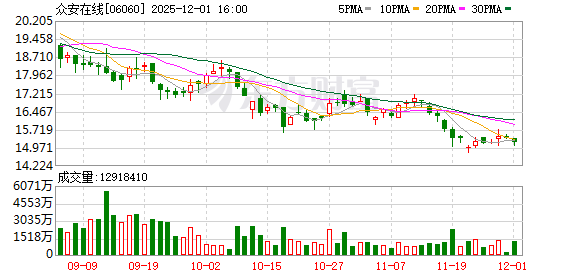
ZA ONLINE(06060)
Search documents
亏7亿还敢上市!暖哇科技靠众安“喂饭”,港股会买账?
Sou Hu Cai Jing· 2025-10-19 09:16
Core Viewpoint - The IPO of Nuwa Technology, backed by ZhongAn Online, raises questions about its financial health and dependency on its parent company, despite its claims of being a leading AI technology firm in the insurance sector [1][12]. Group 1: Financial Performance - Nuwa Technology has reported a cumulative loss of over 700 million from 2022 to mid-2025, indicating a classic case of "earning without profitability" [3][4]. - The company has only 128 million in cash while facing short-term debts of 1.696 billion, highlighting a significant liquidity issue [6]. - Despite a revenue growth of nearly twofold over three years and a consistent gross margin of around 50%, the financial sustainability remains questionable due to cash flow challenges [3][4]. Group 2: Business Model and Dependency - Nuwa's business model heavily relies on ZhongAn, which is both its largest customer and supplier, creating a "left hand to right hand" dynamic that limits pricing power and profit margins [6][8]. - In previous years, nearly 80% of Nuwa's revenue came from ZhongAn, which has now decreased to about 50%, yet it still represents a significant portion of its income [6][8]. Group 3: Market Position and Competition - The insurance technology sector has become highly competitive, with major players like Ping An investing heavily in AI, making it difficult for Nuwa to maintain its market position [8][10]. - The market for AI services in insurance is uncertain, particularly for smaller insurance companies that may not have sufficient demand to sustain Nuwa's growth [8][10]. Group 4: IPO Timing and Market Conditions - The current favorable conditions in the Hong Kong stock market, driven by interest rate cuts and rising insurance stock prices, present an opportunity for Nuwa to capitalize on valuation recovery [10][12]. - However, the capital market has shifted from a phase of indiscriminate investment in AI to a focus on tangible financial performance, raising concerns about Nuwa's ability to attract investment [10][12].
新华保险前三季度净利润同比预增45%-65%,将超去年全年;平安继续增持招商银行、邮储银行H股,持股比例突破17%|13精周报
13个精算师· 2025-10-18 03:03
Regulatory Dynamics - The National Healthcare Security Administration aims to achieve that by the end of 2026, instant settlement funds account for over 80% of local medical insurance fund monthly settlement funds [5] - The Financial Regulatory Bureau will host the first China Insurance Innovation Forum [6][7] - The Tianjin Financial Regulatory Bureau is constructing a technology insurance information data-sharing mechanism [8] - The Henan Financial Regulatory Bureau reported that the insurance industry invested over 12 million in disaster prevention and reduction due to the Huanghuai autumn rain disaster [9] - The Yunnan Financial Regulatory Bureau is developing specialty coffee insurance based on local coffee industry resources [10] - Hong Kong's Legislative Council passed a regulation requiring ride-hailing vehicles to hold appropriate third-party liability insurance [11] Company Dynamics - China Ping An increased its stake in Postal Savings Bank by 641,600 shares, totaling approximately 34.41 million HKD [13] - Ping An Life increased its holdings in China Merchants Bank H-shares, surpassing 17% of the total H-shares [14] - Guomin Pension plans to raise no more than 471 million shares, introducing up to five new shareholders [15] - Taikang Life established a corporate management company in Shanghai with a registered capital of 300 million [16] - China Life saw an increase of 162,000 shares from southbound funds [17] - Xinhua Insurance expects a net profit increase of 45%-65% year-on-year for the first three quarters [18] - PICC anticipates a net profit growth of 40% to 60% year-on-year for the first three quarters [19] - China Pacific Insurance reported a 10.9% year-on-year increase in original insurance premium income for the first three quarters [20] - Xinhua Insurance's cumulative original insurance premium income for the first nine months grew by 19% year-on-year [21] - ZhongAn Online achieved original premium income of 26.934 billion, a year-on-year increase of 5.64% [22] - China Life implemented a semi-annual A-share profit distribution [23] - China Export & Credit Insurance Corporation's underwriting amount for 2024 is expected to reach 102.144 billion USD, a 10% year-on-year increase [24] - China Life reported over 44 million claims in the first three quarters of 2025 [25] Personnel Changes - Zhang Shuguo and Wang Xiaolin were approved as vice general managers of China Coal Property Insurance [26] - Wang Yong was approved as vice general manager of Huaxia Jiuying Asset Management [27][28] - China Ping An appointed three independent non-executive directors to its board [29] - Taiping Fund underwent a significant leadership change with the resignation of its general manager and deputy general manager [30] Industry Dynamics - The insurance industry has maintained its position as the second largest in the world, with cumulative payouts reaching 9 trillion over the past five years [32] - Insurance capital has frequently participated in Hong Kong IPOs, with subscription amounts nearing 3 billion HKD, nearly three times last year's total [33] - 269 universal insurance products disclosed September settlement rates, with an average of 2.68%, down approximately 18 basis points year-on-year [34] - 1,469 combination insurance asset management products reported an average annualized return of 12.63% for the first three quarters [35] - CITIC Securities believes that the implementation of "reporting and operation integration" in non-auto insurance will optimize business expense ratios and enhance market share for leading insurers [36] - Dongwu Securities holds an optimistic outlook for new single premiums in 2026, citing improvements on both asset and liability sides [37] - Over 12,000 surveys have been conducted by insurance companies, with high dividends and technology growth sectors being favored [38] - UBS raised the target price for China Pacific Insurance to 22.5 HKD, expecting a significant increase in net profit [40] - UBS anticipates accelerated growth in new business value for AIA Insurance in the third quarter [41] - The A-share insurance sector has seen a six-day consecutive rise, with Xinhua Insurance's stock price increasing by 11.12% over five days [42] Product and Service Innovations - The "Beijing Inclusive Health Insurance" program has seen a continuous increase in participants, with a new product set to launch [46] - The 2025 "Tianjin Benefit Insurance" has been officially launched, maintaining a premium of 150 RMB with upgraded coverage [47] - PICC introduced a dedicated insurance package for foreign trade enterprises during the 138th Canton Fair [48] - China Pacific Insurance launched the first insurance product specifically for humanoid robots [49][50] - Ping An Property Insurance implemented a compensation insurance for application costs related to "specialized and innovative small and medium enterprises" [51]
@保险,重要改革!238家机构,监管大调整
Zheng Quan Shi Bao Wang· 2025-10-16 08:59
Core Viewpoint - The recent adjustment in the regulatory responsibilities of insurance institutions in China indicates a shift towards localized supervision, with a significant increase in the number of insurance entities under local regulatory bodies, while the Financial Regulatory Authority focuses primarily on insurance groups and their subsidiaries [1][2][3]. Group 1: Regulatory Changes - As of June 30, 2025, the number of insurance entities regulated by the Financial Regulatory Authority decreased from 116 to 65, primarily focusing on insurance groups and their subsidiaries [2]. - The adjustment reflects a broader trend of localizing regulatory responsibilities, with local regulatory bodies now overseeing a larger number of insurance institutions [4][5]. - The Financial Regulatory Authority convened a special meeting with local regulatory agencies to discuss these changes [1]. Group 2: Impact on Local Regulatory Bodies - Local regulatory bodies, particularly in major cities like Beijing and Shanghai, have seen a significant increase in the number of insurance entities they oversee, with Beijing's count rising from 24 to 39 and Shanghai's from 24 to 36 [4][5]. - The increase in regulatory responsibilities has led to heightened pressure on local regulatory bodies, necessitating stronger management accountability from insurance company executives [5]. Group 3: Specific Changes in Insurance Institutions - The total number of insurance institutions listed as of June 30, 2025, is 238, a decrease of one from the end of 2024, with notable changes including the removal of Tianan Insurance and the addition of Suzhou Dongwu Insurance [6]. - Several types of insurance institutions, such as insurance asset management companies and health insurance companies, have shifted from being regulated by the Financial Regulatory Authority to local regulatory bodies [6][7]. - A total of 21 out of 35 insurance asset management companies have transitioned to local regulatory oversight, while 14 remain under the Financial Regulatory Authority [7].
众安在线前9个月原保险保费收入总额约为269.34亿元 同比增加5.64%
Zhi Tong Cai Jing· 2025-10-14 23:55
分时图 日K线 周K线 月K线 16.37 -0.51 -3.02% 3.73% 2.49% 1.24% 0.00% 1.24% 2.49% 3.73% 16.25 16.46 16.67 16.88 17.09 17.30 17.51 09:30 10:30 12:00/13:00 14:00 16:10 0 22万 44万 66万 众安在线(06060)发布公告,该公司于2025年1月1日至2025年9月30日所获得的原保险保费收入总额约为 人民币269.34亿元,同比增加5.64%。 众安在线 ...
华润置地前9月销售额超1500亿元 中国建材预计前三季度同比扭亏
Xin Lang Cai Jing· 2025-10-14 12:22
Company News - China Metallurgical Group Corporation (01618.HK) reported a new contract amount of 760.67 billion yuan for the first nine months, a year-on-year decrease of 14.7%. The overseas contract amount was 66.9 billion yuan, showing a year-on-year increase of 10.1% [1] - China General Nuclear Power Corporation (01816.HK) achieved a total power generation of approximately 182.822 billion kWh in the first nine months, representing a year-on-year growth of 2.67% [1] - "Jiao Ge Peng You" Holdings (01450.HK) recorded a cumulative GMV of approximately 9.53 billion yuan for the first three quarters, a year-on-year increase of 7.56%. However, the GMV for the third quarter was about 2.55 billion yuan, reflecting a year-on-year decline of approximately 12.07% [1] - China Resources Land (01109.HK) reported a cumulative contract sales amount of approximately 154.4 billion yuan for the first nine months, a year-on-year decrease of 10.4% [1] - Times China Holdings (01233.HK) reported cumulative contract sales of 3.933 billion yuan for the first nine months, a year-on-year decline of 37.1% [1] - ZhongAn Online P&C Insurance (06060.HK) achieved cumulative original insurance premium income of 26.934 billion yuan in the first nine months, a year-on-year increase of 5.64% [1] - COFCO Joycome (01610.HK) reported a pig slaughter volume of 468,000 heads in September, a month-on-month decrease of 6.02% [1] - Kingsoft Cloud Holdings (01548.HK) received a new payment under a licensing agreement related to PD-1 monoclonal antibodies, which will enhance cash reserves for new molecular discovery and development [2] - China National Building Material Group (03323.HK) expects a net profit of 2.95 billion yuan for the first three quarters, turning from loss to profit, mainly due to a decrease in sales costs of cement and ready-mixed concrete [2] - Lifen Holdings (01125.HK) issued a profit warning, expecting a year-on-year increase of no less than 50% in annual losses attributable to owners [2] - China Property Investment (00736.HK) signed a cooperation framework agreement to tokenize high-quality photovoltaic new energy assets [2] - Dali Pu Holdings (01921.HK) established a direct sales warehouse and sales office in Oman to strengthen its strategic layout in the Middle East [2] - Beijing Machinery Electric Co., Ltd. (00187.HK) faced bankruptcy liquidation application from creditors for its subsidiary Tianhai Cryogenic [2] Financing and Buyback Activities - Jihai Resources (02489.HK) successfully placed 400 million shares at 1.18 HKD per share, raising approximately 466 million HKD for potential gold mine acquisitions and general working capital [2] - China Galaxy Securities (06881.HK) was approved to issue short-term corporate bonds not exceeding 15 billion yuan [3] - Kuaishou Technology (01024.HK) repurchased 1.3146 million shares for approximately 98.4067 million HKD at prices ranging from 74.55 to 75.1 HKD [3] - Xiaomi Group (01810.HK) repurchased 4 million shares for approximately 19.5 million HKD at prices ranging from 48.44 to 49 HKD [4]
众安在线(06060)前9个月原保险保费收入总额约为269.34亿元 同比增加5.64%
智通财经网· 2025-10-14 11:12
Core Viewpoint - ZhongAn Online (06060) reported a total original insurance premium income of approximately RMB 26.934 billion for the period from January 1, 2025, to September 30, 2025, representing a year-on-year increase of 5.64% [1] Company Summary - The total original insurance premium income for ZhongAn Online is approximately RMB 26.934 billion [1] - The year-on-year growth rate of the insurance premium income is 5.64% [1]
众安在线(06060) - 关於保费收入的公告
2025-10-14 11:03
承董事會命 香港交易及結算所有限公司及香港聯合交易所有限公司對本公告的內容概不負責,對其準確性或完 整性亦不發表任何聲明,並明確表示,概不對因本公告全部或任何部分內容而產生或因倚賴該等內 容而引致的任何損失承擔任何責任。 眾安在綫財產保險股份有限公司 ZHONGAN ONLINE P & C INSURANCE CO., LTD.* (於中華人民共和國註冊成立的股份有限公司,並以「ZA Online Fintech P & C」在香港經營業務) (股份代號:6060) 關於保費收入的公告 眾安在綫財產保險股份有限公司(「本公司」)於二零二五年一月一日至二零二五年九 月三十日所獲得的原保險保費收入總額約為人民幣26,934百萬元。上述資料按照中 華人民共和國財政部《企業會計準則第25號-原保險合同》(財會[2006]3號)及《保險 合同相關會計處理規定》(財會[2009]15號)編製,未經審核及未經本公司審計與消 費者權益保護委員會審閱。本公司股東及潛在投資者務須審慎,以免不恰當依賴該 等資料。 眾安在綫財產保險股份有限公司 董事長 尹海 中國上海,2025年10月14日 * 僅供識別及以「ZA Online ...
重疾险市场现“轻量化”趋势短期低价产品引关注
Zheng Quan Ri Bao· 2025-10-12 23:03
Core Insights - The emergence of "lightweight" critical illness insurance products by several property insurance companies is reshaping consumer perceptions of critical illness insurance, traditionally seen as expensive and long-term [1][2] Group 1: Product Characteristics - "Lightweight" critical illness insurance features low premiums and short-term coverage, with coverage amounts reaching up to 1 million yuan [1][2] - For example, a one-year critical illness insurance policy for a 6-year-old boy has a premium of only 19.05 yuan per month, while a 43-year-old woman would pay 180.42 yuan for a maximum coverage of 600,000 yuan [2] Group 2: Market Dynamics - The introduction of short-term critical illness insurance aligns with regulatory encouragement for innovation and changing consumer preferences, particularly among younger generations seeking flexible and cost-effective options [3][4] - The market for short-term health insurance is expanding as traditional car insurance faces growth pressures, prompting property insurance companies to explore health insurance as a new growth avenue [4][5] Group 3: Competitive Landscape - The launch of "lightweight" critical illness insurance may create a "salmon effect," challenging traditional critical illness insurance and pushing insurers to innovate and optimize their offerings [5][6] - The health insurance product ecosystem is expected to evolve into a multi-layered structure, combining million-dollar medical insurance, long-term critical illness insurance, and short-term critical illness insurance to meet diverse consumer needs [5][6] Group 4: Operational Challenges - The low premium and high leverage model of short-term critical illness insurance attracts a younger, health-conscious demographic but poses operational challenges, such as the risk of adverse selection and rising claim rates [6][7] - Insurers must balance risk control with consumer demand for simplicity and convenience, necessitating precise pricing, effective risk management, and enhanced service delivery [7]
重疾险市场现“轻量化”趋势 短期低价产品引关注
Zheng Quan Ri Bao· 2025-10-12 15:52
Core Viewpoint - The emergence of "lightweight" critical illness insurance products by several property insurance companies represents a significant innovation in the health insurance sector, characterized by low prices and short terms, while offering coverage amounts that can reach millions [1][2]. Group 1: Product Characteristics - "Lightweight" critical illness insurance typically features low premiums, short-term coverage (usually one year), and high coverage amounts, often up to 1 million [2]. - For example, a one-year critical illness policy for a 6-year-old boy can have a coverage of 1 million with a monthly premium of only 19.05 yuan, while for a 43-year-old woman, the maximum coverage is limited to 600,000 yuan with a monthly premium of 180.42 yuan [2]. Group 2: Market Dynamics - The introduction of short-term critical illness insurance aligns with regulatory policies and responds to market conditions, such as declining interest rates, which have made long-term insurance products more expensive [2][3]. - The shift in consumer preferences towards flexible and cost-effective products, particularly among younger generations, has driven the demand for "lightweight" critical illness insurance [3]. Group 3: Competitive Landscape - Property insurance companies are the primary innovators in the short-term critical illness insurance market, leveraging their expertise in short-term non-life insurance to enter this new growth area [3][4]. - The competitive landscape is evolving, with traditional critical illness insurance facing challenges from the new "lightweight" products, which may compel traditional life insurance companies to accelerate their product innovation [5]. Group 4: Future Trends - The introduction of "lightweight" critical illness insurance is expected to create a more diversified health insurance ecosystem, forming a multi-layered structure that includes million-dollar medical insurance as the base, long-term critical illness insurance as the core, and short-term critical illness insurance as a supplementary option [5]. - Future health insurance products are anticipated to exhibit differentiated layers, catering to various consumer needs and price sensitivities, potentially incorporating health management services for competitive differentiation [5][6]. Group 5: Operational Challenges - The "low premium, high leverage" model of short-term critical illness insurance poses operational challenges, such as attracting adverse selection and increasing claim rates, which may lead insurers to raise premiums or deny coverage [6]. - Insurers must balance strict risk control measures with consumer demands for simplicity and convenience, necessitating precise pricing, risk management, and service delivery [6].
众安在线(06060) - 截至二零二五年九月三十日止股份发行人的证券变动月报表

2025-10-03 11:00
FF301 股份發行人及根據《上市規則》第十九B章上市的香港預託證券發行人的證券變動月報表 截至月份: 2025年9月30日 狀態: 新提交 致:香港交易及結算所有限公司 備註: 第 1 頁 共 11 頁 v 1.1.1 由於眾安在綫財產保險股份有限公司*(「本公司」)在中華人民共和國註冊成立,"法定股本"的概念並不適用。 第 I 部分所載資料是指本公司的"已發行股本"。 FF301 公司名稱: 眾安在綫財產保險股份有限公司*(於中華人民共和國註冊成立之股份有限公司) 呈交日期: 2025年10月3日 I. 法定/註冊股本變動 | 1. 股份分類 | 普通股 | 股份類別 | H | | | 於香港聯交所上市 (註1) | 是 | | | --- | --- | --- | --- | --- | --- | --- | --- | --- | | 證券代號 (如上市) | 06060 | 說明 | 眾安在綫 – H 股 | | | | | | | | | 法定/註冊股份數目 | | | 面值 | | 法定/註冊股本 | | | 上月底結存 | | | 1,634,812,900 | RMB | | 1 RM ...