Zijin Mining(601899)

Search documents
买买买,中资矿企今年都买了哪些金矿?
Xin Lang Cai Jing· 2025-12-18 14:24
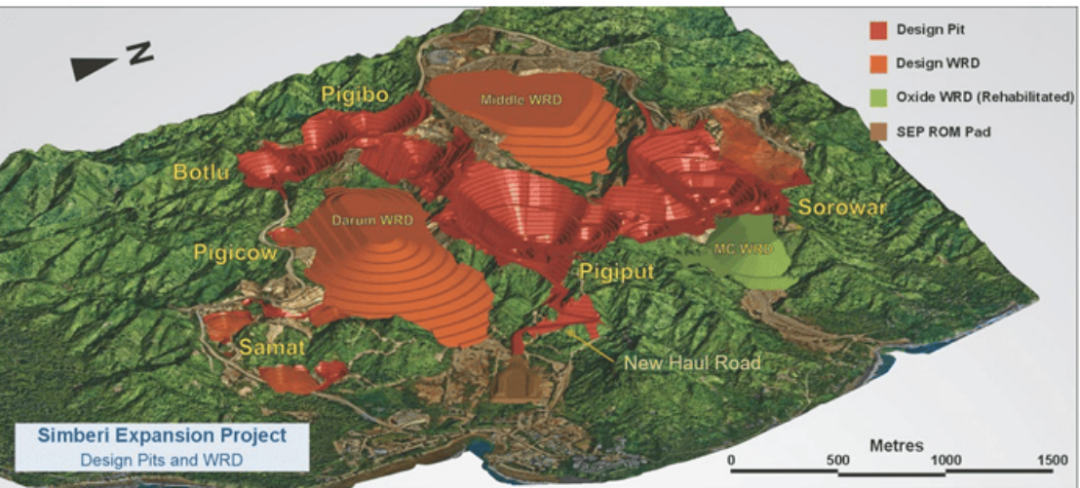
Mergers and Acquisitions - In December, Chinese mining companies are actively pursuing mergers and acquisitions in the gold mining sector, with notable transactions including Luoyang Molybdenum's acquisition of three Brazilian gold mines for $1.015 billion [1][19] - Jiangxi Copper has made a third acquisition offer for the Cascabel project in Ecuador, raising the total value to approximately £842 million ($1.13 billion) [1][11] - Lingbao Gold announced a purchase of 50% plus one share of an Australian company for A$370 million (approximately RMB 1.735 billion), acquiring the Simberi gold mine in Papua New Guinea [1][13] Gold Market Trends - The global economic slowdown and geopolitical conflicts have increased the appeal of gold as a traditional safe-haven asset, leading to a 60% increase in gold prices this year [3][14] - As of December 12, the London gold price reached $4,299.29 per ounce, marking a year-to-date increase of 63.83% [4][14] - The World Gold Council predicts that gold will perform exceptionally well in 2025, potentially setting over 50 historical highs throughout the year [3][14] Strategic Shifts in the Industry - The trend indicates a shift in the Chinese gold industry from fragmented competition to consolidation, with a focus on strategic cooperation and resource integration [10][22] - Companies like Shengton Mining and Lingbao Gold are not only acquiring resources but also gaining operational expertise and processing facilities through their acquisitions [10][22] - The ongoing high gold prices and supportive policies are driving Chinese gold enterprises to enhance their global presence and contribute to the development of the global mining industry [10][22]



数据看盘三家实力游资激烈博弈顺灏股份 多路资金联手抢筹美年健康
Sou Hu Cai Jing· 2025-12-18 11:16
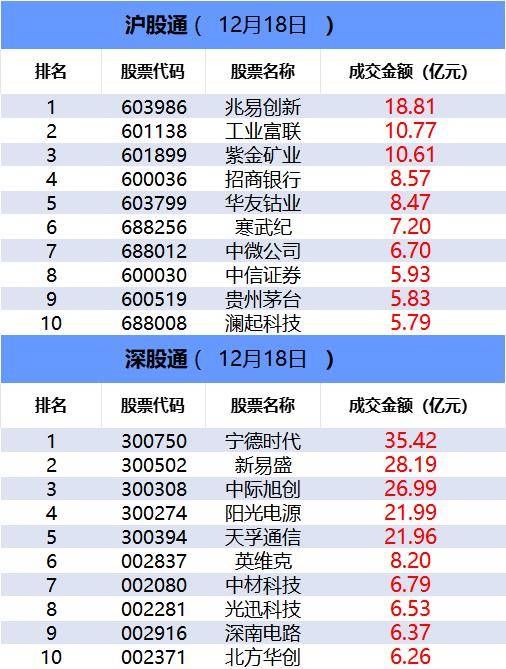
Summary of Key Points Core Viewpoint - The trading volume of the Shanghai and Shenzhen Stock Connect reached a total of 183.4 billion, with significant activity in specific stocks and sectors, indicating a dynamic market environment [1]. Trading Volume - The total trading amount for the Shanghai Stock Connect was 83.09 billion, while the Shenzhen Stock Connect reached 100.31 billion [2]. Top Stocks by Trading Volume - In the Shanghai Stock Connect, the top stock by trading volume was Zhaoyi Innovation with 1.881 billion, followed by Industrial Fulian and Zijin Mining [3]. - In the Shenzhen Stock Connect, the leading stock was CATL with 3.542 billion, followed by Xinyi Technology and Zhongji Xuchuang [3]. Sector Fund Flow - The defense and military sector saw the highest net inflow of funds at 2.106 billion, while the banking sector followed with 743 million [5]. - The electronic sector experienced the largest net outflow of funds at -11.454 billion, indicating a significant sell-off [6]. ETF Trading Activity - The Chemical ETF (516020) saw a remarkable increase in trading volume, with a 166% rise compared to the previous trading day [8]. - The top ETF by trading volume was A500 ETF Huatai Baichuan with 12.4331 billion, followed by A500 ETF Fund [7]. Futures Positioning - In the four major futures contracts, both long and short positions were reduced, with a notable decrease in short positions for IM and IC contracts [9]. Market Activity - The market saw active participation from institutions, with Meinian Health receiving significant buying interest from institutions totaling 686.6 million, alongside a net inflow from the Shenzhen Stock Connect of 831.1 million [11]. - The commercial aerospace concept stock Shunhao Co. hit the daily limit, attracting 164 million from two leading funds [12].





紫金矿业(02899)回购注销1.02万股A股限制性股票
智通财经网· 2025-12-18 08:55
智通财经APP讯,紫金矿业(02899)发布公告,本公司日期为2025年12月15日的公告所披露根据A股限制 性股票激励计划回购注销1.02万股A股限制性股票,并于2025年12月18日完成办理注销手续。 ...
紫金矿业回购注销1.02万股A股限制性股票
Zhi Tong Cai Jing· 2025-12-18 08:53
Core Viewpoint - Zijin Mining (601899)(02899) announced the repurchase and cancellation of 10,200 A-share restricted stocks under its incentive plan, with the cancellation procedures completed on December 18, 2025 [1] Group 1 - The company disclosed the repurchase of 10,200 A-share restricted stocks [1] - The announcement was made on December 15, 2025 [1] - The cancellation of the stocks was finalized on December 18, 2025 [1]
紫金矿业(02899) - 翌日披露报表
2025-12-18 08:45
FF305 翌日披露報表 (股份發行人 ── 已發行股份或庫存股份變動、股份購回及/或在場内出售庫存股份) 表格類別: 股票 狀態: 新提交 公司名稱: 紫金礦業集團股份有限公司 呈交日期: 2025年12月18日 FF305 確認 如上市發行人的已發行股份或庫存股份出現變動而須根據《香港聯合交易所有限公司(「香港聯交所」)證券上市規則》(「《主板上市規則》」)第13.25A條 / 《香港聯合交易所有限公司GEM證券 上市規則》(「《GEM上市規則》」)第17.27A條作出披露,必須填妥第一章節 。 | 第一章節 | | | | | | | --- | --- | --- | --- | --- | --- | | 1. 股份分類 普通股 | 股份類別 A | | 於香港聯交所上市 | 否 | | | 證券代號 (如上市) 601899 | 說明 | | | | | | A. 已發行股份或庫存股份變動 | | | | | | | 事件 | 已發行股份(不包括庫存股份)變動 | | 庫存股份變動 | 每股發行/出售價 (註4) | 已發行股份總數 | | | 已發行股份(不包括庫存股份)數 目 | 佔有關事件前 ...
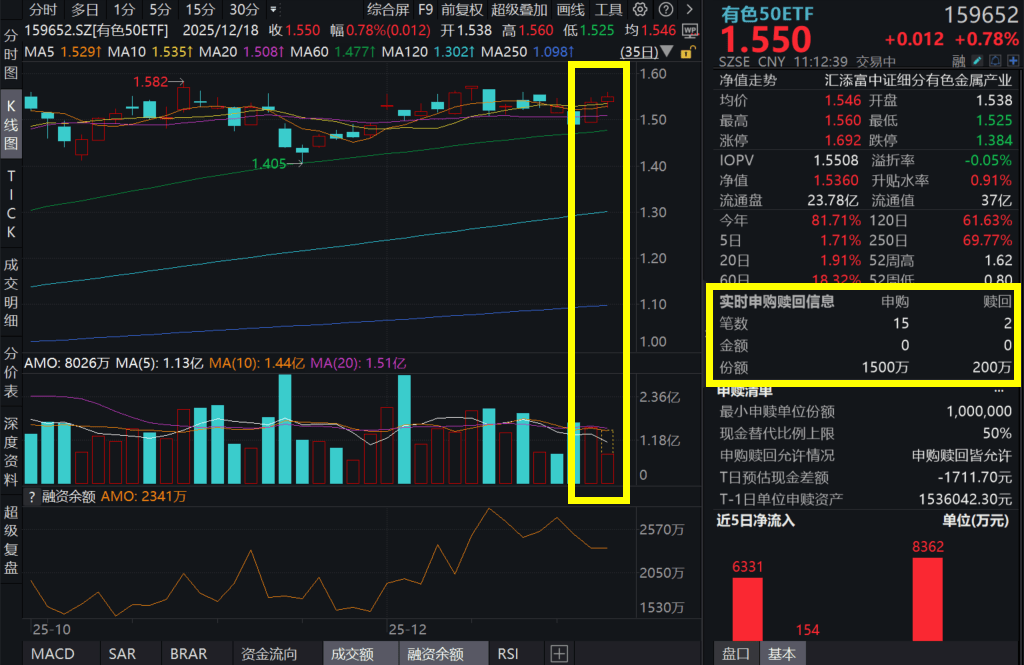
碳酸锂期货续涨超2%!华友钴业涨超4%,获8万吨“超级订单”!有色50ETF(159652)冲击两连阳,盘中强势吸金超2000万!金、铜后市怎么看?
Sou Hu Cai Jing· 2025-12-18 03:52
Core Viewpoint - The A-share market is experiencing an upward trend, particularly in the non-ferrous metals sector, driven by significant capital inflows and positive price dynamics in the sector [1][3]. Group 1: Market Performance - The non-ferrous 50 ETF (159652) saw a slight increase of 0.78%, aiming for a second consecutive day of gains, with over 20 million yuan in capital inflow during the trading session [1]. - Over the past five days, the non-ferrous 50 ETF attracted more than 120 million yuan in investments, indicating strong market interest [1]. Group 2: Key Stocks and Announcements - Major stocks within the non-ferrous 50 ETF index experienced gains, with Huayou Cobalt rising over 4% and Shandong Gold increasing by over 2%, influenced by an 80,000-ton "super order" [3][5]. - Huayou Cobalt announced a binding memorandum with a well-known international client to supply a total of 79,600 tons of ternary precursor products [5]. - Luoyang Molybdenum announced plans to acquire 100% equity in EQX's LatAm and Luna Gold Corp. for approximately 10.15 billion USD, equivalent to over 7.1 billion yuan [5]. Group 3: Industry Trends - Lithium carbonate futures surged again, following a previous increase of 7%, reflecting ongoing bullish sentiment in the market [6]. - The Jiangxi Yichun Natural Resources Bureau plans to revoke 27 mining rights, which could tighten lithium supply and support domestic lithium carbonate prices [8]. - The non-ferrous metals sector is seen as crucial for economic recovery and technological advancements, with copper being highlighted as a key indicator of economic health [9]. Group 4: Investment Opportunities - The non-ferrous 50 ETF (159652) is positioned to benefit from a super cycle in non-ferrous metals, covering a wide range of metals including gold, copper, aluminum, lithium, and rare earths [24][26]. - The ETF has a leading concentration of "gold and copper content," with copper accounting for 31% and gold for 14% of its index [26]. - The index has shown a cumulative return of 86.28% since 2022, driven by earnings rather than valuation expansion, indicating a favorable investment environment [28].




份额规模均创新高,有色金属ETF基金(516650)连续7天吸金1.44亿
Sou Hu Cai Jing· 2025-12-18 02:35
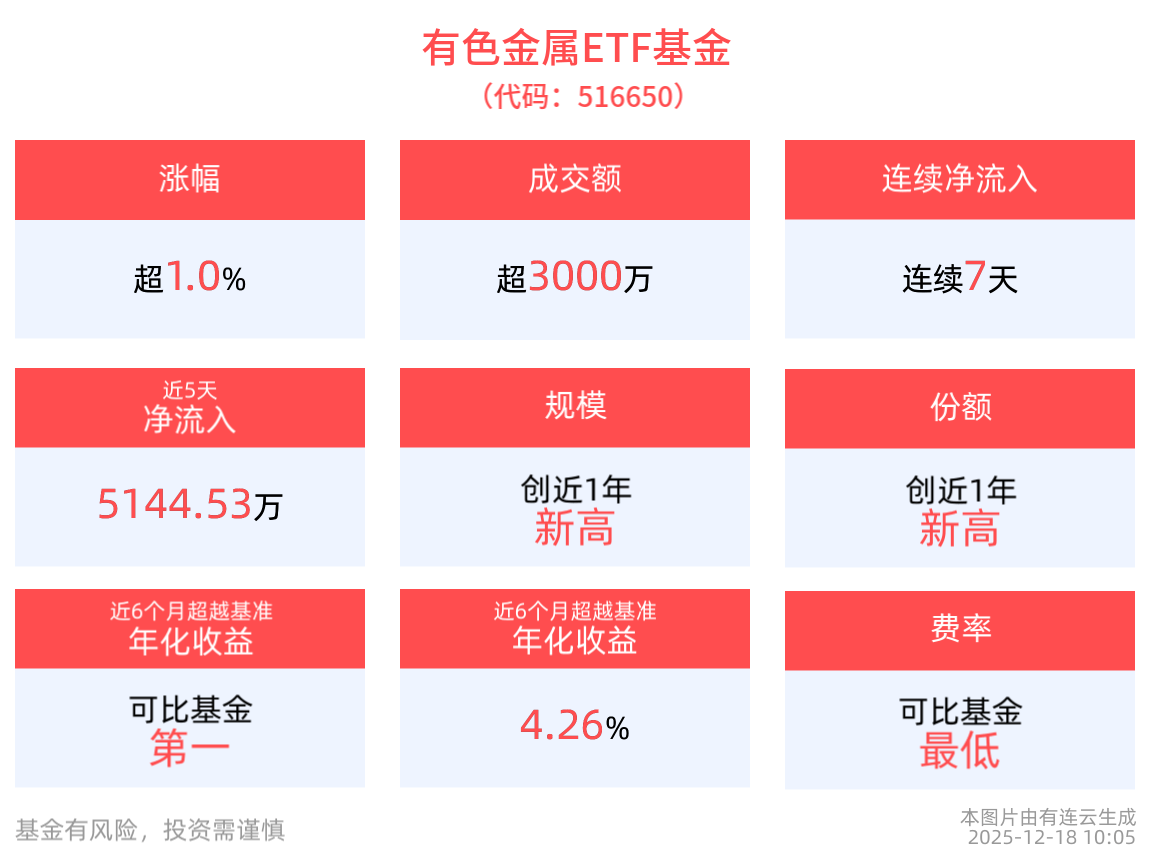
Core Insights - The recent rise in precious metals, including gold, silver, and copper, has positively impacted various ETFs, particularly the gold and non-ferrous metal ETFs [2] - The non-ferrous metal ETF (516650) has seen a continuous inflow of funds over the past week, totaling 144 million yuan, reaching a record high in both share count and total assets [2] - The ETF closely tracks the CSI sub-index for the non-ferrous metal industry, with the top ten weighted stocks accounting for 52.65% of the index [2] ETF Performance - The gold ETF (518850) increased by 0.13%, while the gold stock ETF (159562) rose by 0.46% [2] - The non-ferrous metal ETF (516650) experienced a 1.09% increase, with notable stock performances including Huaxi Nonferrous (7.01% increase) and Chihong Zinc & Germanium (5.04% increase) [2] - The latest share count for the non-ferrous metal ETF reached 1.391 billion, with a total asset size of 2.417 billion yuan [2] Top Holdings - The top ten weighted stocks in the non-ferrous metal ETF include Zijin Mining, Luoyang Molybdenum, Northern Rare Earth, Huayou Cobalt, and China Aluminum, among others [2] - These stocks are significant contributors to the ETF's performance, reflecting the overall strength of the non-ferrous metal sector [2]



大摩闭门会:金融、原材料、交运行业更新 _纪要
2025-12-17 15:50
Summary of Key Points from Conference Call Records Industry Overview - The conference call primarily discusses the **financial, raw materials, and transportation industries** [1][3][4]. Core Insights and Arguments Financial Industry - Current low interest rates may lead to financial mismatches, prompting central banks and banks to shift towards reasonable interest rate pricing [1][3]. - Social financing and M2 no longer have quantitative guidance, with loan growth stabilizing around **6%** [1][3]. - Personal loan growth is not significantly impacted by previous bad asset digestion [1][3]. - As of November, medium to long-term loans show signs of stabilization, while manufacturing investment has slowed to **1.7%**, below overall demand growth of **4%** [1][3]. - A balanced supply-demand relationship is expected to alleviate financial system risk concerns and industrial product price pressures, with a potential rebound in PPI by **2027** [1][3]. - Loan interest rates are stabilizing, which may gradually improve interest margins, and insurance yields are performing well [1][4]. - The financial sector is expected to benefit from government bond rates slightly rising, supporting fiscal policies to stabilize and enhance financial returns [1][4]. Manufacturing and Credit Demand - In **2026**, manufacturing credit demand is anticipated to weaken, while consumer loan growth is expected to decline due to high-interest consumer loan clean-up [5]. - The initiation of the "14th Five-Year Plan" and increased local special bonds will support infrastructure loan demand, stabilizing overall financing needs [5]. - Strict management of hidden debts and real estate risks will continue, leading to a reduction in overall financial risks [5]. Insurance Industry - The insurance sector has significant growth potential, with household financial assets growing at **12%** [6]. - Insurance products are competitive, providing guaranteed rates along with retirement and health services, with growth expected to exceed household financial asset growth [6]. - China Ping An anticipates its BNB growth to exceed **20%**, indicating substantial upside potential [6]. - The insurance sector is viewed as an important investment target due to its long-term double-digit growth potential and the increasing interest from U.S. investors in the Chinese insurance market [6]. Raw Materials Industry - The macro environment for **2026** suggests a weak dollar in the first half, potentially rebounding in the second half, with ample liquidity in both China and the U.S. supporting commodity prices [7]. - Strong demand for energy storage and supply disruptions are expected to drive prices of copper, aluminum, and cobalt higher [7]. - Significant mining accidents have led to a tight supply situation for copper, with global copper supply expected to remain flat [7]. - Recommended stocks include those related to aluminum, copper, gold, lithium, and cobalt, such as Zijin Mining and China Aluminum [7]. Aluminum Supply and Demand - Global aluminum supply is projected to decrease by **700,000 tons** due to factory shutdowns, while new supply is expected to be **1.4 million tons** [2][8]. - Overall demand is forecasted to grow by over **2%**, but demand in the photovoltaic sector is expected to decline by **30%** [9]. Congo Fund's New Quota System - The new quota system from the Congo Fund has led to a significant reduction in supply, with expected output only **40%** of previous levels, resulting in market tightness [10]. Anti-Overcapacity Policies - Recent government meetings have emphasized anti-overcapacity policies, potentially limiting new capacity in coal, steel, and cement industries [11]. Other Important Insights - The Thai market for J&T Express has shown significant success, becoming the largest express company in Thailand, with a market share exceeding that of the second to fourth competitors combined [12]. - The competitive landscape in Thailand's express delivery market is intense, with low costs due to favorable geographic conditions and balanced regional economic development [14]. - Long-term growth potential for J&T Express is viewed positively, but uncertainties in Southeast Asia's e-commerce landscape may affect valuation [15]. - The aviation industry has shown positive performance, with significant growth in passenger traffic and improved pricing power for airlines [16].

【行业研究】求“铜”存异,负加工费时代的铜冶炼企业——有色金属行业深度研究
Xin Lang Cai Jing· 2025-12-17 14:19
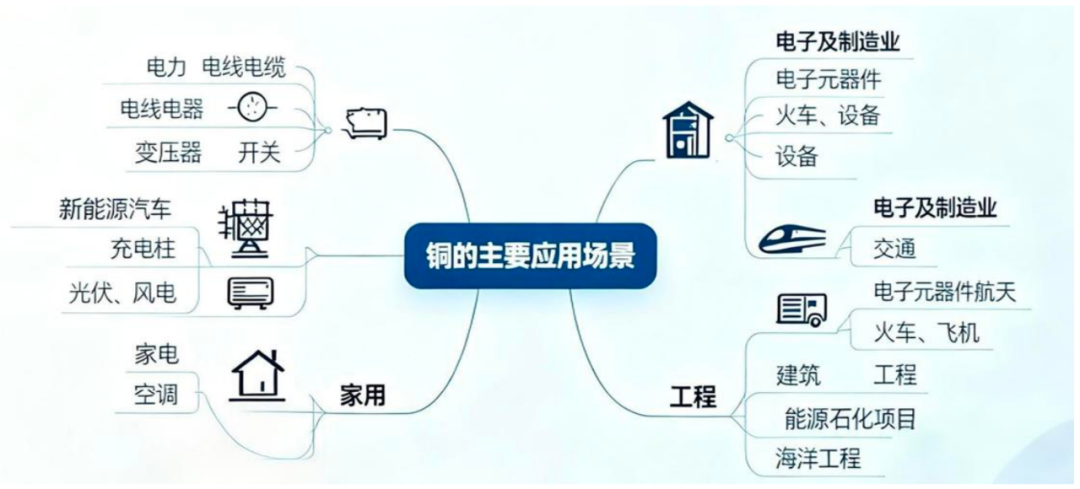
Core Insights - The global copper smelting industry, particularly Chinese enterprises, is facing severe challenges and strategic transformations as it enters a historic "negative processing fee" era, driven by structural imbalances between tight mineral supply and expanded smelting capacity [1][28] - Leading companies are adapting by enhancing resource self-sufficiency, exploring by-product value, optimizing technology for cost reduction, utilizing financial tools flexibly, and promoting industry consolidation to build new competitive advantages [1][28] - Long-term growth is anticipated as demand for materials from new energy and high-end manufacturing continues to rise, transitioning the copper smelting industry from a "strong cyclical attribute" to a "growth attribute" for high-quality development [1][28] Industry Background - Copper is one of the earliest metals recognized and used by humans, with extensive applications due to its excellent conductivity, thermal conductivity, ductility, and corrosion resistance [2][29] - The copper industry chain is divided into upstream mining, midstream copper smelting, and downstream copper processing, ultimately reaching the end consumer market [2][29] Current Industry Challenges - China, as the largest refined copper producer, has limited copper mineral resources and heavily relies on imported ores, a situation expected to persist in the short term [4][31] - In 2024, China's copper ore production is projected to be approximately 1.8 million tons, a year-on-year decrease of 11%, while refined copper production is expected to reach 13.64 million tons, an increase of over 5% [4][31] - The self-sufficiency rate for copper concentrate in China is only 13%, with imports of copper concentrate expected to rise to 28.11 million tons in 2024 [4][31] Processing Fee Dynamics - The processing fee (TC/RC) has entered a downward trend, with the first negative value recorded for imported copper concentrate in 2025, reaching a historical low of -40 USD per dry ton [4][32] - The decline in processing fees reflects the structural imbalance between tight raw material supply and expanded smelting capacity, severely impacting the bargaining power of Chinese smelting enterprises [5][32] Impact of Negative Processing Fees - The "negative processing fee" indicates that smelting companies not only fail to earn processing income but must pay fees to obtain processing rights for copper concentrate, fundamentally disrupting traditional profit models [6][35] - Various scenarios illustrate the impact of processing fee declines on profitability, with significant losses projected if processing fees remain negative [6][36] Profitability Analysis - From 2023 to 2025, the benchmark for long-term copper concentrate processing fees is expected to decline significantly, with 2024 and 2025 fees projected at 80 USD per dry ton and 21.25 USD per dry ton, respectively [7][37] - Despite ongoing resource shortages and cost pressures, leading smelting companies have not significantly reduced production, continuing capital expenditures in the industry [7][37] Company Performance Metrics - Key companies in the copper smelting sector, such as Jiangxi Copper, Tongling Nonferrous, and Jinchuan Group, show varying production capacities and financial metrics, with some facing negative cash flows [9][38] - For instance, Jiangxi Copper has a smelting capacity of 2.13 million tons and reported a cash flow deficit of 7.73 million [9][38] Resource Self-Sufficiency - The self-sufficiency of mineral resources is critical for copper smelting companies, directly affecting their production, costs, competitiveness, and sustainability [11][11] - Companies are attempting to transition from "processing services" to "resource production" to mitigate the impact of low self-sufficiency on profitability [11][11] By-Product Revenue - The production of sulfuric acid as a by-product in copper smelting has become increasingly profitable, with companies like Jiangxi Copper and Tongling Nonferrous reporting high gross profit margins from sulfuric acid sales [13][15] - The recovery of precious metals from copper anode mud also presents significant economic value, with advanced extraction technologies in place [14][15] Technological Advancements - Continuous technological improvements in smelting processes and green transformations have positioned leading companies at the forefront of global standards, enhancing recovery rates and reducing costs [18][19] - Scale production helps lower fixed costs, with major companies maintaining low production costs despite the challenges posed by negative processing fees [19][19] Future Outlook - The copper smelting industry faces numerous survival challenges, but through strategic collaboration and healthy development, companies may maintain profitability even in a negative processing fee environment [24][27] - The global copper market is expected to shift from surplus to shortage by 2026, with prices anticipated to remain high due to supply concerns from major mining regions [27][28]


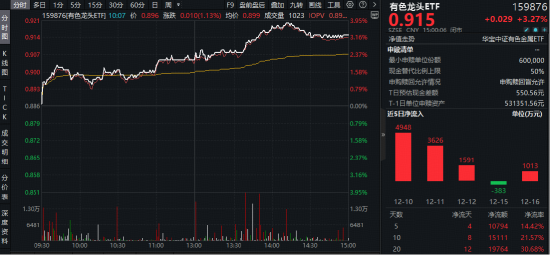
锂矿股强势拉升,盛新锂能涨停!有色龙头ETF(159876)猛拉3.37%!机构:看好“避险三剑客”!
Xin Lang Cai Jing· 2025-12-17 12:04
Core Viewpoint - The non-ferrous metal sector showed strong performance on December 17, with the leading non-ferrous metal ETF (159876) rising over 3.8% during the day and closing up 3.27%, indicating positive market sentiment towards the sector [1][10]. Fund Flows - The non-ferrous metal ETF attracted significant capital, with a single-day inflow of 10.13 million yuan and a total of 198 million yuan over the past 20 days, reflecting investor confidence in the sector's future performance [1][10]. Stock Performance - Lithium stocks surged, with Shengxin Lithium Energy hitting the daily limit, Zhongmin Resources rising over 8%, Tianqi Lithium increasing by 6%, and Ganfeng Lithium up nearly 5%. In the lead zinc sector, Guocheng Mining also hit the daily limit, while Xingye Silver Tin rose over 6%. In the aluminum sector, Zhongfu Industrial increased by over 5%, Huafeng Aluminum by over 4%, and China Aluminum by over 3% [3][12]. Macro Factors - In the macroeconomic context, the U.S. added 64,000 non-farm jobs in November, with the unemployment rate unexpectedly rising to 4.6%, the highest in four years. This weak job market increases the likelihood of interest rate cuts by the Federal Reserve, which could support non-ferrous metal prices [4][13]. Industry Insights - Lithium carbonate futures saw a significant spike, rising over 8% to reach 109,860 yuan/ton. The cancellation of 27 mining licenses may impact the supply-demand dynamics of lithium, potentially driving prices higher. CITIC Securities expressed optimism about copper, aluminum, and gold as key investment options, citing limited new copper capacity and increasing demand from renewable energy and AI data centers [5][14]. Investment Strategy - Given the current market conditions and geopolitical tensions, non-ferrous metals are viewed as core assets for medium to long-term investment. The non-ferrous metal ETF (159876) and its linked funds provide comprehensive exposure to various metals, allowing for risk diversification compared to investing in single metal sectors [6][14].