
CNCB(601998)

Search documents
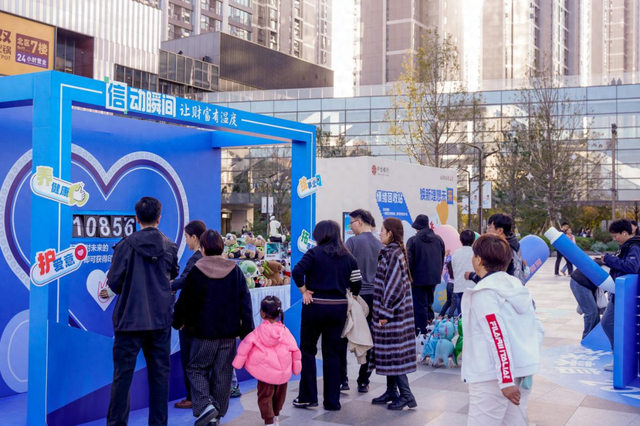
中信银行“未来来信”互动体验展郑州站启幕
Huan Qiu Wang· 2025-11-04 08:45
Group 1 - The event "Future Letter" in Zhengzhou aims to connect finance with daily life, promoting the brand message of "making wealth warm" [1][3] - The interactive experience includes four game zones that attract significant public interest, becoming a popular spot for visitors [3][5] - The event is part of a nationwide tour by CITIC Bank, focusing on topics like consumption stimulation and pension finance, covering 25 cities [3][5] Group 2 - CITIC Bank emphasizes a life-cycle wealth management approach, transitioning from "preparing for old age" to "enjoying old age" [3][5] - The innovative "finance + scenario" approach aims to break traditional financial service stereotypes, making pension finance and wealth planning tangible and interactive [5] - The event aligns with Zhengzhou's vibrant consumer characteristics, reinforcing the idea of "planning for a beautiful future in advance" [5]


中信银行青岛分行联动多方织密反诈防护网
Zhong Guo Jin Rong Xin Xi Wang· 2025-11-04 08:25
Core Viewpoint - The event "Warm the Double Ninth Festival and Protect the Silver Age" aims to enhance the anti-fraud awareness among the elderly community in Qingdao, combining traditional values with modern financial safety measures [1]. Group 1: Event Overview - The event was held on October 29-30, organized by Qingdao Public Security Bureau, Qingdao Radio and Television Station, and CITIC Bank Qingdao Branch, providing safety gifts to the elderly [1]. - The event focused on promoting anti-fraud knowledge and protecting the financial interests of the elderly [4]. Group 2: Anti-Fraud Education - CITIC Bank Qingdao Branch volunteers created an engaging platform for anti-fraud education, offering easy-to-understand guidelines and practical tips for the elderly [2]. - Key messages included being cautious with unfamiliar calls, verifying high-return investment offers, and confirming money transfers [2]. Group 3: Community Engagement - The event featured an interactive quiz area to encourage participation from both elderly residents and younger community members, fostering a family-oriented learning environment [3]. - This approach not only enhanced knowledge transfer but also built a community-wide atmosphere of anti-fraud awareness [3]. Group 4: Commitment to Community - The event exemplified CITIC Bank Qingdao Branch's commitment to providing warm financial services and protecting the public's financial well-being [4]. - Future plans include a continuous blend of online and offline anti-fraud education initiatives to strengthen community protection against fraud [4].
银行板块逆势走强,银行ETF易方达(516310)助力低成本布局板块龙头
Mei Ri Jing Ji Xin Wen· 2025-11-04 06:52
Core Viewpoint - The A-share market is experiencing an overall adjustment, while the banking sector is showing strength, with the China Securities Banking Index rising by 1.7% as of 14:28. This indicates a shift from high-volatility growth stocks to undervalued, high-dividend value sectors, with banks positioned to benefit from this trend [1]. Summary by Category Market Performance - The China Securities Banking Index has increased by 1.7%, with notable gains from stocks such as Xiamen Bank (over 5%) and Jiangyin Bank (over 3%). Major banks like CITIC Bank, Industrial Bank, and China Merchants Bank have also seen increases of over 2% [1]. Investment Trends - Analysts suggest that after an extreme performance of small-cap growth stocks in the third quarter, the excess returns of small-cap growth relative to large-cap value have reached historical highs. This has led to a market shift towards low-valuation, high-dividend value sectors [1]. Valuation Metrics - The current price-to-book ratio of the China Securities Banking Index is approximately 0.7 times, which is at the 34th percentile since the index was launched in 2013. The current dividend yield is around 4%, with the spread over government bonds at a historically high level, indicating significant investment value [1].




今日60只个股突破半年线
Zheng Quan Shi Bao Wang· 2025-11-04 04:24
Core Points - The Shanghai Composite Index closed at 3969.05 points, remaining above the six-month moving average, with a slight decline of 0.19% [1] - A total trading volume of A-shares reached 1.231 trillion yuan [1] - 60 A-shares have surpassed the six-month moving average today, with notable stocks showing significant deviation rates [1] Summary by Category Stock Performance - Zhongmin Energy (600163) saw a price increase of 9.96% with a deviation rate of 8.63% from the six-month moving average [1] - Mongolian Grass Ecology (300355) increased by 10.00%, with a deviation rate of 6.70% [1] - Everbright Jiabao (600622) rose by 9.86%, showing a deviation rate of 5.99% [1] Trading Activity - The trading turnover rate for Zhongmin Energy was 3.77% [1] - Mongolian Grass Ecology had a turnover rate of 14.09% [1] - Everbright Jiabao's turnover rate was 8.31% [1] Deviation Rate Rankings - The stocks with the largest deviation rates from the six-month moving average include Zhongmin Energy (8.63%), Mongolian Grass Ecology (6.70%), and Everbright Jiabao (5.99%) [1] - Other stocks with smaller deviation rates include Renxin New Materials, Jidong Equipment, and Huitong Holdings, which have just crossed the six-month line [1]



内银股延续涨势 三季度银行盈利增长延续 息差边际改善
Zhi Tong Cai Jing· 2025-11-04 03:41
Group 1 - Domestic bank stocks continue to rise, with notable increases in share prices for major banks such as China Merchants Bank (up 2.88% to HKD 51.15), Chongqing Bank (up 2.85% to HKD 8.29), and CITIC Bank (up 2.6% to HKD 7.51) [1] - Morgan Stanley's report indicates that despite a decline in investment income, most Chinese banks reported improvements in net interest income and healthy growth in fee income for Q3 2025 [1] - The report highlights that while state-owned banks face some net interest margin pressure, most joint-stock banks reported a rebound in net interest margins due to lower funding costs and more prudent loan growth and pricing [1] Group 2 - Zhejiang Securities notes that the performance of listed banks in Q1-3 2025 slightly exceeded expectations, with revenue growth remaining stable and profit growth showing a slight increase [2] - The report identifies that the marginal improvement in net interest margin has alleviated revenue pressure, while impairment contributions have increased profit [2] - It is observed that the performance of banks in Q3 has shown resilience, with smaller banks experiencing a greater-than-expected rebound in net interest margins, suggesting a potential market recovery in Q4 [2]
险资三季度继续扫货银行股!银行AH优选ETF(517900)涨近2%,机构:银行股投资进入季节性“顺风期”
2 1 Shi Ji Jing Ji Bao Dao· 2025-11-04 03:31
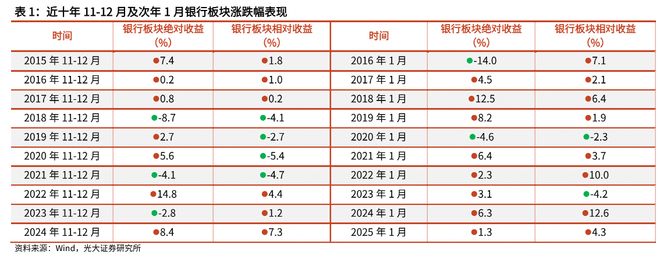
Core Viewpoint - The banking sector is experiencing a strong performance, with several banks seeing significant stock price increases, indicating a seasonal "tailwind" for bank stocks as they enter a favorable investment period from November to January [1][4]. Group 1: Market Performance - On November 4, various banks such as Xiamen Bank and CITIC Bank saw stock price increases of over 4% and 2% respectively, with the Bank AH Preferred ETF also rising nearly 2% [1]. - Historical data shows that from November to December, the banking sector has a 70% probability of generating absolute returns, which increases to 80% in January [4]. Group 2: Investment Trends - Insurance funds have been increasing their holdings in bank stocks since the third quarter, with a notable shift in strategy towards A-share state-owned banks like Agricultural Bank and Postal Savings Bank [4][5]. - Major insurance companies, such as Ping An Life and China Life, are adjusting their investment focus, with Ping An Life increasing its stake in Agricultural Bank and Postal Savings Bank [5][6]. Group 3: Market Conditions - The banking sector's strong performance is attributed to limited market information at the beginning of the year and the traditional "credit opening red" practice in January, which provides more certainty for bank operations [4]. - The current low-interest-rate environment has made high-dividend assets more attractive, enhancing the appeal of bank stocks for long-term investors [9].


港股内银股走高,泸州银行涨超5%
Mei Ri Jing Ji Xin Wen· 2025-11-04 03:05
Group 1 - Hong Kong banking stocks experienced an upward trend on November 4, with Luzhou Bank rising over 5% [1] - Chongqing Bank, CITIC Bank, and China Everbright Bank saw increases of nearly 3% [1] - Minsheng Bank and China Merchants Bank both rose by over 2% [1]
港股中资银行股走高 泸州银行涨超5%
Zheng Quan Shi Bao Wang· 2025-11-04 03:04
Core Viewpoint - Chinese banking stocks in Hong Kong experienced an upward trend, with significant gains observed in several banks [1] Group 1: Stock Performance - Luzhou Bank saw an increase of over 5% [1] - Chongqing Bank, CITIC Bank, and China Merchants Bank each rose by more than 2% [1] - Minsheng Bank and China Everbright Bank recorded gains of over 1% [1]
全国首批!上海4家外资银行接入上线,银行ETF天弘(515290)涨近2%,机构:银行后续或仍有增量资金
2 1 Shi Ji Jing Ji Bao Dao· 2025-11-04 02:53
Group 1 - A-shares showed mixed performance on November 4, with the Shanghai Composite Index turning positive [1] - The Tianhong Bank ETF (515290) rose by 1.83%, with a peak increase of 1.9% during the trading session, and a trading volume of 227 million yuan [1] - Among the constituent stocks, Xiamen Bank increased by over 5%, while several other banks including Shanghai Bank, CITIC Bank, and China Merchants Bank saw gains exceeding 2% [1] Group 2 - The Tianhong Central State-Owned Enterprise Dividend ETF (159281) in the Hong Kong market rose by 0.49%, with a trading volume exceeding 28 million yuan [1] - The ETF tracks the Central State-Owned Enterprise Dividend Index, focusing on sectors with stable cash flows such as finance and energy, making it attractive during a declining interest rate cycle [1] - The first batch of four foreign banks in Shanghai has successfully connected to the national small and micro enterprise credit information sharing platform, with a second batch expected by October 2025 [2] Group 3 - The People's Bank of China has renewed a bilateral currency swap agreement with the Bank of Korea, with a scale of 400 billion yuan / 70 trillion won, valid for five years [2] - Core revenue for listed banks improved in Q3 2025, with a slight slowdown in growth rate and a narrowing decline in interest margins, while asset quality remained stable [2] - Market style shifted in Q3 2025, with bank stock holdings dropping to historical lows, yet the core revenue capacity of the banking sector showed enhancement [2]

银行股表现活跃 上海银行涨超2%
Shang Hai Zheng Quan Bao· 2025-11-04 02:46
Core Viewpoint - Bank stocks showed active performance on November 4, with several banks experiencing notable gains [1] Group 1: Stock Performance - Shanghai Bank rose over 2% by 9:53 AM [1] - Other banks such as CITIC Bank, Chongqing Bank, Agricultural Bank, China Merchants Bank, and Qilu Bank increased by more than 1% [1]
