INVT(002334)

Search documents
英威腾(002334) - 关于2026年度向特定对象发行A股股票摊薄即期回报、填补回报措施以及相关主体承诺的公告
2026-03-13 12:15
深圳市英威腾电气股份有限公司公告(2026) 证券代码:002334 证券简称:英威腾 公告编号:2026-007 深圳市英威腾电气股份有限公司 关于 2026 年度向特定对象发行 A 股股票摊薄即期回 (一)主要假设和说明 以下假设仅用于测算本次发行摊薄即期回报对公司主要财务指标的影响,不 代表对公司 2025 年度及 2026 年度经营情况及趋势的判断,亦不构成盈利预测。 投资者不应据此进行投资决策,投资者据此进行投资决策造成损失的,公司不承 担赔偿责任。 1、假设本次发行于 2026 年 10 月实施完成,该完成时间仅用于测算本次发 行摊薄即期回报对公司主要财务指标的影响,最终以获得深圳证券交易所审核通 过并经中国证监会作出同意注册后实际发行完成时间为准; 2、假设在预测公司总股本时,以本次向特定对象发行前总股本 822,740,600 股为基础,按照本次向特定对象发行股票数量上限 82,274,060 股测算,该发行 股票数量仅为公司用于本测算的估计,最终以经中国证监会批准注册后实际发行 股票数量为准; - 1 - 深圳市英威腾电气股份有限公司公告(2026) 报、填补回报措施以及相关主体承诺的公告 ...

英威腾(002334) - 关于暂不召开股东会审议2026年度向特定对象发行A股股票相关事项的公告
2026-03-13 12:15
关于暂不召开股东会审议 2026 年度向特定对象发行 深圳市英威腾电气股份有限公司公告(2026) 证券代码:002334 证券简称:英威腾 公告编号:2026-010 深圳市英威腾电气股份有限公司 2026 年 3 月 13 日 A 股股票相关事项的公告 本公司及董事会全体成员保证信息披露的内容真实、准确、完整,没有虚 假记载、误导性陈述或重大遗漏。 深圳市英威腾电气股份有限公司(以下简称"公司")于 2026 年 3 月 13 日召 开第七届董事会第十五次会议审议通过了公司 2026 年度向特定对象发行 A 股股 票的相关议案。本次向特定对象发行 A 股股票预案及相关公告详见公司指定信 息披露媒体巨潮资讯网(www.cninfo.com.cn)。 根据相关法律、法规、规范性文件的要求以及《公司章程》的有关规定,本 次提交董事会审议的向特定对象发行 A 股股票的相关议案尚需提交股东会审议 批准。鉴于公司本次向特定对象发行 A 股股票的总体工作安排,公司暂不召开 股东会审议本次向特定对象发行 A 股股票相关事项,待相关工作及事项准备完 成后,将另行适时通知召开股东会审议。 特此公告。 深圳市英威腾电气股份有限 ...
农历马年开工,深圳光明企业“马”力全开
Nan Fang Du Shi Bao· 2026-02-26 15:27
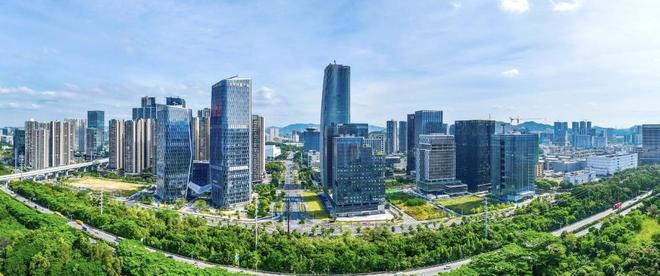
Core Insights - The manufacturing sector in Guangming District is experiencing a robust recovery post-Chinese New Year, with companies rapidly resuming operations and focusing on research and development [1][5]. Group 1: Company Developments - Sugawa Robotics, a national-level specialized enterprise, has accelerated its global expansion and recently acquired iRobot, enhancing its technological capabilities in navigation, AI vision recognition, and sensor integration [3]. - Tuo Zhu Technology has established a 3D printing headquarters in Guangming, aiming for an annual production capacity of over 3 million units, positioning itself as a leading global manufacturer in the 3D printing industry [6]. - Aiklight Technology, a prominent LED smart control system supplier, is ramping up production to meet global demand and plans to enhance its R&D investments to improve product value [7][9]. - Invt has reported a strong recovery with over 90% of its workforce back on-site, focusing on AI and smart manufacturing, and plans to increase investments in its photovoltaic energy storage sector [10]. Group 2: Industry Trends - The Guangming District is becoming a significant hub for technological innovation, contributing to the Greater Bay Area's development as a comprehensive national science center [12]. - The local government is fostering a favorable business environment, attracting investments and entrepreneurial activities, which is expected to yield more surprises in the upcoming spring [12].

英威腾:公司严格按照相关法律法规及监管规定,在定期报告中披露股东总数及相关股东持股情况
Zheng Quan Ri Bao· 2026-02-12 09:13
Group 1 - The company, Invt, stated that it strictly complies with relevant laws and regulations regarding the disclosure of the total number of shareholders and their holdings in periodic reports [2] - For inquiries about the number of shareholders at other points in time, the company allows investors to send shareholder proof and identification to its email for verification [2]
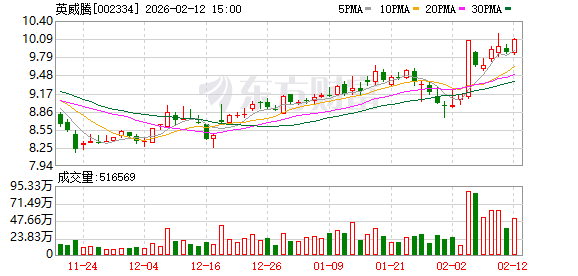
英威腾:公司将加快推进客户试机落地及市场拓展工作
Zheng Quan Ri Bao Wang· 2026-02-11 10:10
Group 1 - The core viewpoint of the article highlights that Invt (002334) is addressing investor inquiries regarding the strict reliability and safety verification processes for liquid cooling products in the data center sector, which leads to longer approval cycles [1] - The company acknowledges that establishing business cooperation requires reaching other commercial agreements [1] - Invt plans to accelerate the implementation of customer trials and market expansion efforts [1]
英威腾:公司变频器产品应用领域广泛
Zheng Quan Ri Bao Zhi Sheng· 2026-02-11 09:37
Core Viewpoint - The company, Invt, has a wide range of applications for its variable frequency drive products, covering various industries and achieving global sales [1] Group 1: Product Applications - The company's variable frequency drive products are utilized in advanced manufacturing, logistics warehousing, machine tools, marine engineering, oil refining, metallurgy, coal mining, chemicals, fluid machinery, printing and packaging, plastic machinery, and elevators [1] Group 2: Global Sales and Manufacturing Capabilities - The company has achieved overseas sales, with its sales regions covering multiple countries and areas worldwide [1] - The company possesses scalable and flexible manufacturing capabilities, which can fully meet the order delivery demands of both domestic and international markets [1]
英威腾:公司将持续优化流程提高效率,及时回应投资者的提问
Zheng Quan Ri Bao· 2026-02-11 08:37
Group 1 - The company, Invt, stated that it will respond to routine inquiries from investors in a timely manner [2] - For more specialized questions, the company will verify details with relevant business departments to ensure accurate responses, which may take longer [2] - The company is committed to continuously optimizing processes to improve efficiency and respond to investor inquiries promptly [2]
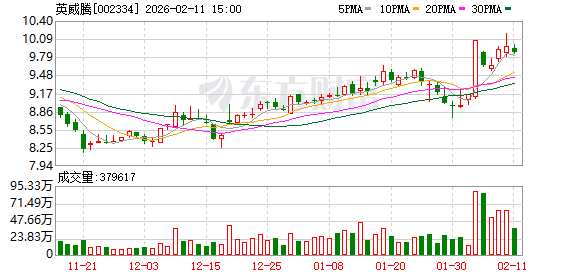
英威腾:变频器产品应用领域广泛,已实现海外销售
Sou Hu Cai Jing· 2026-02-11 03:54
Core Viewpoint - The company, Invt, has a significant portion of its revenue derived from frequency converters, which are widely used across various industries and have achieved international sales [1] Group 1: Application Areas - The frequency converters produced by the company are utilized in advanced manufacturing, logistics warehousing, machine tools, marine engineering, oil refining, metallurgy, coal mining, chemicals, fluid machinery, printing and packaging, plastic machinery, and elevators [1] Group 2: Export and Production Capacity - The company has successfully achieved overseas sales, with its products distributed across multiple countries and regions globally [1] - The company possesses scalable and flexible manufacturing capabilities, enabling it to meet order delivery demands from both domestic and international markets [1]
英威腾(002334):中标黑龙江伊品能源有限公司采购项目,中标金额为187.00万元
Xin Lang Cai Jing· 2026-02-10 12:39
Group 1 - The core point of the news is that Shenzhen Invt Electric Co., Ltd. won a bid for the procurement project of high-frequency converters for Heilongjiang Yipin Energy Co., Ltd., with a bid amount of 1.87 million yuan [1][2][3] Group 2 - Invt Electric (002334.SZ) reported a revenue of 4.322 billion yuan for 2024, with a revenue growth rate of -5.84% and a net profit attributable to the parent company of 287 million yuan, reflecting a net profit growth rate of -22.81% [2][3] - For the first half of 2025, the company achieved a revenue of 2.039 billion yuan, with a revenue growth rate of -3.51% and a net profit attributable to the parent company of 123 million yuan, showing a net profit growth rate of 13.01% [2][3] - The company operates in the industrial sector, with its main product types including transformer equipment, operating system software, low-voltage electrical appliances, internet services, transmission equipment, and specialized equipment and components [2][3] - The main composition of the company's 2024 revenue includes frequency converters (52.57%), data center products (18.32%), motor controllers (13.21%), others (10.77%), and inverters (5.13%) [2][3]
2026年2月4日稀土市场:金属镨钕均价90.46万元/吨涨0.78万元/吨 氧化镨钕均价74.24万元/吨涨0.19万元/吨
Jin Rong Jie· 2026-02-04 12:17
Group 1 - The rare earth market shows a slight increase in mainstream product prices, with praseodymium and neodymium oxide averaging 742,400 CNY/ton, up 1,900 CNY/ton, and praseodymium and neodymium metal averaging 904,600 CNY/ton, up 7,800 CNY/ton [1] - Dysprosium oxide remains stable at 1,384,300 CNY/ton, while terbium oxide also holds steady at 6,116,200 CNY/ton [1] - Supply of upstream raw materials remains tight, and metal enterprises are reluctant to sell, keeping praseodymium and neodymium metal prices high [1] Group 2 - The A-share market shows performance of some rare earth permanent magnet concept stocks, with Yingweiting (002334) at 10.07 CNY, up 10.05%, and Yujing Co. (002943) at 85.21 CNY, up 5.05% [2] - Other notable stocks include Wolong New Energy (600173) at 8.29 CNY, up 2.61%, and China Aluminum (601600) at 13.44 CNY, up 2.28% [2] - The trading volume for these stocks varies, with Yingweiting achieving a transaction amount of 867 million CNY and Yujing Co. reaching 1.549 billion CNY [2]