CTN(300430)

Search documents
光大证券:2025脑机接口行业发展现状、支持政策、临床情况及行业进展分析报告
Xin Lang Cai Jing· 2026-01-11 12:28
Industry Overview - Brain-Computer Interface (BCI) is a new cross-disciplinary technology that creates a communication channel between the brain and external devices, enabling direct information exchange [6] - BCIs can be classified into three types: invasive, semi-invasive, and non-invasive, with applications in medical rehabilitation, consumer interactions, and military fields [7] - The global BCI market is projected to reach $7.63 billion by 2029, growing from $1.2 billion in 2019 to nearly $2 billion in 2023, with a compound annual growth rate (CAGR) exceeding 13% from 2019 to 2023 [13][14] - Over 1,500 financing events in the global BCI sector have raised nearly $10 billion, with significant investments in both the U.S. and China [16] Policy Guidance - Major countries have launched brain initiatives to support BCI development, with the U.S. investing approximately $4.5 billion in its BRAIN Initiative since 2013 [37][40] - China has initiated its "Brain Science and Brain-Like Intelligence Technology" project, with funding expected to reach hundreds of billions of yuan [39][42] Clinical Situation - The medical demand for BCIs is driven by the need for rehabilitation in stroke and disabled populations, with significant clinical research already underway for various diseases [3][33] - Clinical trials for BCIs are accelerating globally, with a rapid increase in the number of trials in China [3][11] Industry Progress - Notable advancements include Neuralink's implantation of over 10 devices and Synchron's achievement of brain-controlled iPad functionality [4][4] - Key overseas companies like Neuralink and Synchron are leading in the invasive BCI field, focusing on treatment and human-computer interaction [4][4] - Domestic companies are also making strides, with clinical trials accelerating and real-time Chinese language decoding being achieved [4][4] Industry Chain Analysis - The BCI industry chain consists of upstream hardware and software supply, midstream BCI product supply, and downstream applications in various fields [18] - Upstream technology innovation barriers are high, with breakthroughs in flexible electrodes and chips being critical [20][21] - Downstream applications are primarily in the medical field, which is the most mature area for commercialization [30]


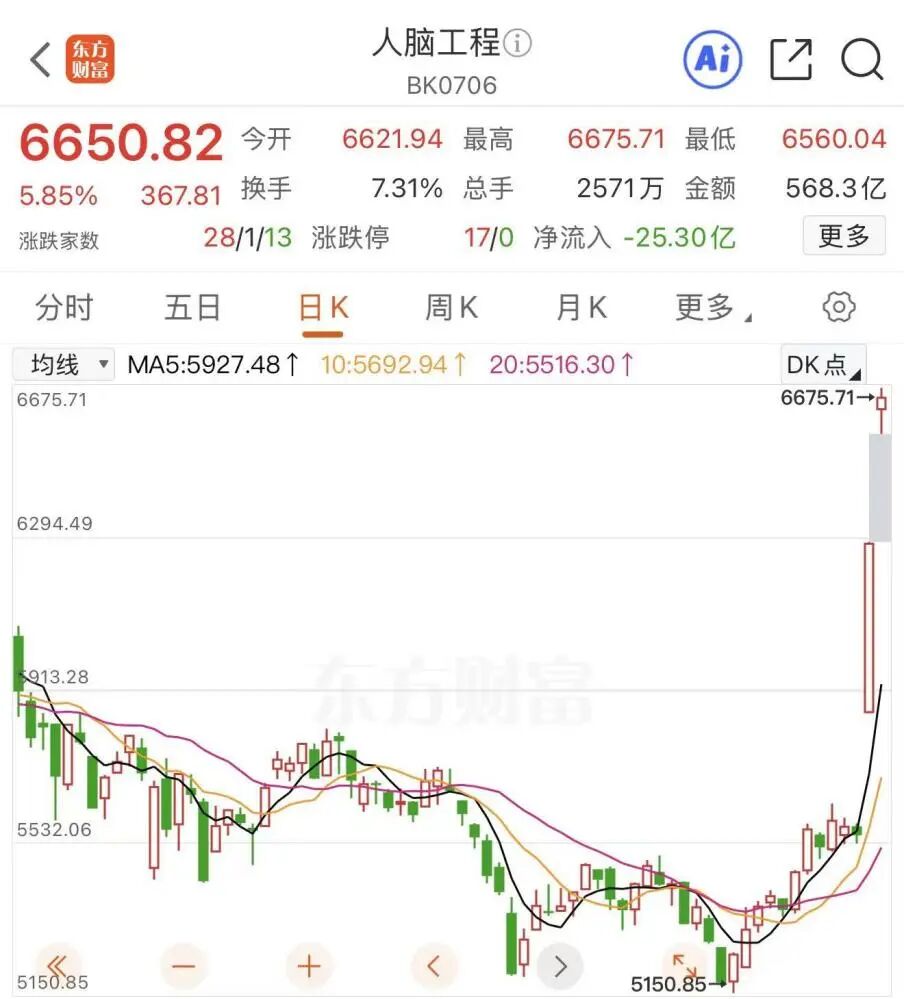
A股脑机接口股继续强势,南京熊猫、普利特、创新医疗4连板
Ge Long Hui· 2026-01-08 02:41
Group 1 - The core viewpoint of the article highlights a significant surge in A-share market stocks related to brain-computer interface (BCI) technology, driven by recent developments in the sector [1] - Aipeng Medical reached a 20% daily limit increase, while Kefu Medical rose over 15%, indicating strong investor interest in BCI-related companies [1] - Notable stocks such as Nanjing Panda, Pulite, and Innovation Medical achieved a 10% daily limit increase, reflecting a broader trend of positive market sentiment towards BCI stocks [1] Group 2 - The article mentions that on January 6, Strong Brain Technology, a leading company in the BCI field, announced the completion of approximately 2 billion RMB in financing, marking a significant milestone for the industry [1] - This financing round is noted to be the second largest globally in the BCI sector, only behind Neuralink, which is owned by Elon Musk [1] - The financing success of Strong Brain Technology is expected to further stimulate interest and investment in the BCI market, potentially leading to more advancements and innovations in the field [1]



A股收评:三大指数集体上涨,沪指涨0.05%14连阳创业板指涨0.31%,存储芯片爆发,光刻机(胶)走强!近3200股下跌,成交2.88万亿放量493亿
Ge Long Hui· 2026-01-07 07:55
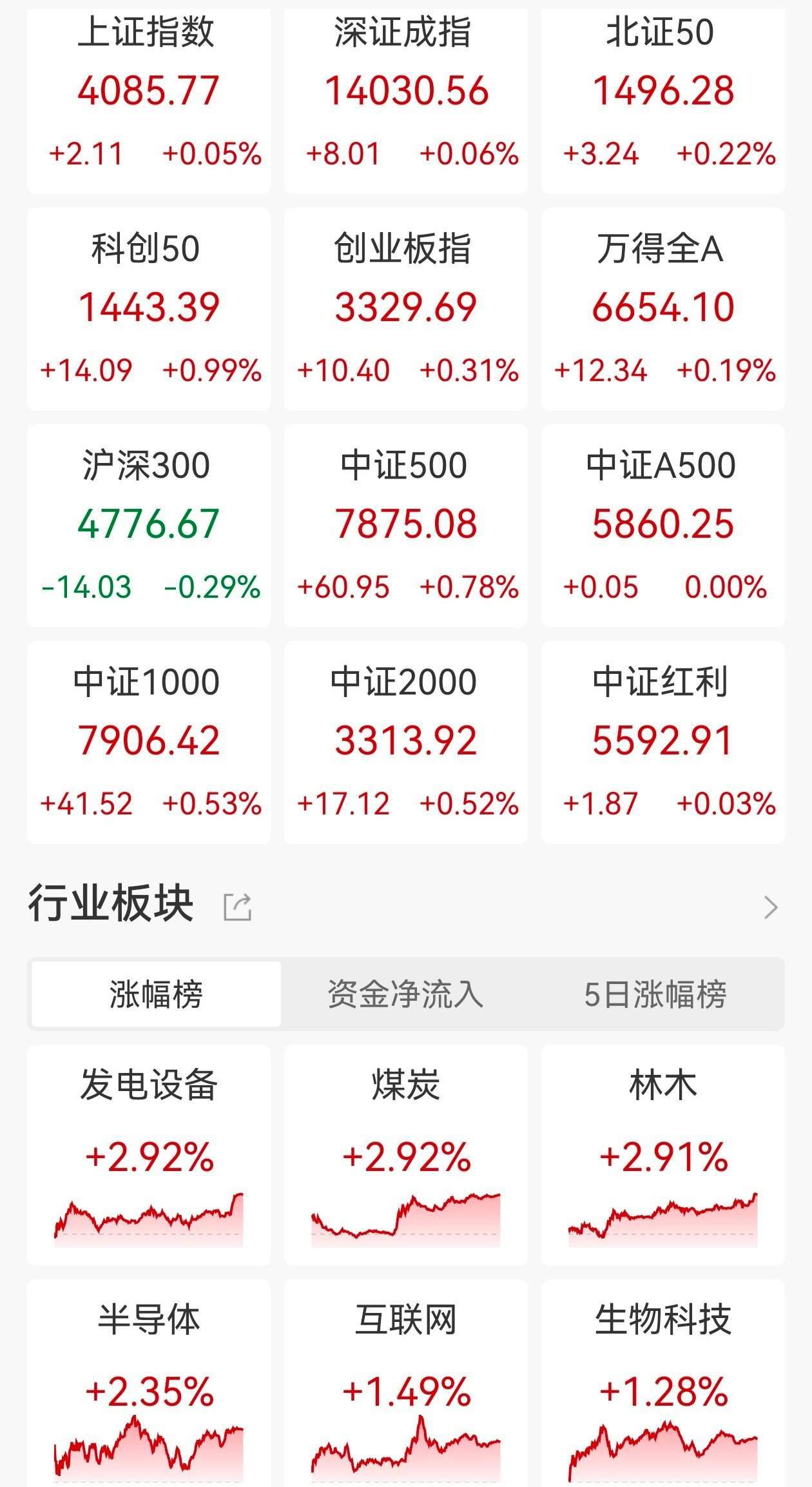
Market Overview - The three major A-share indices experienced slight increases, with the Shanghai Composite Index rising by 0.05% to 4085 points, the Shenzhen Component Index increasing by 0.06%, and the ChiNext Index up by 0.31% [1][2] - The total market turnover reached 2.88 trillion yuan, an increase of 49.3 billion yuan compared to the previous trading day, with nearly 3200 stocks declining [1] Index Performance - Shanghai Composite Index: 4085.77 (+2.11, +0.05%) [2] - Shenzhen Component Index: 14030.56 (+8.01, +0.06%) [2] - ChiNext Index: 3329.69 (+10.40, +0.31%) [2] - Sci-Tech 50 Index: 1443.39 (+14.09, +0.99%) [2] - CSI 300 Index: 4776.67 (-14.03, -0.29%) [2] - CSI 500 Index: 7875.08 (+60.95, +0.78%) [2] Sector Performance - The storage chip sector saw a significant surge, with companies like Tongcheng New Materials and Hengkun New Materials hitting the daily limit [1][3] - The electronic chemicals sector also rose, with Guanggang Gas hitting the daily limit [1][3] - The photolithography machine sector strengthened, with companies like Nanda Optoelectronics reaching the daily limit [1][3] - The media sector experienced gains, with companies such as Dayou Energy and Shanxi Black Cat hitting the daily limit [3] Declining Sectors - The DRG/DIP concept saw a decline, with Rongke Technology hitting a 20% limit down [3] - The brain-computer interface sector faced a significant pullback, with companies like Chengyitong and Aipeng Medical dropping over 10% [3] - The titanium dioxide sector weakened, with Zhenhua Co. leading the decline [3] - Sectors related to digital currency, under-screen photography, and brokerage concepts also experienced notable declines [3]



A股异动丨脑机接口板块跳水,爱朋医疗跌超10%
Ge Long Hui A P P· 2026-01-07 06:02
Group 1 - The brain-computer interface sector in the A-share market experienced a significant decline, with multiple companies reporting substantial drops in their stock prices [1] - Major companies such as Mailland, Chengyitong, and Aipeng Medical saw declines exceeding 10%, while others like Leidi Ke and Weisi Medical dropped over 8% [1][2] - Several brain-computer interface concept stocks issued announcements indicating a cooling off, with companies like Aerospace Changfeng stating they have not actually engaged in related business activities [1] Group 2 - Mailland's stock fell by 11.09%, with a total market value of 54.43 billion [2] - Chengyitong's stock decreased by 10.91%, with a market capitalization of 6.731 billion [2] - Aipeng Medical's stock dropped by 10.39%, with a market value of 4.514 billion [2]


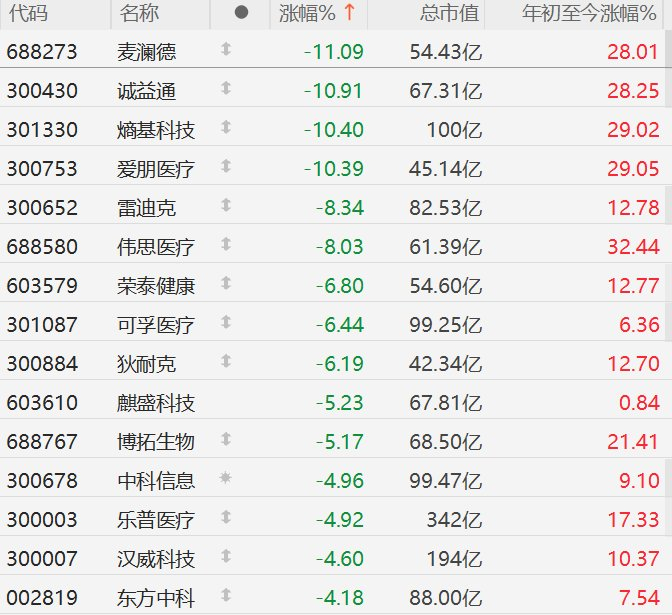
脑机接口板块午后跳水,诚益通等股跌超10%
Xin Lang Cai Jing· 2026-01-07 05:29
Group 1 - The brain-computer interface sector experienced a significant decline in the afternoon, with companies such as Chengyitong, Aipeng Medical, and Entropy Technology dropping over 10% [1] - Other companies in the sector, including Xiangyu Medical, Mylan, and Weisi Medical, also faced notable declines [1]
多家公司出“降温”公告,部分脑机接口概念股明显回调
Ge Long Hui· 2026-01-07 02:42
Core Viewpoint - The A-share market has seen a significant pullback in several brain-computer interface (BCI) concept stocks, with notable declines among various companies [1] Group 1: Stock Performance - Companies such as 麦澜德 (Mikland) and 熵基科技 (Entropy Technology) experienced declines exceeding 10% [1] - 诚益通 (Chengyi Tong) and 雷迪克 (Redik) fell over 7% [1] - 博拓生物 (Botuo Bio) and 爱朋医疗 (Aipeng Medical) dropped more than 6% [1] - 可孚医疗 (Kefu Medical) and 翔宇医疗 (Xiangyu Medical) decreased over 5% [1] - 狄耐克 (Dinaike) and 伟思医疗 (Weisi Medical) saw declines greater than 4% [1] Group 2: Company Announcements - Multiple BCI concept stocks issued announcements indicating a cooling off in the market [1] - 航天长峰 (Aerospace Changfeng) stated that the company has not actually engaged in BCI-related business [1] - 伟思医疗 (Weisi Medical) mentioned that new products in the BCI field are still in the early stages of market cultivation [1]

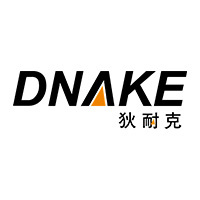

A股异动丨多家公司出“降温”公告,部分脑机接口概念股明显回调,熵基科技跌超10%
Ge Long Hui A P P· 2026-01-07 02:18
Group 1 - The A-share market has seen a significant pullback in brain-computer interface (BCI) concept stocks, with notable declines in companies such as Mailland and Entropy Technology, which fell over 10% [1] - Several BCI concept stocks have issued announcements indicating a cooling off, with Aerospace Changfeng stating that it has not actually engaged in BCI-related business [1] - Weisi Medical mentioned that its new products in the BCI field are still in the early stages of market cultivation [1] Group 2 - Specific stock performance includes Mailland down 10.68% with a market cap of 5.468 billion, Entropy Technology down 10.13% with a market cap of 10.1 billion, and Chengyi Tong down 7.55% with a market cap of 6.985 billion [2] - Other notable declines include Leedick down 7.14%, Botao Biological down 6.37%, and Aipeng Medical down 6.38% [2] - The overall trend shows that many BCI-related stocks are experiencing a downturn, with declines ranging from 4.33% to 10.68% across various companies [2]

脑机接口彻底火了!多家A股回应
Zhong Guo Ji Jin Bao· 2026-01-07 00:40
Core Viewpoint - The brain-computer interface (BCI) concept continues to gain traction, with multiple listed companies responding positively to the trend, leading to significant stock price increases in the sector [1]. Company Responses - On January 6, several companies, including Weisi Medical, Sanbo Brain Science, Aipeng Medical, and others, saw their stocks hit the daily limit, with many achieving consecutive gains [3]. - Weisi Medical reported a 20.01% increase in stock price, indicating a strong market response to its developments in the neuro-rehabilitation field, expanding from single-device solutions to comprehensive "diagnosis-treatment-rehabilitation" offerings [4][5]. - Sanbo Brain Science highlighted the promising applications of BCI technology in clinical diagnosis and neuro-rehabilitation, also achieving a 20.01% stock price increase [7]. - Xiangyu Medical announced the establishment of a BCI laboratory and aims to develop a product system covering four major categories, also achieving a two-day stock increase [8]. - Aipeng Medical's stock rose by 20%, emphasizing the role of BCI as a bridge between the brain and external devices [9][10]. - Entropy Technology and Meihua Medical also reported significant stock increases, with the former focusing on BCI and vehicle-road collaboration technologies [11][12]. Industry Developments - Companies are actively engaging in the BCI sector, with Xiangyu Medical entering over 500 medical institutions and aiming for over a thousand top-tier hospitals nationwide, indicating a robust commercialization strategy [15]. - Mcland anticipates obtaining its first BCI medical device registration certificate by Q1 2026, which could accelerate the application of BCI technology in existing product lines [15]. - Chengdu Huayi and Yingjixin are focusing on the foundational hardware for BCI, with Chengdu Huayi developing high-precision ADCs and low-power FPGAs for signal processing [15][16]. - The integration of BCI with embodied intelligence is gaining attention, with companies exploring applications in smart healthcare and rehabilitation [17]. - Blue Si Technology announced its strategic investment in Qiang Brain Technology, which recently secured approximately 2 billion yuan in funding, marking it as the second-largest financing in the BCI field after Neuralink [18]. Market Outlook - The global BCI market is projected to reach approximately $12.4 billion by 2034, with a CAGR of 17% from 2025 to 2034, driven by technological advancements and increased capital investment [20]. - The transition of BCI from clinical validation to commercial scalability is expected to unlock significant market opportunities in healthcare and consumer sectors [20].

深股通现身22只个股龙虎榜
Zheng Quan Shi Bao Wang· 2026-01-06 14:22
Group 1 - On January 6, a total of 22 stocks appeared on the Longhu list with the presence of Shenzhen Stock Connect special seats among the top five trading departments [1] - The net purchases included stocks such as Shanzi Gaoke, Zhongchao Holdings, and Qiangli New Materials, with net buying amounts of 150.91 million, 104.95 million, and 94.51 million respectively [1][2] - The net sales included stocks like Zhongtian Rocket, Haige Communication, and Tongyu Communication, with net selling amounts of 71.78 million, 54.57 million, and 53.40 million respectively [1][2] Group 2 - The stocks with the highest net purchases included: - Shanzi Gaoke (150.91 million) with a daily increase of 10.12% and a turnover rate of 12.69% [2] - Zhongchao Holdings (104.95 million) with a daily increase of 9.99% and a turnover rate of 34.29% [2] - Qiangli New Materials (94.51 million) with a daily increase of 15.84% and a turnover rate of 36.12% [2] - The stocks with the highest net sales included: - Zhongtian Rocket (-71.78 million) with a daily increase of 8.05% and a turnover rate of 15.76% [2] - Haige Communication (-54.57 million) with a daily increase of 9.98% and a turnover rate of 16.67% [2] - Tongyu Communication (-53.40 million) with a daily increase of 3.38% and a turnover rate of 40.79% [2]




海外准备量产,国内脑机接口进度到哪了?
Hua Er Jie Jian Wen· 2026-01-06 13:02
Core Insights - The brain-computer interface (BCI) industry is transitioning from "scientific experiments" to "commercialization," with Neuralink planning large-scale production by 2026, igniting market expectations [1] - China is accelerating its progress in the BCI field through supportive policies and technological breakthroughs, with significant investments being made in the sector [1][12] - The market is characterized as a "0 to 1" incremental market, driven by short-term sentiment from Neuralink's production expectations and favorable domestic policies [1] Investment Landscape - Strong Brain Technology recently completed approximately 2 billion yuan in financing, marking the second-largest funding round in the BCI sector after Neuralink [1] - Investors are advised to focus on companies with core technological advantages, such as self-developed chips and flexible electrodes, as well as those that can achieve commercial closure in rehabilitation and consumer electronics [1] Technology Comparison - The BCI technology landscape is divided into invasive, semi-invasive, and non-invasive routes, each with distinct differences in signal quality, safety, and commercialization timelines [2] - Invasive methods, like those used by Neuralink, involve surgical implantation of electrodes for high-resolution signal acquisition but come with high costs and long development cycles [5] - Non-invasive methods utilize external sensors for signal collection, offering lower costs and safety but facing challenges with signal attenuation [8] Competitive Landscape - The U.S. leads in invasive BCI technology by 2-5 years, while China is catching up, particularly in non-invasive applications where both countries are on par [9][11] - Chinese companies are making significant strides in clinical trials, with several achieving notable milestones in both invasive and non-invasive technologies [12] Company Developments - Companies like BrainCo and Huashan Hospital have completed pioneering clinical trials in invasive BCI systems, demonstrating the ability to control devices through thought [12][13] - Strong Brain Technology has received FDA and CE certifications, positioning itself as a leader in the commercialization of BCI products [12] - Other companies, such as Beijing Chip Intelligence and ZhiDian Medical, are also advancing in the invasive BCI space, with various clinical trials and product developments underway [13][14] Regulatory Environment - The Chinese government has included BCI in its national strategic emerging industries, with plans for independent billing standards and industry regulations to facilitate commercialization [11]