
Chengdu Yunda Technology (300440)

Search documents
运达科技(300440) - 董事会决议公告
2025-08-20 11:00
证券代码:300440 证券简称:运达科技 公告编号:2025-044 成都运达科技股份有限公司 第五届董事会第二十次会议决议公告 本公司及董事会全体成员保证信息披露的内容真实、准确、完整,没有虚 假记载、误导性陈述或重大遗漏。 一、董事会会议召开情况 1.发出董事会会议通知的时间和方式:成都运达科技股份有限公司(以下简 称"公司")第五届董事会第二十次会议通知及补充会议通知分别于 2025 年 8 月 8 日、8 月 15 日以电子邮件方式发出。 2.召开董事会会议的时间、地点和方式:本次董事会会议于 2025 年 8 月 19 日在成都高新区康强四路 99 号成都运达科技股份有限公司会议室以现场及通讯 表决方式召开。 3.会议出席人数:本次董事会会议应出席董事 7 名,实际出席董事 7 名,其 中何鸿云、朱金陵、王玉松以现场表决方式出席,徐总茂、顾诚、黄庆、吉利以 通讯表决方式出席。 半年度报告》全文及摘要。 2.审议通过了《关于选举公司董事的议案》。 4.会议的主持人:本次董事会会议由公司董事长何鸿云先生主持。 5.会议的召开合法合规:本次董事会会议的召集、召开符合法律法规、部门 规章、规范性文件及《公 ...

运达科技(300440) - 2025 Q2 - 季度财报
2025-08-20 10:55
Important Notice, Table of Contents, and Definitions [Important Notice](index=2&type=section&id=%E9%87%8D%E8%A6%81%E6%8F%90%E7%A4%BA) The company's board ensures the truthfulness, accuracy, and completeness of this semi-annual report, with no false records or misleading statements 2025 Half-Year Core Financial Indicators | Indicator | Amount | YoY Change | | :--- | :--- | :--- | | Operating Revenue | 289 million Yuan | +23.65% | | Net Profit Attributable to Shareholders | - | +13.65% | - The company plans no cash dividends, bonus shares, or capital increase from capital reserves for the half-year period[9](index=9&type=chunk) [Risk Factors](index=2&type=section&id=%E9%A3%8E%E9%99%A9%E6%8F%90%E7%A4%BA) The company faces significant risks including a large balance of accounts receivable, challenges in technology and product development, and market concentration Accounts Receivable Balance and Proportion of Total Assets | Time Point | Accounts Receivable (million Yuan) | Proportion of Total Assets | | :--- | :--- | :--- | | End of 2023 | 1,174.1967 | 45.14% | | End of 2024 | 1,099.9474 | 43.99% | | End of H1 2025 | 933.5574 | 40.42% | - Product sales are highly dependent on the railway and urban rail transit markets, which accounted for **99.65%** of revenue in H1 2025[7](index=7&type=chunk) - The company faces technology and product development risks if it fails to accurately judge future technological trends or if R&D investment is insufficient[6](index=6&type=chunk) [Definitions](index=7&type=section&id=%E9%87%8A%E4%B9%89) This chapter defines key terms and abbreviations used in the report, including company entities, related parties, industry terms, and regulatory bodies, to facilitate investor understanding Company Profile and Key Financial Indicators [Company Profile](index=9&type=section&id=%E5%85%AC%E5%8F%B8%E7%AE%80%E4%BB%8B) Chengdu Yunda Technology Co., Ltd. (stock code: 300440) is listed on the Shenzhen Stock Exchange, with its legal representative and basic information remaining unchanged during the reporting period Company Basic Information | Item | Content | | :--- | :--- | | Stock Abbreviation | Yunda Technology | | Stock Code | 300440 | | Listing Exchange | Shenzhen Stock Exchange | | Full Chinese Name | 成都运达科技股份有限公司 | | Legal Representative | He Hongyun | [Key Accounting Data and Financial Indicators](index=10&type=section&id=%E4%B8%BB%E8%A6%81%E4%BC%9A%E8%AE%A1%E6%95%B0%E6%8D%AE%E5%92%8C%E8%B4%A2%E5%8A%A1%E6%8C%87%E6%A0%87) In H1 2025, the company achieved 289 million Yuan in operating revenue, a 23.65% increase, and 16.47 million Yuan in net profit attributable to shareholders, up 13.65%, with operating cash flow significantly improving by 40.57% despite remaining negative, while total assets decreased by 7.64% to 2.31 billion Yuan 2025 Half-Year Key Financial Data | Indicator | Current Reporting Period | Prior Year Period | YoY Change | | :--- | :--- | :--- | :--- | | Operating Revenue (Yuan) | 288,695,017.91 | 233,468,426.88 | 23.65% | | Net Profit Attributable to Shareholders (Yuan) | 16,465,606.55 | 14,487,723.70 | 13.65% | | Net Profit Attributable to Shareholders (Excluding Non-Recurring Items) (Yuan) | 13,563,467.97 | 13,249,974.66 | 2.37% | | Net Cash Flow from Operating Activities (Yuan) | -40,678,563.88 | -68,447,278.94 | 40.57% | | Basic Earnings Per Share (Yuan/share) | 0.0380 | 0.0335 | 13.43% | | Weighted Average Return on Net Assets | 1.02% | 0.92% | Increased by 0.10 percentage points | | **Indicator** | **Current Period-End** | **Prior Year-End** | **Period-End vs. Prior Year-End Change** | | Total Assets (Yuan) | 2,309,697,062.34 | 2,500,664,167.60 | -7.64% | | Net Assets Attributable to Shareholders (Yuan) | 1,604,665,688.18 | 1,609,653,523.37 | -0.31% | 2025 Half-Year Non-Recurring Gains and Losses | Item | Amount (Yuan) | | :--- | :--- | | Government Subsidies | 2,740,583.87 | | Gains/Losses from Fair Value Changes and Disposal of Financial Assets | 1,581,353.49 | | Gains/Losses from Disposal of Non-Current Assets | 90,424.00 | | Net Other Non-Operating Income/Expenses | -952,037.83 | | **Total** | **2,902,138.58** | Management Discussion and Analysis [Business Overview](index=12&type=section&id=%E4%B8%80%E3%80%81%E6%8A%A5%E5%91%8A%E6%9C%9F%E5%86%85%E5%85%AC%E5%8F%B8%E4%BB%8E%E4%BA%8B%E7%9A%84%E4%B8%BB%E8%A6%81%E4%B8%9A%E5%8A%A1) As a smart system provider for rail transit, the company maintains stable operations, serving national railways, urban rail, and vocational colleges, implementing a "3351" strategy with strong market prospects driven by national policies - The company implements a "3351" strategic plan, targeting **3** customer groups (national railways, urban rail, vocational colleges), exploring **3** business segments (locomotive and rolling stock, traction power supply, railway transportation), offering **5** system solutions (smart training, smart O&M, smart depot, smart traction power supply, smart freight), and providing **1** transport and maintenance service business[36](index=36&type=chunk)[43](index=43&type=chunk) - National policies, including the "National Comprehensive Three-Dimensional Transportation Network Plan" and the "Action Plan for Large-Scale Equipment Renewal and Trade-in of Consumer Goods," are key performance drivers, explicitly supporting the innovative development and upgrading of rail transit equipment, presenting high-growth opportunities for the company[71](index=71&type=chunk)[72](index=72&type=chunk)[73](index=73&type=chunk) [Smart Training Solutions](index=13&type=section&id=%EF%BC%881%EF%BC%89%E6%99%BA%E6%85%A7%E5%9F%B9%E8%AE%AD%E8%A7%A3%E5%86%B3%E6%96%B9%E6%A1%88) This solution leverages digital twin and AI technologies to provide intelligent training systems for national railways, urban rail, and vocational institutions, covering scenarios such as train driving, maintenance, and emergency response, with successful expansion into "Belt and Road" projects like the Jakarta-Bandung High-Speed Railway [Smart O&M Solutions](index=15&type=section&id=%EF%BC%882%EF%BC%89%E6%99%BA%E8%83%BD%E8%BF%90%E7%BB%B4%E8%A7%A3%E5%86%B3%E6%96%B9%E6%A1%88) This solution utilizes physical sensing, image recognition, and big data analytics, centered on the full lifecycle health management of vehicles, to achieve intelligent perception, fault early warning, and O&M decision-making, ensuring safe, reliable, efficient, and energy-saving train operations, widely applied in major urban rail units [Smart Depot Solutions](index=16&type=section&id=%EF%BC%883%EF%BC%89%E6%99%BA%E6%85%A7%E8%BD%A6%E8%BE%86%E6%AE%B5%E8%A7%A3%E5%86%B3%E6%96%B9%E6%A1%88) This solution focuses on enhancing depot operational quality and efficiency by integrating IoT, AI, and digital twin technologies to build a unified intelligent management and control platform, enabling information interoperability across vehicle operation, preparation, and maintenance stages, and promoting a shift towards condition-based intelligent maintenance [Smart Traction Power Supply Solutions](index=17&type=section&id=%EF%BC%884%EF%BC%89%E6%99%BA%E8%83%BD%E7%89%B5%E5%BC%95%E4%BE%9B%E7%94%B5%E8%A7%A3%E5%86%B3%E6%96%B9%E6%A1%88) This solution provides intelligent power distribution management and efficient regenerative energy utilization for traction catenary systems to national and urban rail clients, ensuring reliable power supply for trains, with products widely applied domestically and in "Belt and Road" countries like Belarus and Egypt [Smart Freight Solutions](index=18&type=section&id=%EF%BC%885%EF%BC%89%E6%99%BA%E8%83%BD%E8%B4%A7%E8%BF%90%E8%A7%A3%E5%86%B3%E6%96%B9%E6%A1%88) This solution integrates IoT, big data, and AI to drive the digital and intelligent transformation of railway freight systems, building intelligent dispatching and unified smart control platforms that significantly enhance yard operation efficiency and reduce operating costs, widely deployed across 18 national railway bureaus - The smart freight solution, through technological innovation, improves yard operation efficiency by **30%-50%**, reduces operating costs by **15%-25%**, decreases cargo damage rate by **80%**, and contributes to a **30%-50%** reduction in carbon emissions[60](index=60&type=chunk) [Core Competitiveness Analysis](index=22&type=section&id=%E4%BA%8C%E3%80%81%E6%A0%B8%E5%BF%83%E7%AB%9E%E4%BA%89%E5%8A%9B%E5%88%86%E6%9E%90) The company's core competitiveness stems from its profound scientific research foundation, elite team, technological leadership achieved through independent innovation, extensive accumulation in the smart industry, and excellent product quality and brand reputation, with its core team possessing over 30 years of industry experience and technical personnel exceeding 70% - The company's core team originated from Southwest Jiaotong University, boasting over **30 years** of industry experience, with technical personnel accounting for over **70%**[76](index=76&type=chunk) - The company adheres to independent innovation, earning recognition as a National "Little Giant" enterprise specializing in new technologies, a National Enterprise Technology Center, and participating in the formulation of multiple international and domestic industry standards[78](index=78&type=chunk) - The company operates over **200** service outlets nationwide, is ISO/TS 22163 system certified to a silver standard, and has established a "product + service" sales model[80](index=80&type=chunk) [Main Business Analysis](index=23&type=section&id=%E4%B8%89%E3%80%81%E4%B8%BB%E8%90%A5%E4%B8%9A%E5%8A%A1%E5%88%86%E6%9E%90) In H1 2025, the company's operating revenue reached 289 million Yuan, a 23.65% increase, and net profit attributable to shareholders was 16.47 million Yuan, up 13.65%, driven by strong market performance across all business segments, particularly smart O&M with a 63.98% revenue growth, while the company further solidified its technological leadership by launching the "Yunda Agent Platform" and deploying the "Vehicle Maintenance Expert Large Model" at Guangzhou Metro - In the smart O&M sector, core product technologies were upgraded, securing multi-million Yuan orders for new 6A HD video and 6A fire prevention systems, and winning a multi-million Yuan retrofit project for foreign vehicle models, achieving breakthroughs in both new and existing markets[81](index=81&type=chunk) - The company officially launched the "Yunda Agent Platform" and deployed the "Vehicle Maintenance Expert Large Model" at Guangzhou Metro for the first time, empowering core products with AI for intelligent upgrades[83](index=83&type=chunk)[84](index=84&type=chunk) Operating Revenue by Product/Service (Yuan) | Product/Service | Operating Revenue | Operating Cost | Gross Margin | YoY Change in Operating Revenue | | :--- | :--- | :--- | :--- | :--- | | Smart O&M | 106,058,436.68 | 60,814,660.50 | 42.66% | 63.98% | | Smart Training | 88,605,709.86 | 51,323,089.30 | 42.08% | 5.15% | | Smart Traction Power Supply | 37,911,152.15 | 23,051,784.13 | 39.20% | 40.95% | Reasons for Changes in Key Financial Data | Item | YoY Change | Reason for Change | | :--- | :--- | :--- | | Operating Cost | 40.13% | Orderly delivery of ongoing projects led to a year-on-year increase in costs | | Financial Expenses | 37.96% | Increase in interest expenses during the current period | | Income Tax Expense | 71.95% | Due to increased profit | | Net Cash Flow from Investing Activities | -659.11% | Increased purchase of wealth management products during the current period | | Net Cash Flow from Financing Activities | 63.34% | No repayment of borrowings or share repurchase in the current period, unlike the prior period | [Non-Core Business Analysis](index=26&type=section&id=%E5%9B%9B%E3%80%81%E9%9D%9E%E4%B8%BB%E8%90%A5%E4%B8%9A%E5%8A%A1%E5%88%86%E6%9E%90) Non-core operations significantly impacted profit during the reporting period, with other income (primarily software VAT refunds and government subsidies) and credit impairment loss reversals (reversal of bad debt provisions for accounts receivable) constituting 44.59% and 76.97% of total profit, respectively Non-Core Business Profit and Loss (Yuan) | Item | Amount | Proportion of Total Profit | Reason for Formation | | :--- | :--- | :--- | :--- | | Investment Income | 1,444,597.58 | 5.97% | Primarily investment income from wealth management products | | Other Income | 10,789,047.11 | 44.59% | Primarily software VAT refunds and government subsidies received | | Credit Impairment Loss | 18,621,654.31 | 76.97% | Primarily reversal of bad debt provision for accounts receivable | [Asset and Liability Status Analysis](index=27&type=section&id=%E4%BA%94%E3%80%81%E8%B5%84%E4%BA%A7%E5%8F%8A%E8%B4%9F%E5%80%BA%E7%8A%B6%E5%86%B5%E5%88%86%E6%9E%90) As of the end of the reporting period, the company's total assets were 2.31 billion Yuan, a 7.64% decrease from the beginning of the year, with accounts receivable remaining the largest asset component at 40.42% (though its proportion decreased), while inventory proportion increased, and accounts payable constituted the primary liability at 17.15% of total assets Major Balance Sheet Item Changes | Item | Period-End Amount (Yuan) | Proportion of Total Assets | Year-Beginning Amount (Yuan) | Proportion of Total Assets | Change in Proportion | | :--- | :--- | :--- | :--- | :--- | :--- | | Cash and Cash Equivalents | 108,483,195.77 | 4.70% | 199,485,843.43 | 7.98% | -3.28% | | Accounts Receivable | 933,557,396.96 | 40.42% | 1,099,947,364.78 | 43.99% | -3.57% | | Inventory | 353,325,702.75 | 15.30% | 305,368,998.32 | 12.21% | 3.09% | | Accounts Payable | 396,133,872.81 | 17.15% | 482,155,450.02 | 19.28% | -2.13% | [Investment Status Analysis](index=28&type=section&id=%E5%85%AD%E3%80%81%E6%8A%95%E8%B5%84%E7%8A%B6%E5%86%B5%E5%88%86%E6%9E%90) During the reporting period, the company's investment amount significantly increased to 437 million Yuan, an 862.27% year-on-year growth, primarily due to entrusted wealth management using proprietary funds, with a total outstanding balance of 158 million Yuan at period-end - The investment amount for the reporting period was **437 million Yuan**, a significant increase of **862.27%** compared to 45.43 million Yuan in the prior year[102](index=102&type=chunk) Entrusted Wealth Management Overview (million Yuan) | Specific Type | Source of Funds | Amount Incurred | Outstanding Balance | | :--- | :--- | :--- | :--- | | Bank Wealth Management Products | Proprietary Funds | 367.14 | 128.17 | | Brokerage Wealth Management Products | Proprietary Funds | 30.00 | 30.00 | | **Total** | | **397.14** | **158.17** | [Analysis of Major Holding and Participating Companies](index=30&type=section&id=%E5%85%AB%E3%80%81%E4%B8%BB%E8%A6%81%E6%8E%A7%E8%82%A1%E5%8F%82%E8%82%A1%E5%85%AC%E5%8F%B8%E5%88%86%E6%9E%90) During the reporting period, key subsidiaries such as Sichuan Huiyou (traction power), Guangzhou Yunda (smart O&M), and Chengdu Huoan (smart freight) operated steadily, contributing 8.43 million Yuan, 4.41 million Yuan, and 3.98 million Yuan in net profit respectively, while the company deregistered Tangshan Xijiao Zhida Rail Transit Equipment Co., Ltd. to optimize resource allocation Major Subsidiary Operating Performance (Yuan) | Company Name | Main Business | Operating Revenue | Operating Profit | Net Profit | | :--- | :--- | :--- | :--- | :--- | | Sichuan Huiyou | Traction Power Equipment | 27,234,752.59 | 9,575,929.76 | 8,426,732.74 | | Guangzhou Yunda | Smart O&M | 39,025,728.81 | 4,407,337.18 | 4,407,337.77 | | Chengdu Huoan | Smart Freight | 15,297,516.48 | 6,923,953.95 | 3,982,618.97 | Corporate Governance, Environment, and Society [Implementation of Equity Incentive Plans](index=32&type=section&id=%E4%B8%89%E3%80%81%E5%85%AC%E5%8F%B8%E8%82%A1%E6%9D%83%E6%BF%80%E5%8A%B1%E8%AE%A1%E5%88%92%E3%80%81%E5%91%98%E5%B7%A5%E6%8C%81%E8%82%A1%E8%AE%A1%E5%88%92%E6%88%96%E5%85%B6%E4%BB%96%E5%91%98%E5%B7%A5%E6%BF%80%E5%8A%B1%E6%8E%AA%E6%96%BD%E7%9A%84%E5%AE%9E%E6%96%BD%E6%83%85%E5%86%B5) During the reporting period, the company adjusted its 2023 restricted stock incentive plan, canceling a total of **3.508 million** granted but unvested second-class restricted shares due to employee departures and the failure to meet 2024 company-level performance targets - Due to the departure of some incentive recipients, the company canceled a total of **394,000** granted but unvested second-class restricted shares[122](index=122&type=chunk) - Due to the failure to meet the 2024 performance targets, the company canceled a total of **3.114 million** (2.7105 million + 0.4035 million) restricted shares corresponding to the assessment year from both initial and reserved grants[123](index=123&type=chunk) Significant Matters [Significant Contracts and Their Performance](index=36&type=section&id=%E5%8D%81%E4%BA%8C%E3%80%81%E9%87%8D%E5%A4%A7%E5%90%88%E5%90%8C%E5%8F%8A%E5%85%B6%E5%B1%A5%E8%A1%8C%E6%83%85%E5%86%B5) This chapter details the company's significant contracts, primarily involving leasing and guarantees, including an office lease agreement with related party Yunda Innovation and 111.15 million Yuan in guarantees provided to several subsidiaries to support their development - The company signed a **5-year** office lease contract with its controlling shareholder, Yunda Innovation, for an office area of **31,914 sqm**, with an annual rent of **8.4189 million Yuan**[142](index=142&type=chunk) Summary of Guarantees to Subsidiaries (million Yuan) | Guaranteed Party | Actual Guaranteed Amount | | :--- | :--- | | Sichuan Huiyou | 10.00 | | Chengdu Huoan | 30.00 | | Hunan Hengxin | 20.40 | | Guangzhou Yunda | 40.75 | | Technical Services | 10.00 | | **Total Actual Guarantee Balance at Period-End** | **111.15** | [Significant Matters of Subsidiaries](index=38&type=section&id=%E5%8D%81%E5%9B%9B%E3%80%81%E5%85%AC%E5%8F%B8%E5%AD%90%E5%85%AC%E5%8F%B8%E9%87%8D%E5%A4%A7%E4%BA%8B%E9%A1%B9) During the reporting period, the company deregistered its subsidiary, Tangshan Xijiao Zhida Rail Transit Equipment Co., Ltd., to optimize resource allocation, while a project contract awarded to its controlling subsidiary, Guangzhou Yunda, in July 2023 is proceeding normally - To optimize resource allocation and reduce management costs, the company deregistered its subsidiary, Tangshan Xijiao Zhida Rail Transit Equipment Co., Ltd., on April 29, 2025[151](index=151&type=chunk) Share Changes and Shareholder Information [Share Changes](index=39&type=section&id=%E4%B8%80%E3%80%81%E8%82%A1%E4%BB%BD%E5%8F%98%E5%8A%A8%E6%83%85%E5%86%B5) As of the end of the reporting period, the company's total share capital remained unchanged at 443.9186 million shares, with unrestricted shares accounting for 99.62% and restricted shares for 0.38% Share Structure | Share Type | Number of Shares | Proportion | | :--- | :--- | :--- | | Restricted Shares | 1,695,035 | 0.38% | | Unrestricted Shares | 442,223,565 | 99.62% | | **Total Share Capital** | **443,918,600** | **100.00%** | [Shareholder Numbers and Shareholding](index=40&type=section&id=%E4%B8%89%E3%80%81%E5%85%AC%E5%8F%B8%E8%82%A1%E4%B8%9C%E6%95%B0%E9%87%8F%E5%8F%8A%E6%8C%81%E8%82%A1%E6%83%85%E5%86%B5) As of the end of the reporting period, the company had 19,184 common shareholders, with controlling shareholder Yunda Innovation (Chengdu) Investment Co., Ltd. holding 33.07% of shares, approximately half of which were pledged, and the company's share repurchase account holding 2.37% of total shares - At the end of the reporting period, the company had **19,184** common shareholders[157](index=157&type=chunk) Top Two Shareholders' Shareholding | Shareholder Name | Nature | Shareholding Proportion | Number of Shares Held | Pledge/Mark or Freeze Status | | :--- | :--- | :--- | :--- | :--- | | Yunda Innovation (Chengdu) Investment Co., Ltd. | Domestic Non-State-Owned Legal Person | 33.07% | 146,809,324 | Pledged 73,980,000 shares | | Liu Zhiqiang | Domestic Natural Person | 3.32% | 14,757,400 | Not Applicable | - The company's share repurchase special securities account held **10,521,800** shares, accounting for **2.37%** of the company's total share capital[158](index=158&type=chunk) Bond-Related Information [Bond-Related Information](index=44&type=section&id=%E5%80%BA%E5%88%B8%E7%9B%B8%E5%85%B3%E6%83%85%E5%86%B5) The company had no bond-related activities during the reporting period - The company had no bond-related activities during this reporting period[164](index=164&type=chunk) Financial Report [Audit Report](index=45&type=section&id=%E5%AE%A1%E8%AE%A1%E6%8A%A5%E5%91%8A) The company's 2025 half-year financial report is unaudited - This half-year financial report is unaudited[166](index=166&type=chunk) [Financial Statements](index=45&type=section&id=%E8%B4%A2%E5%8A%A1%E6%8A%A5%E8%A1%A8) This section presents the company's unaudited consolidated and parent company financial statements, including balance sheets, income statements, cash flow statements, and statements of changes in owners' equity, accompanied by detailed notes on accounting policies, estimates, and major statement items [Consolidated Balance Sheet](index=45&type=section&id=%E5%90%88%E5%B9%B6%E8%B5%84%E4%BA%A7%E8%B4%9F%E5%80%BA%E8%A1%A8) As of June 30, 2025, the company's total assets were 2.31 billion Yuan, total liabilities were 688 million Yuan, and owners' equity attributable to the parent company was 1.605 billion Yuan, resulting in a debt-to-asset ratio of 29.78% Consolidated Balance Sheet Summary (2025-06-30) | Item | Period-End Balance (Yuan) | | :--- | :--- | | **Total Assets** | **2,309,697,062.34** | | Total Current Assets | 1,844,458,922.68 | | Total Non-Current Assets | 465,238,139.66 | | **Total Liabilities** | **687,809,929.72** | | Total Current Liabilities | 666,675,858.16 | | Total Non-Current Liabilities | 21,134,071.56 | | **Total Owners' Equity** | **1,621,887,132.62** | | Owners' Equity Attributable to Parent Company | 1,604,665,688.18 | [Consolidated Income Statement](index=49&type=section&id=%E5%90%88%E5%B9%B6%E5%88%A9%E6%B6%A6%E8%A1%A8) In H1 2025, the company achieved total operating revenue of 289 million Yuan, incurred total operating costs of 295 million Yuan, resulting in a total profit of 24.19 million Yuan, a net profit of 17.52 million Yuan, and net profit attributable to parent company shareholders of 16.47 million Yuan Consolidated Income Statement Summary (H1 2025) | Item | Amount (Yuan) | | :--- | :--- | | Total Operating Revenue | 288,695,017.91 | | Total Operating Cost | 294,779,422.68 | | Total Profit | 24,193,936.20 | | Net Profit | 17,515,378.90 | | Net Profit Attributable to Parent Company Shareholders | 16,465,606.55 | [Consolidated Cash Flow Statement](index=53&type=section&id=%E5%90%88%E5%B9%B6%E7%8E%B0%E9%87%91%E6%B5%81%E9%87%8F%E8%A1%A8) In H1 2025, the company's net cash flow from operating activities was -40.68 million Yuan (an improvement), from investing activities was -20.91 million Yuan (primarily due to wealth management product purchases), and from financing activities was -30.41 million Yuan, with cash and cash equivalents totaling 90.08 million Yuan at period-end Consolidated Cash Flow Statement Summary (H1 2025) | Item | Amount (Yuan) | | :--- | :--- | | Net Cash Flow from Operating Activities | -40,678,563.88 | | Net Cash Flow from Investing Activities | -20,910,580.01 | | Net Cash Flow from Financing Activities | -30,411,639.60 | | **Net Increase in Cash and Cash Equivalents** | **-92,000,783.49** | | Cash and Cash Equivalents at Period-End | 90,083,939.21 |
运达科技: 关于控股股东协议转让公司部分股份完成过户登记的公告
Zheng Quan Zhi Xing· 2025-08-15 09:17
Core Viewpoint - Chengdu Yunda Technology Co., Ltd. announced the transfer of 44,391,860 shares, representing 10.00% of its total share capital, from its controlling shareholder Yunda Innovation (Chengdu) Investment Co., Ltd. to Zhixiangdahang (Chengdu) Technology Partnership (Limited Partnership) [1][5] Summary by Sections 1. Transfer Details - The share transfer was executed through an agreement, and the transfer of shares has been completed with the registration at China Securities Depository and Clearing Corporation Limited on August 14, 2025 [2][5] - The transfer involves 44,391,860 unrestricted circulating shares, which now makes Zhixiangdahang the second-largest shareholder of the company [5][6] 2. Shareholding Structure Before and After the Transfer - Before the transfer, the total shares held by Yunda Innovation and its concerted actors amounted to 146,809,324 shares, representing 33.07% of the total share capital [3] - After the transfer, Yunda Innovation's shareholding decreased to 102,417,464 shares, representing 23.07% of the total share capital, while Zhixiangdahang holds 10.00% [3][5] 3. Compliance and Governance - The transfer complies with relevant laws and regulations, including the Interim Measures for the Administration of Share Reduction by Shareholders of Listed Companies and does not violate any commitments made by the parties involved [6] - The transfer is not expected to have a significant adverse impact on the company's governance structure or ongoing operations [6]
运达科技:控股股东运达创新协议转让公司10%股份给智象达行
Xin Lang Cai Jing· 2025-08-15 09:04
运达科技公告,控股股东运达创新通过协议转让方式将其持有的公司4439.19万股无限售流通股(占总 股本比例10.00%)转让给智象达行,已在中国证券登记结算有限责任公司办理完成过户登记手续。此 次转让后,智象达行成为公司第二大股东。 ...
运达科技(300440) - 关于控股股东协议转让公司部分股份完成过户登记的公告
2025-08-15 08:58
关于控股股东协议转让公司部分股份完成过户登记的公告 公司控股股东运达创新(成都)投资有限公司保证向本公司提供的信息内容 真实、准确、完整,没有虚假记载、误导性陈述或重大遗漏。 本公司及董事会全体成员保证公告内容与信息披露义务人提供的信息一致。 成都运达科技股份有限公司(以下简称"公司")于近日收到控股股东运达 创新(成都)投资有限公司(以下简称"运达创新")的通知,运达创新通过协 议转让的方式将其持有的公司 44,391,860 股无限售流通股(占总股本比例 10.00%) 转让给智象达行(成都)科技合伙企业(有限合伙)(以下简称"智象达行"), 已在中国证券登记结算有限责任公司办理完成过户登记手续,现将具体情况公告 如下: 一、本次协议转让基本情况 2025 年 7 月 21 日,运达创新与智象达行签订了《关于成都运达科技股份有 限公司之股份转让协议》,拟通过协议转让方式将其持有公司 44,391,860 股无限 售流通股(占总股本比例 10.00%)转让给智象达行。具体内容详见公司分别于 2025 年 7 月 21 日、2025 年 8 月 1 日在巨潮资讯网(www.cninfo.com.cn)披露的 ...
IT服务板块8月5日涨0.1%,运达科技领涨,主力资金净流出14.21亿元
Zheng Xing Xing Ye Ri Bao· 2025-08-05 08:37
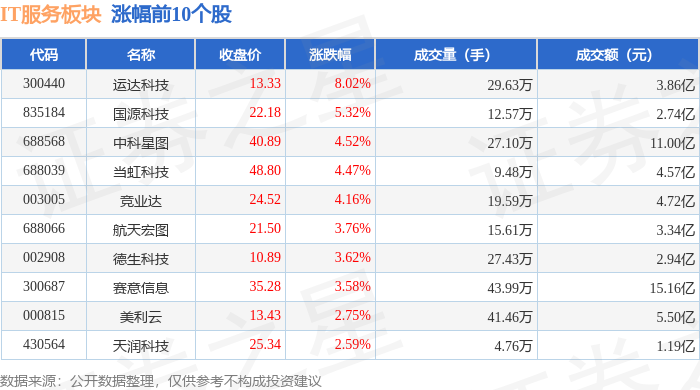
证券之星消息,8月5日IT服务板块较上一交易日上涨0.1%,运达科技领涨。当日上证指数报收于 3617.6,上涨0.96%。深证成指报收于11106.96,上涨0.59%。IT服务板块个股涨跌见下表: 以上内容为证券之星据公开信息整理,由AI算法生成(网信算备310104345710301240019号),不构成投资建议。 从资金流向上来看,当日IT服务板块主力资金净流出14.21亿元,游资资金净流入3.57亿元,散户资金净 流入10.64亿元。IT服务板块个股资金流向见下表: | 代码 | 名称 | 主力净流入(元) | 主力净占比 游资净流入(元) | | 游资净占比 散户净流入 (元) | | 散户净占比 | | --- | --- | --- | --- | --- | --- | --- | --- | | 600536 中国软件 | | 2.01亿 | 15.03% | -7227.95万 | -5.41% | -1.29 Z | -9.62% | | 300687 | 赛意信息 | 1.26亿 | 8.32% | -4775.49万 | -3.15% | -7836.44万 | -5.17% | ...




运达科技(300440) - 关于控股股东协议转让公司股份进展暨签署补充协议的公告
2025-08-01 08:36
成都运达科技股份有限公司 关于控股股东协议转让公司股份进展暨签署补充协议的公告 运达创新(成都)投资有限公司、智象达行(成都)科技合伙企业(有限合 伙)保证向本公司提供的信息内容真实、准确、完整,没有虚假记载、误导性陈 述或重大遗漏。 本公司及董事会全体成员保证公告内容与信息披露义务人提供的信息一致。 证券代码:300440 证券简称:运达科技 公告编号:2025-042 2025 年 7 月 21 日,持有本公司股份 146,809,324 股,占总股本比例 33.07% (占剔除公司回购专用账户中的股份数量 10,521,800 股后的股本 433,396,800 股 比例 33.87%)的公司控股股东运达创新(成都)投资有限公司(以下简称"运达 创新")与智象达行(成都)科技合伙企业(有限合伙)(以下简称"智象达行") 签订了《关于成都运达科技股份有限公司之股份转让协议》,拟通过协议转让方 式将其持有公司 44,391,860 股无限售流通股(占总股本比例 10.00%)转让给智 象达行。具体内容详见公司于 2025 年 7 月 21 日在巨潮资讯网(www.cninfo.com.cn) 披露的《关于控 ...
机器人产业未来发展趋势明确 成都路桥、富临精工等上市川企纷纷入局抢滩
Zheng Quan Ri Bao Wang· 2025-07-30 12:48
瑞迪智驱作为深耕国内自动化设备传动与制动系统零部件领域的知名企业,其自主研制的谐波减速机产品凭借长寿命重载 型谐波减速机工艺制造技术和产品开发测试及应用验证技术,已在工业机器人、服务型协作机器人、关节模组、人形机器人等 行业应用。 中关村物联网产业联盟副秘书长袁帅向《证券日报》记者表示:"从企业发展角度而言,布局机器人领域有助于相关上市 川企实现多元化发展,降低对单一业务的依赖风险。在当前市场竞争日益激烈、行业变化迅速的背景下,通过进入机器人这一 新兴领域,企业可以开拓新的业务板块,培育新的利润增长点,提升自身的抗风险能力和市场竞争力。" (编辑 才山丹) 国际注册创新管理师、鹿客岛科技创始人兼CEO卢克林表示,四川在国防军工、精密制造等领域实力较强,旋转关节、伺 服电机、减速器等核心零部件本地就能配套,加上地方政府把机器人写进"5+1"现代产业体系的重要位置,补贴、基金、场景 开放一步到位,当地上市公司顺势把原有业务链延伸到机器人,既抬升估值又锁定订单,是典型的"顺政策、顺产业、顺资 本"的"三顺"扩张。 详细来看,2025年7月中旬,成都路桥官方微信公众平台发布消息,公司与深圳市优必选科技股份有限公司(人 ...


运达科技(300440) - 2025年第一次临时股东大会决议公告
2025-07-23 09:58
证券代码:300440 证券简称:运达科技 公告编号:2025-041 一、会议召开和出席情况 成都运达科技股份有限公司(以下简称"公司"或"上市公司")2025 年第 一次临时股东大会(以下简称"本次股东大会")由董事会召集,公司董事会于 2025 年 7 月 8 日以公告形式发出本次股东大会通知。公司本次股东大会于 2025 年 7 月 23 日在成都高新区康强四路 99 号成都运达科技股份有限公司 A 座二楼 会议室以现场投票和网络投票相结合的方式召开。其中,通过深圳证券交易所交 易系统进行网络投票的时间为:2025 年 7 月 23 日 9:15—9:25,9:30—11:30 和 13:00—15:00;通过深圳证券交易所互联网投票系统进行网络投票的具体时间为: 2025 年 7 月 23 日 9:15-15:00 期间的任意时间。 公司总股本 443,918,600 股,其中,扣除回购账户股份数后有表决权股份总 数为 433,396,800 股。股东出席的总体情况:通过现场和网络投票的股东 144 人, 代表股份 151,205,812 股,占公司有表决权股份总数的 34.8885%。其中:通过现 ...
运达科技(300440) - 北京金杜(成都)律师事务所关于成都运达科技股份有限公司2025年第一次临时股东大会之法律意见书
2025-07-23 09:58
北京金杜(成都)律师事务所 关于成都运达科技股份有限公司 2025 年第一次临时股东大会 之法律意见书 致:成都运达科技股份有限公司 北京金杜(成都)律师事务所(以下简称本所)接受成都运达科技股份有限公 司(以下简称公司)委托,根据《中华人民共和国证券法》(以下简称《证券法》)、 《中华人民共和国公司法》(以下简称《公司法》)、中国证券监督管理委员会《上 市公司股东会规则》(以下简称《股东会规则》)等中华人民共和国境内(以下简 称中国境内,为本法律意见书之目的,不包括中国香港特别行政区、中国澳门特别 行政区和中国台湾省)现行有效的法律、行政法规、规章、规范性文件和现行有效 的公司章程有关规定,指派律师出席了公司于 2025 年 7 月 23 日召开的 2025 年 第一次临时股东大会(以下简称本次股东大会),并就本次股东大会相关事项出具 本法律意见书。 为出具本法律意见书,本所律师审查了公司提供的以下文件,包括但不限于: 1. 经公司 2024 年第一次临时股东大会审议通过的《成都运达科技股份有限 公司章程》(以下简称《公司章程》); 2. 公司 2025 年 7 月 8 日刊登于巨潮资讯网及深圳证券交易所网 ...