
AMD(AMD)

Search documents
AMD Stock: The Selloff Looks Overdone, Let’s Calm Down (NASDAQ:AMD)
Seeking Alpha· 2026-02-05 17:50
Core Viewpoint - Advanced Micro Devices, Inc. (AMD) is showing a more optimistic outlook as it is not only presenting a GPU roadmap but also a tangible system for the first time in a while [1] Company Insights - AMD is transitioning from merely selling a GPU roadmap to offering a real system, indicating a shift in its product strategy [1] - The company is positioned within the semiconductor sector, which is characterized by high barriers to entry and oligopolistic market conditions [1] Analyst Background - The analyst has a background in Mechanical Engineering and has transitioned from the oil and gas sector to focus on technology investments, particularly in semiconductors, robotics, and energy [1] - The analyst emphasizes a growth at a reasonable price investment approach with a mid- to long-term horizon [1]


AMD Stock: The Selloff Looks Overdone, Let's Calm Down
Seeking Alpha· 2026-02-05 17:50
Core Viewpoint - Advanced Micro Devices, Inc. (AMD) is showing a more optimistic outlook as it is not only presenting a GPU roadmap but also a tangible system for the first time in a while [1] Company Insights - AMD is transitioning from merely selling a GPU roadmap to offering a real system, indicating a shift in its product strategy [1] - The company is positioned within the semiconductor sector, which is characterized by high barriers to entry and oligopolistic market conditions [1] Analyst Background - The analyst has a background in mechanical engineering and has transitioned from the oil and gas sector to focus on technology investments, particularly in semiconductors, robotics, and energy [1] - The analyst emphasizes a growth at a reasonable price investment approach with a mid- to long-term horizon [1]
AMD's AI Story Is Intact: So Why Did The Stock Trade Like It Was Over?
Seeking Alpha· 2026-02-05 16:34
Small deep value individual investor, with a modest private investment portfolio, split approx. 50%-50% between shares and call options. I have a B.Sc. in aeronautical engineering and over 6 years of experience as an engineering consultant in the aerospace sector. The latter statement is not relevant in any way whatsoever to my investment style, but I thought to add it for self-indulgent purposes. I have a contrarian investment style, highly risky, and often dealing with illiquid options. How illiquid? Well ...
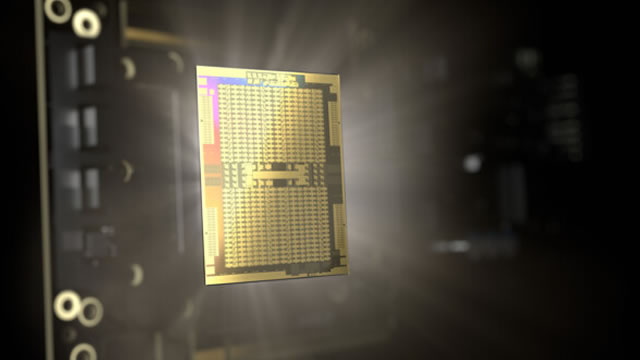
Is 32% Revenue Growth Enough to Justify Buying AMD Stock in 2026?
Yahoo Finance· 2026-02-05 16:32
Coming to the much-talked-about guidance, AMD forecasted revenues for Q1 2026 to be in the range of $9.5-$10.1 billion, the midpoint of which would denote an annual growth rate of 32%. However, this includes about $100 million of AMD Instinct MI308 chip sales to China, which remain uncertain.Earnings went up by 40% from the corresponding period a year ago to $1.53, easily outpacing the consensus estimate of an EPS of $1.32. Notably, this marked the fifth consecutive quarter of earnings beat from the company ...
今夜,无眠!全崩了
Zhong Guo Ji Jin Bao· 2026-02-05 16:27
Market Overview - Global markets experienced a significant downturn, with major indices in the US suffering substantial losses. The Dow Jones dropped approximately 600 points, while the Nasdaq fell nearly 2% [1][2]. Stock Performance - Major technology stocks faced considerable declines, including Qualcomm (-7.58%), Oracle (-4.55%), Google (-4.51%), Amazon (-4.38%), and Tesla (-3.66%) [3]. - Alphabet, the parent company of Google, saw its stock decrease by 4% following its announcement of expected capital expenditures related to artificial intelligence, which could reach up to $185 billion by 2026 [7][8]. Commodities and Cryptocurrencies - Precious metals experienced sharp declines, with silver prices plummeting over 16% [3]. - Oil prices also fell significantly during this period [4]. - Bitcoin dropped below the $70,000 mark, settling at $67,000, indicating a loss of interest from traditional investors and a growing pessimism regarding cryptocurrencies [5]. Economic Indicators - Concerns about the labor market intensified, with US employers announcing 108,435 layoffs in January, the highest number for that month since the global financial crisis [8]. - Initial jobless claims for the week ending January 31 exceeded expectations, further contributing to a negative market sentiment [8]. - The US Bureau of Labor Statistics reported that job vacancies fell to their lowest level since September 2020 by December 2025 [9].





AMD延续周三跌势 业绩超预期仍重挫
Xin Lang Cai Jing· 2026-02-05 16:05
责任编辑:张俊 SF065 责任编辑:张俊 SF065 AMD周四早盘下跌3.7%,延续了周三的大幅下跌趋势。尽管业绩超预期,但第一季度指引未达高涨的 AI预期,导致AMD股价周三收跌17.3%。该公司首席执行官苏姿丰称2026年将成为下一代数据中心GPU 放量的"转折之年"。 AMD周四早盘下跌3.7%,延续了周三的大幅下跌趋势。尽管业绩超预期,但第一季度指引未达高涨的 AI预期,导致AMD股价周三收跌17.3%。该公司首席执行官苏姿丰称2026年将成为下一代数据中心GPU 放量的"转折之年"。 ...
美股异动 | 纳指跌幅扩大至1.6% 明星科技股普跌 亚马逊(AMZN.US)跌超4%
智通财经网· 2026-02-05 15:44
Group 1 - The U.S. stock market opened lower, with the Nasdaq index falling by 1.6%, and major tech stocks like Google, Amazon, and Tesla experiencing declines of over 4% [1] - The VIX index surged by 22%, reaching its highest level since December of the previous year, indicating increased market volatility [1] - Job vacancies in the U.S. unexpectedly dropped to the lowest level since 2020, with December vacancies falling from a revised 6.93 million in November to 6.54 million, below market expectations [1] Group 2 - The narrative of a "Software-mageddon" is gaining traction, with hedge funds increasing their short positions in software stocks, contributing to significant sell-offs in the sector [2] - Hedge funds have reportedly made $24 billion in profits from shorting software stocks since 2026, while the total market capitalization of the U.S. software industry has decreased by $1 trillion during the same period [2]




The Move in AMD Stock After Earnings Was Much Larger Than the Average. Why?
Yahoo Finance· 2026-02-05 15:42
Core Viewpoint - Advanced Micro Devices (AMD) stock experienced a significant decline of 17% after its earnings report, contrary to expectations of a modest movement, indicating a fundamental reevaluation of the company's future trajectory in the AI sector [1][2][5]. Earnings Performance - AMD reported fiscal Q4 results that exceeded Street expectations, but the first-quarter guidance was deemed "muted," leading to investor disappointment [4]. Market Reaction - The options market anticipated a 4.39% swing in AMD shares, while historical data suggested a 7.35% move; however, the actual decline was much sharper, indicating a "black swan" reaction [1][4]. Technical Analysis - The stock's decline was exacerbated by a technical breakdown, with key support levels being breached: the $233 level snapped the 20-day moving average, the $222 level violated the 50-day moving average, and the final blow came at $218, breaking the 100-day moving average [6][7]. Investor Sentiment - The sharp selloff reflects that investors are not merely adjusting their expectations based on numbers but are fundamentally reassessing AMD's future prospects [5]. Wall Street Outlook - Despite the disappointing outlook and technical breakdown, Wall Street firms maintain a bullish stance on AMD [11].
ETFs to Buy as AMD Shares Sink Post Poor Q1 View Amid Q4 Earnings Beat
ZACKS· 2026-02-05 15:17
Key Takeaways AMD shares slid 17% after a weaker-than-expected Q1 sales outlook overshadowed its Q4 earnings beat.Advanced Micro Devices posted record server CPU revenues. AMD guided first-quarter revenues of about $9.8 billion, implying roughly 32% year-over-year growth. Shares of Advanced Micro Devices (AMD) slumped 17% on the bourses yesterday despite surpassing analysts’ top- and bottom-line expectations. This pullback was most likely triggered by the chipmaker’s first-quarter sales forecast, which fell ...
美股芯片股走高:博通涨超4% 台积电等多股涨超1%
Ge Long Hui A P P· 2026-02-05 15:02
格隆汇2月5日|美股芯片股走高,其中,博通涨超4%,英特尔涨超3%,台积电、阿斯麦、AMD、应用 材料、英伟达涨超1%。 ...


