BANK OF CHINA(BACHY)

Search documents
时时皆绿 金融有为:中国银行深圳市分行2000亿元绿色贷款赋能生态建设
2 1 Shi Ji Jing Ji Bao Dao· 2025-12-15 23:11
Core Viewpoint - Shenzhen is recognized as a leading city in green transformation and development, supported by robust green finance initiatives from the Bank of China Shenzhen Branch, which has achieved significant milestones in green loans and bonds [1][2]. Group 1: Green Finance Achievements - As of November, the Bank of China Shenzhen Branch's green loan balance exceeded 200 billion yuan, leading the market in Shenzhen [1]. - During the 14th Five-Year Plan period, the bank's cumulative green bond underwriting exceeded 33 billion yuan, serving over 700 green enterprises [1]. - The bank has established itself as a pioneer in green finance innovation and a leader in the growth of green finance scale [1]. Group 2: Support for Green Projects - The bank has supported the carbon-neutral experimental park "Biocircle No. 3" with a 10 million yuan loan, enabling it to achieve an 85% green electricity usage rate [2]. - The bank has a long-standing partnership with BYD Group, expanding its services from traditional credit to bond underwriting and supply chain financing as the company leads global electric vehicle sales [2][3]. - The bank's collaboration with companies like Grinmei has spanned over 15 years, providing loans for battery recycling and resource utilization [3]. Group 3: Innovative Financial Products - In July 2024, the bank issued Shenzhen's first 30 million yuan "carbon reduction loan" to a clothing company, linking loan rates to emission reduction outcomes [4]. - The Shenzhen government launched 1 billion yuan offshore RMB green bonds, with the bank serving as the sole global coordinator and green structure advisor [4]. Group 4: Mechanisms and Institutional Support - Shenzhen has established a comprehensive ecological civilization system, with the green finance framework being a critical component [6]. - The implementation of the first green finance regulation in March 2021 has encouraged the establishment of specialized green finance systems within banks [6]. - The bank has formed a green finance committee and has been publishing environmental information disclosure reports for four consecutive years, setting a transparency benchmark [6][7]. Group 5: Integration into Urban Development - The bank is integrating green finance into urban development through targeted green credit support, product innovation, and transparent environmental disclosures [7]. - The bank's headquarters is set to achieve carbon neutrality by 2024, becoming the first zero-carbon financial institution in Shenzhen [6][7].

中国银行(03988) - 建议派发截至2025年6月30日止六个月之中期股息(更新)
2025-12-15 23:00
EF002 免責聲明 | 香港交易及結算所有限公司及香港聯合交易所有限公司對本公告的內容概不負責,對其準確性或完整性亦不發表任何聲明,並明確表示,概不對因 | 公告全部或任何部份內容而產生或因倚賴該等內容而引致的任何損失承擔任何責任。 | | --- | --- | | | 股票發行人現金股息(可選擇貨幣)公告 | | 發行人名稱 | 中國銀行股份有限公司 | | 股份代號 | 03988 | | 多櫃檯股份代號及貨幣 | 不適用 | | 相關股份代號及名稱 | 不適用 | | 公告標題 | 建議派發截至2025年6月30日止六个月之中期股息(更新) | | 公告日期 | 2025年12月16日 | | 公告狀態 | 更新公告 | | 更新/撤回理由 | 更新中期利润分配方案细节 | | 股息信息 | | | 股息類型 | 中期(半年期) | | 股息性質 | 普通股息 | | 財政年末 | 2025年12月31日 | | 宣派股息的報告期末 | 2025年6月30日 | | 宣派股息 | 每 10 股 1.094 RMB | | 股東批准日期 | 2025年11月27日 | | 香港過戶登記處相關信息 | ...
中国银行(03988) - 二零二五年中期股息-股息货币选择表格
2025-12-15 23:00
NAME(S) AND ADDRESS OF REGISTERED SHAREHOLDER(S) 登記股東之姓名及地址 + CCS3605 BNCH + 中國銀行股份有限公司 BANK OF CHINA LIMITED (a joint stock company incorporated in the People's Republic of China with limited liability) (於中華人民共和國註冊成立的股份有限公司) (Stock Code 股份代號: 3988) DIVIDEND CURRENCY ELECTION FORM FOR 2025 INTERIM DIVIDEND OF RMB1.094 PER 10 SHARES ("2025 INTERIM DIVIDEND") 二零二五年中期股息每10股人民幣1.094元(「二零二五年中期股息」) 股息貨幣選擇表格 Registered shareholders will automatically receive their cash dividends in Hong Kong dollars unless they el ...
中国银行湖北省分行:为鄂州花湖国际机场打造内陆开放新标杆注入“金融动能”
Zhong Guo Jin Rong Xin Xi Wang· 2025-12-15 12:27
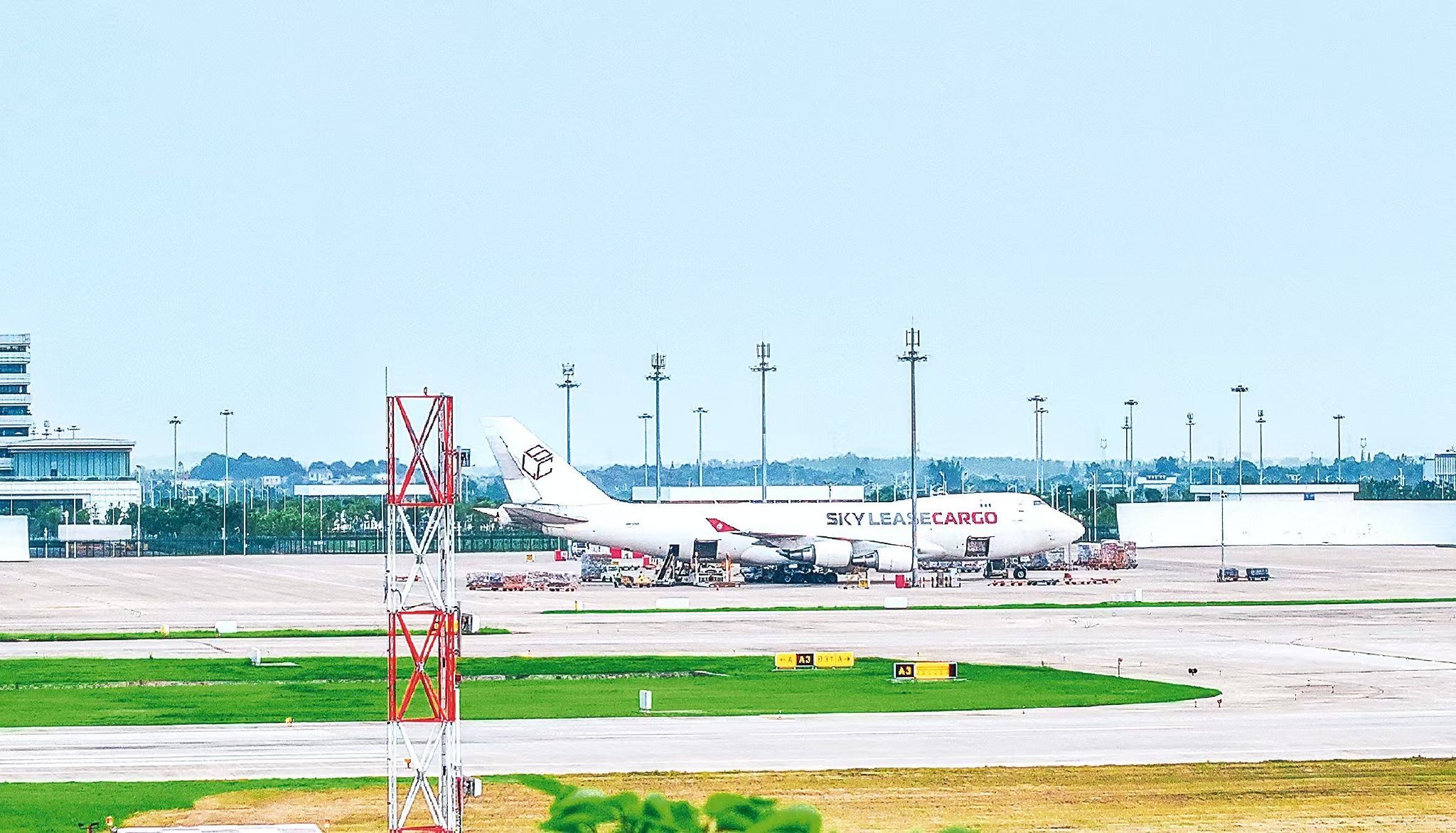
转自:新华财经 党的二十届四中全会发出"扩大高水平对外开放,开创合作共赢新局面"的强音。在湖北鄂州,这一部署正加速转化为生动的实践:开航三年,货运航班超6 万架次,货邮吞吐量突破200万吨,逾百条航线在此交织……鄂州花湖国际机场已逐渐成为湖北通向世界的"空中出海口"。 在这串跃动数字的背后,离不开金融活水的精准滴灌。近年来,中国银行湖北省分行深度锚定机场建设与物流发展需求,持续以高质量金融服务支撑湖北内 陆"空中出海口"高质量发展,赋能中部地区高水平对外开放。 全程护航 打造全球货运枢纽标杆 "十四五"以来,花湖国际机场建设稳步推进,中国银行湖北省分行聚焦机场重点项目建设需求,持续强化金融供给,以源源不断的金融"活水"为推动地方经 济发展提供坚实的保障。 2024年3月,该行与鄂州市人民政府签订《支持花湖国际自由贸易航空港建设合作备忘录》,同时成立金融服务专班,制定《中国银行湖北省分行关于支持 花湖机场及临空经济区高质量发展的行动方案》,全力支持鄂州创建国际自由贸易航空港建设,以及花湖机场和临空经济区建设。 中国银行鄂州分行积极响应省分行工作部署,聚焦机场基础设施建设与临空产业发展需求,持续优化金融服务供给, ...


中银基金迎来新任董事长刘信群 曾在中国银行任职多年
Xi Niu Cai Jing· 2025-12-15 10:13
12月11日,中银基金发布高级管理人员变更公告,刘信群自2025年12月10日起任中银基金董事长、法定代表人,执行总裁张家文不再代为履行董事长、法定 代表人职责。 | 新任职务 | 董事长、法定代表人 | | --- | --- | | 姓名 | 刘信群 | | 任职日期 | 2025年12月10日 | 公告显示,刘信群在中国银行工作多年,历任中国银行司库助理总经理,中国银行深圳市分行行长助理、党委委员,中国银行深圳市分行副行长、党委委 员,中国银行(香港)有限公司风险管理部总经理,中国银行司库总经理,中国银行深圳市分行行长、党委书记。 6月17日,中银基金发布公告称,章砚因工作调整原因离任董事长职位,暂无转任其他工作岗位。章砚有着丰富的中国银行从业经历,历任中国银行总行全 球金融市场部主管、助理总经理、总监,总行金融市场总部、投资银行与资产管理部总经理。 ...

贝莱德:在中国银行持股比例升至6.03%
Ge Long Hui· 2025-12-15 09:09
格隆汇12月15日|香港交易所信息显示,贝莱德在中国银行H股的持股比例于12月09日从5.76%升至 6.03%。 ...

锚定政策强主业 立足首都显担当 中国银行北京市分行“十四五”答卷
Jin Rong Shi Bao· 2025-12-15 02:28
Core Viewpoint - The Bank of China Beijing Branch has effectively aligned its operations with the national strategy and the capital's development needs during the "14th Five-Year Plan" period, focusing on technology finance, green finance, cross-border finance, and addressing key social demands, thereby delivering high-quality results in supporting the capital's development [1][2][6]. Group 1: Technology Finance - The Bank of China Beijing Branch has established a three-tier service system for technology finance, including 17 specialized outlets, to comprehensively cover the service needs of innovation enterprises in the capital [2][4]. - Innovative financial products such as "Innovation Star Loan," "Specialized and New Loan," and "Entrepreneur Loan" have been launched to address the unique challenges faced by technology enterprises, particularly those with asset-light characteristics [4][5]. - The branch has actively participated in major innovation forums and customized financial products to support high-quality entrepreneurial projects in Beijing [2][4]. Group 2: Green Finance - The Bank of China Beijing Branch has developed a comprehensive green finance service system, establishing a green financial working group to provide specialized services across various sectors [6][8]. - The branch has implemented targeted credit policies for industries such as hydrogen energy and new energy vehicles, ensuring that financial support reaches green industries effectively [6][8]. - By the end of Q3 2025, the balance of green upgrade projects in infrastructure exceeded 200 billion yuan, demonstrating the branch's commitment to supporting sustainable development [8]. Group 3: Cross-Border Finance - The Bank of China Beijing Branch has enhanced cross-border financial services by launching various convenient settlement products, facilitating trade and investment for enterprises [11][12]. - The branch has pioneered several industry-first initiatives, including the establishment of a cross-border dual-currency cash pool and the first full RMB capital injection for foreign financial institutions in the region [12]. - A new innovative service product, the "Mifang Card," has been developed to enhance payment convenience for foreign visitors, integrating payment, communication, and travel needs [13]. Group 4: Social Responsibility and Inclusive Finance - The Bank of China Beijing Branch has introduced diverse financial products and services to meet the needs of the public, particularly in areas like rural revitalization and individual entrepreneurship [16][17]. - The branch has successfully supported small and micro enterprises with loans exceeding 80 billion yuan by the end of September 2025, addressing their financing challenges [17]. - Initiatives in the elderly care sector have been implemented, including the launch of various age-friendly products and the organization of financial literacy events to enhance the quality of life for senior citizens [18]. Group 5: Cultural and Community Support - The Bank of China Beijing Branch has actively engaged in cultural projects, providing financial support for the renovation of cultural sites and promoting cultural enterprises through optimized processes and reduced fees [19]. - The branch has established a one-stop service system to assist cultural enterprises in securing financing and connecting with resources, thereby enhancing the cultural industry's development [19]. - The bank's efforts in supporting cultural heritage and tourism projects have contributed to enriching the spiritual and cultural needs of the capital's residents [19].

中国银行行业 - 11 月社会融资规模增长掩盖了贷款的内在疲软-China Banks_ Nov TSF growth masks underlying loan weakness
2025-12-15 01:55
Summary of Key Points from the Conference Call Industry Overview - The conference call discusses the performance of **China's banking sector** in November 2025, focusing on **Total Social Financing (TSF)** and loan growth metrics. Core Insights and Arguments 1. **New TSF Growth**: - New TSF in November 2025 was **Rmb 2.5 trillion**, an increase from **Rmb 2.3 trillion** in November 2024. This growth was primarily driven by: - A rise in corporate bond issuance, which increased by **Rmb 417 billion** month-over-month, compared to **Rmb 238 billion** in November 2024. - Trust loans and bank acceptances also saw increases of **Rmb 84 billion** and **Rmb 149 billion**, respectively, compared to **Rmb 9 billion** and **Rmb 91 billion** in November 2024. - Negative contributors included a decrease in government bond issuance (**Rmb 1.2 trillion** vs. **Rmb 1.3 trillion** in November 2024) and weaker credit demand, with an increase of only **Rmb 0.4 trillion** in Rmb loans to the real economy, down from **Rmb 0.5 trillion** in November 2024 [1][2][3]. 2. **Loan Performance**: - New loans totaled **Rmb 0.4 trillion** in November 2025, down from **Rmb 0.6 trillion** in November 2024. This included: - A decline in retail loans by **Rmb 206 billion** compared to an increase of **Rmb 270 billion** in November 2024. - Corporate loans increased by **Rmb 610 billion**, up from **Rmb 252 billion** in November 2024, indicating a shift towards stronger corporate loan growth despite overall weak credit demand [2]. 3. **Deposit Trends**: - New deposits rose by **Rmb 1.4 trillion**, down from **Rmb 2.2 trillion** in November 2024. Within this: - Retail deposits increased by **Rmb 0.7 trillion**, compared to **Rmb 0.8 trillion** in November 2024. - Non-bank financial institution (FI) deposits were **Rmb 80 billion**, down from **Rmb 180 billion** in November 2024. - The data suggests a temporary reversal in deposit migration to non-deposit products, reflecting a lowered risk appetite among households amid capital market volatility [3]. 4. **Monetary Growth Rates**: - M1 and M2 growth rates stood at **4.9%** and **8%** year-over-year, respectively, slower than **6.2%** and **8.2%** in November 2024, likely due to a high base effect from the previous year [3]. Additional Important Insights - The overall credit demand remains weak, primarily due to continued weak consumption and property sales, although there was some sequential improvement in corporate loan growth, aligning with banks' guidance from post-3Q NDR meetings [2]. - The report highlights the importance of monitoring these trends as they may indicate broader economic conditions and potential investment opportunities or risks within the banking sector [1][2][3].
经济学博士、神州数码联席董事长王永利:把握本质、开拓创新,切实加快数字人民币发展
Xin Lang Cai Jing· 2025-12-13 14:22
Core Viewpoint - The development of digital RMB is crucial for establishing a new international monetary and financial order, and it is imperative to accelerate its innovation and application to gain a competitive advantage globally [1][19]. Group 1: Digital RMB Development - Since May 2025, the U.S. and Hong Kong have been advancing legislation on stablecoins and digital assets, prompting discussions in China about the need to promote digital RMB and stablecoin legislation [3][22]. - The People's Bank of China (PBOC) announced plans to optimize the positioning of digital RMB beyond the previously defined M0 level and to enhance its management system [3][22]. - A meeting was held on November 28, where 13 departments emphasized the need to continue prohibiting virtual currencies and to combat illegal financial activities related to them [3][22]. Group 2: Challenges and Controversies - The policy direction to firmly curb virtual currencies has exceeded many expectations and has sparked significant social debate [4][23]. - The initial positioning of digital RMB as M0 has led to limitations in supply and application scenarios, making it less competitive compared to mobile payments [7][27]. - There is a need to redefine the essence and positioning of digital RMB to ensure its successful development and international competitiveness [4][28]. Group 3: Technological and Structural Considerations - Digital RMB must leverage technologies such as blockchain and smart contracts to enhance efficiency and security [12][34]. - The integration of digital RMB with digital identity systems is essential for ensuring the authenticity and security of user information [14][36]. - A clear distinction between domestic and international versions of digital RMB is necessary due to jurisdictional differences [16][37]. Group 4: Strategic Importance - Digital RMB should be elevated to a national strategic project, requiring collaboration across various government departments to ensure effective resource allocation and project quality [18][39]. - The relationship between digital RMB and existing RMB clearing systems must be carefully managed to ensure seamless integration and operation [19][40].