Basf(BASFY)

Search documents
巴斯夫、科思创、世索科,固态电池陆续签约!
DT新材料· 2026-01-21 16:05
Core Viewpoint - The article discusses the advancements and collaborations in the solid-state battery industry, highlighting key players and their strategic partnerships aimed at enhancing battery technology and materials for electric vehicles and other applications [1][2][3][4][5]. Group 1: Industry Developments - Solid-state batteries are recognized for their high safety and energy density, marking a significant development direction for electric vehicle power batteries [1]. - The Ministry of Industry and Information Technology of China has emphasized accelerating breakthroughs in solid-state battery technologies, indicating a shift from pure R&D to engineering validation [1]. - Major chemical companies are actively engaging in the solid-state battery sector, with BASF and Sanyou Technology announcing milestone collaborations to enhance their strategic partnership [2]. Group 2: Key Collaborations - BASF has partnered with Sanyou Technology to deliver high-quality samples for heavy-duty vehicle projects and to collaborate on new product cell validation in the 3C safety certification field [2]. - Covestro is working with Fujian Blue Ocean Black Stone New Materials Technology to develop polyurethane binders for silicon-carbon anodes, addressing volume expansion issues during charge and discharge cycles [3]. - SES Holdings has formed a new company, Argylium, with Axens Group to focus on the commercialization of advanced materials for solid-state batteries, particularly targeting the next generation of sulfide solid electrolytes [4]. Group 3: Material Innovations - Companies like Dow Chemical and LG Chem are developing low-cost sulfide electrolytes and uniform control technologies for solid-state electrolytes, respectively, with LG Chem planning to launch a vehicle solid-state battery with an energy density exceeding 500 Wh/kg by 2027 [5]. - Other firms, such as Tianqi Materials and Huizhou Enjie, are also advancing their production capabilities for lithium sulfide and solid-state electrolytes, with significant production lines already established [5]. - The article notes that various materials, including polymer electrolytes and silicon-based anode materials, present promising opportunities for chemical companies in the solid-state battery landscape [6].






BASF to Feature Sustainable Plastics Solutions at PlastIndia 2026
ZACKS· 2026-01-21 15:11
Core Insights - BASF SE (BASFY) will participate in PlastIndia 2026 from February 5-10 in New Delhi, showcasing a range of sustainable performance materials and innovative applications [1][8] - The event will highlight BASF's commitment to sustainability and circularity through the plastics journey across the 'Make,' 'Use,' and 'Recycle' phases [1][3] Group 1: Event Participation and Themes - BASF's participation in PlastIndia 2026 aligns with the theme "Bharat Next," which represents a self-reliant India, reflecting the company's ambition to be the preferred chemical partner [3] - The showcase will include products and technologies from BASF's Creation Centers, Ultrasim Simulation Technology, and applications in various sectors such as automotive, medical, and consumer goods [4][8] Group 2: Product Innovations and Capacity Expansion - BASF has increased its Ultramid PA capacity and introduced Ultradur FR and HR grades produced in India, enhancing its polymer offerings [2][8] - The display will feature a fully TPU-based concept shoe, a chess set made from upcycled engineering plastics, and mobile spectroscopy solutions, emphasizing innovation in recycling and sustainable materials [4] Group 3: Stock Performance - BASFY stock has increased by 8.6% over the past year, contrasting with a 21.9% decline in the industry [5]
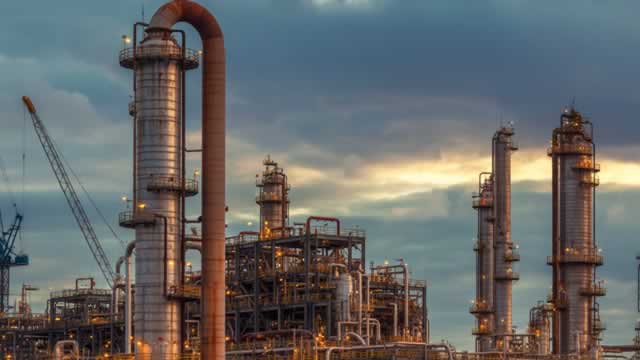
巴斯夫、陶氏化学已布局,又一新材料企业赴美上市!
Sou Hu Cai Jing· 2026-01-20 00:58
Group 1 - Boca International Limited, a company specializing in phase change materials (PCM) for thermal energy storage, successfully completed its IPO on the AMEX at an issue price of $4 per share, selling 2.5 million shares and registering the resale of 1.8 million existing shares [1] - Founded in 1992 and headquartered in Hong Kong, Boca International is one of the few companies globally focused on the production and application of PCM technology, developing practical and efficient thermal energy storage solutions [3] - The company has developed over 20 types of PCM, each with unique phase change temperatures and thermal storage capacities, suitable for a wide temperature range from -86°C to +600°C, providing customized thermal storage panel products for HVAC and refrigeration sectors [3] Group 2 - Financial data indicates that Boca International's revenue for the fiscal year ending March 31, 2025, reached approximately HKD 16.6 million, a significant increase of HKD 11.3 million or 216.53% compared to HKD 5.2 million in the previous fiscal year, driven by a notable rise in consulting and construction-related business revenues [4] - The company's losses narrowed from HKD 7.9 million to HKD 6 million, a decrease of 24.49%, reflecting a positive correlation with the increase in gross profit [4] - The PCM industry has seen significant achievements from various companies globally, with major international players including Henkel, BASF, Cryopak, Dow Chemical, Honeywell, and others, while domestic players include Guangzhou Meiya Technology, Jiangxi Zero Carbon Future, and several others [4][5]
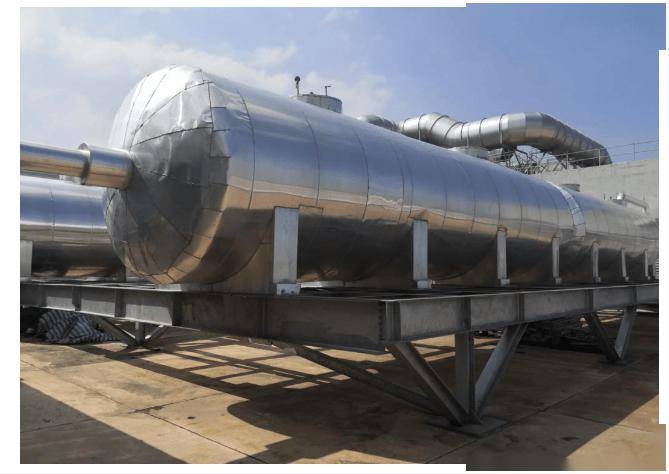
“十四五”广东湛江累计完成投资4400亿元
Zhong Guo Xin Wen Wang· 2026-01-15 07:18
Group 1 - The city of Zhanjiang has implemented 2,367 major provincial and municipal projects over the past five years, with a total investment of 440 billion yuan, ranking first in the Guangdong East-West North region [1] - By 2025, Zhanjiang's industrial added value is expected to exceed 100 billion yuan [1] - During the "14th Five-Year Plan" period, Zhanjiang has established a leading industrial system focused on "four greens and one blue," including green steel, green petrochemicals, green energy, green food, and blue ocean economy [1] Group 2 - The green steel industry, led by Baosteel Zhanjiang Iron and Steel Company, has an annual output value exceeding 60 billion yuan, making it the largest steel production base in Guangdong Province [2] - The green petrochemical industry has developed a complete industrial chain including crude oil extraction, refining, and both basic and fine chemicals, with an annual output value exceeding 120 billion yuan, positioning it among the top five petrochemical bases in the province [2]


BASFY's Polyamide Materials Meet New eMobility Requirements
ZACKS· 2026-01-14 16:26
Core Insights - BASF SE is adapting its testing methods for eMobility applications to meet the increasing demands for ageing resistance in plastics, shifting from air-heat tests to hydrolysis storage to evaluate ageing in water-glycol mixtures [1][7] - The service life requirements for eMobility applications have significantly increased, with operating temperatures needing to be maintained for 45,000-55,000 hours compared to the 5,000 hours typical for conventional combustion engine components [2] - BASF's Ultramid polyamide material has shown promising results, with properties extrapolated to over 100,000 hours after five years of testing, meeting automotive performance and safety requirements [4][7] Company Performance - BASFY stock has increased by 13.9% over the past year, contrasting with a 21.2% decline in the industry [4] - BASFY currently holds a Zacks Rank of 3 (Hold), indicating a neutral outlook [6] - In comparison, other companies in the Basic Materials sector, such as Agnico Eagle Mines Limited and Kinross Gold Corporation, have higher Zacks Ranks of 1 (Strong Buy) [6][8]
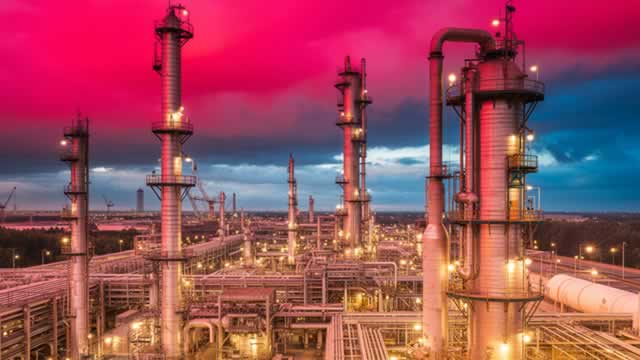
巴斯夫、三菱化学、万华化学等上榜全球研发投入2000强
Zhong Guo Hua Gong Bao· 2026-01-14 06:26
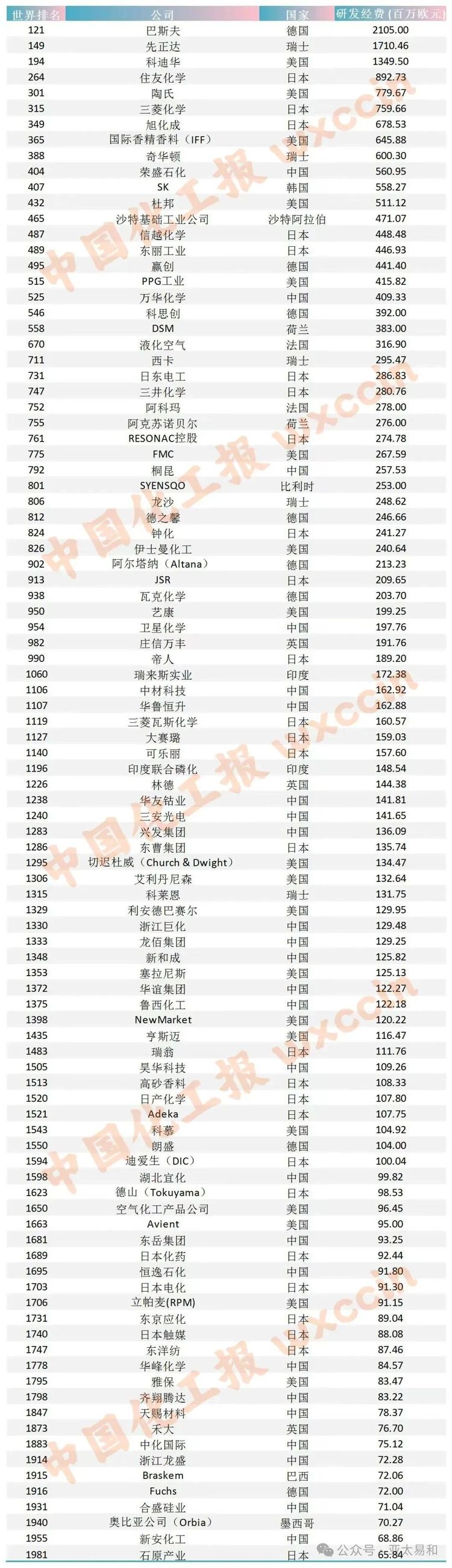
Core Insights - The European Commission released the "2025 EU Industrial R&D Investment Scoreboard" report, highlighting that 25 Chinese chemical companies are among the top 2000 global industrial R&D investors [1] - The total R&D investment of the top 2000 companies is projected to reach €144.6 billion in 2024, accounting for over 90% of global corporate R&D investment [1] Group 1: R&D Investment Rankings - BASF leads the chemical industry with an annual R&D investment of €2.1 billion, ranking 121st overall [1][3] - Syngenta follows with €1.71 billion, ranking 149th, while Corteva ranks 194th with €1.35 billion [1][3] - The top ten chemical companies by R&D investment include Sumitomo Chemical, Dow, Mitsubishi Chemical, Asahi Kasei, IFF, and Firmenich [1] Group 2: Country Distribution - Japan has the highest number of chemical companies on the list with 27, followed by China with 25, the USA with 19, Germany with 8, and Switzerland with 5 [1] - The report indicates that the USA has 674 companies in the top 2000, while China has 581, and the EU and Japan contribute 318 and 192 companies, respectively [1]


Elastomers Applications and Global Markets, 2024-2025 and 2029, Profiles of Leading Companies - BASF SE, Dow, LG Chem, Covestro AG and Arkema
Globenewswire· 2026-01-13 09:02
Core Insights - The global elastomers market was valued at $112.7 billion in 2024 and is projected to grow to $177.7 billion by 2030, with a compound annual growth rate (CAGR) of 8.1% from 2025 to 2030 [1][7]. Market Dynamics and Growth Factors - Increased production of lightweight automotive components, electric vehicles (EVs), medical devices, and consumer electronics is creating new opportunities for elastomer manufacturing [2]. - Advanced medical treatments and the demand for biocompatible elastomers are driving global demand, with applications in various medical devices such as ECG sensors and disposable medical devices [3]. - The demand for EVs and lightweight vehicles positively impacts the elastomers market, as they can replace some metal and ceramic compounds, aiding manufacturers in reducing their carbon footprint [4]. Report Scope - The report covers various types, processes, and end uses of elastomers, with estimated values based on manufacturers' total revenue, projected in constant U.S. dollars [5]. - It includes a comprehensive analysis of global market trends, historical revenue data, and forecasts for the elastomers market [10]. Key Attributes - The report consists of 153 pages, covering a forecast period from 2025 to 2030, with an estimated market value of $120.4 billion in 2025 and a forecasted value of $177.7 billion by 2030 [7]. Emerging Technologies and Developments - The report highlights the evolution of vitrimer polymers technology, development of polyolefin catalysts, and the use of AI systems for TPPU production as key technological advancements [11]. Market Segmentation - The elastomers market is segmented by type (thermosets and thermoplastics), process (injection molding, extrusion, adhesive, coating, and others), end use (automotive, industrial, medical, consumer goods, building and construction, and others), and region (North America, Europe, Asia-Pacific, South America, and the Middle East and Africa) [15]. Companies Featured - Leading companies in the elastomers industry include BASF, Dow, LG Chem, Covestro AG, and Arkema, among others [12][15].


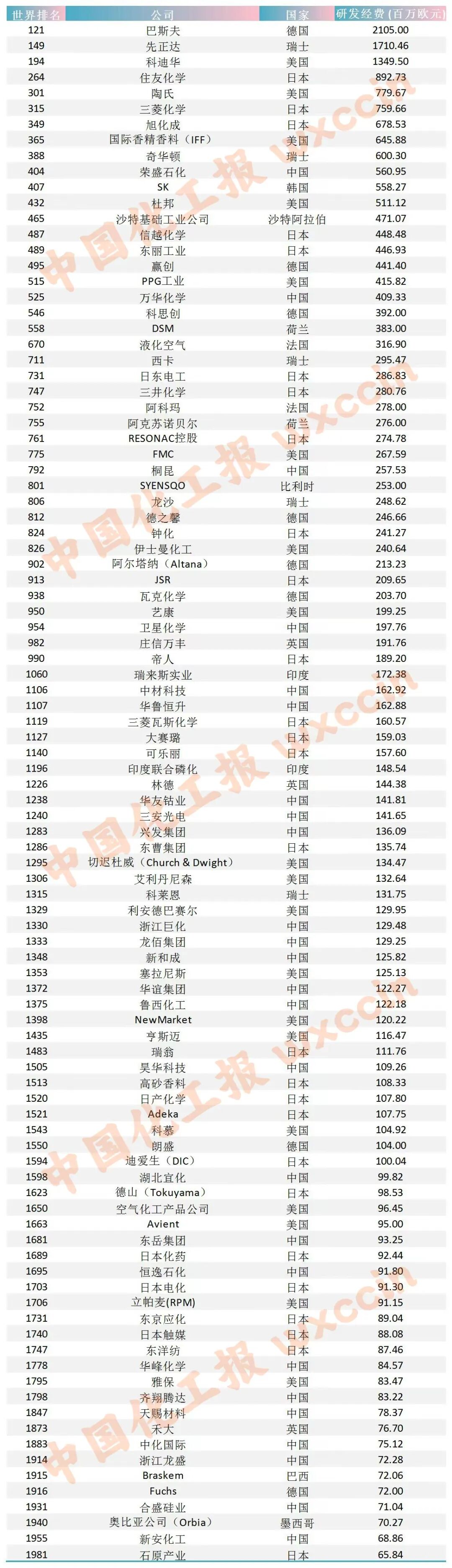
25家中国化企上榜全球研发投入2000强(附名单)
Zhong Guo Hua Gong Bao· 2026-01-11 04:33
Group 1 - The European Commission's report on the "2025 EU Industrial R&D Investment Scoreboard" reveals that 25 Chinese chemical companies are among the top 2000 global industrial R&D investors for 2025 [1] - Among the top 2000 companies, there are 98 chemical firms, with a total R&D investment of €26 billion in 2024, averaging €1.32 million per chemical company [2] - BASF leads the chemical industry with an R&D investment of €2.1 billion in 2024, ranking 121st overall; Syngenta ranks 149th with €1.71 billion, and Corteva ranks 194th with €1.34 billion [2] Group 2 - By country, Japan has the highest number of companies on the list with 27, followed by China with 25, the USA with 19, Germany with 8, and Switzerland with 5 [3] - The total R&D investment of the top 2000 companies in 2024 is €144.6 billion, accounting for over 90% of global corporate R&D investment [3] - The top ten companies globally include Amazon, Alphabet (Google's parent company), Meta (Facebook's parent company), Microsoft, Apple, Huawei, Samsung Electronics, Volkswagen, Johnson & Johnson, and Intel [4] Group 3 - The detailed list of the top chemical companies includes BASF (Germany), Syngenta (Switzerland), Corteva (USA), and others, with their respective R&D expenditures listed in millions of euros [5][6] - Notable Chinese companies in the list include Rongsheng Petrochemical (ranked 404th with €560.95 million), Wanhua Chemical (525th with €409.33 million), and others [5][6] - The report highlights the competitive landscape of the chemical industry, showcasing significant investments in R&D by various global players [2][3]


Fluor Achieves Mechanical Completion on BASF's New Verbund Site Project in South China
Businesswire· 2026-01-09 01:04
Group 1 - Fluor has achieved mechanical completion on BASF's new Verbund site project in South China, marking a significant milestone in the project timeline [1] - The completion of this project is expected to enhance BASF's production capabilities and operational efficiency in the region [1] - This development aligns with the growing demand for chemical products in Asia, particularly in China, which is a key market for BASF [1]


BASF Launches Key Steam Cracker at New Zhanjiang Verbund Site
ZACKS· 2026-01-08 13:06
Core Insights - BASF SE has commenced operations at its steam cracker in the new Verbund complex in Zhanjiang, China, representing a significant investment in the region and one of the largest projects in its global network for Asia-Pacific [1][3] Group 1: Facility and Production - The steam cracker has an annual ethylene capacity of approximately 1 million metric tons and is the first globally to operate its main compressors entirely on renewable energy, showcasing BASF's commitment to sustainable chemical production [2][7] - This facility will supply multiple downstream units and enhance BASF's local value chain to cater to the rapidly growing chemical market in China [3][7] Group 2: Market Position and Performance - Zhanjiang is positioned to be BASF's third largest Verbund site globally, following Ludwigshafen and Antwerp, further solidifying its presence in the chemical industry [3] - BASF's shares have increased by 0.5% over the past six months, contrasting with a 13% decline in the industry [4]