Basf(BASFY)

Search documents
巴斯夫分拆业务冲击全球前三,拟于德国法兰克福上市
Xin Lang Cai Jing· 2025-11-14 04:20
Core Points - BASF Group's agricultural solutions business will be listed on the Frankfurt Stock Exchange as a European company (Societas Europaea, SE) with the stock code SE, marking a key step in its "Winning Path" strategy aimed at achieving independent listing by 2027 [1] - The management committee for the newly established agricultural solutions company will be led by Dr. Livio Tedeschi, who will oversee the business transformation and prepare for the initial public offering (IPO) [2] - BASF aims to retain controlling interest post-IPO, benefiting from the growth and success of the agricultural solutions business while implementing a governance structure in line with market practices [2] Management Structure and Leadership - The management committee will consist of four members starting May 1, 2026, with Dr. Livio Tedeschi as the chairman, who is currently the president of BASF Agricultural Solutions [3] - Other committee members include Sascha Bieber as CFO, Maximilian Becker responsible for business operations, and Dr. Melanie Pausten-Wiens overseeing technical affairs [4] Business Vision and Transformation Plans - Dr. Tedeschi emphasized the commitment to innovation in agriculture, integrating crop protection, seeds and traits, digital agriculture, and sustainable solutions to meet evolving customer needs [5] - The agricultural solutions business is currently being separated from the BASF Group into an independent legal entity, with the North American split already completed and the rest expected by early 2027 [5] Future Strategic Direction - The agricultural solutions company aims to provide market-oriented innovative products for major crop growers, with strategic goals to become a top three player in seeds and traits, expand digital and sustainable business models, and consolidate its leadership in the crop protection market [6]

德企巴斯夫CEO:对华投资对公司未来发展至关重要
Zhong Guo Xin Wen Wang· 2025-11-13 11:20
Group 1 - The CEO of BASF, Markus Kamieth, emphasized that investment in China is crucial for the company's future growth and urged the German government to strengthen cooperation with China [2][3] - BASF is constructing an integrated chemical complex in southern China, which is the company's largest single investment project to date [2] - Kamieth stated that to become a growth-oriented chemical company, it is essential to expand business in the Chinese market, which is currently the largest chemical market globally [3] Group 2 - The German chemical industry has faced challenges due to high energy costs and stringent regulatory requirements, leading to a difficult development environment [3] - BASF has implemented several significant cost-cutting measures in recent years as the largest chemical company by revenue [3] - The core facilities of BASF's integrated base in Zhanjiang, Guangdong Province, China, have begun production of their first products, marking an important milestone in the project's progress [3]


巴斯夫计划将农业解决方案业务在法兰克福证券交易所上市,并公布该部门全新管理董事会
Sou Hu Cai Jing· 2025-11-13 10:21
Core Insights - BASF plans to list its agricultural solutions business on the Frankfurt Stock Exchange as part of its "Winning with Purpose" strategy, marking a significant milestone for the company [2][3] - The agricultural solutions division will transition into an independent, globally-focused company with strong growth potential and cash flow capabilities, while BASF will remain the majority shareholder [3][5] Management Board - The new management board, effective from May 1, 2026, will consist of four members with extensive industry expertise and capital market experience [5] - Livio Tedeschi, currently the global president of BASF's agricultural solutions division, will serve as the chairman of the management board [7] - Sascha Bibert will join from Vallourec SA to oversee financial matters, while Maximilian Becker and Melanie Bausen-Wiens will handle business and technical affairs, respectively [9][12][14] Strategic Focus - The agricultural solutions business aims to leverage its integrated strengths in crop protection, seeds and traits, digital agriculture, and sustainability to meet evolving customer needs [15] - The division is currently being established as a separate legal entity, with the transition in North America already completed and expected to finalize in other regions by early 2027 [15] - Future strategic priorities include becoming a top three player in the seeds and traits market, scaling digital agriculture, and maintaining leadership in crop protection through a comprehensive product portfolio [15]
德企巴斯夫CEO:要确保公司未来实现增长,对华投资至关重要
Huan Qiu Wang· 2025-11-13 01:37
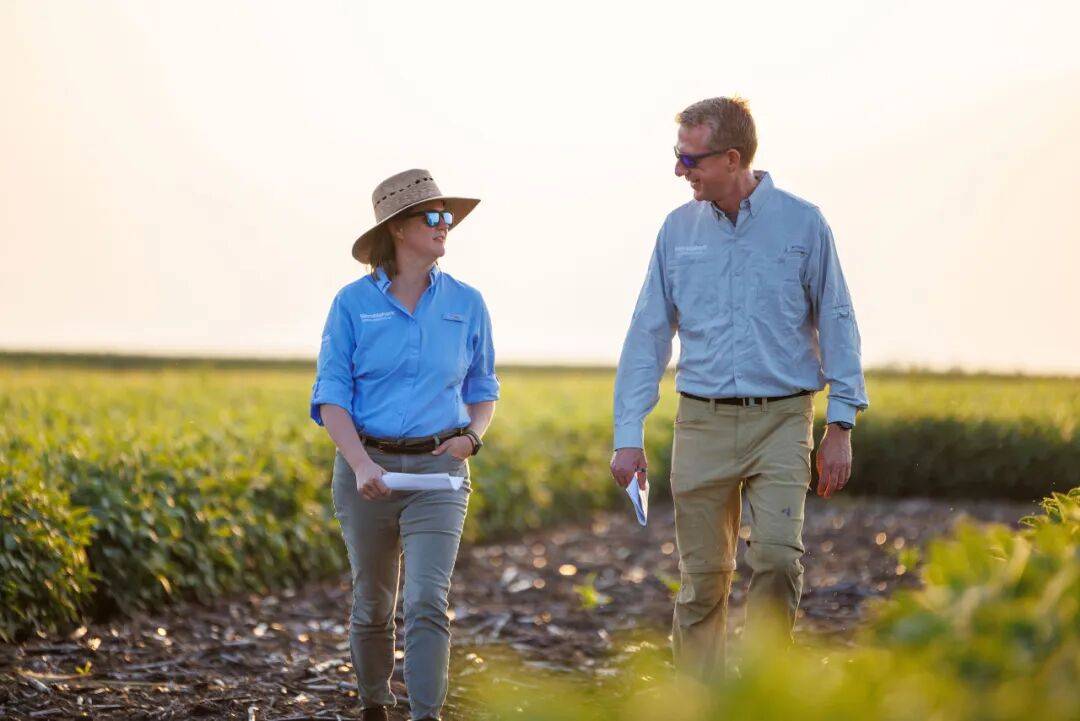
Core Viewpoint - BASF's CEO emphasizes the critical importance of investing in China for the company's future growth, highlighting China's status as the largest chemical market globally and a key manufacturing powerhouse [1][3]. Group 1: Investment Strategy - BASF is constructing a comprehensive chemical park in southern China, indicating a strategic move to tap into the growth potential of the Chinese market [3]. - The CEO asserts that to be a growth-oriented chemical company, it is essential to seek development opportunities in China [3]. Group 2: Political Context - The CEO notes that the German government has not yet sent strong positive signals towards China, advocating for improved working relations between Germany and China [3]. - A Chinese Foreign Ministry spokesperson highlighted that an increasing number of foreign enterprises are investing in China, reflecting confidence in China's stable high-quality development and commitment to opening up [3]. Group 3: Policy Environment - China is advancing institutional openness and has introduced the "2025 Action Plan for Stabilizing Foreign Investment," which includes revisions to encourage foreign investment in high-end manufacturing and digital economy sectors [3]. - The spokesperson also welcomed more foreign companies to establish a presence in China, aiming for mutual benefits in the context of new productive forces and technological innovation [3].
TPU+超临界流体发泡技术!巴斯夫,打造概念座椅的头枕和扶手
DT新材料· 2025-11-11 16:03
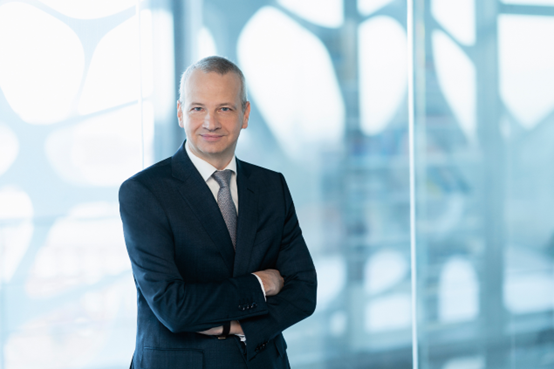
Core Insights - Hyundai Transys and BASF have developed a modular concept seat specifically for purpose-built vehicles (PBV), utilizing advanced materials and supercritical fluid (SCF) injection foaming technology [2][3] - The Elastollan® thermoplastic polyurethane (TPU) used in the seat is 100% recyclable, supporting sustainable automotive interior solutions [3] Group 1: Material Innovation - The SCF injection foaming technology allows for uniform gas dispersion, creating a consistent foam structure that enhances mechanical properties, reduces density, and minimizes volatile organic compound (VOC) emissions [2] - This innovation initially applied in the footwear industry is now being adapted for automotive interiors, enabling lightweight, durable, and high-quality components [2] Group 2: Sustainability and Compliance - The foaming process does not use crosslinking agents or chemical blowing agents, making the product easier to recycle after consumer use, thus aligning with the EU's proposed End-of-Life Vehicles Regulation (ELVR) for circular design principles [3] - Reduced energy consumption during production contributes to carbon neutrality and emission reduction goals for companies, providing lower ownership costs for end-users at the vehicle end-of-life stage [3]
德国自废武功!爆破核电站后电价暴涨6倍,巴斯夫连夜逃往中国
Sou Hu Cai Jing· 2025-11-11 12:39
Core Insights - Germany is symbolically bidding farewell to nuclear energy by demolishing a nuclear power plant, amidst rising electricity prices and industrial relocation, raising questions about the ecological progress versus economic risks [1][4] Energy Transition and Policy - Following the Fukushima disaster in 2011, Germany's Green Party rapidly implemented the "nuclear and coal phase-out" plan, resulting in the shutdown of 17 nuclear plants and about 60% of coal plants over the past decade, relying on remaining fossil fuels and unstable renewable energy [4][6] - The energy transition has led to Germany becoming a net electricity importer in 2023, relying on French nuclear and Norwegian hydroelectric power to meet demand [6] Economic Impact - Industrial electricity prices surged from 0.8 RMB per kWh to 1.9 RMB, with residential electricity costs exceeding six times that of China [6] - Capital outflow has accelerated, with the German central bank reporting a net capital outflow three times larger than in the past five years, as major companies like BASF and Volkswagen shift production to the US and China [6] Environmental Concerns and Activism - Environmentalists advocate for aggressive measures against energy production impacts, leading to conflicts with industrial interests, highlighting the disconnect between idealistic environmental goals and economic realities [5][7] International Dynamics - The energy crisis in Germany reflects a complex international landscape, where the initial environmental concepts from the West aimed to curb industrialization in developing countries, while China has turned challenges into opportunities through technological innovation [9][10] - The US benefits from high-priced LNG orders, while France capitalizes on its stable nuclear power supply, positioning itself as a key electricity supplier to Germany [11] Renewable Energy Landscape - China dominates the global renewable energy market, producing 80% of solar panels and 60% of wind power equipment, with decreasing green energy costs [12] - China's ecological initiatives have significantly improved forest coverage and integrated industrial and environmental goals, exemplified by the production of electric vehicles [12] Lessons for Global Energy Policy - Germany's experience serves as a warning that high energy costs could undermine its Industry 4.0 strategy, emphasizing the need for a balanced approach to ecological protection and economic development [14] - The transition to green energy must be gradual, as abruptly abandoning existing energy infrastructure poses significant risks [14]
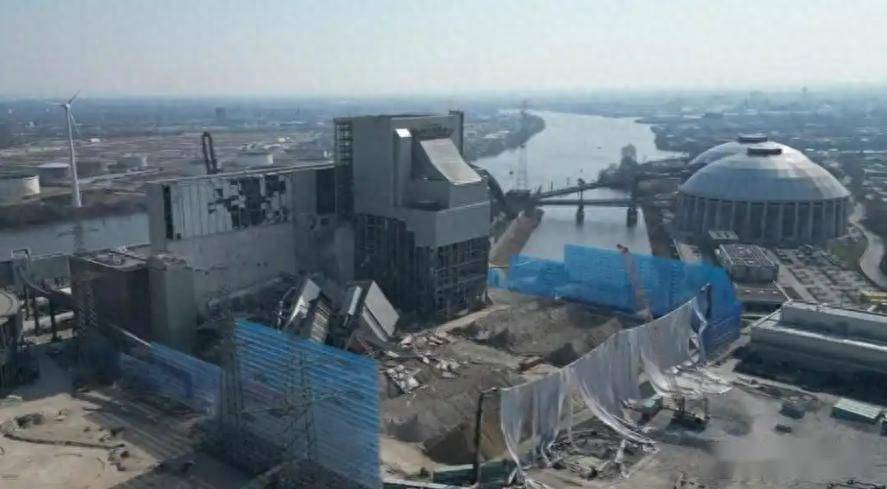
(投资中国)世界化工巨头巴斯夫湛江一体化基地核心装置首批产品启动生产
Zhong Guo Xin Wen Wang· 2025-11-05 14:00
Core Insights - BASF's Zhanjiang integrated base has commenced production of its first batch of products, marking a significant milestone in the company's operations in China [1][2] - The Zhanjiang base represents BASF's largest single investment project to date, with a total investment of approximately €10 billion, and will become the company's third-largest production site globally upon full completion [1] - The base is strategically positioned to provide high-quality, low-carbon chemical products to meet the rapidly growing market demands in China and the Asia-Pacific region [2] Investment and Development - Construction of the Zhanjiang integrated base began in November 2019, with the first facilities starting construction in 2020 and core facilities being fully advanced by July 2022 [1] - The base includes a steam cracking facility with an annual capacity of 1 million tons of ethylene, along with multiple downstream facilities for producing petrochemicals and intermediates [1] Strategic Importance - The progress at the Zhanjiang base is a key step in BASF's strategy of "local production to serve local markets," which aims to strengthen its core business and promote sustainable growth in key markets [1] - The successful production of the first batch of products lays a solid foundation for the base to achieve full operational capacity by the end of 2025 [2]
关厂、出售!两大化工巨头同日宣布调整业务
Zhong Guo Hua Gong Bao· 2025-11-04 09:09
Group 1 - BASF announced the integration of its Asian PolyTHF business into its Shanghai Caojing site and will cease production at its Ulsan facility in South Korea, with the closure expected to be completed by 2026 [1] - The decision is part of BASF's global production strategy assessment aimed at enhancing competitiveness in response to structural changes in the global chemical fiber market, including severe overcapacity [1] - After the Ulsan plant closure, BASF will continue to produce PolyTHF at its sites in China, Germany, and the USA, with a total capacity of 250,000 tons per year [1] Group 2 - Evonik announced the sale of its betaine business in Indonesia to Aekyung Chemical, marking a step towards its transformation into a sustainable specialty chemicals supplier [1] - Evonik has been gradually divesting its global betaine-related assets, having sold its business in Milton Keynes, UK, in August 2020, and its Virginia, USA, business in August 2022 [2] - Despite the divestitures, Evonik will continue its betaine operations in Europe and Latin America, as betaine is widely used in personal care products and other consumer goods [2]
美股三大指数集体高开:纳指涨近1%,亚马逊大涨超4%
Feng Huang Wang Cai Jing· 2025-11-03 14:37
Group 1: Market Overview - US stock indices opened higher, with Dow Jones up 0.06%, S&P 500 up 0.49%, and Nasdaq up 0.97% [1] - Amazon surged over 4% after signing a $38 billion agreement with OpenAI to expand computing power using Nvidia chips [1] - Nvidia rose over 2% as Microsoft received export licenses to ship Nvidia's A100, H100, and H200 GPUs to the UAE [1] - Google opened slightly higher by 0.1%, planning to issue $15 billion in dollar bonds [1] Group 2: Company News - Microsoft plans to invest nearly $8 billion in the UAE by 2029, with over $5.5 billion allocated for AI and cloud infrastructure expansion [2] - IREN announced a $9.7 billion GPU cloud service contract with Microsoft, including a 20% upfront payment, and a separate $5.8 billion agreement with Dell for GPU and related equipment [3] - BP announced the sale of non-controlling interests in US onshore assets for $1.5 billion, reducing its stake in certain areas [4] - Kimberly plans to acquire Kenvue for approximately $48.7 billion through a cash and stock transaction [5] - BASF will integrate its Asian PolyTHF business into its China facility and close its Ulsan plant in South Korea by 2026 [6]






加码中国!巴斯夫,又一新材料业务大调整
DT新材料· 2025-11-03 14:17
Core Viewpoint - BASF is restructuring its PolyTHF™ business by consolidating operations in China and shutting down production in South Korea, signaling a shift towards efficiency and cost-effectiveness in the global chemical market [2][4][5]. Market Dynamics - PolyTHF (PTMEG) is a significant downstream product of 1,4-butanediol (BDO), consuming approximately 50% of BDO's production capacity, while biodegradable plastics account for only about 5% [2]. - The demand for PTMEG is driven by the expanding spandex industry, although actual spandex demand has not increased, leading to declining industry profits [3]. Production Capacity - Domestic PTMEG production capacity has reached around 1.5 million tons per year, with over 90% of PTMEG used for spandex production [3]. - BASF's consolidation will create a network of three major production bases in China, Germany, and the USA, maintaining a total capacity of around 250,000 tons [5]. Strategic Moves - BASF's decision to close the Ulsan plant in South Korea reflects a broader trend of multinational chemical companies focusing on cost and efficiency rather than geographical diversification [4][6]. - The company has made significant investments in China, totaling over €13 billion by the end of 2024, to enhance production and R&D capabilities [6].