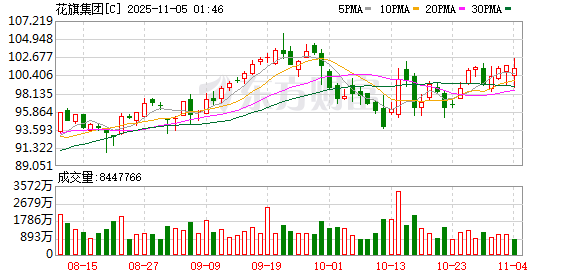
Citi(C)

Search documents
Citi Says Crypto’s Weakness Stems From Slowing ETF Flows and Fading Risk Appetite
Yahoo Finance· 2025-11-05 15:03
Core Insights - The recent weakness in the crypto market is occurring despite strong equity performance, leading to diminished investor confidence due to significant liquidations in October [1] - A slowdown in inflows into U.S. spot bitcoin ETFs has undermined the positive outlook for bitcoin, which relies on steady ETF inflows from financial advisors and investors [2] - Onchain data indicates a decrease in large bitcoin holders and an increase in smaller retail wallets, suggesting that long-term investors may be selling [3] Market Sentiment - The decline in funding rates points to a decrease in demand for leverage, reflecting a cautious market sentiment [3] - Bitcoin's price has fallen below its 200-day moving average, which could further dampen demand as the market often relies on such technical indicators [4] - The tightening of bank liquidity, characterized by drained reserves and high short-term rates, is linked to bitcoin's current weakness [4] Future Outlook - The report emphasizes that the flows into spot ETFs are a critical signal to monitor for any potential shifts in crypto sentiment, as the industry is still in the early stages of broader adoption [5]

Mamdani’s policy proposals are aggressive and will require help from Albany: Citi’s Ed Skyler
CNBC Television· 2025-11-05 13:46
Ed Skyler, Citi head of enterprise services and public affairs, joins 'Squawk Box' to discuss Zohran Mamdani's election victory to become the next mayor of New York City, impact on the business community, and more. ...

花旗中国新任“掌门人”,首次发声!
证券时报· 2025-11-05 04:40
Core Viewpoint - The article discusses the strategic return of Zhang Wenjie as the President of Citigroup China, emphasizing the importance of a dual perspective gained from extensive experience in both local and foreign banks, and the need to adapt to new market changes while maintaining the bank's core values and commitments to China [2][5]. Group 1: Strategic Focus and Market Position - Citigroup's unique positioning in the Chinese financial ecosystem is attributed to its unparalleled global network and unified cross-border service capabilities, serving both multinational corporations operating in China and assisting Chinese enterprises in their global expansion [6][8]. - The bank has identified new characteristics in the outbound expansion of Chinese enterprises, with a shift from state-owned enterprises to private companies in sectors like technology and advanced manufacturing [7]. - Citigroup has facilitated over 100 Chinese companies in accessing international capital markets over the past decade, with a total financing scale of $100 billion [7]. Group 2: Future Plans and Resource Allocation - In the next three to five years, Citigroup plans to focus its resources on advanced manufacturing, technological modernization, and AI, aligning with China's policy directions [8]. - The bank aims to enhance its coverage in key trade corridors, including ASEAN, Latin America, and the Middle East, while providing tailored solutions to meet local demands [8]. Group 3: Commitment to Growth and Risk Management - Citigroup emphasizes "responsible growth" by prioritizing long-term partnerships with clients over short-term transactions, maintaining a focus on the right clients and transactions [14]. - The bank's core competitive advantage lies in its efficient and unified cross-border financial service capabilities, which are essential for both Chinese enterprises going global and international capital entering China [14]. Group 4: Leadership Philosophy and Talent Development - The leadership philosophy at Citigroup is centered around a customer-first approach, ensuring that all decisions are made with the clients' best interests in mind [15]. - The bank places significant importance on local talent development, with a strong emphasis on training programs to build a robust talent pipeline [16].

独家|花旗中国新任“掌门人”,首次发声!
Zheng Quan Shi Bao Wang· 2025-11-05 03:49
Core Insights - The article discusses the strategic return of Zhang Wenjie as the President of Citigroup China, emphasizing a blend of legacy and new perspectives in navigating the evolving financial landscape in China [1][2]. Group 1: Strategic Vision and Market Position - Zhang Wenjie highlights the importance of Citigroup's global network, which spans over 180 markets and 90 countries, as a core competitive advantage [2]. - The bank's unique positioning in the Chinese financial ecosystem is defined by its dual role in facilitating both outbound investments by Chinese companies and inbound investments from international investors [3][4]. - Citigroup aims to support Chinese enterprises in emerging sectors such as technology, advanced manufacturing, and renewable energy, while also serving a significant portion of Fortune 500 companies operating in China [3][4]. Group 2: Future Focus and Resource Allocation - The company plans to concentrate resources on three key areas: aligning with Chinese policy directions, enhancing coverage in critical trade corridors like ASEAN and Latin America, and providing tailored solutions to meet local needs [5][6]. - Citigroup's upcoming 20th China Investment Summit is expected to reinforce the bank's commitment to the Chinese market and facilitate dialogue between international investors and local industry leaders [6][7]. Group 3: Risk Management and Competitive Edge - The bank emphasizes a balanced approach to growth and risk management, focusing on long-term partnerships with clients rather than short-term transactions [8]. - Citigroup's competitive advantage lies in its efficient and unified cross-border financial services, which cater to both outbound Chinese enterprises and inbound international capital [8][9]. Group 4: Leadership Philosophy and Talent Development - Zhang Wenjie advocates for a customer-centric approach in decision-making, prioritizing the creation of value for clients, shareholders, and the community [9][10]. - The company places significant importance on local talent development, ensuring a robust pipeline of skilled professionals to adapt to market changes and client needs [10].
独家|花旗中国新任“掌门人”,首次发声!
券商中国· 2025-11-05 03:16
Core Viewpoint - The article discusses the strategic return of Zhang Wenjie as the President of Citigroup China, emphasizing the importance of adapting to new market changes while maintaining the bank's historical values and commitment to China [1][3]. Group 1: Strategic Focus and Market Position - Citigroup's unique positioning in the Chinese financial ecosystem is defined by its unparalleled global network and unified cross-border service capabilities, serving both multinational corporations operating in China and assisting Chinese enterprises in their global expansion [3][4]. - The bank has identified two main business lines: aiding Chinese companies in global markets, particularly in emerging sectors like technology and renewable energy, and serving a substantial portion of the Fortune 500 companies in China, with 70% of them being Citigroup clients [4][6]. Group 2: Opportunities in Global Capital Flow - The current wave of Chinese enterprises going global shows new characteristics, with private companies in technology and advanced manufacturing becoming significant players, moving beyond the earlier dominance of state-owned enterprises [6]. - Citigroup has proactively positioned itself in key trade corridors such as ASEAN, Latin America, and the Middle East, and plans to enhance its services for Chinese companies in emerging markets [6]. Group 3: Future Resource Allocation - China is recognized as Citigroup's second-largest market outside the U.S., with strong revenue growth, prompting the bank to focus its resources on advanced manufacturing, technology modernization, and AI, aligning with China's policy directions [7]. - The bank aims to provide "one-stop solutions" that adapt its global products and services to local needs, enhancing its competitive edge in the market [7]. Group 4: Commitment to Client Engagement - The upcoming 20th China Investment Summit is expected to convey Citigroup's strong commitment to the Chinese market, with high-level executives participating to foster dialogue between international investors and Chinese industry leaders [8]. - Citigroup emphasizes the importance of its global cash management solutions, which facilitate automated financial management for businesses engaged in complex cross-border operations [9]. Group 5: Leadership Philosophy and Risk Management - Citigroup maintains a philosophy of "responsible growth," focusing on long-term partnerships with clients rather than short-term transactions, which is seen as a key competitive advantage [10]. - The bank's core "moat" lies in its efficient and unified cross-border financial service capabilities, which are crucial for both Chinese enterprises expanding abroad and international capital entering China [10]. Group 6: Talent Development and Organizational Resilience - Citigroup's "centennial gene" is characterized by its ability to innovate and adapt, supported by strong institutional frameworks and talent development programs [13]. - The management aims to enhance the team's market insight and responsiveness to better serve clients' needs in China and abroad, ensuring the bank's long-term success [13].

以全球网络与本土智慧 加固跨境金融护城河
Sou Hu Cai Jing· 2025-11-04 22:14
Core Insights - The article discusses the return of Zhang Wenjie as the President of Citigroup China, emphasizing a strategic return and new perspectives for the company in the Chinese market [1][2]. Group 1: Strategic Positioning - Citigroup's unique positioning lies in its unparalleled global network and unified cross-border service capabilities, which are essential for serving both multinational corporations operating in China and Chinese enterprises going global [2][3]. - The company has identified new characteristics in Chinese enterprises going abroad, with a shift from state-owned enterprises to private companies in sectors like technology and advanced manufacturing [3]. Group 2: Market Focus and Growth Areas - Citigroup plans to focus its resources on three key areas: aligning with Chinese policy directions, enhancing coverage in critical trade corridors such as ASEAN, Latin America, and the Middle East, and providing one-stop solutions tailored to local needs [4]. - The company has helped over 100 Chinese enterprises raise a total of $100 billion in international capital markets over the past decade, showcasing its commitment to facilitating Chinese companies' global expansion [3]. Group 3: Commitment to the Chinese Market - The upcoming 20th China Investment Summit is expected to convey Citigroup's strong commitment to the Chinese market, with high-level executives attending to foster dialogue between international investors and Chinese industry leaders [6][5]. - Citigroup's operations in China are ranked highly in terms of revenue compared to other regions, indicating the market's significance for the company [4]. Group 4: Risk Management and Competitive Edge - The company emphasizes "responsible growth" within a risk framework, focusing on long-term partnerships with clients rather than short-term transactions [7]. - Citigroup's core competitive advantage remains its efficient and unified cross-border financial service capabilities, which differentiate it from local competitors [7]. Group 5: Leadership and Talent Development - The company prioritizes innovation and adaptability as part of its "centennial gene," alongside a strong emphasis on local talent development through various training programs [8]. - Zhang Wenjie aims to enhance the team's market insight and responsiveness to better serve clients' needs in China and abroad [8].
The best cash-back credit cards for April 2026
Yahoo Finance· 2025-11-04 18:23
Core Insights - The article highlights the best cash-back credit cards for 2025, emphasizing their rewards structures, fees, and potential cash-back earnings. Group 1: Best Overall Card - The Chase Freedom Unlimited is identified as the best overall cash-back credit card, offering a $200 bonus after spending $500 in the first 3 months and a 0% introductory APR on purchases for 15 months [4][5]. Group 2: Best for Specific Categories - The Amex Blue Cash Preferred card is noted for providing 6% cash back at U.S. supermarkets on up to $6,000 in eligible purchases annually, with a potential annual cash back of $590.65 after the annual fee [9][10]. - The Amex Blue Cash Everyday card offers 3% cash back on U.S. supermarkets and online retail purchases, with a potential annual cash back of $451.08 [11][17]. - The Capital One Savor Cash Rewards card is highlighted for its unlimited 3% cash back on dining, with a potential annual cash back of $513.90 [19][21]. Group 3: Unique Features - The Citi Custom Cash card automatically adjusts its top 5% reward category based on spending, with a potential annual cash back of $522.10 [22][25]. - The Discover it Cash Back card offers 5% cash back on rotating categories each quarter, with a potential annual cash back of $476.88 [27][31]. Group 4: Cash-Back Mechanics - Cash-back credit cards typically offer between 2% and 6% cash back across various bonus categories, with 1% on all non-bonus spending [38][40]. - The article explains that cash back can be redeemed as statement credits, checks, or direct deposits into bank accounts [39][60]. Group 5: Considerations for Card Selection - Factors to consider when choosing a cash-back card include annual fees, welcome offers, cash-back rewards categories, and additional benefits [50][55][57]. - The article emphasizes the importance of aligning card rewards with spending habits to maximize cash-back potential [70][72].





花旗集团中国区总裁、花旗银行(中国)行长张文杰: 以全球网络与本土智慧 加固跨境金融护城河
Zheng Quan Shi Bao· 2025-11-04 17:57
Core Insights - Citi's return to China is marked by a strategic commitment to the market, emphasizing the importance of adapting to new market changes while maintaining its historical values and mission [2][3]. Group 1: Strategic Focus and Market Position - Citi's global network is a core competitive advantage, covering over 180 markets and having local teams in more than 90 countries, which positions it uniquely in the financial ecosystem [2]. - The bank aims to support both multinational companies operating in China and Chinese enterprises expanding internationally, highlighting its dual role in facilitating cross-border transactions [2][3]. Group 2: Opportunities in Globalization - The trend of Chinese enterprises going global has evolved, with private companies in technology and advanced manufacturing now leading the charge, moving beyond the earlier focus on state-owned enterprises [3]. - Citi has proactively established a presence in key regions such as ASEAN, Latin America, and the Middle East to support Chinese companies in their overseas ventures [3]. Group 3: Future Resource Allocation - In the next 3 to 5 years, Citi plans to focus its resources on advanced manufacturing, technology modernization, and AI, aligning with China's policy directions [4]. - The bank will enhance its coverage in critical trade corridors and provide tailored solutions to meet local demands [4]. Group 4: Commitment to the Chinese Market - The upcoming 20th China Investment Summit will showcase Citi's commitment to the Chinese market, with top executives attending to strengthen client relationships and facilitate dialogue between international investors and Chinese leaders [5][6]. - This event signals Citi's strong dedication to supporting clients' local and global development [5]. Group 5: Balancing Growth and Risk Management - Citi emphasizes "responsible growth" within a risk framework, focusing on long-term partnerships with clients rather than short-term transactions [7]. - The bank's competitive edge lies in its efficient and unified cross-border financial services, catering to both outbound Chinese enterprises and inbound international capital [7]. Group 6: Leadership and Talent Development - Citi's "centennial gene" reflects its ability to innovate and adapt, supported by robust institutional frameworks and talent development programs [8]. - The management aims to enhance the team's market insight and responsiveness to better serve clients' needs in China and abroad [8].
外资10月以来密集调研A股 覆盖309家公司 重视“含科”量
Zheng Quan Shi Bao· 2025-11-04 17:48
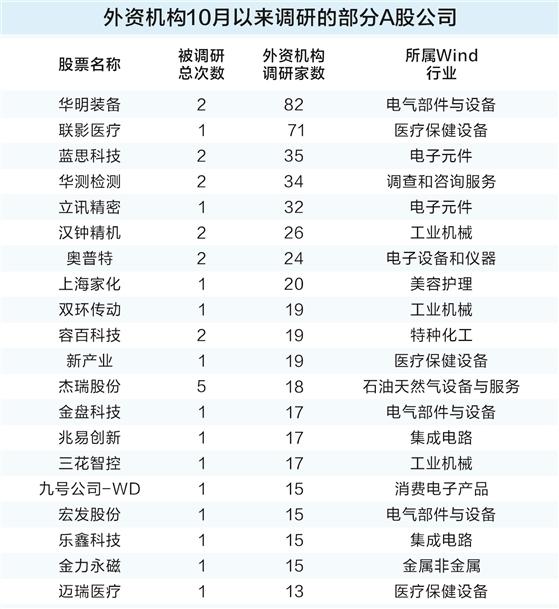
Group 1: Foreign Investment Focus - Since October, foreign institutions have conducted research on 309 A-share listed companies, primarily focusing on high-growth industries such as artificial intelligence, industrial automation, new energy, semiconductors, and consumer electronics [1][3] - Notably, 35 companies received attention from more than 10 foreign institutions, indicating a strong interest in companies like Huaming Equipment, United Imaging Healthcare, Lens Technology, and others [3] - Major foreign institutions involved in the research include Goldman Sachs, UBS, and Morgan Stanley, with Goldman Sachs alone researching over 50 A-share companies since October [5][6] Group 2: Company-Specific Insights - Huaming Equipment was the most researched company, with 82 foreign institutions focusing on its Q3 performance and future export orders [3][4] - United Imaging Healthcare attracted 71 foreign institutions, which were particularly interested in its performance in overseas markets and project deliveries [4] - Other companies like Lixun Precision, Han's Laser, and Jereh Group also received significant attention, reflecting a trend towards sectors like industrial machinery and medical equipment [1][3] Group 3: Economic Outlook and Policy Implications - Foreign institutions are optimistic about China's "14th Five-Year Plan," with Goldman Sachs raising its forecasts for China's export growth and GDP growth [2][6] - The focus on building a robust domestic market and enhancing advanced manufacturing capabilities is expected to positively impact A-shares, particularly in sectors related to self-sufficiency and emerging industries [6][7] - Goldman Sachs predicts that China's export volume will grow by 5% to 6% annually over the next few years, contributing to overall economic expansion [7]


花旗集团中国区总裁、花旗银行(中国)行长张文杰:以全球网络与本土智慧 加固跨境金融护城河
Zheng Quan Shi Bao· 2025-11-04 17:45
Core Insights - Citi's return to China is marked by a strategic commitment to the market, emphasizing the importance of adapting to new market changes while maintaining its historical values and mission [3][4]. Group 1: Strategic Focus and Market Position - Citi's unique positioning lies in its unparalleled global network and unified cross-border service capabilities, which are essential for serving both multinational corporations operating in China and Chinese enterprises expanding abroad [3][4]. - The bank has identified a significant shift in Chinese enterprises going global, with a growing number of private companies in technology and advanced manufacturing sectors leading the way, moving beyond the earlier dominance of state-owned enterprises [4]. Group 2: Future Resource Allocation - In the next 3 to 5 years, Citi plans to focus its resources on three key areas: aligning with Chinese policy directions, enhancing coverage in critical trade corridors such as ASEAN, Latin America, and the Middle East, and providing tailored solutions that adapt global products and services to local needs [6]. Group 3: Commitment to the Chinese Market - The upcoming 20th China Investment Summit is a significant event for Citi, showcasing the bank's commitment to the Chinese market and facilitating dialogue between international investors and Chinese industry leaders [7]. - Citi's approach emphasizes responsible growth within a risk framework, prioritizing long-term partnerships with clients over short-term transactions [8]. Group 4: Leadership and Talent Development - Citi's ability to navigate market cycles is supported by its "centennial gene," which reflects its capacity for innovation and change, as well as a strong focus on talent development through various training programs [9].