Chevron(CVX)

Search documents
How Chevron played the long game for Venezuela's oil reserves
Fastcompany· 2026-01-12 21:31
Core Viewpoint - The future of Venezuela is perceived as an opportunity for large U.S. oil companies to extract significant wealth following recent military actions in the country [1] Group 1: Military Actions - U.S. forces in Caracas killed at least 80 people and kidnapped President Nicolás Maduro [1] Group 2: Economic Implications - Donald Trump indicated that large U.S. oil companies would soon be extracting a tremendous amount of wealth from Venezuela [1]


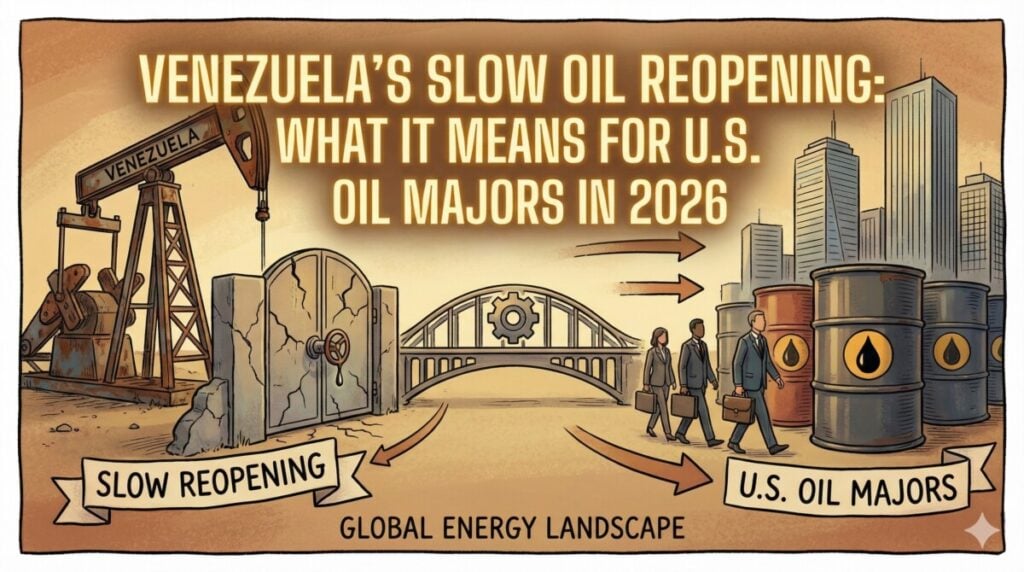
Venezuela's Slow Oil Reopening And What It Means For U.S. Oil Majors In 2026 - ConocoPhillips (NYSE:COP), Chevron (NYSE:CVX)
Benzinga· 2026-01-12 17:55
Core Insights - Venezuela's oil sector is experiencing a cautious regulatory thaw rather than a significant increase in production or supply [3][19] - The U.S. Treasury has granted limited licenses for companies like Chevron to resume restricted operations, focusing on maintenance and incremental exports rather than full commercial activity [5][10] - Venezuela's oil production remains well below historical levels due to years of underinvestment and infrastructure decay, making a rapid recovery unlikely [4][6] Regulatory Changes - The White House's limited licenses signal a controlled engagement with Venezuela, which is crucial for U.S. oil producers facing geopolitical risks [3][5] - Current licenses allow Chevron to operate limited activities and export some crude, but do not represent a full return to pre-sanction operations [9][10] Production Capacity - Venezuela holds significant proven oil reserves, but its production capacity is constrained by structural issues rather than political factors [4][6] - The International Energy Agency indicates that substantial investment is needed to restore Venezuela's oil infrastructure, which could take years [16] Investment Implications - For U.S. oil majors, Venezuela's situation provides long-term optionality without immediate earnings impact, with Chevron being the most exposed [8][19] - Other majors like Exxon and ConocoPhillips benefit indirectly from supply tightness and market structure [14][19] Monitoring Indicators - Investors should focus on U.S. Treasury license renewals, capital spending commitments from companies, and actual export data to gauge the situation accurately [18]

Chevron Bets on Venezuela Oil to Unlock Up to $700M in Cash Flow
ZACKS· 2026-01-12 17:15
Core Insights - Chevron Corporation (CVX) could potentially unlock up to $700 million in annual cash flow from increased crude exports in Venezuela due to easing logistical constraints and a more permissive U.S. sanctions environment [1][10] - The company has a competitive advantage among U.S. oil majors, with estimates suggesting an additional $400 million to $700 million per year, representing approximately 1%-2% of its operating cash flow [2] Strategic Positioning - Chevron is the only major U.S. oil company actively operating in Venezuela, with joint ventures producing around 240,000 barrels per day, shared equally with state-owned PDVSA [3] - The company is expected to focus on optimizing existing assets rather than making large new capital investments until there is greater political stability in Venezuela [4] Export Dynamics - The surge in Chevron's exports is driven by logistical factors, as Venezuelan crude storage facilities are nearing capacity, necessitating quick movement of barrels [5] - This logistical challenge has transformed Venezuela into one of Chevron's busiest export hubs, showcasing how physical constraints can alter trade flows [6] Operational Strategy - Chevron has rebuilt a high-throughput export operation, leveraging its global trading and logistics network to ship larger and more frequent cargoes to refiners capable of processing Venezuela's heavy, sour crude [7] - Key destinations for these exports include the U.S. Gulf Coast, where refiners like Phillips 66 and Valero Energy are well-equipped to handle Venezuelan crude [8][9] Financial Implications - Sustained Venezuelan exports are expected to materially enhance Chevron's cash generation, supporting dividends, share buybacks, or reinvestment [10][11] - The operational push is underpinned by clear financial incentives, with every additional cargo moved strengthening the company's near-term cash flow outlook [11] Geopolitical Considerations - Venezuelan oil exports remain closely tied to U.S. sanctions policy, with the potential for quick shifts in export approvals and waivers [12] - Chevron's strategy of rapid loading aims to capitalize on current regulatory conditions while mitigating political risks [12] Competitive Landscape - Chevron's position is facing increased competition from trading giants like Vitol and Trafigura, which are seeking access to Venezuelan exports [13] - This growing competition could tighten margins and complicate scheduling, although it reflects a broader belief in the ongoing relevance of Venezuelan crude in global oil flows [14] Strategic Outlook - Chevron's approach in Venezuela combines caution with opportunism, aiming to maximize near-term cash flow without overcommitting capital in a politically unstable environment [15] - As long as exports continue and storage pressures remain, Venezuela could serve as a significant, albeit risky, contributor to Chevron's global portfolio [15]
Is Iraq About to Make Its Biggest Geopolitical Pivot in Years?
Yahoo Finance· 2026-01-12 16:00
Core Insights - The recent sanctions targeting Russia's top oil firms, Lukoil and Rosneft, indicate a significant escalation in U.S. and E.U. efforts to curb Russian influence in Iraq and the broader Middle East [1][2][3] - The exit of Lukoil from Iraq's West Qurna 2 field and Rosneft's reduction of its stake in the Kurdistan Pipeline Company mark a pivotal shift in the geopolitical landscape, allowing Western firms like Chevron to re-enter the market [2][3] - The U.S. and its allies aim to weaken the ties between Iraq and Iran, while also countering the influence of Russia and China in the region [5][6] Sanctions and Their Impact - The U.S. sanctions introduced on October 22 specifically target Lukoil and Rosneft, which together export approximately 3.1 million barrels of oil per day, crucial for funding Russia's military actions [2] - The E.U. has mirrored these sanctions, including measures against Russia's liquefied natural gas sector, with a commitment to halt all Russian gas imports by January 1, 2027 [1][2] Opportunities for Western Firms - Following Lukoil's exit, Chevron is positioned as a leading contender to develop the West Qurna 2 oilfield, alongside plans for the Nasiriyah project and Balad oil field [3][6] - TotalEnergies and BP are also making significant investments in Iraq, with TotalEnergies leading a $27 billion deal and BP agreeing to a $25 billion deal, indicating a renewed Western interest in Iraq's oil sector [6] Geopolitical Shifts - The sanctions and subsequent withdrawal of Russian firms are seen as a strategic move to re-establish U.S. influence in Iraq, countering the previous boldness of Moscow and Beijing in the region [3][4] - The ongoing military presence of the U.S. and its allies in Iraq is under pressure from Iran-backed militias, which are supported by Russia and China, highlighting the complex geopolitical dynamics at play [3][5] Production Potential - The West Qurna 2 field has an estimated recoverable oil reserve of around 13 billion barrels, with the potential to produce up to 1.2 million barrels per day under revised development plans [6] - The Nasiriyah project aims for an initial capacity of 600,000 barrels per day, further emphasizing the potential for increased oil production in Iraq as Western firms re-engage [6]
特朗普:他们太狡猾了
Xin Lang Cai Jing· 2026-01-12 14:51
Group 1 - President Trump indicated he might block ExxonMobil from investing in Venezuela, expressing dissatisfaction with the company's cautious stance on the investment potential of the country [2] - ExxonMobil's CEO Darren W. Woods stated that Venezuela needs to amend its laws to become an attractive investment destination, which has drawn attention and weakened the White House's efforts to encourage international energy companies to participate in Venezuela's reconstruction [2] - ExxonMobil has a troubled history in Venezuela, having faced nationalization of its assets in 2007 and subsequently filing a lawsuit for $12 billion in compensation, of which it only recovered a small portion [2] Group 2 - U.S. Energy Secretary Chris Wright announced that major oil companies including Chevron, Shell, Repsol, and Eni will "immediately increase" their investments in Venezuela following discussions with Trump [3] - Wright mentioned that he has contacted several U.S. oil exploration companies that are ready to visit Venezuela for assessments, indicating a proactive approach to investment in the region [3] Group 3 - When asked about the possibility of deploying U.S. security forces to ensure the safety of personnel and assets in Venezuela, Wright stated that this is not being considered, emphasizing that there is no need to force U.S. companies back into the market [4] - Wright expressed optimism that the local security situation in Venezuela would significantly improve within a month, which could facilitate investment opportunities [4]


埃克森美孚CEO直言委内瑞拉“不可投资”,特朗普怒怼:那就别来了
Hua Er Jie Jian Wen· 2026-01-12 07:50
Group 1 - The CEO of ExxonMobil, Darren Woods, stated that Venezuela's current business environment is "not investable" and emphasized the need for significant changes before making large capital commitments [1][2] - President Trump expressed dissatisfaction with Woods' response and indicated a willingness to exclude ExxonMobil from the Venezuelan market, suggesting that the company was being uncooperative [1][2] - The U.S. government is negotiating with Western oil companies to attract at least $100 billion in private sector investment to help rebuild Venezuela's oil sector, but major energy firms remain cautious without specific guarantees [2][4] Group 2 - Under pressure from Trump, Woods softened his stance, stating that ExxonMobil would send a technical team to Venezuela in the coming weeks to assess the situation and expressed confidence that necessary changes could be implemented [3] - Chevron, the only U.S. company currently operating in Venezuela, conveyed a more optimistic outlook, stating it could increase production by 50% within 18 to 24 months by expanding existing operations [4] - Trump reassured that companies would be safe and that security would not be an issue, addressing concerns about legal, financial, and safety guarantees for investments in Venezuela [4]
特朗普对委内瑞拉“石油野心”或吓退投资,数十亿计划悬了?
Sou Hu Cai Jing· 2026-01-12 07:38
Core Viewpoint - The handling of Venezuela by the Trump administration may jeopardize its oil objectives, as emphasized by former National Security Advisor John Bolton, who suggests that focusing on oil deals rather than regime change could deter investment from oil companies [1][3]. Group 1: Investment and Infrastructure - The U.S. government aims to allow major American oil companies to invest billions to repair Venezuela's severely damaged oil infrastructure, with an estimated cost of $183 billion needed for rebuilding the energy sector from 2026 to 2040 [3][5]. - Trump claims that Venezuela will "hand over" up to 50 million barrels of oil, valued at over $2 billion, to benefit both nations [1][3]. - Chevron, the only U.S. company still operating in Venezuela, is currently focused on employee safety and asset integrity [5]. Group 2: Political and Legal Environment - Bolton argues that U.S. oil companies prefer a democratically elected government with an independent judiciary rather than the current Maduro regime, which is viewed as a "thug rule" [3][4]. - The political situation remains uncertain, with Trump seemingly favoring former Vice President Delcy Rodríguez as the interim president, marking a shift from previous policies that supported opposition leaders [3][4]. - Historical context shows that Venezuela nationalized its oil industry in 1976, leading to the expropriation of foreign assets, which has created a legacy of distrust among potential investors [4]. Group 3: Challenges to Investment - The infrastructure in Venezuela is in a dire state due to decades of mismanagement and underinvestment, making it difficult to develop its vast oil reserves [5]. - The lack of political stability and legal order poses significant risks for foreign companies considering investment in Venezuela [5]. - Experts note that while the potential returns on investment could be substantial, the current political and regulatory uncertainties may dampen enthusiasm from oil giants [5].
A trader’s guide to Venezuela as Trump eyes its oil
BusinessLine· 2026-01-12 03:28
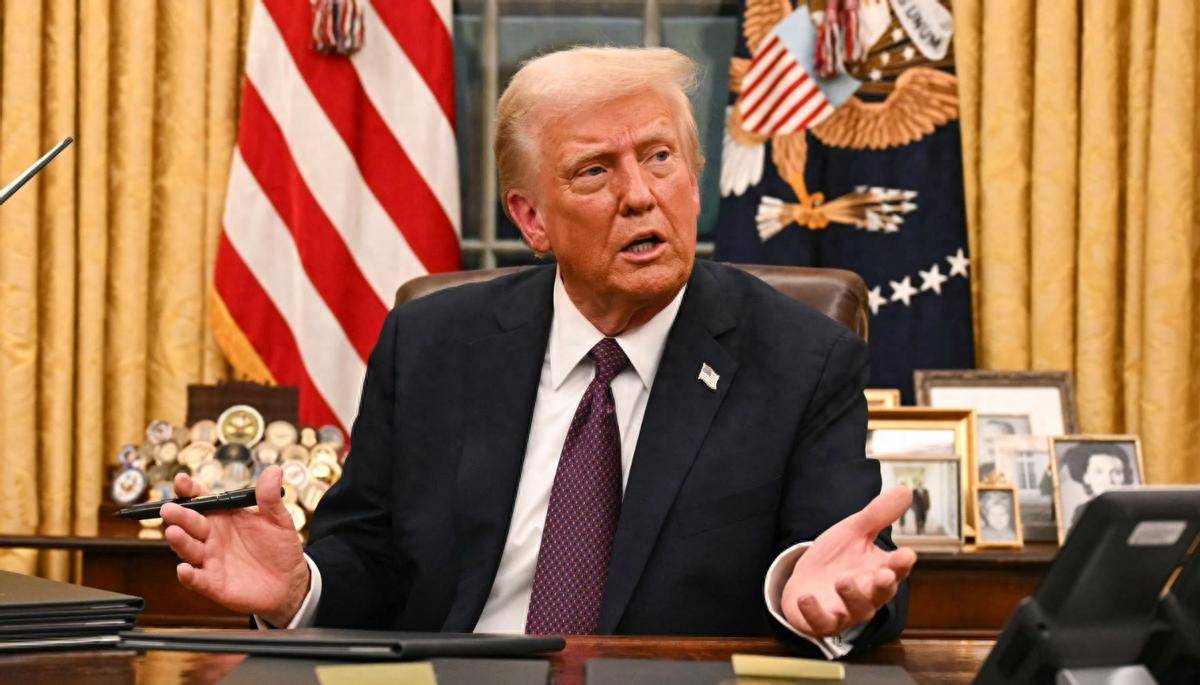
Investment Opportunities in Venezuela's Oil Industry - President Trump's initiative aims to attract billions of dollars from US energy companies to revitalize Venezuela's oil sector, which is believed to have the world's largest oil reserves [1][4] - The plan includes US companies potentially rebuilding Venezuela's oil infrastructure and reviving production, with an initial offer of up to 50 million barrels of oil valued at approximately $3 billion [5][6] Challenges and Risks - Significant questions remain regarding the timeline and costs associated with increasing energy production, with concerns that the political will in both the US and Venezuela may wane over time [2] - The current global oil market is characterized by oversupply, with declining capital spending in oil due to abundant supply and lower-than-expected demand [3] - Experts estimate that restoring Venezuela's oil production could require investments of up to $100 billion over the next decade, raising doubts about the feasibility of such a turnaround [9] Major Players and Market Dynamics - Chevron is currently the only major US oil producer operating in Venezuela, with the potential to increase its cash flow by up to $700 million annually if production levels are restored [7] - Previous operators like Exxon Mobil and ConocoPhillips face challenges in recovering assets worth over $9 billion due to past seizures, complicating their return to the market [8] Refining and Related Opportunities - US refiners are already seeing increased interest, with about 140 million barrels of Venezuelan crude processed in 2025, representing 0.8% of total US throughput [11] - Companies like Valero Energy and PBF Energy could benefit from increased Venezuelan crude flows, while Phillips 66 may see upside from the need for imported diluent [12] Broader Investment Themes - The potential for increased tanker operations could benefit companies like DHT Holdings and Frontline, especially if Chevron charters compliant vessels to replace those circumventing US sanctions [13] - Beyond oil, Venezuela's rich mineral deposits present opportunities for mining companies, although the current state of the industry poses significant challenges [16][17] Infrastructure and Long-Term Investments - Rebuilding Venezuela's infrastructure is viewed as a long-term opportunity, with historical precedents suggesting that recovery in post-crisis markets can take years [18] - Investors are advised to consider high-quality regional companies with indirect exposure to Venezuela, treating direct investments as long-dated options [19] Defense and Food Sector Implications - Increased geopolitical uncertainty may benefit defense companies, with potential gains for firms like Lockheed Martin and Northrop Grumman [20] - Opportunities in food exports may arise if Venezuela's economy recovers, with companies like Bunge Global and Archer-Daniels-Midland positioned to benefit [21] Debt and Macro Considerations - The removal of Maduro has sparked interest in Venezuela's defaulted debt, with potential for higher recovery values as part of a debt restructuring [22][23] - The geopolitical shakeup could influence macro-oriented investments, with implications for oil prices and consumer confidence [24][25]

特朗普强硬施压美国石油巨头:赶紧去委内瑞拉投资,你们要是不干,有的是人愿意接手
Sou Hu Cai Jing· 2026-01-11 21:52
Group 1 - The U.S. military's recent actions in Venezuela have created an environment that President Trump claims is "absolutely safe" for American oil companies to invest in [1][3] - Venezuela possesses the largest oil reserves in the world, with over 300 billion barrels, surpassing Saudi Arabia and Canada [3][5] - Despite its vast reserves, Venezuela's oil production has drastically declined from 3.5 million barrels per day in the late 1990s to around 1 million barrels per day currently, accounting for less than 1% of global production [5][9] Group 2 - Chevron is currently the only major U.S. oil company still operating in Venezuela, while ExxonMobil and ConocoPhillips express significant caution regarding investment due to past asset seizures [5][11] - Smaller oil companies have shown a willingness to invest in Venezuela, contrasting with the hesitance of larger firms [11][16] - The restoration of Venezuela's oil industry is estimated to require an investment of $110 billion just for exploration and production to return to levels seen 15 years ago [11][13] Group 3 - The U.S. energy market's reaction to the situation in Venezuela has been muted, with no immediate impact on oil prices or gasoline costs observed [9][16] - Experts suggest that U.S. companies will only return to Venezuela if there are guarantees of investment returns and security [9][13] - The complexities of Venezuela's oil industry, including the need for significant infrastructure investment and the challenges posed by the current political climate, make immediate investment unlikely [5][11][13]

The Trump Market: Where Tweets Are Policy and Volatility Is Just a Feature
Stock Market News· 2026-01-11 18:00
Group 1: Tariffs and Pharmaceutical Sector - President Trump has threatened pharmaceutical tariffs of up to 250% and 500% on India over Russian oil purchases, indicating a shift in the administration's approach to tariffs as a tool for industry reshaping rather than negotiation [2] - Johnson & Johnson (JNJ) has secured an exemption from certain tariffs by committing to lower drug prices, joining 14 other major pharmaceutical companies in the "TrumpRx" program, which aims to align US drug prices with European counterparts [3] - Moody's Analytics reported a "collapse in pharmaceutical imports" as companies stockpiled goods in anticipation of tariffs, demonstrating the market's tendency to react preemptively to presidential announcements [3] Group 2: Energy Sector and Venezuela - Following the capture of Venezuelan President Nicolás Maduro, President Trump declared a national emergency and announced new sanctions, leading to a surge in US energy stocks, with Chevron (CVX) rising 5% and Exxon Mobil (XOM) increasing by 2.2% [4] - However, by January 10, 2026, analysts expressed skepticism about the viability of Venezuelan oil investments, citing a lack of legal pathways and the need for significant infrastructure rebuilding [5] - Venezuelan government bonds saw a rally, with a bond maturing in 2027 increasing from 31.5p to over 40p on the dollar, indicating market interest despite the geopolitical instability [5] Group 3: Credit Card Industry - President Trump proposed a one-year, 10% cap on credit card interest rates, aiming to save Americans "tens of billions of dollars," which has raised concerns among banking executives [6][7] - The banking industry, including the Bank Policy Institute and the American Bankers Association, warned that such a cap could lead consumers to less regulated alternatives and reduce credit availability [8] - Major credit card companies like American Express (AXP) and JPMorgan Chase (JPM) experienced stock declines of -1.92% and -0.18% respectively, reflecting market apprehension about the proposed cap [8] Group 4: Defense Sector - President Trump's executive order threatening to restrict stock buybacks and dividends for defense contractors initially caused a drop in defense stocks, but a subsequent announcement of a $1.5 trillion defense budget for fiscal year 2027 led to a rally in the sector [9][10] - Northrop Grumman (NOC) saw a premarket increase of 6.8%, while Lockheed Martin (LMT) rose 6.7%, indicating strong market response to the budget announcement [10] - The iShares US Aerospace & Defense ETF gained approximately 55% over the past year, significantly outperforming the S&P 500's 17% increase, highlighting robust demand in the defense sector [10] Group 5: Market Reactions and Trends - The US stock market exhibited polarized performance on January 8, 2026, with the DOW gaining 60.94 points (+0.12%) while the S&P 500 and NASDAQ Composite fell [13] - By January 9, 2026, the indices largely recovered, with the S&P 500 climbing 0.6% and the DOW adding 0.5%, indicating a rotation out of high-growth technology into heavy industry [14] - Analysts forecast a 10% increase for the S&P 500 in the remainder of 2026, although they acknowledge that presidential tariffs pose a significant source of uncertainty for market performance [15]