
Disney(DIS)

Search documents
The best YouTube TV alternatives: Make sure you can still live stream ESPN and ABC with these services
Business Insider· 2025-11-14 19:05
Core Insights - Disney and YouTube TV have not reached a new carriage deal, resulting in the blackout of major channels like ESPN and ABC from YouTube TV [1][2] - YouTube TV is offering a $20 credit to subscribers affected by the blackout, while alternatives to YouTube TV are being recommended [2][3] Group 1: Impact of the Blackout - The blackout affects popular Disney-owned channels including ABC, ESPN, ESPN2, and others, which are crucial for sports viewers [2][28] - YouTube TV has stated that negotiations with Disney are ongoing but cannot predict when the channels will be restored [2] Group 2: Alternatives to YouTube TV - Recommended alternatives include DirecTV, Sling TV, Fubo, and ESPN Unlimited, each offering different price points and channel line-ups [3][4] - DirecTV is highlighted as the best overall alternative, starting at $89.99 per month for the Entertainment plan, which includes 90+ channels [5][6] - ESPN Unlimited is a budget-friendly option at $29.99 per month, focusing on sports content [11][13] - Sling TV offers various plans, with the Sling Orange + Blue combo being the most comprehensive for major sports channels at $60.99 per month [17][19] - Fubo is noted for its extensive sports offerings, with the Pro plan costing $84.99 per month and including over 200 channels [20][21] Group 3: Historical Context of Carriage Disputes - Similar carriage disputes have occurred in the past, such as a 13-day blackout between DirecTV and Disney in Fall 2024, and an 11-day dispute with Charter in 2023 [26] - Long-term blackouts can result from these disputes, as seen with Fubo's loss of Warner Bros. channels in April 2024 [27]




Disney Exec Says ESPN Outage on YouTube TV May 'Go for a Little While'
CNET· 2025-11-14 17:40
Core Viewpoint - The ongoing negotiations between Disney and YouTube TV regarding the carriage fees for Disney's streaming channels have stalled, leading to significant subscriber losses for YouTube TV and revenue losses for Disney [1][4][5]. Group 1: Negotiation Status - Disney's CFO indicated that the company has prepared for a prolonged negotiation period due to the YouTube TV outage [2] - Disney CEO Bob Iger emphasized the importance of reaching a deal that reflects the value Disney provides [2] - The disagreement centers around the carriage fees YouTube TV pays to Disney, with Disney asserting that YouTube TV is not paying enough [3][9] Group 2: Subscriber Impact - Approximately 24% of YouTube TV subscribers have canceled or plan to cancel their subscriptions due to the lack of core content [4] - YouTube TV has over 9 million subscribers, making it the largest internet TV provider, while Hulu has 4.3 million [3] - Disney is reportedly losing around $30 million in revenue per week during the outage, which translates to a 2-cent drop in adjusted earnings per share for Disney [5][8] Group 3: Historical Context - Disney has experienced similar disputes in the past, with previous conflicts typically resolved within a week or two [6][7] - The current outage has lasted longer than previous disputes, raising concerns about the potential for further subscriber losses [8] Group 4: Company Statements - Disney accused YouTube TV of not negotiating in good faith and attempting to devalue Disney's content [11] - YouTube TV stated that it advocates for fair pricing to provide the best experience for its members [9] Group 5: Compensation for Subscribers - YouTube TV is offering a $20 credit to subscribers affected by the outage, with some receiving it automatically and others needing to claim it [15][19]

Disney Is America’s Worst Entertainment Company
Yahoo Finance· 2025-11-14 15:15
Core Viewpoint - Warner Bros. Discovery Inc. is perceived as poorly managed, leading to its decision to auction itself off, while Walt Disney Co. has now taken the title of America's worst-run entertainment company, with Bob Iger's leadership under scrutiny [1][2][4]. Company Performance - Disney's recent earnings report disappointed investors, causing an 8% drop in stock price immediately after the announcement, with revenue remaining flat at $23.5 billion and segment operating income decreasing by 5% to $3.5 billion [7]. Subscriber Growth - Disney+ and Hulu have reached a combined total of 196 million subscribers, indicating some positive growth in a highly competitive streaming market, which includes challenges from platforms like YouTube [8]. Investment in Theme Parks - The company is investing significantly in its theme parks, which continue to be stable contributors to its overall financial health [9]. Leadership Changes - Bob Iger, who previously led Disney from 2005 to 2020, returned to the company after the dismissal of his successor, Bob Chapek, but has not yet named a successor for his upcoming departure [2][4]. Historical Context - Iger is known for building Disney through major acquisitions, creating a legacy media giant, but the company now faces competition from new streaming services that threaten its traditional assets [5][6].
Disney Stock Is Dropping. More Downside Risk?
Forbes· 2025-11-14 14:20
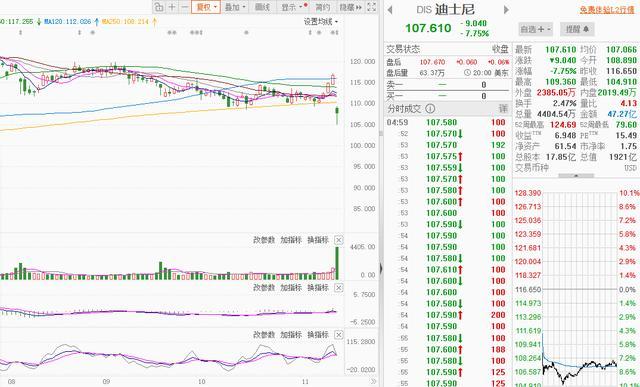
Core Insights - Walt Disney's stock has experienced a significant decline of 7.7% in one day following mixed Q4 FY'25 earnings, primarily due to larger-than-expected declines in its linear TV business, which remains crucial for overall revenues and profits despite growth in the streaming sector [1][3] Company Overview - Walt Disney is valued at $194 billion with $95 billion in revenue, currently trading at $107.61 [3] - The company reported a revenue growth of 5.0% over the last 12 months and an operating margin of 14.8% [3] - The liquidity metrics show a Debt to Equity ratio of 0.22 and a Cash to Assets ratio of 0.03, indicating moderate operational performance [3][4] Valuation Metrics - The stock is currently trading at a P/E multiple of 16.8 and a P/EBIT multiple of 15.1, suggesting a fair valuation [8] - Historical performance indicates that the stock has dropped over 30% in less than 30 days only once since 2010, after which it rebounded by 115% within a year [8] Historical Performance Analysis - DIS stock has seen a decline of 60.7% from a peak of $201.91 on March 8, 2021, to $79.32 on October 4, 2023, compared to a 25.4% decline for the S&P 500 [9] - The stock decreased 42.1% from a peak of $148.20 on January 2, 2020, to $85.76 on March 23, 2020, but fully rebounded by November 24, 2020 [9] - A previous drop of 16.3% from a peak of $115.84 on April 27, 2017, to $96.93 on October 12, 2017, was also followed by a complete recovery by August 6, 2018 [9] Market Resilience Considerations - The analysis suggests that if DIS stock were to drop another 20-30% to $75, investors may need to evaluate their positions based on historical performance during economic downturns [5][4] - The stock has underperformed relative to the S&P 500 during various economic downturns, raising questions about its resilience [5]
Disney: The Market Is Finally Waking Up To The Danger Of The YouTube TV Blackout
Seeking Alpha· 2025-11-14 14:00
Core Viewpoint - The Walt Disney Company reported its full-year results for Fiscal Year 2025, leading to unexpected stock performance rather than the anticipated sideways trading [1]. Financial Performance - The article does not provide specific financial metrics or results from Disney's Fiscal Year 2025 report, but it implies that the results were significant enough to influence stock trading behavior [1]. Analyst Background - The author, Max Greve, is a graduate of Northwestern University with a quadruple major and has expertise in various fields including economics and political science, which may inform his analysis of market trends [1].

Disney stock tumbles as TV business slides further toward collapse
Fastcompany· 2025-11-14 09:10
Core Insights - Disney reported $22.46 billion in revenue for the quarter, slightly missing analyst expectations, leading to a 5% drop in premarket trading [2] - The entertainment division experienced a 6% decline in revenue, with linear networks dropping 16% to $107 million compared to the previous year [2] - Disney+ and Hulu saw an increase of 12.4 million subscribers, ending the quarter with 196 million subscriptions [2] Revenue Breakdown - The sports segment reported a 2% increase in revenue to $4 billion, but operating income decreased by $18 million to $911 million, with domestic ESPN operating income down 3% [3] - Domestic advertising revenue in sports increased by 8%, but higher marketing and production costs impacted overall operating income [3] Challenges and Disputes - Disney is currently in a carriage dispute with Google, resulting in several networks going dark on YouTube TV, which could cost Disney approximately $60 million in revenue due to a two-week blackout [5] - CEO Bob Iger expressed optimism about resolving the dispute in a timely manner to ensure consumer access to Disney's content [6]

Dow Tumbles Around 800 Points On US Government Reopening Day; Investor Fear Increases, Greed Index Moves To 'Extreme Fear' Zone
Benzinga· 2025-11-14 07:47
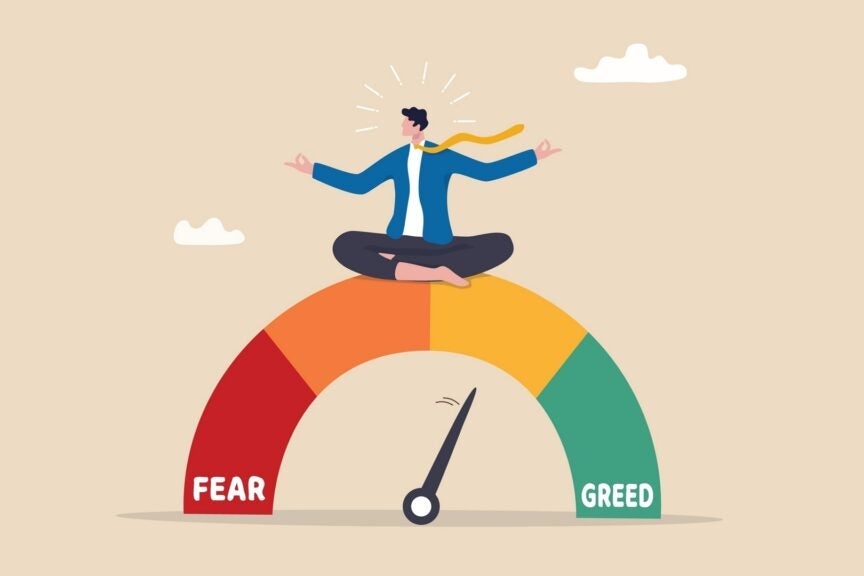
Market Sentiment - The CNN Money Fear and Greed index has moved into the "Extreme Fear" zone, indicating a heightened level of fear among investors, with a current reading of 24.3 compared to a prior reading of 32.6 [1][3] Stock Performance - U.S. stocks experienced a decline, with the Dow Jones index falling approximately 800 points, closing at 47,457.22. The S&P 500 decreased by 1.66% to 6,737.49, and the Nasdaq Composite dropped by 2.29% to 22,870.36 [3] - Walt Disney Co. saw a significant drop of around 8% due to overall revenue missing market expectations, while Cisco Systems Inc. rose by 4.6% after surpassing analyst expectations and providing positive guidance [2] Sector Performance - Most sectors within the S&P 500 closed negatively, with consumer discretionary, information technology, and communication services experiencing the largest losses. Conversely, energy stocks managed to close higher, defying the overall market trend [2]


Dow Tumbles Around 800 Points On US Government Reopening Day; Investor Fear Increases, Greed Index Moves To 'Extreme Fear' Zone - Cisco Systems (NASDAQ:CSCO), Walt Disney (NYSE:DIS)
Benzinga· 2025-11-14 07:47
Market Sentiment - The CNN Money Fear and Greed index has moved into the "Extreme Fear" zone, indicating a further increase in overall fear levels, with a current reading of 24.3 compared to a prior reading of 32.6 [1][3] Stock Performance - U.S. stocks closed lower, with the Dow Jones index dropping approximately 800 points during the session, settling at 47,457.22 [3] - The S&P 500 decreased by 1.66% to 6,737.49, while the Nasdaq Composite fell by 2.29% to 22,870.36 [3] - Walt Disney Co. experienced a decline of around 8% due to overall revenue missing expectations, while Cisco Systems Inc. rose by 4.6% after beating analyst expectations and providing positive guidance [2] Sector Performance - Most sectors within the S&P 500 ended negatively, with consumer discretionary, information technology, and communication services stocks facing the largest losses [2] - In contrast, energy stocks performed well, closing higher despite the overall market trend [2]
冰火两重天,迪士尼利润新高与业务隐忧
Huan Qiu Wang Zi Xun· 2025-11-14 06:25
Core Insights - Disney's net profit for fiscal year 2025 increased by 149% year-on-year, reaching $12.404 billion, primarily due to effective cost control [1][3] - The company's revenue growth was modest, with total revenue approximately $94.425 billion, reflecting a year-on-year increase of about 3% [1] - Following the mixed financial report, Disney's stock price fell by 7.75%, indicating market concerns about its future outlook [1] Financial Performance - In Q4 of fiscal year 2025, Disney's net profit was approximately $1.313 billion, a significant increase of 185% year-on-year [3] - The diluted earnings per share for the entire year were $6.88, up 153% compared to the previous year [3] - The surge in profit was mainly driven by a substantial reduction in restructuring and impairment costs, which decreased by 75% in Q4 and 77% for the full year [3] Business Segments - The direct-to-consumer streaming segment, including Disney+ and Hulu, showed strong performance with Q4 revenue growth of 8% year-on-year and a similar annual growth rate [3] - User growth was robust, with a 3% increase in domestic Disney+ users and a 4% increase in international users, while Hulu's total user base surged by 15% [3] - The experiences segment, which includes theme parks, cruises, and consumer products, also experienced stable growth, with Q4 revenue increasing by 6% year-on-year [3] Challenges - In contrast to the growth in the experiences segment, Disney's traditional cable television business faced significant challenges, with Q4 revenue declining by 16% and a 12% decrease for the full year [3] - The decline in cable television revenue was attributed to lower rates, decreased viewership, and a drop in advertising revenue [3] Future Outlook - Disney expressed confidence in its future, projecting double-digit growth in adjusted earnings per share for fiscal year 2026 [4] - The company announced plans to double its stock buyback target to $7 billion for 2026 and declared a cash dividend of $1.50 per share [4] - Despite the positive outlook, there are ongoing concerns in the industry regarding the sustainability of Disney's overall growth and the decline of its traditional business segments [4]
2025年11月14日:环球市场动态
citic securities· 2025-11-14 04:55
Market Overview - US stocks experienced significant declines, with the Nasdaq dropping 2.3%, the S&P 500 down 1.7%, and the Dow Jones falling 1.7% due to concerns over the release of key economic data[11] - European markets also closed lower, with the pan-European Stoxx 600 index down 0.61% and the German DAX index falling 1.39% as investors opted for profit-taking after recent gains[11] Economic Indicators - The market's expectations for a December interest rate cut have diminished, with the probability now below 50%[6] - The US 10-year Treasury yield rose to 4.12%, while the 30-year yield increased to 4.71%, reflecting market reactions to hawkish comments from Federal Reserve officials[31] Commodity Trends - International gold prices fell by 0.45% to $4,194.5 per ounce, influenced by reduced rate cut expectations[28] - Oil prices saw a slight rebound after a significant drop, with NY crude oil rising 0.34% to $58.69 per barrel[28] Chinese Market Performance - The A-share market closed higher, with the Shanghai Composite Index up 0.73% at 4,029 points, driven by gains in the lithium sector and precious metals[18] - The total market turnover reached 2.07 trillion yuan, indicating robust trading activity[18] Corporate Earnings Insights - JD.com reported a 15% year-on-year revenue increase to 299.1 billion yuan, but adjusted EBIT fell sharply by 98% to 2.11 billion yuan, highlighting challenges in its electronics segment[8] - Tencent's Q3 revenue grew 15% to 192.9 billion yuan, with a notable 23% increase in its gaming business, reflecting strong performance in its core segments[14] Investment Recommendations - Focus on sectors such as technology, manufacturing, and energy infrastructure, particularly in nuclear power and military industries, as potential investment opportunities[6] - The S&P 500 is expected to see revenue and earnings growth rates of 7.3% and 15.6%, respectively, in 2026, suggesting a favorable outlook for equities[6]


