Disney(DIS)

Search documents
Disney's No. 2 exec to earn higher base pay than CEO as part of $27M package
New York Post· 2026-02-09 17:32
The longtime exec tapped as Walt Disney Company’s No. 2 is reportedly set to earn a base salary that’s 50% higher than her boss’ — a move that’s meant to blunt the sting of being passed over for the top job.Dana Walden, who served as co-chair of Disney Entertainment prior to the company’s succession announcement last week, will reportedly earn $3.75 million in base pay — higher than that of Josh D’Amaro, the executive chosen over her for the CEO role.D’Amaro, who has led Disney’s theme parks and experiences ...



Disney’s $27 million retention deal pays its No. 2 a higher base salary than her boss
Yahoo Finance· 2026-02-09 11:20
Disney’s post-succession strategy is not just about who won the CEO job. It is about converting a potential rival into a highly incentivized partner. In most corporate succession battles, the runner-up leaves. At The Walt Disney Company, the opposite just happened, and it came with a carefully structured price tag. After naming Josh D’Amaro its next CEO, Disney moved quickly to ensure that Dana Walden, the executive many believed could just as easily have won the job, did not become Hollywood’s most va ...
Will Netflix Turn to ESPN If It Misses Out on Warner Bros. Discovery?
Yahoo Finance· 2026-02-09 09:40
Core Viewpoint - The potential $72 billion acquisition of Warner Bros. Discovery by Netflix is uncertain due to antitrust challenges and competition, prompting speculation about alternative strategies, such as acquiring ESPN from Disney if the deal fails [1][2]. Group 1: Netflix and Warner Bros. Discovery Deal - The acquisition deal for Warner Bros. Discovery is valued at $72 billion, which increases to approximately $83 billion when including assumed debt [1]. - Antitrust hurdles exist for Netflix, particularly in Europe, complicating the acquisition process [2]. - The deal's uncertainty raises questions about whether Netflix should consider other options, such as acquiring ESPN from Disney [2]. Group 2: ESPN Ownership and Disney's Stake - Disney previously owned 80% of ESPN, but after selling a 10% stake to the NFL, its ownership has been reduced to 72%, while Hearst Broadcasting now holds 18% [3]. - The sports programming business, led by ESPN, is underperforming, contributing less than 19% of Disney's $94.4 billion revenue in fiscal 2025 and only 16% of its segment operating income [6]. - ESPN's latest quarter showed only a 1% year-over-year revenue increase, alongside a 25% decline in segment operating profit, indicating financial strain [6]. Group 3: Disney's Strategic Considerations - Disney faces increasing costs for sports rights, making ownership burdensome compared to its other segments like theme parks and studio productions [4][5]. - Selling ESPN could improve Disney's margins significantly, especially if Netflix is willing to pay a premium similar to that for Warner Bros. Discovery [6]. - The upcoming leadership change with Josh D'Amaro becoming Disney's new CEO may lead to significant strategic decisions regarding ESPN [6].


5 Reasons to Buy Disney Stock Like There's No Tomorrow
The Motley Fool· 2026-02-08 21:15
Core Viewpoint - Disney's recent fiscal performance has led to a decline in stock price, but underlying strengths in its experiences and streaming segments suggest potential for recovery and growth [1][2]. Group 1: Experiences Segment - Disney's experiences segment, including parks and cruise lines, is a key driver of earnings recovery, with record highs in revenue and operating income [4][6]. - In the quarter ending December 27, 2025, the experiences segment generated $10 billion in revenue and $3.31 billion in operating income, reflecting significant growth compared to $7.4 billion and $2.34 billion in the same quarter of 2019 [7]. Group 2: Streaming Segment - The streaming video-on-demand (SVOD) segment, which includes Disney+, Hulu, and Disney+ Hotstar, has transitioned from losses to consistent profitability, with operating income increasing from $189 million to $450 million year-over-year [11][12]. - The operating margin for the SVOD segment reached 8.4%, with expectations for further growth as the focus shifts to profitability rather than just subscriber growth [12]. Group 3: Box Office Performance - Disney's box office revenue rebounded in 2025, achieving $6.45 billion, driven by major hits such as Avatar: Fire and Ash and Zootopia 2, with plans for more anticipated releases in 2026 [13][14]. Group 4: Stock Buybacks - Disney plans to repurchase $7 billion in stock during fiscal 2026, supported by $19 billion in expected cash flow from operations, which would reduce the share count by approximately 3.8% [15][16]. Group 5: Valuation - Disney's current valuation is significantly below historical averages, despite strong operational performance and guidance for double-digit adjusted EPS growth in fiscal 2026 [17][19].
7 Billion Reasons to Buy Walt Disney Stock in February
The Motley Fool· 2026-02-08 16:15
Core Viewpoint - Disney's recent post-earnings sell-off presents a significant buying opportunity for long-term investors despite concerns over its streaming service growth and challenges in its cable business [1][2]. Financial Performance - Disney reported solid overall results for the first quarter of fiscal 2026, but there are investor concerns regarding the slower growth of its streaming video on demand (SVOD) service, which is not sufficient to offset declines in its linear networks [2]. - The company is guiding for $19 billion in cash from operations for fiscal 2026, with capital expenditures projected at $9 billion, leaving $10 billion in free cash flow (FCF) for stock buybacks and dividend expenses [5]. Stock Buyback Program - Disney has announced a near-record stock buyback plan of $7 billion for fiscal 2026, which is double the amount from fiscal 2025 and the second-highest annual buyback plan in its history [5]. - The buyback program is expected to reduce the outstanding share count by approximately 67.5 million shares, or 3.8%, which is a significant reduction in a single year [9]. - This strategy reflects management's confidence in the stock's undervaluation and is seen as a more effective way to return cash to shareholders compared to increasing dividends [7][10]. Growth and Valuation - Despite the challenges in growth, Disney is generating consistent high FCF, and its streaming business has become profitable with improving margins [11]. - The company is projected to achieve double-digit adjusted earnings per share growth in fiscal 2026, making it an attractive value stock at a forward price-to-earnings ratio of 15.7 [3][11].

Streaming Profits at This Netflix Rival Are Skyrocketing. Down 48%, Is This Bargain Stock Ready for a Bull Run?
The Motley Fool· 2026-02-08 13:25
Core Insights - The streaming industry is highly competitive, with multiple players vying for viewer attention, and one notable competitor to Netflix is experiencing significant streaming profits despite a 48% decline in stock value from its peak as of February 5 [1][2] Company Overview - Disney launched its streaming service, Disney+, in November 2019, entering the market significantly later than Netflix, which began streaming in 2007 [4] - Disney's direct-to-consumer (DTC) streaming operations, including Hulu and ESPN+, faced a cumulative operating loss of $4.6 billion in fiscal years 2020 and 2021, leading to investor skepticism about the segment's viability [5] Financial Performance - Disney's DTC division reported an operating profit of $1.3 billion in fiscal 2025, with expectations of $500 million in the current quarter (Q2 2026), marking a $200 million increase from the previous year [6] - The stock is currently trading at a forward price-to-earnings ratio of 16.2, which is below the S&P 500's multiple of 22.2, indicating a potential undervaluation [10] Market Position - Disney has a competitive advantage in the streaming market due to its extensive intellectual property portfolio, including popular franchises like Pixar, Star Wars, and Marvel, which appeal to a broad audience [6][7] - The bundling strategy of Disney+, Hulu, and ESPN is a key focus for management, aimed at reducing customer churn and enhancing subscriber retention [7] Future Outlook - Disney's leadership anticipates double-digit adjusted earnings per share growth for the current fiscal year, suggesting potential for a bull run if streaming profits continue to rise as the company transitions from losses to significant income [10]
Where Will Disney Stock Be in 5 Years?
The Motley Fool· 2026-02-08 08:15
Core Viewpoint - The Walt Disney Company is positioned for potential growth in the streaming sector and its experiences segment, despite a recent decline in share price and challenges in traditional cable operations [1]. Streaming Growth - Disney's entry into the streaming market with Disney+ in November 2019 has led to significant subscriber growth, reaching 191 million global subscribers by September 27, 2025, when combined with Hulu+ [4]. - The direct-to-consumer streaming segment is projected to generate $500 million in operating income in Q2 2026, a substantial recovery from a $2.9 billion operating loss in fiscal 2020 [5]. - The launch of a flagship ESPN streaming service indicates Disney's strong positioning in the evolving media landscape [5]. Experiences Segment - The experiences segment, which includes theme parks, cruises, and consumer products, reported $10 billion in revenue and $3.3 billion in operating income in Q1 2026 [6]. - Disney plans to expand its cruise fleet by adding five more ships after the introduction of a new ship for the Asia market, totaling 13 ships [7]. - A 10-year $60 billion investment was announced to enhance the experiences segment, highlighting the company's strategy to attract more visitors to its parks [8]. Financial Strength - Disney shares are trading at a forward price-to-earnings ratio of 15.8, indicating potential for investors [10]. - The company is returning capital to shareholders through a $0.75 semi-annual dividend and plans to buy back $7 billion worth of stock in fiscal 2026, reflecting financial strength [11].
耐用消费产业行业研究:国际烟草巨头财报频出,泡泡年会更新,苹果官宣AI硬件布局
SINOLINK SECURITIES· 2026-02-08 06:35
Investment Rating - The report maintains a "Buy" rating for the durable consumer goods industry [1] Core Insights - The durable consumer goods industry is experiencing growth driven by various segments, including trendy toys, new tobacco products, home furnishings, and AI technologies [1][2][3] - The report highlights the expansion of brands like Bubble Mart and the collaboration with Takara Tomy to enhance IP development in the trendy toy sector [1][8] - The new tobacco segment shows long-term growth potential, with companies like Philip Morris International reporting significant revenue increases [2][14] - The home furnishings market is showing signs of recovery, particularly in the second-hand housing market, while new housing remains under pressure [15][16] - The report emphasizes the importance of adapting to regulatory changes in the personal care and AI glasses sectors, which are expected to reshape marketing and distribution strategies [19][23] Summary by Relevant Sections Trendy Toys - Bubble Mart is expanding into the Japanese market and collaborating with Takara Tomy to enhance its IP development [1][8] - The company reported that it aims to sell over 400 million products across all IP categories in 2025, with significant growth in registered members and store numbers [9] New Tobacco - Philip Morris International's revenue reached $40.6 billion in 2025, with a 7.3% year-on-year increase, driven by a 15% increase in new tobacco product sales [14] - The market for heated tobacco products is expected to accelerate, despite potential regulatory challenges in various countries [2][13] Home Furnishings - The report notes a significant increase in transaction volumes in the second-hand housing market, with a 754.6% year-on-year increase in certain cities [15] - Export figures for furniture show a decline, but there is potential for recovery driven by policy support and improved consumer sentiment [16] AI and Personal Care - New regulations are set to transform marketing strategies in the personal care sector, emphasizing compliance and professional channels [19][21] - The AI glasses market is witnessing innovation, with companies like Oakley and Meta launching new products, indicating a growing trend towards smart technology integration [23] 3D Printing - The report highlights advancements in 3D printing technology, particularly in multi-color printing solutions, which are expected to enhance efficiency and usability in consumer applications [35] Two-Wheeled Vehicles - The electric bicycle market is facing challenges due to policy changes and high base effects, while the motorcycle sector is showing positive trends due to regulatory relaxations [36][37]





Top 50 Cruise Ships Around the World for 2026 Revealed by TTW
Prnewswire· 2026-02-07 19:33
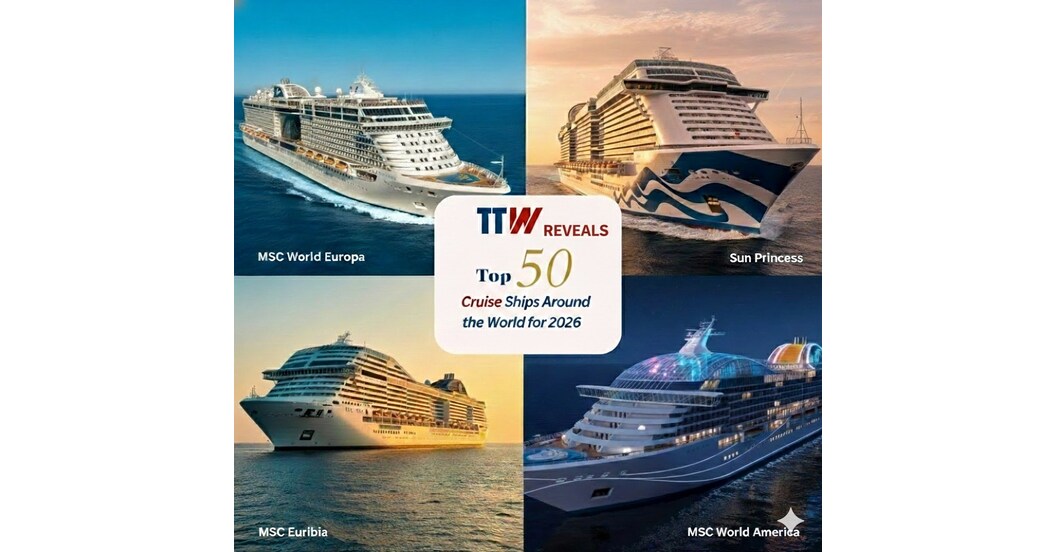
Core Insights - The 2026 rankings highlight a diverse array of cruise ships, showcasing modern amenities and unique experiences tailored for various traveler preferences [1][2] - The cruise industry is evolving towards experience-led itineraries that prioritize cultural and thematic relevance over traditional luxury [60][64] Industry Trends - **Experience-Led Itineraries**: Modern travelers are increasingly drawn to cruises that offer narrative-driven experiences, enhancing emotional connections to destinations [60] - **Seasonal Timing**: The appeal of cruise itineraries is significantly influenced by seasonal factors, with optimal climate conditions and wildlife activity driving demand [61] - **Destination Immersion**: Longer port stays and access to secondary destinations are becoming essential for cultural engagement, allowing travelers to connect more deeply with locations [62] - **Luxury Cruising**: The luxury segment is shifting focus towards privacy and personalization, favoring smaller ships that provide intimate experiences [63] Ranking Methodology - The Top 50 Cruise Ships ranking is based on a comprehensive evaluation of itinerary strength, destination relevance, experiential depth, seasonal alignment, and overall traveler appeal [65][67]


Grading Bob Iger's Performance in His Second Term as Disney's CEO
The Motley Fool· 2026-02-07 16:27
Core Viewpoint - Bob Iger has officially announced his retirement again, with the current head of theme parks and cruise lines set to take over as CEO by the end of 2026, prompting discussions on Disney's current position compared to when Iger returned from retirement [1]. Group 1 - Disney's current CEO, Bob Iger, will retire at the end of 2026, marking a significant leadership transition for the company [1]. - The new CEO will be the head of theme parks and cruise lines, indicating a focus on these segments moving forward [1]. - Discussions among Disney fans reflect on whether the company is in a better position now than it was when Iger returned from retirement [1].