Workflow
Ford Motor(F)
icon
Search documents
因仪表盘显示故障 福特(F.US)在美召回超35万辆F系列皮卡
Zhi Tong Cai Jing· 2025-08-27 08:38
Group 1 - Ford has announced a large-scale recall in the U.S. involving 355,656 units of the 2025-2026 F-Series trucks and the 2025 F-150 model due to a dashboard display software issue [1] - The National Highway Traffic Safety Administration (NHTSA) reported that the affected vehicles may experience a blank screen at startup, preventing the display of safety-related indicators and information, thus increasing the risk of accidents [1] - Ford plans to address the defect through dealer service or wireless software updates, and has not received any accident reports directly related to this issue [1] Group 2 - Earlier this month, Ford initiated another recall for over 103,000 units of the 2023-2025 F-150 trucks due to a potential axle bolt fracture hazard [2] - The NHTSA investigation indicated that the faulty bolts could damage the rear axle hub spline components, leading to vehicle skidding or loss of drive power, with extreme cases potentially causing the vehicle to roll away if the parking brake is not engaged [1] - The recalls highlight the challenges Ford faces in quality control, especially as the F-150 series has faced multiple recalls in recent years for issues related to the powertrain and braking systems [2]
Will Ford Pro's Market Share Gains in the US and Europe Continue?
ZACKS· 2025-08-25 16:26
Core Insights - Ford Pro is the primary growth engine for Ford Motor Company, with significant transformation in revenue streams over the past year [1][3] - The segment's disciplined investment strategy has led to increased market share in both the U.S. and Europe [2][3] - Ford Pro's revenues grew by 11% year over year, reaching nearly $19 billion, with a strong EBIT margin of 12.3% [3][9] Revenue and Market Share - Ford Pro's aftermarket parts, software, and services contributed to 17% of its EBIT, approaching the 20% target for next year [1] - Market share increased by 1 percentage point in the U.S. and 3.2 points in Europe, supported by a diverse vehicle lineup [2][9] - The segment's capital investment has accelerated, with dealers contributing $2 billion since 2022 to enhance service capacity [2][9] Performance Metrics - Uptime, a key metric for commercial customers, improved with a 20% reduction in customer repair times over the past year [2][9] - Ford Pro's EBIT margin of 12.3% was driven by a strong product lineup and disciplined pricing [3][9] - The company expects strong demand in the second half of the year, aided by policy changes and a potential recovery in small business activity [3] Competitive Landscape - Ford Pro's growth is contrasted with competitors, as General Motors retains a leading market share of 17.3% in the U.S. [5] - Tesla is losing market share, currently below 50%, down from 63% in 2022, indicating a shift in competitive dynamics [6] Valuation and Estimates - Ford's stock has outperformed the Zacks Automotive-Domestic industry, gaining 18.6% year to date compared to the industry's decline of 13.9% [8] - The stock appears undervalued with a forward price-to-sales (P/S) ratio of 0.29, significantly below the industry's 2.79 [10] - The Zacks Consensus Estimate for 2025 and 2026 EPS has increased by 2 cents and 5 cents, respectively, in the past week [11]
TSLA or F: Which Stock Deserves a Place in Your EV Portfolio?
ZACKS· 2025-08-25 13:30
Core Insights - Tesla, once the dominant name in the electric vehicle (EV) market, is now facing significant challenges as competition increases and demand weakens [2][3][24] - Ford is repositioning its strategy towards affordable EVs, aiming to capture a broader market segment [10][13][25] Tesla's Current Situation - Tesla experienced its first annual delivery decline in 2024, with Q1 and Q2 2025 deliveries falling 13% and 13.4% year over year, respectively, totaling 384,122 vehicles [3][10] - The decline is attributed to demand issues rather than production, as inventory levels have increased despite steady production [4][8] - The lack of new mainstream vehicle launches and increased competition have contributed to Tesla's struggles [4][5] - CEO Elon Musk has indicated that Tesla is expected to deliver fewer cars in 2025 than in 2024, marking a significant shift from previous growth expectations [7][24] - Financially, Tesla reported its steepest revenue drop in over a decade, with automotive revenues down 12% and gross margins narrowing to 17% [8][24] Ford's Strategic Shift - Ford is pivoting towards affordable EVs with its Universal EV Platform, targeting a $30,000 midsize pickup by 2027 [10][14] - Despite facing losses of approximately $12 billion in its EV division over the past two and a half years, Ford is adapting its strategy rather than doubling down on high-end models [11][13] - The new platform aims to improve production efficiency, reducing parts and assembly times significantly, which is crucial for achieving the $30,000 price target [16][25] - Ford's stock has increased by 18% year-to-date, contrasting with Tesla's 16% decline, and Ford is trading at a lower sales multiple compared to Tesla [10][20] Market Positioning and Valuation - Ford's forward sales multiple stands at 0.29, below its five-year median, while Tesla's is at 10.58, indicating a potential overvaluation [20] - Consensus estimates for Ford's earnings per share (EPS) have improved, while those for Tesla's have declined over the past 60 days [22][23] - The choice between investing in Tesla or Ford hinges on investor preferences for premium brands versus legacy automakers focusing on affordability and scale [24][25]
网约车巨头优步CEO:中国车企创新和发展速度,堪称非凡
Guan Cha Zhe Wang· 2025-08-25 11:26
Core Insights - Chinese electric vehicle (EV) manufacturers are experiencing unprecedented innovation and competition, leading to significant advancements in the industry [1][3] - The intense domestic competition in China is fostering a survival-of-the-fittest environment, which is beneficial for the growth of companies like BYD and Geely [3] - Chinese EV companies are increasingly investing overseas, with 2022 marking the first year that their foreign investments surpassed domestic investments, totaling approximately $16 billion compared to $15 billion domestically [4] Group 1 - Uber CEO Dara Khosrowshahi praised the Chinese EV industry for its remarkable innovation and competitiveness, attributing its success to fierce local competition [1][3] - Khosrowshahi noted that every major city or province in China aims for the success of its local EV manufacturers, resulting in over 100 automakers competing in a supportive governmental framework [3] - The competitive landscape in China has led to significant advancements in technology, cost, and quality, putting pressure on Western automakers like Tesla and Ford [1][4] Group 2 - In 2022, Chinese EV supply chain companies invested approximately $16 billion overseas, marking a historic shift where foreign investments exceeded domestic ones for the first time since 2014 [4] - Battery manufacturers are leading the charge in international expansion, while EV manufacturers still focus primarily on the domestic market [4] - Prior to this shift, around 80% of investments by Chinese EV companies were concentrated in the domestic market, indicating a significant change in strategy [4]
Is Ford's Lucrative Dividend About to Get Slashed?
The Motley Fool· 2025-08-25 08:20
Core Viewpoint - Analysts predict a potential cut in Ford's dividend due to various internal and external challenges, despite the company currently maintaining a 5.2% yield on its dividend [1] Financial Performance - Ford is expected to pay out $0.75 per share in dividends for 2025, which includes a base quarterly payout and a supplemental dividend of $0.15 per share [4] - The company anticipates a total dividend payout of approximately $3 billion for the year, with a payout ratio of around 86% based on adjusted free cash flow estimates of $3.5 billion to $4.5 billion [5][6] External Challenges - Ford faces significant challenges from tariffs, which are projected to impact pre-tax earnings by about $2 billion, an increase from a previous estimate of $1.5 billion [2] - Quality concerns and rising warranty costs have also negatively affected Ford's financial performance [2] Cash Position - Ford's balance sheet shows over $28 billion in cash and $46 billion in liquidity, providing the company with the ability to fund dividends and invest in growth opportunities despite short-term challenges [8] Shareholder Considerations - The Ford family, holding a significant voting power through Class B shares, received $55 million in dividends in 2024 and is likely to prefer maintaining dividend stability [9] - Competition with General Motors, which recently increased its dividend, adds pressure on Ford to maintain its own dividend to avoid negative optics [10] Future Outlook - Analysts express concerns about Ford's ability to maintain its dividend in the near term, but there is a belief that the company will focus on improving profitability in its Model-e division and generating higher-margin business from its Ford Pro division [10]
SK On美国工厂投产即过剩:电动化理想敌不过现实“寒流”
高工锂电· 2025-08-23 08:23
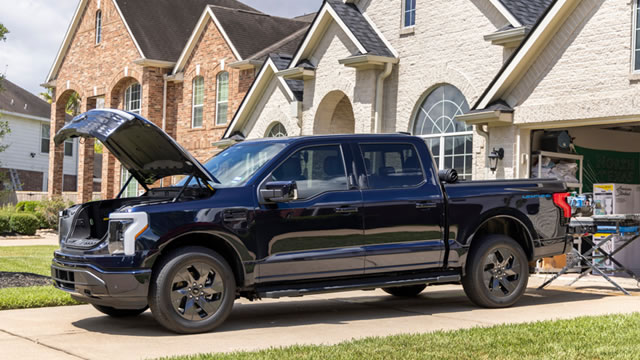
Core Viewpoint - The article discusses the challenges faced by American electric vehicle (EV) battery manufacturers, particularly focusing on Ford's BlueOval SK joint venture with SK On, which is struggling to find buyers for surplus batteries produced at its Kentucky plant shortly after starting mass production. The article highlights the impact of policy uncertainty and cost sensitivity on the EV market in the U.S. [2][3][4] Group 1: Production and Sales Challenges - BlueOval SK's Kentucky plant began mass production of high-density power batteries for Ford's F-150 Lightning, but sales pressures have led to underutilization of production capacity, with only 7,913 units sold in Q1 2025, a slight decline from the previous year [4] - Similar challenges are observed with Tesla and its battery supplier Panasonic, which has delayed the full production of its DeSoto battery plant to March 2027 due to sales setbacks [5] - The U.S. EV market is showing weaker growth compared to Europe and China, with a seasonally adjusted annual rate (SAAR) of 15.68 million vehicles in June, down from over 17 million in March and April [6] Group 2: Policy and Market Dynamics - The cancellation of tax credits under the Trump administration has led to decreased consumer expectations, prompting companies to adjust their EV and battery investment projects in the U.S. [6] - The American Clean Energy Association reported that about 21 GWh of planned battery capacity for 2028 has been canceled due to tariff and market uncertainties [7] Group 3: Technological Shifts - American battery manufacturers have traditionally focused on nickel-cobalt-manganese (NCM) technology, which offers high energy density but comes with high material costs [8][9] - The article notes a shift towards lithium iron phosphate (LFP) batteries, which are becoming more popular due to their cost-effectiveness, with companies like GM and Ford planning to transition some production lines to LFP [11][12] Group 4: Energy Storage Market - The demand for energy storage in the U.S. is expected to rise, with a projected 40 GWh of storage capacity needed in 2024, representing 20% of global demand [14] - Despite challenges, local production of storage batteries is increasing, with LG Energy and Tesla entering into a $4.3 billion agreement for LFP battery production in Michigan [15] Group 5: Future Outlook - The article emphasizes the need for American battery companies to quickly clarify effective technology investments and market strategies amid fluctuating policies and market conditions [18] - The potential for residential and commercial energy storage markets is highlighted, with record installations expected in 2024 [18]
20亿美元翻修工厂!福特2027年将推首款平价电动车,欲与中国电动车企竞争
Mei Ri Jing Ji Xin Wen· 2025-08-22 09:51
Core Viewpoint - Ford Motor Company announced a $5 billion investment in the U.S., with $2 billion allocated for a comprehensive renovation of its Louisville, Kentucky plant to produce affordable electric vehicles, starting with a mid-size four-door electric pickup priced around $30,000, set to launch in 2027 [1] Group 1: Investment and Production Plans - Ford is investing $2 billion to upgrade its Louisville plant for electric vehicle production, transitioning from gasoline vehicles to electric [1] - The first product based on the new Universal EV platform will be a mid-size electric pickup, with a starting price of $30,000, compared to the current F-150 Lightning starting at $54,800 [1] - A new Universal EV platform and production system have been introduced to enable cost-effective mass production of various vehicle types, reducing parts by 20% and fasteners by 25%, while assembly time is cut by 15% [1] Group 2: Battery Production and Technology - Ford announced a $3 billion investment to build a new battery factory in Michigan, set to produce low-cost lithium iron phosphate batteries starting in 2026, supported by CATL technology [2] Group 3: Competitive Landscape and Strategic Adjustments - CEO Jim Farley emphasized the need for these initiatives to compete with Chinese electric vehicle manufacturers like BYD and emerging startups, as well as large tech companies entering the automotive space [4] - Ford plans to reduce the scale of large electric vehicle development and production, having already canceled a three-row electric SUV and postponed the next-generation F-150 Lightning and E-Transit production to 2028 [4] Group 4: Financial Performance and Challenges - Ford's electric vehicle business has faced significant losses since its independence in 2022, with a projected loss of $5.5 billion in 2025, following a $4.9 billion loss in 2024 [4] - In Q2 2025, the electric vehicle segment continued to incur a $1.3 billion loss, with declining sales for key models like the F-150 Lightning and Mustang Mach-E [5] - Ford's performance in the Chinese electric vehicle market has been underwhelming, with limited offerings beyond the Ford electric Mustang and the E-Transit [5][7]
对话江铃福特刘继升:以“用户共创”重塑越野生态
Qi Lu Wan Bao· 2025-08-22 02:07
Core Viewpoint - The event "烈马创造营音乐派对" marks a shift from traditional car launches to a user co-creation model, emphasizing the integration of outdoor culture and community engagement in the automotive experience [1][6]. Group 1: User Engagement and Experience - The "福特纵横户外主题乐园" has attracted nearly 50,000 visitors since its trial operation, with a customer spending rate five times that of traditional attractions [3]. - The park offers diverse activities beyond vehicles, creating an "outdoor lifestyle community" that enhances user retention [3]. - The transformation of users from mere buyers to co-creators is exemplified by the "烈马创造营" campaign, which received nearly 2,800 creative submissions and engaged 610,000 voters [7]. Group 2: Brand Evolution and Market Strategy - Ford is transitioning from a brand that solely outputs products to a platform that encourages user expression and creativity, making user participation a valuable asset [9]. - The "纵横购" platform has achieved over 150 million yuan in revenue, offering flexible options for vehicle modifications, thus fostering ongoing dialogue with users [9]. - Ford is building an ecosystem that extends beyond the brand itself, with plans for differentiated experiences in new locations like 柳州乐园 [10]. Group 3: Commitment to Core Values - Despite the electric vehicle trend, Ford maintains a strategy that balances traditional fuel-powered vehicles with modern demands, emphasizing the unique functionality of off-road vehicles [11]. - The company aims to redefine the relationship between brand and users, focusing on inclusivity and diverse value creation [10]. Group 4: Future Outlook - The event signifies a potential new business paradigm where vehicles serve as a starting point, and users take center stage, with Ford facilitating a platform for self-discovery [13].
福特/SK On合资电池厂投产!
起点锂电· 2025-08-21 10:15
Core Viewpoint - The article discusses the challenges and strategies of SK On and Ford in their electric vehicle (EV) transformation, highlighting the need for collaboration, technological advancements, and market adaptation to overcome current difficulties [4][10]. Group 1: SK On's Strategies - SK On has initiated three major actions to self-rescue amid financial pressures, including advancements in solid-state battery technology, securing new orders, and restructuring within the capital market [7][8]. - The company is focusing on solid-state battery research, with plans to establish a dry electrode pilot line and develop a prototype using polymer-oxide composite gel electrolyte by the end of next year [7][8]. - SK On has secured a six-year contract with Nissan to supply 99.4 GWh of high-nickel soft-pack batteries, sufficient for approximately 2 million electric vehicles [8][9]. - A merger with SK Enmove is planned to enhance operational efficiency, with a capital infusion of 432 billion RMB to support business operations [9][10]. Group 2: Ford's Electric Vehicle Transition - Ford is committed to its electric transformation but faces significant challenges, including declining sales of electric vehicles in the U.S. and financial losses [10][12]. - The company has introduced the Universal EV platform aimed at producing a new electric pickup truck, with a starting price of approximately 215,000 RMB, primarily targeting the U.S. market [11][12]. - Financially, Ford reported a net profit decline in Q1 2025, with electric vehicles losing 850 million USD in Q1 and 1.1 billion USD in Q2, indicating a loss of 42,000 USD per electric vehicle sold [12][13]. - Ford's CEO emphasized the need for efficiency and innovation to compete with Chinese electric vehicle manufacturers, acknowledging the challenges posed by geopolitical risks and supply chain vulnerabilities [13][14].
小米旗下瀚星创投等入股纬钛机器人;美国一波音飞机在宜昌改装后交付出境丨智能制造日报
创业邦· 2025-08-21 03:47
Group 1 - Xiaomi's subsidiary, Hanxing Venture Capital, has invested in Weitai Robotics, which focuses on intelligent robot development and sales, as well as AI software and system integration services [2] - XGIMI's first projector has officially rolled off the production line at its Vietnam factory, which is part of its strategy to expand globally, with overseas revenue reaching 1.086 billion yuan in 2024, a year-on-year increase of 18.94%, accounting for 31.89% of total revenue [2] - A Boeing 737-800 aircraft from World Star Aviation has been successfully modified and exported after maintenance at a local MRO company in Yichang, which has completed over 500 aircraft repairs since its establishment in 2016 [2] - Ford and SK On's joint venture, BlueOval SK, has commenced production at its first battery factory in Kentucky, which will supply batteries for the all-electric Ford F-150 Lightning [2]