GM(GM)

Search documents
4 Auto Stocks Up More Than 50% YTD & Still Worth Buying for 2026
ZACKS· 2025-12-24 16:51
Core Insights - The U.S. auto industry has shown resilience in consumer demand despite volatility in sentiment and demand, with notable stock performance from companies like General Motors, Strattec Security, Garrett Motion, and REV Group, each gaining over 50% year to date [1] Industry Overview - 2025 was marked by policy uncertainty, particularly around trade and tariffs, which initially created concerns about vehicle pricing and supply chains but ultimately led to a surge in demand as consumers rushed to make purchases [4] - The mid-year surge in electric vehicle (EV) sales was driven by consumers seeking to qualify for a $7,500 federal tax credit before its expiration, resulting in the strongest quarter for EV sales [5] - Following the expiration of EV incentives, the fourth quarter saw a slowdown in demand, yet U.S. new-vehicle sales are projected to reach approximately 16.3 million units in 2025, nearly 2% higher than the previous year [6] Future Outlook - For 2026, the market is expected to stabilize with sales settling around 16 million units, driven by genuine consumer demand rather than temporary incentives [7] - Affordability will be a key theme, with higher-income buyers supporting demand for larger vehicles while cost-conscious consumers shift towards used options [8] Company Highlights - **General Motors (GM)**: The leading automaker in the U.S. with strong brand demand, upcoming product launches, and significant revenue from software offerings, including $2 billion from Super Cruise and OnStar [9][10] GM stock has increased by 55% in 2025, with a projected 13% EPS growth for 2026 [11] - **Strattec Security (STRT)**: A key player in vehicle access and security systems, transitioning towards smarter solutions and benefiting from operational efficiencies, with a stock increase of 95% in 2025 and a projected EPS of $5.24 for fiscal 2026 [12][14] - **Garrett Motion (GTX)**: Focused on advanced turbocharging and zero-emission technologies, with new contracts and a raised profit outlook, the stock has risen by 93% in 2025, with a projected 19% EPS growth for 2026 [15][17] - **REV Group (REVG)**: Specializes in manufacturing specialty vehicles and is merging with Terex to enhance market position, with expectations of $75 million in annual synergies by 2028. The stock has increased by 96% in 2025, with a projected 38% EPS growth for fiscal 2026 [18][20]





General Motors’ Quarterly Earnings Preview: What You Need to Know
Yahoo Finance· 2025-12-24 07:23
Core Insights - General Motors Company (GM) is a leading global automotive manufacturer with a market cap of $77.5 billion, focusing on a diversified portfolio that includes internal combustion vehicles, electric vehicles (EVs), autonomous technology, and mobility services [1] Financial Performance - GM is expected to report an adjusted profit of $2.21 per share for Q4, reflecting a 15.1% increase from $1.92 per share in the same quarter last year [2] - In fiscal 2025, GM's adjusted EPS is projected to decrease by 2.5% to $10.34, but a rebound of 12.7% to $11.65 per share is anticipated in fiscal 2026 [3] Stock Performance - GM's stock has increased by 57.4% over the past 52 weeks, significantly outperforming the S&P 500 Index's 15.7% and the Consumer Discretionary Select Sector SPDR Fund's 6.6% gains during the same period [4] - On December 1, GM reached a new 10-year high in trading, indicating growing investor confidence and a successful transformation since its bankruptcy during the financial crisis [5] Analyst Ratings - GM holds a consensus "Moderate Buy" rating, with 13 "Strong Buys," three "Moderate Buys," nine "Holds," and three "Strong Sells" among 28 analysts [6] - The current trading price is above the mean price target of $74.85, with a Street-high target price of $110 suggesting a potential upside of 32.9% from current levels [6]
马斯克老对手或接手通用
Guan Cha Zhe Wang· 2025-12-24 04:55
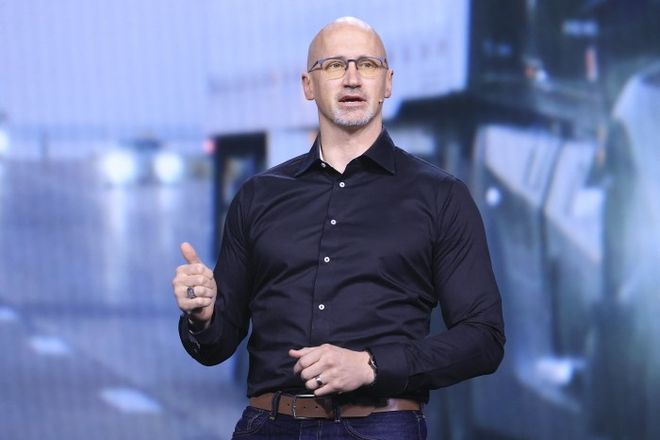
Core Viewpoint - Sterling Anderson, a technology expert in robotics and autonomous driving, has quickly become a focal point within General Motors (GM) and the capital markets since joining the company this summer, especially as CEO Mary Barra approaches her tenth year in leadership [1][3]. Group 1: Leadership and Succession - Anderson is viewed by some board members and investors as a potential "dark horse successor" to CEO Mary Barra [3]. - His rise reflects GM's current challenges in the face of intensified competition in electrification and automation, particularly from Tesla and Waymo in the U.S. and Chinese companies in other markets [3][4]. - Anderson's background includes working with Elon Musk at Tesla and co-founding Aurora Innovation, a self-driving truck company valued at approximately $8 billion [4]. Group 2: Strategic Direction - Anderson's appointment comes after a period of instability in GM's leadership, with several potential CEO candidates leaving the company [4]. - He has taken on significant responsibilities, overseeing the integration of artificial intelligence and software systems into GM's vehicle and business frameworks, making him one of the few executives at GM to control the core direction of "hardware-software integration" [3][4]. - The company is at a critical juncture, needing to define whether it will transition into a technology company or maintain its focus on traditional large fuel vehicles [5]. Group 3: Challenges and Controversies - Since Anderson's arrival, GM has seen multiple senior technical executives depart, raising concerns about his management style and the direction of the company [7][8]. - Anderson's new technology strategy aims to launch a production model capable of "driving without line of sight" by 2028, initially applied to Cadillac electric SUVs, while also focusing on cost-effective batteries and AI technology [7]. - Internally, opinions on Anderson are mixed; some welcome his leadership, while others question his decisions regarding personnel and performance management [8].
General Motors Is Investigating Air Bag That Exploded in Recalled but Unrepaired Pickup Truck
WSJ· 2025-12-23 22:24
Group 1 - A passenger in the GMC Sierra was injured due to a defective air bag [1] - The GMC Sierra had an open recall related to the air bag issue [1]
Wealthy buyers expose distressing auto industry trend
Yahoo Finance· 2025-12-23 19:03
Market Trends - Car buyers rushed to dealerships in the first half of the year to secure purchases before anticipated price increases due to higher tariffs [1] - Automakers provided substantial incentives to maintain sales momentum, despite rising prices [3] - Consumer interest in the auto industry declined in the second half of the year as incentive spending decreased and car prices rose [3] Sales Data - New car sales showed weakness in Q3 and continued to decline in Q4, with December's annual sales rate expected to be around 15.9 million, down from 16.8 million in December of the previous year but up from 15.6 million in November [4] - In November, the average price paid for new vehicles reached $49,814, a 1.3% increase year-over-year and only $54 higher than October's average [5] Incentives and Pricing - Dealer incentives decreased, with the average discount on cars falling to 6.7% in November from 7.9% the previous year [9] - Throughout 2025, average incentives are projected to be 7% of the final sales price [9] Consumer Behavior - Many new-car buyers are in their peak earning years and are less sensitive to price, opting for higher-end vehicles that offer desired features [10]


Ford or General Motors: Which Stock to Buy Heading into 2026?
ZACKS· 2025-12-23 16:50
Core Insights - General Motors (GM) and Ford are competing in the American auto industry, with GM currently showing stronger stock performance and fundamentals as they both transition towards electric and software-defined vehicles [1][2]. General Motors - GM is the top-selling automaker in the U.S. with approximately 17% market share, driven by strong demand for its core brands, particularly pickups and SUVs [3]. - The company is experiencing a recovery in China, with vehicle sales increasing by 10% year over year in Q3 2025, marking two consecutive quarters of growth [4]. - GM's software and services are significant growth drivers, generating around $2 billion in revenues year-to-date, with deferred software revenues rising over 90% year over year to $5 billion by the end of Q3 [5]. - GM is strategically involved in securing domestic battery materials through a joint venture in Lithium Americas' Thacker Pass project, positioning itself as a major lithium source in North America [6]. - The company has been shareholder-friendly, repurchasing over $3.5 billion in stock, reducing its share count by 15% year over year, with an additional $2.8 billion available for buybacks [7]. - The Zacks Consensus Estimate indicates a slight 0.3% sales decline for GM in 2026, but a 13% increase in earnings per share (EPS) is expected [7]. Ford - Ford is adjusting its strategy in response to slower EV adoption and rising costs, focusing more on hybrids, gas-powered vehicles, and smaller electric models rather than large EVs [8]. - The introduction of Ford's Universal EV Platform aims to reduce costs and enhance flexibility, with the first vehicle expected to be a midsize electric pickup starting production in 2027 [9]. - Ford anticipates a significant turnaround in its EV unit, expecting to reach breakeven by 2029, but this transition will incur approximately $19.5 billion in special items, impacting cash flow mainly in 2026 and 2027 [11]. - Ford Pro is a bright spot for the company, showing strong demand for Super Duty trucks and growing software and service revenues [12]. - The Zacks Consensus Estimate suggests a 3% decline in Ford's sales for 2026, while earnings are projected to increase by about 35% [13]. Comparative Analysis - GM is viewed as a more compelling investment heading into 2026 due to its focus on long-term profitability, narrowing EV-related losses, and strong momentum in software and performance in China [14]. - Ford's strategic adjustments are sensible, but the one-time charges related to its EV reset and delayed profitability timeline for its Model e present challenges [15]. - Valuation favors GM, trading at a forward earnings multiple of 7.14x compared to Ford's 9.55x, making GM the more attractive stock [16].
3 Auto Stocks Accelerating as EV Sales Surge Into 2026
ZACKS· 2025-12-23 16:01
Industry Overview - Global electric vehicle (EV) sales reached approximately 2 million units in November 2025, totaling around 18.5 million vehicles year-to-date, representing a 21% increase compared to the same period in 2024 [1][10] - EVs accounted for over one-quarter of all new cars sold worldwide in 2025 [1][10] - Europe experienced a significant growth in EV sales, with November sales up 36% year-over-year, driven by new incentives and a broader range of available models [2][10] Market Dynamics - China and Europe are expected to remain leaders in EV adoption, with emerging regions like the Middle East and Africa anticipated to see faster growth in 2026 due to improved financing and more affordable models [4] - The global EV penetration is projected to reach 26.7% in 2026 [4] - The expansion of charging infrastructure is critical for EV adoption, with ongoing investments from public and private sectors enhancing the viability of long-distance travel for EV users [5] Company Insights General Motors (GM) - GM is the top-selling automaker in the U.S., holding a 17% market share in Q3 2025, up 50 basis points year-over-year, and retained its 2 spot in the U.S. EV market with 67,000 deliveries and a 16.5% share [7][9] - The company benefits from the federal government's Auto Tariff Offset Process, enhancing its cost competitiveness and supporting U.S.-based manufacturing [8] - GM has a Zacks Rank 1, with a consensus estimate for fiscal 2026 EPS implying year-over-year growth of 12.9% [9] BorgWarner (BWA) - BorgWarner is a leader in clean and efficient technology solutions for combustion, hybrid, and electric vehicles, securing several new programs in Q3 2025 [11] - The company booked 17 awards over the past six months, broadening its customer base and increasing hybrid and EV exposure [12] - BWA carries a Zacks Rank 2, with a consensus estimate for fiscal 2026 sales and EPS implying year-over-year growth of 2.1% and 6.8%, respectively [13] Blue Bird Corporation (BLBD) - Blue Bird is a leading player in low- and zero-emission school buses, well-positioned to benefit from long-term trends such as a growing school-age population and ongoing federal funding for clean transportation [14] - The company expects fiscal 2026 revenues of $1.5 billion and adjusted EBITDA of $220 million, anticipating continued profitable growth [15] - BLBD carries a Zacks Rank 2, with a consensus estimate for fiscal 2026 sales implying year-over-year growth of 5.7% [16]



EV realism is here. How automakers react in 2026 will be telling
CNBC· 2025-12-23 12:00
Core Viewpoint - The U.S. automotive industry is transitioning to a more realistic approach regarding electric vehicles (EVs), moving away from initial euphoria to a focus on consumer demand and market realities [2][10]. Industry Overview - Early 2020s saw high expectations for EVs, but consumer demand did not meet projections, leading automakers to reassess their strategies [2][19]. - Automakers have incurred significant financial losses, with GM reporting a $1.6 billion impact from reduced EV investments and Ford expecting $19.5 billion in restructuring costs [5][19]. Consumer Demand and Market Dynamics - U.S. EV sales peaked at 10.3% of the new vehicle market in September but fell to an estimated 5.2% in the fourth quarter [9]. - The end of federal incentives for EV purchases in September has contributed to a slowdown in demand and sales [24][25]. Strategic Shifts by Automakers - GM plans to focus on large trucks and SUVs, with limited expansion in EV offerings, while also considering plug-in hybrids [14]. - Ford is shifting investments towards hybrid vehicles and smaller, more affordable EVs, canceling plans for a new generation of large all-electric trucks [15]. - Stellantis is deprioritizing EVs, including for its Jeep brand, to boost U.S. sales [15]. Long-term Outlook - Industry experts believe the long-term direction towards electrification remains, but the timeline is being adjusted, with EVs expected to comprise 19% of the U.S. market by 2030 [10][12]. - Automakers are expected to expand hybrid offerings to align with current consumer preferences [10]. Tesla's Influence - Tesla's success has created a unique market for its brand rather than a general market for EVs, influencing other automakers' strategies [20][21]. - The influx of new EV companies has led to many failures, highlighting the challenges in replicating Tesla's success [22][23].

特朗普停止CAFE标准,美国能源、环境与产业政策急转弯
Zhong Guo Qi Che Bao Wang· 2025-12-23 06:29
Core Viewpoint - The Trump administration's decision to halt the Corporate Average Fuel Economy (CAFE) standards marks a significant shift in U.S. automotive regulation, impacting energy, environmental, and industrial policies [1]. Group 1: Policy Changes - The new regulations set the fuel efficiency target for 2031 vehicles at 34.5 miles per gallon (mpg), a substantial decrease of 31.5% from the previous target of 50.4 mpg [4]. - The elimination of the CAFE standards means automakers will no longer need to invest heavily in research and development to meet stringent fuel efficiency requirements, allowing them to focus on producing more profitable traditional fuel vehicles and larger models [5]. Group 2: Economic Implications - The policy change is expected to save consumers at least $1,000 when purchasing new vehicles, with potential for even greater savings [3]. - Under the Trump administration, $700 billion has been invested in the U.S. automotive industry, with significant investments announced by major automakers such as Ford and Stellantis [3]. Group 3: Industry Reactions - The automotive industry has largely welcomed the decision, with industry leaders stating that the previous CAFE standards were unrealistic and burdensome [5]. - The oil industry has expressed optimism that higher fuel consumption vehicles will boost gasoline demand and support traditional energy sectors [6]. Group 4: Environmental Concerns - The cessation of CAFE standards is anticipated to lead to stagnation or regression in vehicle fuel efficiency, resulting in increased fuel costs for consumers [6]. - Critics argue that the rollback of these standards could hinder technological advancements in the automotive sector, which have historically been driven by the need to meet fuel efficiency regulations [6].


车圈俩月换了6个CEO,29家企业327名高管变动,掀起年终人事巨变
3 6 Ke· 2025-12-22 23:18
Core Insights - The automotive industry is experiencing a significant wave of executive changes, with over 327 high-level personnel adjustments reported in the last two months, including six CEOs [2][3][4] - The restructuring reflects a strategic shift among companies as they prepare for intensified competition in 2026, focusing on leadership renewal, efficiency, and core business enhancement [4][5][6] Group 1: Executive Changes in State-Owned Enterprises - Major state-owned automotive groups such as Dongfeng, Changan, GAC, and BAIC have undergone frequent personnel changes, aiming for younger and more professional decision-making teams [5][6][7] - GAC has appointed its first "post-70s" general manager, indicating a move towards clearer internal responsibilities and optimized decision-making [7] - Dongfeng has brought in external talent to drive its smart transformation, while Changan has filled its long-vacant president position, reflecting a commitment to leadership stability [11][13][15] Group 2: Executive Departures in Private Enterprises - Private automakers like BYD, Geely, and Great Wall have seen significant executive turnover, with key figures leaving amid fierce market competition [17][19] - Chery has emerged as an active talent poacher, recruiting from competitors to enhance its marketing and technology capabilities [19][21] Group 3: New Forces in the Automotive Sector - New energy vehicle companies are making urgent personnel adjustments to tackle pressing challenges, with Li Xiang of Li Auto taking direct control of human resources to streamline operations [22][24] - Xiaomi's automotive division is focusing on sales growth, with top executives taking on additional responsibilities to drive performance [26][28] - XPeng Motors is enhancing its technical capabilities by hiring AI experts, indicating a strategic focus on core technology development [29] Group 4: Changes in Foreign and Joint Venture Brands - Major foreign automotive companies, including GM and Tesla, are undergoing significant executive changes, with GM's software and AI teams experiencing notable turnover [32][34][36] - German luxury brands are also reshuffling their leadership, with key executives transitioning to new roles to align with future strategic goals [38][40][42] Group 5: Supply Chain and Component Manufacturers - The supply chain sector is also witnessing high-frequency personnel changes, with Huawei's Yu Chengdong taking on additional leadership roles to strengthen its market position [46][49] - Traditional component manufacturers like Continental and ZF are focusing on efficiency and business concentration through their leadership adjustments [51][52] Conclusion - The recent wave of personnel changes in the automotive industry signifies a critical reassessment of survival strategies amid the ongoing transition towards electrification and intelligence [53]