
GM(GM)

Search documents
Did General Motors Company Insiders Breach their Fiduciary Duties to Shareholders?
Prnewswire· 2026-03-12 18:50
Core Viewpoint - Halper Sadeh LLC is investigating potential breaches of fiduciary duties by certain officers and directors of General Motors Company, which may affect shareholder rights and options [1][2]. Group 1: Shareholder Rights and Options - Long-term shareholders of General Motors may seek corporate governance reforms, financial incentives, or other benefits through legal avenues [2]. - Shareholders are encouraged to contact Halper Sadeh LLC to discuss their rights and options at no cost [1]. Group 2: Importance of Shareholder Participation - Shareholder involvement is crucial for improving company policies and practices, leading to enhanced transparency and accountability, which can ultimately increase shareholder value [3]. Group 3: Legal Representation and Achievements - Halper Sadeh LLC represents global investors affected by securities fraud and corporate misconduct, having successfully implemented corporate reforms and recovered millions for defrauded investors [4].



GM recalls more than 17,000 Buicks over a part that could cause drivers to lose control
Fastcompany· 2026-03-12 14:01
Core Viewpoint - The article highlights the need for owners of older Buick Regal vehicles to visit their nearest dealer for potential issues related to their cars [1] Group 1 - The article indicates that older Buick Regal models may require servicing or repairs that can only be addressed by authorized dealers [1]
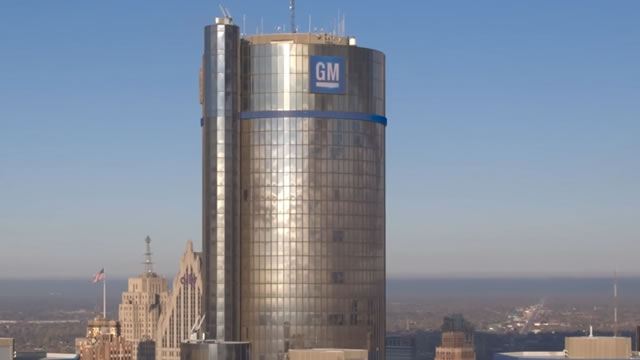
GM recalls 17K vehicles over rear toe link fracture that could lead to crashes
Fox Business· 2026-03-12 03:45
Core Viewpoint - General Motors has issued a recall affecting over 17,000 vehicles due to a rear toe link fracture that increases the risk of a crash [1] Group 1: Recall Details - The recall affects approximately 17,050 Buick vehicles, specifically targeting the rear toe link fracture that can lead to loss of vehicle control [1] - The affected models include about 4,751 2012 Buick Regals and approximately 12,299 2013 Buick Regals sold or registered in over 20 "high corrosion" states [2][5] - Only about 1% of the recalled vehicles may have the defect, attributed to a supplier's failure to apply proper corrosion protection [7] Group 2: Geographic Scope - The "high corrosion" states include Connecticut, Delaware, Illinois, Indiana, Iowa, Kentucky, Maine, Maryland, Massachusetts, Michigan, Minnesota, Missouri, New Hampshire, New Jersey, New York, Ohio, Pennsylvania, Rhode Island, Vermont, Virginia, West Virginia, and Wisconsin, along with Washington, D.C. [5] Group 3: Remedial Actions - General Motors dealerships will replace the rear suspension toe links and adjuster fasteners at no cost to the owners [9] - Owner notification letters are expected to be mailed on April 13 [9]

Why Is General Motors Betting on India's Auto Parts Market?
ZACKS· 2026-03-11 14:41
Core Insights - General Motors Company (GM) is re-entering the Indian automotive market by focusing on the automotive parts business rather than vehicle sales, targeting the lucrative aftermarket sector [1][4] Group 1: Market Strategy - GM has relaunched its global aftermarket brand ACDelco in India through a licensing partnership with Assurance International Limited, which will produce and distribute ACDelco-branded batteries and lubricants [2][8] - The company aims to capitalize on India's growing vehicle repair and replacement ecosystem, with the total number of vehicles in operation exceeding 300 million and the aftermarket sector valued at over $12 billion annually [4][8] Group 2: Investment and Production - Assurance has invested approximately Rs 180 crore in a lubricant blending and packaging facility with a daily capacity of 100,000 liters, and plans to invest around Rs 300 crore in a battery manufacturing plant expected to produce 25,000 units per day by April [5][6][8] - ACDelco's initial product lineup in India will include automotive batteries and high-performance lubricants for both passenger and commercial vehicles, manufactured locally [5][8] Group 3: Financial Performance - GM's stock has outperformed the Zacks Automotive-Domestic industry, with shares gaining 28.1% compared to the industry's growth of 9.9%, while competitors Ford and Tesla have seen gains of 4.8% and 0.8%, respectively [7][8] - From a valuation perspective, GM is trading at a forward sales multiple of 0.36, significantly lower than the industry's 3.3, indicating it may be undervalued [9] Group 4: Earnings Estimates - The Zacks Consensus Estimate for GM's EPS for 2026 and 2027 has increased by 3 cents and 8 cents, respectively, over the past week [10]

Does Iran War Show Ford And GM Turned In The Wrong Direction?
Yahoo Finance· 2026-03-11 13:30
Oil Market Insights - The ongoing war in Iran could significantly impact global oil supply, with the potential for crude prices to rise above $100, and some analysts predicting prices could reach $150 or even $200 [2][3] - The International Energy Agency may release 400 million barrels of oil to mitigate supply concerns, while the US might also tap into its Strategic Petroleum Reserve [2] Automotive Industry Trends - General Motors (GM) shares have decreased by 8% this year, while Ford has seen a 7% drop, primarily occurring in recent days [4] - Both GM and Ford previously exited the electric vehicle (EV) market, believing that Chinese companies would dominate the sector, leading to significant write-offs for both companies [5] - The Department of Energy highlights that EVs offer lower fuel costs compared to gas-powered vehicles, especially as gas prices rise, suggesting that the decision to exit the EV market may not have been optimal for GM and Ford's future [6] AI Investment Opportunities - A notable analyst has identified ten AI companies that could yield significant returns, with one company dominating a $100 billion equipment market and another addressing a major bottleneck in AI data centers [7][8]

General Motors (GM) Q4 Adjusted EPS Beats at $2.51 as Company Hikes Dividend 20%, Adds $6B Buyback
Yahoo Finance· 2026-03-11 07:20
Group 1 - General Motors Company (NYSE:GM) reported Q4 adjusted earnings per share (EPS) of $2.51, exceeding Wall Street's expectations of $2.20, despite a slight revenue miss at $45.29 billion [1][7] - The company announced a 20% increase in its quarterly dividend to 18 cents per share and authorized a new $6 billion stock repurchase program to enhance stock value [1][7] - In 2025, GM faced over $7.2 billion in special charges due to a strategic pullback from electric vehicles and operations in China, leading to a reported net loss for Q4, although core North American operations remained profitable [2] Group 2 - For 2026, GM provided optimistic guidance, forecasting adjusted EBIT between $13 billion and $15 billion and EPS in the range of $11 to $13, with a goal to return North American adjusted profit margins to between 8% and 10% [3] - The 2026 outlook includes a 15% tariff on vehicles imported from South Korea, with ongoing trade negotiations being monitored that could affect entry-level models like the Chevrolet Trax [3] - GM operates through three segments: GM North America, GM International, and GM Financial, focusing on designing, building, and selling trucks, crossovers, cars, and automobile parts worldwide [4]
How Did General Motors Make the 2027 Bolt Its Most Affordable EV?
ZACKS· 2026-03-10 15:41
Core Insights - General Motors Company's (GM) 2027 Chevrolet Bolt will be priced at an MSRP of $28,995, making it the most affordable electric vehicle (EV) in the United States [1][8] - The new model aims to enhance driving range, charging speed, and technology while maintaining a strong value proposition [1] Cost Reduction and Engineering - Cost reductions for the 2027 Bolt were achieved through economies of scale and shared components from GM's broader EV portfolio, rather than by removing features [2][4] - The vehicle features larger displays, including an 11-inch driver screen and an 11.3-inch touchscreen, which were adapted from GM's mid-size trucks [3] Performance Enhancements - The 2027 Bolt maintains the same battery capacity but gains approximately 15 additional miles of range due to improved efficiency from shared power electronics and motor systems [3] - The introduction of a new LFP battery allows for faster charging speeds of up to 150 kW, marking GM's first use of this battery chemistry in North America [4][8] Competitive Landscape - Rivian Automotive, Inc. plans to launch the R2 model, a midsize SUV with a starting price around $45,000, targeting budget-conscious consumers [5] - Ford Motor Company is set to introduce a new lineup of affordable EVs in 2027, including a midsize pickup truck expected to start at about $30,000 [6] Financial Performance - GM's stock has outperformed the Zacks Automotive-Domestic industry, with shares gaining 27.2% compared to the industry's growth of 16.1% [7] - GM is currently trading at a forward price/sales ratio of 0.36, which is significantly lower than the industry's ratio of 3.29, indicating potential undervaluation [10] Earnings Estimates - The Zacks Consensus Estimate for GM's EPS for 2026 and 2027 has seen minor adjustments, with a decrease of 3 cents for 2026 and an increase of 8 cents for 2027 [12]

Major General Malcolm B. Frost (Ret.
Globenewswire· 2026-03-10 12:12
Core Insights - Gaxos.ai Inc. has announced the appointment of retired Major General Malcolm B. Frost to the America First Defense (AFD) Drone and Robotics Advisory Council, aimed at guiding next-generation counter-drone innovation, AI, and robotics [1][3] Group 1: Company Overview - Gaxos.ai is focused on developing artificial intelligence applications across various high-growth sectors, including defense, health, and productivity [7] - America First Defense specializes in advanced defense systems, particularly airborne counter-drone technology and biomimetic soft robotics for defense and homeland security [6] Group 2: Leadership and Expertise - Major General Frost brings extensive operational and strategic experience in modern warfare and advanced defense technologies, having held multiple senior leadership roles in the U.S. Army [2] - His role at AFD will involve advising on AI-driven autonomous systems and drone defense technologies to address national security threats [3][4] Group 3: Market Focus - AFD is concentrating on the rapidly expanding counter-drone and autonomous defense systems market, which is expected to grow significantly as governments seek effective tools to counter hostile unmanned aerial systems [5]

V2X Extends Strategic Partnership with General Motors to Deliver Advanced Technical Training Nationwide
Prnewswire· 2026-03-10 11:30
Core Insights - V2X, Inc. has extended its partnership with General Motors (GM) to provide advanced technical training across GM's nearly 4,000 U.S. dealerships, with the contract valued at over $100 million and extended through 2030 [1] - The collaboration focuses on designing, delivering, and evaluating comprehensive technical training for GM Service Technicians, supporting the GM Technical Training Center in Troy, MI, and the World Class Technician certification program [1] - The GM Service Technical College, in partnership with V2X, trains over 40,000 Service Technicians and Apprentices annually, with a curriculum that is continually updated to meet emerging technologies and vehicle model requirements [1] Company Overview - V2X builds innovative solutions that integrate physical and digital environments, enhancing readiness, optimizing resource management, and boosting security across various markets, including national security and defense [1] - The company employs approximately 16,000 professionals and leverages AI and machine learning capabilities to address complex challenges across operational domains [1]


Record Truck Profits, a $7 Billion EV Write Off, and a Market That Doesn’t Care
Yahoo Finance· 2026-03-10 11:19
Core Viewpoint - General Motors (GM) is facing significant challenges as it navigates the transition to electric vehicles (EVs) while dealing with rising oil prices, which complicates its strategic decisions and market positioning [2][6]. Financial Performance - GM's Q4 EBIT-adjusted was $2.8 billion, reflecting a 13.3% year-over-year increase, with EBIT margin expanding to 6.1% from 5.3% [3]. - The company reported a net loss of $3.3 billion for Q4 due to $7.2 billion in special charges related to EV capacity realignment, despite an adjusted earnings beat [7]. - Full-year 2025 net income fell 55.11% year-over-year to $2.70 billion, although operating cash flow increased significantly [7]. Market Position and Strategy - GM holds a 17.2% share of the U.S. truck market, with North American plants operating at 113.7% two-shift utilization [3]. - The company raised its dividend by 20% to $0.18 per share and authorized a new $6 billion buyback [3]. - The 2026 guidance projects adjusted EPS between $11 and $13 [3]. EV Strategy and Market Sentiment - GM and Ford are both experiencing significant write-offs related to their EV strategies, with GM's recent write-off coinciding with oil prices hitting $100 per barrel, creating a strategic dilemma [2][6]. - Retail investors are concerned about the high costs associated with the transition to EVs, especially as EV incentives have diminished [5]. - Fleet sales as a share of total volume increased to 19.6% from 16.9%, indicating a shift towards lower-margin sales that may impact profitability [7].