Home Depot(HD)

Search documents
Home Depot vs. Lowe's: Which DIY Giant Wins?
The Motley Fool· 2025-08-01 08:38
Core Viewpoint - The home improvement industry is a significant segment of the retail sector, valued at $1 trillion, with Home Depot and Lowe's as the leading competitors [1][2]. Company Analysis - Home Depot and Lowe's are both profitable companies that return substantial capital to shareholders, making them attractive options for investors seeking exposure to the home improvement market [2]. - Home Depot derives 50% of its revenue from professional customers, while Lowe's only captures 30% from this segment, giving Home Depot a competitive advantage [6]. - Home Depot's trailing-12-month revenue stands at $163 billion, nearly double Lowe's $83 billion, indicating a stronger market position [11]. - Lowe's is actively working to close the gap with Home Depot by enhancing its pro division and improving customer loyalty programs [12]. Market Conditions - The home improvement sector is currently facing challenges due to higher interest rates affecting the housing market, leading to reduced spending on large purchases [4]. - Despite current struggles, the long-term outlook remains positive due to factors such as the aging housing stock in the U.S., which will require more maintenance and renovations [8]. - There is a significant supply and demand imbalance in the housing market, with millions of homes in inventory shortage, which may lead homeowners to invest in renovations rather than purchasing new homes [9]. - The increase in home prices over the past five years has created trillions of dollars in untapped equity, suggesting potential pent-up demand for home improvement products once macro conditions improve [10]. Valuation Comparison - As of July 28, Lowe's shares are trading at a price-to-earnings ratio of 19.1, which is a 25% discount compared to Home Depot's 25.6 multiple, indicating a potential for better returns from Lowe's in the next five years [13].



Home Depot's Focus on Omnichannel: Real Impact or Buzzword?
ZACKS· 2025-07-31 17:11
Core Insights - Home Depot Inc. (HD) is leveraging its omnichannel strategy as a key driver for long-term growth, integrating physical retail with digital convenience to meet changing customer preferences [1] Omnichannel Strategy - In Q1 fiscal 2025, over 45% of online orders were fulfilled through stores, indicating the company's commitment to seamless integration between digital and physical platforms [2][10] - The company is enhancing app experience, search relevance, and online checkout as part of its omnichannel initiatives [2] - Home Depot is investing in improved delivery capabilities, a frictionless returns experience, and expanded Pro customer features to enhance the customer journey [3] Sales Performance - Despite advancements in omnichannel execution, overall comparable sales decreased by 2.8% in Q1 due to macroeconomic pressures and weak DIY demand [4][10] - The effectiveness of the omnichannel strategy in driving conversion and ticket size will be crucial for determining its transformative potential [5] Competitive Landscape - Competitors like Lowe's Companies Inc. (LOW) and Williams-Sonoma Inc. (WSM) are also enhancing their omnichannel strategies to remain competitive [6] - Lowe's reported that over 60% of online orders were fulfilled through stores, with improvements in mobile app functionality and same-day delivery capabilities [7] - Williams-Sonoma achieved a 3.4% increase in comparable brand revenue in Q1, supported by strong cross-channel engagement and inventory optimization [8] Financial Metrics - Home Depot's shares have increased by 3.8% over the past year, outperforming the industry growth of 1.8% [9] - The company trades at a forward price-to-earnings ratio of 23.66X, higher than the industry's 21.47X [11] - The Zacks Consensus Estimate indicates a year-over-year earnings decline of 1.3% for fiscal 2025, with a projected growth of 9.2% for fiscal 2026 [12]
Should You Invest in the Fidelity MSCI Consumer Discretionary Index ETF (FDIS)?
ZACKS· 2025-07-28 11:20
Core Viewpoint - The Fidelity MSCI Consumer Discretionary Index ETF (FDIS) is a passively managed ETF that provides broad exposure to the Consumer Discretionary sector, appealing to both retail and institutional investors due to its low costs and tax efficiency [1][3]. Group 1: ETF Overview - FDIS was launched on October 21, 2013, and has accumulated over $1.85 billion in assets, making it one of the largest ETFs in its category [3]. - The ETF aims to match the performance of the MSCI USA IMI Consumer Discretionary Index, which reflects the U.S. consumer discretionary sector [3]. Group 2: Cost Structure - FDIS has an annual operating expense ratio of 0.08%, making it the least expensive option in its category [4]. - The ETF offers a 12-month trailing dividend yield of 0.76% [4]. Group 3: Sector Exposure and Holdings - The ETF is fully allocated to the Consumer Discretionary sector, with Amazon.com Inc (AMZN) representing approximately 23.76% of total assets [5][6]. - The top 10 holdings constitute about 58.79% of total assets under management [6]. Group 4: Performance Metrics - As of July 28, 2025, FDIS has increased by approximately 21.88% over the past year and has a year-to-date gain of about 0.27% [7]. - The ETF has traded between $75.33 and $104.24 in the last 52 weeks, with a beta of 1.29 and a standard deviation of 23.15% over the trailing three-year period, indicating medium risk [7]. Group 5: Alternatives - FDIS has a Zacks ETF Rank of 5 (Strong Sell), suggesting it may not be the best option for investors seeking exposure to the Consumer Discretionary sector [8]. - Alternatives include the Vanguard Consumer Discretionary ETF (VCR) and the Consumer Discretionary Select Sector SPDR ETF (XLY), which have larger asset bases and competitive expense ratios [10].



Home Depot: A Contrarian Call To Buy Despite A Challenging Macro-Environment
Seeking Alpha· 2025-07-24 06:07
Core Viewpoint - Home Depot (NYSE: HD) is recognized as a leading name in the home improvement sector, despite experiencing a decline in investor favor [1]. Company Analysis - Home Depot has seen a decrease in stock popularity among investors, indicating potential challenges in market perception [1]. - The company is viewed as a sustainable growth stock, with a focus on strong fundamentals such as revenue growth and profitability margins [1]. Investment Strategy - The investment approach emphasizes a systematic strategy that combines technical analysis with fundamental insights, focusing on long-term investments rather than day trading [1]. - The strategy prioritizes companies with a balanced risk profile and strong management quality, aiming for consistent annualized returns [1]. Market Dynamics - The analysis highlights the importance of macroeconomic trends in evaluating investment opportunities within the home improvement industry [1]. - The motivation for sharing insights is rooted in the desire to educate the investing community and promote better decision-making in financial markets [1].
Home Depot's Inventory Playbook: Is It Delivering Results in FY25?
ZACKS· 2025-07-23 15:51
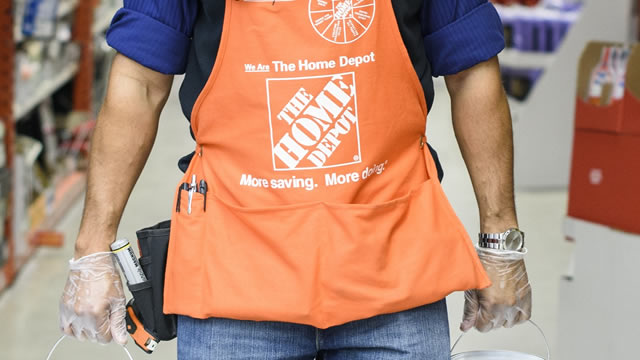
Core Insights - Home Depot Inc.'s inventory strategy for fiscal 2025 is designed to enhance operational resilience and meet customer demand amid macroeconomic uncertainties, with a year-over-year inventory increase of $3.3 billion to $25.8 billion in Q1 fiscal 2025 [1][11] Inventory Strategy - The increase in inventory is a strategic decision to maintain high in-stock levels ahead of the peak spring season, rather than a reaction to overstocking or panic buying, resulting in improved product availability and faster fulfillment [2] - Home Depot's diversified sourcing strategy, with over 50% of goods sourced domestically, reduces reliance on any single country, helping to manage tariff risks and supply chain disruptions [3][11] - The use of digital tools, such as the AI-powered Magic Apron, enhances online conversions and customer confidence by improving access to product information [3] Market Position and Competitors - Despite a challenging macroeconomic environment, Home Depot has successfully captured demand for smaller DIY and Pro projects, with strong engagement in high-demand categories like building materials and outdoor garden products [4] - Competitors like Lowe's and Floor & Decor are adopting more disciplined inventory strategies, focusing on tighter SKU management and demand forecasting to optimize working capital [5][6] - Lowe's is investing in supply chain modernization and advanced demand forecasting tools to enhance operational efficiency and compete effectively with Home Depot [6][7] - Floor & Decor maintains a focused inventory model with deep inventory levels in key categories, ensuring customer access to necessary products for entire projects [8][9] Financial Performance - Home Depot's shares have declined by 4.6% year to date, compared to a 9.4% decline in the industry [10] - The company trades at a forward price-to-earnings ratio of 23.64X, higher than the industry's 20.52X, with a VGM Score of B [12] - The Zacks Consensus Estimate indicates a year-over-year earnings decline of 1.3% for fiscal 2025, but a growth of 9.2% is expected for fiscal 2026 [13]
Home Depot: I Know It's Overvalued, But Core Strengths And Technicals Are So Tempting That I Want To Add More (Rating Upgrade)
Seeking Alpha· 2025-07-23 12:52
Core Insights - The logistics sector has seen significant engagement from investors, particularly in the ASEAN and US markets, highlighting its growth potential and diversification opportunities [1] Investment Focus - The company has diversified its investments across various sectors including banking, telecommunications, logistics, and hotels, indicating a strategic approach to portfolio management [1] - The entry into the US market in 2020 reflects a growing interest in international investment opportunities, particularly in sectors like banks, hotels, and shipping [1] Market Trends - The popularity of insurance companies in the Philippines since 2014 suggests a shift in investment preferences among local investors, moving towards more diversified financial products [1] - The trend of using platforms like Seeking Alpha for analysis indicates a growing reliance on data-driven investment strategies among investors in both the ASEAN and US markets [1]
2 Magnificent S&P 500 Dividend Stocks Down 2% and 16% to Buy and Hold Forever
The Motley Fool· 2025-07-23 00:00
Group 1: Home Depot - Home Depot has experienced a decline of 1.8% over the past year, affected by macroeconomic factors such as interest rates and housing sales [1][5] - The company reported a 0.3% decrease in same-store sales for the fiscal first quarter, with foreign-currency translations contributing a 0.7 percentage point decline [5] - Despite current challenges, Home Depot offers a 2.6% dividend yield, which is more than double the S&P 500's yield of 1.2%, and has a history of increasing dividends since 2010 [6][7] - Management expects diluted earnings per share to fall about 3% from $14.91 to approximately $14.26, which will comfortably cover the annual dividend of $9.20 [8] Group 2: PepsiCo - PepsiCo's sales have been sluggish, with adjusted sales rising only 2% in the second quarter, while volume pressure subtracted 1.5 percentage points [10] - The company relies on price increases for revenue growth, which contributed a 4-percentage-point increase, but will need to boost volume for sustainable growth [11] - PepsiCo has increased its quarterly dividend by 5%, maintaining a streak of 53 consecutive years of dividend increases, making it a Dividend King with a 4% dividend yield [12]


Home Depot or FGI Industries: Where Should Investors Place Their Bets?
ZACKS· 2025-07-22 16:26
Core Insights - The home improvement market is characterized by competition and evolution, with Home Depot Inc. (HD) and FGI Industries Ltd. (FGI) representing contrasting business models [1][2] Group 1: Home Depot (HD) - Home Depot is a retail giant with significant market share and a strong supply chain, dominating both DIY and professional segments in North America [3][4] - The company benefits from a balanced customer base, capturing demand from individual home projects and large-scale renovations, supported by aging housing stock and supply shortages [4] - Home Depot's "One Home Depot" strategy integrates digital and in-store experiences, enhancing customer flexibility and fulfillment [5] - Financially, Home Depot shows strong profitability and a focus on long-term growth, with continued investments in supply chain and digital tools [6] - Fiscal 2025 sales are projected to grow 3.1% year-over-year to $164.5 billion, with EPS expected to decline 1.3% to $15.04 [11] Group 2: FGI Industries (FGI) - FGI Industries focuses on kitchen and bath products, reporting an 8% year-over-year revenue increase to $33.2 million in Q1 2025, with significant growth in specific segments [7][10] - The company emphasizes repair-and-remodel demand and utilizes an AI-driven platform to engage the premium kitchen design market [9] - Despite a net loss of $0.6 million in the quarter, FGI maintains a revenue guidance of $135-$145 million for 2025, indicating confidence in its growth strategy [10][14] - FGI's sales are expected to increase 5.5% year-over-year to $139 million in 2025, with a projected loss per share of 18 cents [14] Group 3: Market Performance and Valuation - Home Depot's stock has grown 1.3% over the past year, underperforming the S&P 500's 13.3% return but outperforming FGI's 22.8% decline [17] - Home Depot trades at a forward P/E multiple of 23.21X, above its 3-year median, reflecting its alignment with Pro customers and strong brand equity [21][22] - FGI trades at 20.82X, above its 5-year median, indicating potential for multiple expansion as it executes its growth strategy [23] - Home Depot's operational strength and investor confidence position it as a long-term leader, while FGI's innovation-driven approach signals long-term promise despite its smaller scale [25][26]


5 Monster Stocks to Hold for the Next 25 Years
The Motley Fool· 2025-07-22 07:32
Core Insights - Buy-and-hold investing is effective when the right companies are chosen, with a focus on long-term growth and substantial returns for shareholders [1][2] Company Summaries - **Amazon**: Dominates the U.S. e-commerce market with a 40% market share and leads global cloud services with approximately 30% market share. E-commerce represents only 16.2% of total U.S. retail spending, indicating significant growth potential. The cloud services market is expected to grow at an annualized rate of 22% through 2030, driven by AI demand [4][5] - **Home Depot**: A leader in the U.S. home improvement market valued over $500 billion, with projections for the market to reach $700 billion in North America by 2034. Home Depot has expanded into specialty trades and made a significant acquisition of SRS Distribution for $18.25 billion, positioning itself for continued growth and profitability [6][9] - **Eli Lilly**: A major player in the weight loss market with a 35% market share, poised for growth as the market is expected to expand tenfold over the next decade. Upcoming next-generation drugs may enhance market share, and the company has a promising pipeline [10][11] - **NextEra Energy**: The leading producer of wind and solar power, investing $120 billion in American energy infrastructure over the next four years. The company offers a solid dividend yield of 3%, which has been increased for 30 consecutive years, indicating strong financial health and growth potential [12][14] - **Arm Holdings**: Develops proprietary designs for silicon chips, with a market share increase from 43% in 2022 to 47% at the end of last year. The company is well-positioned to benefit from the growing demand in technology infrastructure for cloud computing and AI applications [15][16]




Wall Street Analysts Look Bullish on Home Depot (HD): Should You Buy?
ZACKS· 2025-07-21 14:31
Core Viewpoint - The article discusses the reliability of Wall Street analysts' recommendations, particularly focusing on Home Depot (HD), and emphasizes the importance of using these recommendations in conjunction with other research tools like the Zacks Rank. Group 1: Brokerage Recommendations - Home Depot has an average brokerage recommendation (ABR) of 1.61, indicating a consensus between Strong Buy and Buy, based on 37 brokerage firms' recommendations [2] - Of the 37 recommendations, 26 are Strong Buy and one is Buy, which accounts for 70.3% and 2.7% of all recommendations respectively [2] - Despite the positive ABR, relying solely on this information for investment decisions may not be advisable, as studies show brokerage recommendations often lack success in guiding investors towards stocks with significant price appreciation [5][10] Group 2: Analyst Bias and Zacks Rank - Brokerage analysts tend to exhibit a strong positive bias due to their firms' vested interests, resulting in a disproportionate number of favorable ratings compared to negative ones [6][10] - The Zacks Rank, which is based on earnings estimate revisions, is presented as a more reliable indicator of a stock's near-term price performance compared to the ABR [8][11] - The Zacks Rank is timely and reflects current business trends, while the ABR may not always be up-to-date [12] Group 3: Home Depot's Earnings Estimates - The Zacks Consensus Estimate for Home Depot's earnings for the current year remains unchanged at $15.04, indicating steady analyst views on the company's earnings prospects [13] - The unchanged consensus estimate has led to a Zacks Rank of 3 (Hold) for Home Depot, suggesting caution despite the Buy-equivalent ABR [14]