
HP(HPQ)

Search documents
戴尔、联想等PC厂计划涨价,涨幅最高20%
Xin Lang Cai Jing· 2025-12-07 08:13
Core Viewpoint - The ongoing increase in storage prices is impacting not only smartphone manufacturers but also PC and laptop manufacturers, leading to planned price hikes of up to 20% by companies like Lenovo, Dell, and HP [1] Group 1: Price Increases - Lenovo has already begun notifying customers about upcoming price adjustments [1] - Dell and HP are also planning to raise prices, with the maximum increase expected to reach 20% [1] - All server and computer quotes will expire on January 1, 2026, after which new pricing will significantly increase [1]



联想、戴尔、惠普要涨价了
财联社· 2025-12-07 06:25
Core Viewpoint - The ongoing surge in memory prices is impacting various sectors, particularly mobile and PC manufacturers, leading to anticipated price increases of up to 20% for products from companies like Lenovo, Dell, and HP [5][6]. Group 1: Price Increases and Manufacturer Responses - Lenovo has begun notifying customers of upcoming price adjustments, with new pricing set to take effect on January 1, 2026, due to rising memory costs and increased demand for high-performance systems driven by AI applications [6]. - Dell is also considering price hikes of at least 15% to 20%, with potential implementation as early as mid-December, citing unprecedented increases in memory chip costs [6]. - HP's CEO has indicated that the second half of 2026 may be particularly challenging, with plans to raise prices if necessary, noting that memory chips account for approximately 15% to 18% of a PC's cost [6]. Group 2: Market Impact and Forecast Adjustments - The rise in memory prices is exerting upward pressure on the material costs of consumer electronics, leading to increased retail prices and dampening market demand, as highlighted by TrendForce's report [7]. - TrendForce has revised its forecast for laptop shipments in 2026 from a projected growth of 1.7% to a decline of 2.4% due to the impact of rising memory prices [7]. - The shortage of storage chips has escalated from a component-level issue to a macroeconomic risk, potentially hindering productivity growth based on AI and delaying significant investments in digital infrastructure [7]. Group 3: Industry Dynamics and Competitive Landscape - Huatai Securities predicts that the ongoing rise in storage prices will pressure the consumer electronics sector, particularly Android smartphones and PCs, which may see a year-on-year decline in shipment volumes [8]. - The competitive landscape among smartphone manufacturers may shift, with companies like Apple and Samsung potentially less affected by storage price increases, while others may need to balance hardware profit margins with market share [8]. - There is a risk of profit margins being squeezed in the supply chain, suggesting a need to monitor production rates and the potential for price wars in certain industries [8].


涨幅最高20%,戴尔、联想等PC厂计划涨价 存储成本压力“扛不住了”
Feng Huang Wang· 2025-12-07 03:04
随着存储涨价潮持续发酵,手机厂商之后,PC和笔电厂商也开始感受到压力。综合多家媒体消息,联 想、戴尔、惠普等都计划涨价,涨幅最高达到20%。 其中,联想已开始通知客户即将进行涨价调整。当前所有的服务器和电脑的报价将于2026年1月1日到 期,届时新的报价将会大幅涨价。 联想表示,一方面,全球供应链压力推高内存成本,连带推动整体硬件价格上涨;另一方面,企业竞相 部署AI应用,高性能系统需求激增,进一步加剧供应紧张,推动价格继续走高。因此,联想建议客户 尽早下单,以当前价格锁定采购,避免因未来价格调整而增加额外成本。 戴尔同样向客户发出了涨价预警。业内人士表示,戴尔正考虑对PC和服务器产品涨价,预计涨幅至少 15%–20%,涨价最快可能在12月中旬生效。此前戴尔首席运营官Jeff Clarke曾警告,他"从未见过内存 芯片成本涨得这么快",各产品线的开支都在攀升。 惠普CEO Enrique Lores则警告称,2026年下半年"可能尤其艰难",必要时将上调价格。他指出,内存芯 片约占一台PC成本的15%–18%。 据悉,由于内存价格上涨,PC 厂商正面临不断上升的利润压力。联想、惠普、戴尔、三星电子与LG电 子 ...
涨幅最高20%!戴尔(DELL.US)、联想(00992)等PC厂计划涨价 存储成本压力“扛不住了”
智通财经网· 2025-12-07 02:57
Group 1 - The core issue is the rising memory prices impacting PC and laptop manufacturers, leading to planned price increases of up to 20% by companies like Lenovo, Dell, and HP [1][2] - Lenovo has already notified customers of upcoming price adjustments, with new pricing set to take effect on January 1, 2026, due to increased memory costs and heightened demand for AI applications [1] - Dell is also considering price hikes of at least 15%-20%, with potential implementation as early as mid-December, citing unprecedented increases in memory chip costs [1][2] Group 2 - HP's CEO has indicated that the second half of 2026 may be particularly challenging, with plans to raise prices if necessary, noting that memory chips account for 15%-18% of a PC's cost [1][2] - The rising memory prices are exerting profit pressure on PC manufacturers, prompting a reevaluation of product plans for 2026, including AI PCs and tablets [2] - TrendForce has revised its 2026 laptop shipment forecast from a 1.7% year-on-year growth to a 2.4% year-on-year decline due to increased material costs [2] Group 3 - The ongoing memory shortage is evolving from a component-level issue to a macroeconomic risk, potentially hindering productivity growth based on AI and delaying significant digital infrastructure investments [2] - The storage price increases may lead to a decline in shipment volumes for Android phones and PCs, affecting competition dynamics among brands [3] - There is a suggestion to monitor production activity rates and the potential for price wars within the supply chain as profit margins are squeezed [3]
内存短缺,服务器价格上涨
半导体行业观察· 2025-12-07 02:33
Core Insights - The article discusses the significant impact of memory shortages on server and PC prices, with manufacturers facing rising component costs due to a shift in production focus towards AI servers [3][4]. Group 1: Price Increases - DRAM prices are projected to rise by 8% to 13%, with some forecasts suggesting even higher increases [3]. - Major OEMs, including Dell, Lenovo, HP, and HPE, plan to raise server prices by approximately 15%, while PC prices are expected to increase by about 5% [4][5]. - Samsung has reportedly raised memory prices by up to 60% as wafer production capacity shifts towards AI workloads [4]. Group 2: Industry Response - Manufacturers are reevaluating their product lines, with some brands halting consumer-oriented memory production to meet enterprise demands [4]. - The COO of Dell described the current memory shortage as "unprecedented," indicating that supply is struggling to keep pace with growing demand [4]. - Lenovo's COO highlighted the immense cost pressure from memory and solid-state drives, complicating mitigation efforts [5]. Group 3: Market Dynamics - The shift towards AI-centric production is affecting the supply and cost of general hardware components [4][6]. - IDC analysts noted that the current market volatility is unusually high compared to past fluctuations, driven by increasing demand for servers, CPUs, and GPUs [5].

惠普取得打印流体再循环系统和方法专利
Jin Rong Jie· 2025-12-06 03:19
Group 1 - The core point of the article is that HP Development Company, LLC has obtained a patent for a "Printing Fluid Recirculation System and Method" [1] - The patent was granted with the announcement number CN116507500B [1] - The application date for the patent was October 2020 [1]
Looking For Yields: HP, Black Hills, And First Merchants Are Consistent Moneymakers
Yahoo Finance· 2025-12-04 13:00
Group 1: HP Inc. - HP has a history of increasing dividends for nine consecutive years, with the latest quarterly payout raised from $0.2894 to $0.30, resulting in an annual figure of $1.20 per share [3] - The current dividend yield for HP is 4.93% [3] - HP's annual revenue as of July 31 is reported at $54.71 billion, with Q4 2025 revenues of $14.64 billion, slightly below the consensus estimate of $14.70 billion, while EPS of $0.93 exceeded the consensus of $0.92 [3] Group 2: Black Hills Corp. - Black Hills has increased its dividends for 55 consecutive years, with the most recent quarterly payout raised from $0.65 to $0.676 per share, equating to an annual figure of $2.70 per share [5] - The current dividend yield for Black Hills stands at 3.76% [5] - The company's annual revenue as of September 30 is $2.27 billion, with Q3 2025 revenues of $430.20 million, which missed the consensus estimate of $440.96 million, while EPS of $0.45 surpassed the consensus of $0.42 [6] Group 3: First Merchants Corp. - First Merchants is a financial holding company that owns First Merchants Bank, providing various financial services including commercial and consumer banking, wealth management, and mortgage lending [7]


HPQ Silicon and Novacium Sign Industrial Cooperation Agreement with AD-VENTA, Advancing METAGENE™ Scale-Up
Globenewswire· 2025-12-04 12:30
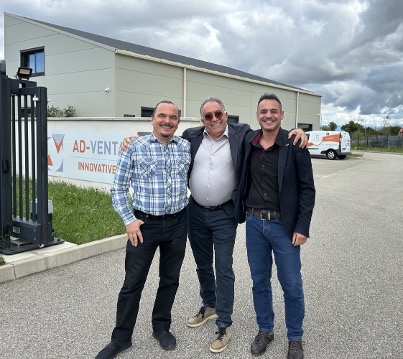
Core Viewpoint - The strategic partnership between HPQ Silicon Inc., Novacium, and AD-VENTA aims to enhance the production capacity of the METAGENE™ process for green hydrogen, facilitating its industrial deployment and commercialization [1][4][11]. Group 1: Partnership Details - HPQ Silicon Inc. and Novacium have signed a cooperation agreement with AD-VENTA, a company specializing in high-pressure hydrogen storage and distribution systems [1][12]. - The partnership is expected to significantly increase the METAGENE™ station's hydrogen production capacity from a range of 1 to 10 kg/day to up to 20 kg/day [4][11]. - The collaboration will integrate the METAGENE™ hydrogen-production reactor into AD-VENTA's existing high-pressure hydrogen dispensing station [6][11]. Group 2: Technology and Production Capacity - The METAGENE™ technology autonomously produces high-pressure green hydrogen using an aluminum-silicon fuel, which will replace the previously used compressed hydrogen cylinders [6][11]. - A single METAGENE™ unit can produce 20 kg of hydrogen per day, equivalent to 400 kWh of useful electrical energy via a 60% PEM fuel cell, enabling stable power supply in off-grid regions [8][10]. - The technology is particularly suited for decentralized applications, providing an economical solution for hydrogen generation in isolated environments [7][11]. Group 3: Commercial Applications - The hydrogen produced can support various applications, including powering inspection drones, communication stations, and remote monitoring posts, which require reliable energy sources in isolated settings [9][10]. - The agreement aims to conduct operational tests for hydrogen production capacity, targeting hydrogen-vehicle fleets and autonomous power supply stations [7][11]. Group 4: Company Backgrounds - HPQ Silicon Inc. focuses on advanced materials innovation and has exclusive North American rights for the METAGENE™ technology [14][11]. - Novacium, founded in 2022, specializes in energy-related materials and is developing technologies for hydrogen generation and silicon-based battery anodes [13]. - AD-VENTA is recognized for its expertise in high-pressure hydrogen systems and contributes to the energy transition and carbon-emission reduction [12].
HP Inc. (HPQ) Presents at UBS Global Technology and AI Conference 2025 Transcript
Seeking Alpha· 2025-12-03 18:43
Group 1 - The article does not provide any relevant content regarding company or industry insights [1]

HP (NYSE:HPQ) 2025 Conference Transcript
2025-12-03 16:57
Summary of HP (NYSE: HPQ) 2025 Conference Call Company Overview - **Company**: HP Inc. (HPQ) - **Fiscal Year**: Recently completed the fourth quarter of the fiscal year Key Financial Highlights - **Overall Growth**: Achieved 4% growth at the total company level and 8% growth in personal systems, driven by strength in office and consumer premium segments [4][5] - **Free Cash Flow**: Delivered free cash flow of $2.9 billion and returned $1.9 billion to shareholders [5] - **Dividend Increase**: Announced the 10th consecutive annual dividend increase, reflecting management's confidence in future performance [5] - **Cost Savings Program**: Completed the Future Ready program, achieving $2.2 billion in gross annualized run rate savings, exceeding initial commitments [5] Market Dynamics and Outlook - **Memory Costs**: Anticipated headwinds from increased memory costs, expected to impact margins by approximately $0.30 in the back half of the fiscal year [6][22] - **AIPCs Growth**: Over 30% of shipments are AIPCs, with expectations to reach 40%-50% in the upcoming fiscal year and over 70% by FY 2028 [4][9] - **PC Market**: Continued growth expected, particularly from the Windows 11 refresh cycle, with about 40% of the upgrade still pending [9][12] Strategic Initiatives - **AI Integration**: Plans to leverage AI to enhance productivity, product innovation, and customer satisfaction, with a target of an additional $1 billion in gross annualized run-rate savings over the next three years [7] - **Recurring Revenue Focus**: Emphasis on transitioning to recurring revenue models, particularly in the print business, with over a million subscribers in the all-in offering for print [51] Print Business Insights - **Growth Areas**: Industrial print has shown consistent growth for nine consecutive quarters, now generating $1.8 billion in revenue [51] - **Market Challenges**: While the overall print market is expected to decline, HP aims to gain market share through strategic pricing and product offerings [52] - **Supply Chain Impact**: Tariffs have significantly impacted print costs, but HP has implemented price increases to mitigate these effects [56] Competitive Landscape - **Tariff Absorption**: Absorbed approximately $500 million in tariffs last fiscal year, with expectations to absorb about $700 million this fiscal year [22] - **Foreign Exchange Dynamics**: Japanese competitors have benefited from favorable yen rates, but HP maintains pricing discipline to ensure profitability [62] Financial Management and Capital Allocation - **Cash Flow Strategy**: Focus on returning 100% of free cash flow to shareholders, with a commitment to maintaining a gross leverage ratio below two times [74][75] - **M&A Discipline**: Future M&A activities will align with strategic goals and ROI expectations, with a preference for stock repurchase when valuations are favorable [80][81] Market Perception - **Investor Sentiment**: Management believes the market may underestimate HP's ability to navigate macroeconomic challenges while continuing to grow and innovate [90][91] Conclusion - **Future Outlook**: Despite current headwinds, HP is positioned for growth through strategic initiatives in AI, recurring revenue, and market share expansion in both PCs and print [91]