
HP(HPQ)

Search documents
HP Delivers Surprise Beat but Signals Trouble Ahead as Memory Costs Double
247Wallst· 2026-02-25 14:29
Core Insights - HP Inc. reported Q1 FY2026 earnings that exceeded expectations with a non-GAAP EPS of $0.81 and revenue of $14.44 billion, driven by strong growth in Personal Systems, particularly AI PCs [1] - Despite the positive earnings report, HP faces significant challenges ahead due to a doubling of memory costs, which now constitute 35% of the bill of materials, and a declining printing segment [1] - The company has guided towards the low end of its full-year EPS range of $2.90 to $3.20, projecting Q2 non-GAAP EPS between $0.70 and $0.76, indicating potential headwinds from rising memory costs [1] Financial Performance - HP's Q1 FY2026 non-GAAP EPS of $0.81 surpassed the consensus estimate of $0.77, marking a 9.5% increase year-over-year [1] - Revenue of $14.44 billion was approximately $500 million above estimates, reflecting a year-over-year growth of 6.9% [1] - Operating income fell by 10.2% year-over-year to $759 million, despite revenue growth, primarily due to increased memory and storage costs [1] Segment Performance - The Personal Systems segment was a key growth driver, with AI PCs accounting for 35% of total PC shipments in Q1, up from 30% in the previous quarter, leading to an 11% year-over-year revenue increase to $10.25 billion [1] - The Consumer segment within Personal Systems showed notable strength, growing by 16% [1] - The Printing segment continued to decline, with revenue down 2% and hardware units down 6% [1] Future Outlook - Interim CEO Bruce Broussard expressed cautious optimism about the company's performance, emphasizing the strength of the portfolio and the execution of the Future of Work strategy [1] - HP is implementing a three-pronged mitigation plan to address memory cost pressures, including long-term supplier agreements, expanded lower-cost sourcing, and targeted pricing actions, aiming for $1 billion in gross run-rate savings by FY2028 [1] - The market's initial muted reaction to the earnings report reflects concerns over ongoing memory cost pressures and the stability of AI PC demand [1]


道明·科文公司将惠普公司目标股价从26美元下调至20美元。
Xin Lang Cai Jing· 2026-02-25 13:17
道明·科文公司将惠普公司目标股价从26美元下调至20美元。 来源:滚动播报 ...
巴克莱银行将惠普公司目标价从18美元下调至16美元。
Xin Lang Cai Jing· 2026-02-25 11:27
Group 1 - Barclays has lowered the target price for HP Inc. from $18 to $16 [1]

HP blames memory-price surge as it forecasts earnings at low end of guidance
MarketWatch· 2026-02-25 10:58
Core Viewpoint - HP has attributed its forecast for earnings at the low end of previously issued guidance to the increase in memory chip prices [1] Company Summary - HP is experiencing challenges in its earnings forecast due to rising memory chip prices, which are impacting its financial outlook for the upcoming year [1]
Stock Market Today: Dow Jones, Nasdaq 100 Futures Rise After Trump's State Of The Union Address—Nvidia, HSBC, Workday In Focus
Benzinga· 2026-02-25 10:14
Market Overview - U.S. stock futures rose on Wednesday after a positive close on Tuesday, with all major benchmark indices showing gains [1] - The Dow Jones increased by 0.14%, S&P 500 by 0.16%, Nasdaq 100 by 0.20%, and Russell 2000 by 0.42% [3] Company Performance - Workday Inc. (NASDAQ: WDAY) saw a premarket decline of 9.51% despite reporting upbeat fourth-quarter earnings, as forward guidance fell below estimates [4] - HP Inc. (NYSE: HPQ) dropped 5.16% after issuing second-quarter GAAP EPS guidance below expectations [4] - HSBC Holdings PLC (NYSE: HSBC) rose 4.43% following a 6% increase in net interest income to $34.8 billion for 2025, while also cutting 10% of its U.S.-based debt capital [4] - Nvidia Corp. (NASDAQ: NVDA) was up 0.44% with analysts expecting earnings of $1.53 per share on revenue of $65.87 billion [4] - Shell PLC (SHEL) maintains a strong price trend across all time frames, supported by a solid value score [5] Sector Insights - Consumer discretionary, information technology, and industrials sectors led the S&P 500 higher, while energy and health care stocks trended lower [6] Analyst Insights - Professor Jeremy Siegel maintains an optimistic outlook for the U.S. economy and equity markets in 2026, citing strong underlying private demand despite a softer 1.4% fourth-quarter GDP report [7] - Siegel anticipates a market rotation favoring small caps, industrials, and globally exposed companies, viewing potential energy-driven volatility as a recalibration rather than a cycle-ending shock [8]


存储芯片将缺到明年
半导体芯闻· 2026-02-25 10:11
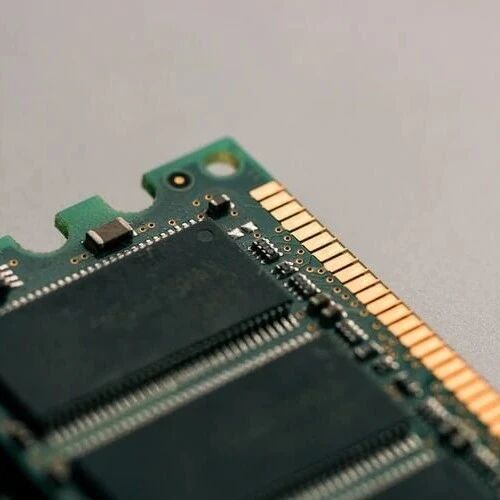
Core Viewpoint - HP Inc. anticipates continued volatility in memory chips into next year, predicting a significant decline in personal computer shipments, which led to a roughly 6% drop in its stock price in after-hours trading [1] Group 1: Financial Performance - For the fiscal year ending October 31, 2026, HP expects adjusted earnings per share to be at the lower end of the previously forecasted range of $2.90 to $3.20 [1] - In the first quarter, HP reported a revenue increase of 6.9% to $14.44 billion, surpassing the previous expectation of $13.94 billion [2] - The adjusted earnings per share for the first quarter were $0.81, exceeding the prior expectation of $0.76 [2] Group 2: Market Trends and Challenges - HP forecasts a double-digit decline in personal computer shipments, aligning with industry trends, due to significant capacity consumption by AI data center construction leading to memory chip shortages [1] - The company has taken measures to mitigate rising costs, including supply chain adjustments and price increases to offset the impact of tariffs [1] - Despite challenges, HP noted positive demand in Europe and Asia, driven by the ongoing Windows 11 upgrade cycle, with a 16% growth in its consumer business [1] Group 3: Product Segmentation - The personal systems segment, which includes consumer and commercial PCs, saw an 11% revenue growth in the quarter, reaching $10.25 billion [2] - The printing segment, which includes office printers and services, experienced a 2% revenue decline, totaling $4.19 billion [2] Group 4: Future Outlook - HP predicts adjusted earnings per share for the second quarter to be between $0.70 and $0.76, compared to the previous expectation of $0.74 [2] - The company is assessing the impact of newly announced tariffs but does not expect immediate effects on its business [2]
惠普公司预计2026年个人电脑销量下滑后,戴尔股价在盘前交易中下跌1.1%。
Xin Lang Cai Jing· 2026-02-25 09:48
Core Viewpoint - HP Inc. anticipates a decline in personal computer sales by 2026, leading to a 1.1% drop in Dell's stock price during pre-market trading [1] Group 1 - HP's forecast indicates a downturn in the personal computer market, which could impact related companies [1] - Dell's stock reaction reflects investor concerns regarding the overall health of the PC industry following HP's announcement [1]

惠普(HPQ.N)美股盘前下跌5.4%,此前该公司预计2026年个人电脑部门出货量将出现两位数降幅。
Jin Rong Jie· 2026-02-25 09:21
Core Viewpoint - HP Inc. (HPQ.N) shares fell 5.4% in pre-market trading after the company projected a double-digit decline in personal computer shipments by 2026 [1] Company Summary - HP Inc. anticipates a significant decrease in its personal computer division, forecasting a two-digit percentage drop in shipment volumes by 2026 [1]
美股异动丨惠普盘前跌5.2%,美国关税及内存成本上涨拖累盈利指引
Ge Long Hui· 2026-02-25 09:20
Core Viewpoint - HP's stock dropped 5.2% to $17.25 in pre-market trading despite reporting a 6.9% year-over-year revenue increase to $14.4 billion for Q1, with adjusted earnings per share of $0.81, exceeding market expectations. However, the adjusted operating profit margin of 6.9% fell short of the anticipated 7.4% [1] Financial Performance - HP reported Q1 revenue of $14.4 billion, reflecting a 6.9% increase year-over-year [1] - Adjusted earnings per share were $0.81, surpassing market expectations [1] - The adjusted operating profit margin was 6.9%, which was below the market forecast of 7.4% [1] Future Guidance - For the fiscal year 2026, HP expects earnings per share to be at the lower end of the guidance range of $2.90 to $3.20 [1] - Multiple factors are pressuring profit margins, including uncertainties related to U.S. tariffs and a shortage of storage chips, which have seen price surges [1]