
Intel(INTC)

Search documents
Why Intelligent Bio Solutions Shares Are Trading Lower By Around 20%? Here Are Other Stocks Moving In Friday's Mid-Day Session - Aimei Health Technology (NASDAQ:AFJK), Astera Labs (NASDAQ:ALAB)





Benzinga· 2026-01-02 17:23
Company Overview - Intelligent Bio Solutions Inc. (NASDAQ:INBS) announced plans to raise $10 million through a private placement, leading to a significant drop in its share price [1] - Following the announcement, shares of Intelligent Bio fell 19.7% to $7.65 [1] Stock Movements - Lavoro Limited (NASDAQ:LVRO) saw a substantial increase of 181%, reaching $1.2900 [4] - Ironwood Pharmaceuticals, Inc. (NASDAQ:IRWD) rose 57.7% to $5.32 after issuing FY26 guidance, expecting US net sales of Linzess to be between $1.125 billion and $1.175 billion [4] - Brand Engagement Network, Inc. (NASDAQ:BNAI) jumped 56% to $3.6290 after entering a Vendor Services Project Agreement with a global advertising agency [4] - ChowChow Cloud International Holdings Limited (NYSE:CHOW) increased by 39.7% to $0.8500 due to year-over-year revenue and net income growth in H1 2025 [4] - Sidus Space, Inc. (NASDAQ:SIDU) gained 29% to $4.0314, marking a 470% surge over the past month [4] - Baidu, Inc. (NASDAQ:BIDU) rose 12.1% to $146.57 after announcing a proposed spin-off and Hong Kong listing of its AI unit [4] Declines - Outlook Therapeutics, Inc. (NASDAQ:OTLK) experienced a significant decline of 58% to $0.6632 after receiving a complete response letter from the FDA regarding its biologics license application [4] - ESH Acquisition Corp. (NASDAQ:ESHA) fell 23.5% to $14.68 [4] - Nuvve Holding Corp. (NASDAQ:NVVE) declined 15.3% to $2.1500 after announcing the closing of a private placement [4]


深夜!中国资产,大爆发!
券商中国· 2026-01-02 15:34
Core Viewpoint - Chinese assets experienced a strong start in 2026, with significant gains in various indices and stocks, indicating a continuation of the structural bull market from 2025 and a clear investment theme for the year ahead [1][2]. Group 1: Performance of Chinese Assets - The Nasdaq Golden Dragon China Index surged nearly 4%, while leveraged ETFs for Chinese stocks saw increases of over 10% and 8% respectively [2]. - Major Chinese stocks performed well, with Baidu Group rising over 12%, and other notable gains from companies like WanGuo Data and JinkoSolar, which increased by over 8% and 7% respectively [2]. - The Hong Kong market also showed strong performance, with the Hang Seng Index up 2.76% and the Hang Seng Technology Index up 4% [2]. Group 2: Currency Movements - The offshore RMB/USD exchange rate broke above 6.97, reaching a high of 6.9662, marking the strongest level since May 2023 [3]. - Factors contributing to the RMB appreciation include a strong Chinese stock market, increased demand for currency conversion from export companies, and a weakening US dollar [4]. Group 3: Global Market Trends - Global markets continued their strong performance from 2025, with Asian markets achieving their best opening since 2012, led by gains in AI and semiconductor stocks [5]. - Major US tech stocks also saw gains, with the Philadelphia Semiconductor Index rising over 4% and ASML ADR increasing by over 8% [6]. - Investor sentiment remains optimistic, with significant net inflows into global equity funds, totaling $26.54 billion in the last week of 2025 [6].

英特尔涨幅扩大至8%。
Xin Lang Cai Jing· 2026-01-02 15:26
Group 1 - Intel's stock price has increased by 8% [1]

美股异动 | 半导体股全线走高 阿斯麦(ASML.US)、美光科技(MU.US)齐创历史新高
智通财经网· 2026-01-02 15:10
Core Viewpoint - Semiconductor stocks experienced a significant rally, with major companies reaching all-time highs, indicating strong market performance and investor confidence in the sector [1]. Group 1: Stock Performance - ASML and Micron Technology both achieved historical highs, each rising over 7% [1]. - Intel's stock increased by more than 7%, reflecting positive market sentiment [1]. - AMD and Applied Materials saw gains of over 5%, contributing to the overall strength of the semiconductor sector [1]. - Taiwan Semiconductor Manufacturing Company (TSMC) and Marvell Technology rose by over 4.7%, showcasing robust performance among key players [1]. - Broadcom's stock increased by over 3%, further highlighting the upward trend in semiconductor stocks [1]. - NVIDIA's stock rose by 3%, indicating continued investor interest in leading technology firms [1].


Evaluating Intel Against Peers In Semiconductors & Semiconductor Equipment Industry - Intel (NASDAQ:INTC)
Benzinga· 2026-01-02 15:01
Core Insights - The article provides a comprehensive comparison of Intel against its competitors in the Semiconductors & Semiconductor Equipment industry, focusing on financial metrics, market position, and growth prospects to offer insights for investors [1] Company Overview - Intel is a leading digital chipmaker specializing in microprocessors for personal computers and data centers, holding a significant market share in both PC and server markets [2] - The company aims to revitalize its chip manufacturing business and develop advanced products within its Intel Products segment [2] Financial Metrics Comparison - Intel's Price to Earnings (P/E) ratio is 615, significantly higher than the industry average, indicating potential overvaluation [3] - The Price to Book (P/B) ratio is 1.65, slightly below the industry average, suggesting possible undervaluation [3] - Intel's Price to Sales (P/S) ratio is 3.04, which is lower than the industry average, indicating potential undervaluation based on sales performance [3] - The Return on Equity (ROE) for Intel is 3.98%, which is below the industry average, indicating inefficiency in generating profits from equity [3] - Intel's EBITDA stands at $7.85 billion, which is below the industry average, suggesting lower profitability [3] Profitability and Growth - Intel's gross profit is $5.22 billion, indicating lower revenue after production costs compared to the industry average [7] - The revenue growth for Intel is 2.78%, significantly lower than the industry average of 34.59%, indicating a slowdown in sales expansion [7] Debt to Equity Ratio - Intel has a debt-to-equity ratio of 0.44, which is lower than its top four peers, suggesting a more favorable balance between debt and equity [9]

Can Intel Stock Replicate Its Stellar 2025 Performance This Year?
ZACKS· 2026-01-02 15:01
Core Insights - Intel Corporation (INTC) stock experienced a significant turnaround in 2025, gaining 84.1%, outperforming the industry growth of 35.9% and competitors AMD and NVIDIA [1][7]. Stock Performance - INTC stock rose 84.1% in 2025, while AMD and NVDA gained 77.3% and 38.8% respectively [7]. AI PC Development - Intel is capitalizing on the growing demand for AI PCs, introducing the Intel Core Ultra series 3 processor and Xeon 6+ processor, both manufactured using the advanced Intel 18A process [4][5]. - The Intel Core Ultra features a neural processing unit that offers 2.5x better power efficiency than previous generations, enhancing AI capabilities [5]. Capital Investments - Intel secured a $5 billion investment from NVIDIA to develop advanced AI solutions, leveraging both companies' strengths [8]. - Softbank invested $2 billion in Intel for AI research and development, acquiring approximately 2% ownership [9]. - The U.S. Department of Commerce provided $7.86 billion to support semiconductor manufacturing projects, aiding Intel's IDM 2.0 strategy [9]. Competitive Challenges - Despite advancements, Intel struggles to keep pace with competitors like NVIDIA, particularly in AI chip innovation [10]. - The company faces margin pressures due to competition, production shifts, and higher costs associated with non-core businesses [11]. Market Risks - China represented over 29% of Intel's revenue in 2024, but recent moves by the Chinese government to replace U.S. chips pose significant risks to revenue [12][13]. - Increased competition from domestic Chinese chipmakers and elevated customer inventory levels further complicate Intel's market position [15]. Earnings Estimates - Earnings estimates for Intel have declined significantly, with a 63% drop for 2025 and a 63.8% drop for 2026, indicating bearish sentiment [16]. Future Outlook - Intel's focus on innovative AI solutions and significant capital investments may drive future growth, but challenges such as margin pressures and declining earnings estimates remain [18][19].
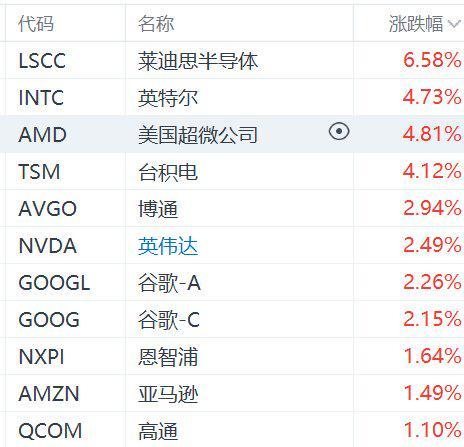
美股AI芯片股集体走高,英特尔、AMD、台积电涨超4%
Ge Long Hui A P P· 2026-01-02 14:59
Core Viewpoint - The AI chip stocks in the US market experienced a collective rise, with significant gains observed in several key companies, indicating a positive trend in the sector. Group 1: Stock Performance - Lattice Semiconductor (LSCC) saw an increase of 6.58% [1] - Intel (INTC) rose by 4.73% [1] - AMD (Advanced Micro Devices) increased by 4.81% [1] - TSMC (Taiwan Semiconductor Manufacturing Company) grew by 4.12% [1] - Broadcom (AVGO) experienced a rise of 2.94% [1] - NVIDIA (NVDA) increased by 2.49% [1] - Alphabet Inc. (GOOGL) saw a gain of 2.26% [1] - Alphabet Inc. (GOOG) rose by 2.15% [1] - NXP Semiconductors (NXPI) increased by 1.64% [1] - Amazon (AMZN) rose by 1.49% [1] - Qualcomm (QCOM) saw an increase of 1.10% [1]


Intel: Time To Get Out Before 2026 (NASDAQ:INTC)
Seeking Alpha· 2026-01-02 14:45
Up until the end of summer, Intel Corporation's ( INTC ) stock has been trading at levels similar to those that were achieved back in May when we last covered the company. However, after the American governmentBears of Wall Street is a community of asset managers and traders who take a pragmatic approach to valuing companies. Bears of Wall Street provide unique research with a bearish sentiment on overvalued or weak companies with declining businesses and poor growth perspectives - companies whose likely de ...
Comparative Study: Intel And Industry Competitors In Semiconductors & Semiconductor Equipment Industry - Intel (NASDAQ:INTC)
Benzinga· 2026-01-01 15:01
In today's rapidly evolving and fiercely competitive business landscape, it is crucial for investors and industry analysts to conduct comprehensive company evaluations. In this article, we will undertake an in-depth industry comparison, assessing Intel (NASDAQ:INTC) alongside its primary competitors in the Semiconductors & Semiconductor Equipment industry. By meticulously examining crucial financial indicators, market positioning, and growth potential, we aim to provide valuable insights to investors and sh ...


Nvidia Buys Intel Corporation’s (INTC) Shares Worth $5 Billion, Here’s What You Need to Know
Yahoo Finance· 2026-01-01 11:29
Intel Corporation (NASDAQ:INTC) is one of the Unstoppable Technology Stocks to Buy. On December 29, Reuters reported that Nvidia purchased Intel Corporation’s (NASDAQ:INTC) shares worth $5 billion. The share price went up by around 2% after the announcement. According to the report, this move is based on Nvidia’s previous announcement in September, where the company announced that it would buy Intel’s share at $23.28 per share to support its finances to enhance production capacity. On December 29, Nvidia ...