Lockheed Martin(LMT)

Search documents
Behind the Scenes of Lockheed Martin's Latest Options Trends - Lockheed Martin (NYSE:LMT)
Benzinga· 2026-02-18 16:01
Group 1 - Investors have taken a bearish stance on Lockheed Martin, with a notable split in sentiment among big-money traders, showing 11% bullish and 44% bearish positions [1][2] - Recent options trades indicate a targeting price range for Lockheed Martin between $580.0 and $740.0 over the last three months [3] - The volume and open interest metrics for Lockheed Martin's options reveal significant liquidity and investor interest, particularly within the specified strike price range [4] Group 2 - Professional analysts have set an average price target of $628.0 for Lockheed Martin based on recent evaluations [6] - Lockheed Martin's current trading volume is 304,777, with the stock price up by 0.95% to $655.75, indicating potential overbought conditions [7]



Iran's Khamenei Warns Of 'Slap' To US Military Amid Strait Of Hormuz's Temporary Closure: LMT, RTX Eyed—FRO, DHT On Watch For Shipping Risks - Lockheed Martin (NYSE:LMT)
Benzinga· 2026-02-18 07:22
Group 1 - Iran announced the temporary closure of the Strait of Hormuz for live-fire drills, impacting global shipping and U.S. defense contractors as regional tensions rise [1] - The Strait of Hormuz is crucial as it handles 20% of the world's oil, leading to increased scrutiny on tanker companies and defense stocks [2] - As of February 18, Brent crude is trading at approximately $67.63 per barrel, up 0.31%, while West Texas Intermediate is at about $62.40 per barrel, higher by 0.22% [2] Group 2 - Despite military tensions, Iranian Foreign Minister expressed optimism for a sustainable solution during a U.N. disarmament conference, indicating a potential diplomatic opening [4] - U.S. Vice President noted that while some progress has been made in indirect nuclear talks, Iran has not acknowledged certain "red lines" set by the previous administration [4]

Lockheed Martin Stock: Analyst Estimates & Ratings
Yahoo Finance· 2026-02-17 14:09
Core Insights - Lockheed Martin Corporation (LMT) is valued at a market cap of $150.1 billion and specializes in aerospace and defense technology systems [1] Performance Overview - LMT shares have surged 50.1% over the past 52 weeks, significantly outperforming the S&P 500 Index, which gained 11.8% during the same period [2] - Year-to-date, LMT stock is up 34.9%, while the S&P 500 Index has experienced a slight decline [2] - Compared to the iShares U.S. Aerospace & Defense ETF (ITA), which increased by 51.5% over the past 52 weeks, LMT has lagged but outperformed ITA's 9.4% year-to-date rise [3] Financial Performance - On January 29, LMT's shares rose 4.2% following stronger-than-expected Q4 results, with total sales increasing by 9.1% year-over-year to $20.3 billion, exceeding consensus estimates by 2.5% [4] - The company's net income per share saw a remarkable increase of 161.3% from the previous year, reaching $5.80 [4] Future Earnings Expectations - Analysts project LMT's EPS to grow by 4.5% year-over-year to $29.81 for fiscal 2026 [5] - LMT has a strong earnings surprise history, having exceeded consensus estimates in each of the last four quarters [5] Analyst Ratings - Among 23 analysts covering LMT, the consensus rating is a "Moderate Buy," consisting of seven "Strong Buy," 15 "Hold," and one "Strong Sell" ratings [5] - As of February 5, BofA maintained a "Neutral" rating on LMT and raised its price target to $660, indicating a potential upside of 1.1% from current levels [7] - LMT is currently trading above its mean price target of $624.05, with a Street-high price target of $695 suggesting a potential upside of 6.5% [7]
荷兰国防官员:F-35战机或可像iPhone手机一样“越狱”
Huan Qiu Wang· 2026-02-16 08:26
Core Viewpoint - The Dutch Secretary of State for Defense, Gijs Tuinman, indicated that the F-35 fighter jet's computer systems, including its cloud components, could potentially be "jailbroken" to access third-party software updates, raising concerns about the implications of U.S. support for the aircraft amid diplomatic tensions with Europe [1][3]. Group 1 - Tuinman suggested that upgrading the F-35 could be likened to "jailbreaking" an iPhone, although he did not provide specific details on the process or any existing cybersecurity vulnerabilities [3]. - The F-35 program imposes unique restrictions on users regarding the modification of aircraft software and ground support systems, with most software updates being managed through the cloud-based Autonomic Logistics Information System (ALIS) [3][5]. - Israel is noted as the only country that has successfully negotiated the right to independently install domestically developed software on its F-35I jets, allowing them to operate outside the ALIS/ODIN network [3]. Group 2 - Even if technically feasible, the ability to independently rebuild critical mission planning and support functions after "jailbreaking" the F-35 remains a significant challenge [5]. - Any form of "jailbreaking" could lead to legal repercussions from Lockheed Martin and potential friction with the U.S. government, particularly for countries like the Netherlands [5]. - Engaging in such actions could signal a further deterioration in relations with Washington, risking the cutoff of spare parts and support, which could render the "jailbroken" aircraft inoperable [5].

荷兰国防部国务秘书:F-35战斗机和iPhone一样,也能“越狱”
Xin Lang Cai Jing· 2026-02-16 05:42
Core Viewpoint - The article discusses the implications of U.S. policies under President Trump on the F-35 fighter jet program, particularly regarding the potential for foreign users to "jailbreak" the aircraft's systems amid concerns over U.S. support and software updates [1][8]. Group 1: F-35 System Vulnerabilities - Dutch Defense Secretary Gijs Tuinman indicated that the F-35's "computer brain" could be compromised similarly to "jailbreaking" a phone, raising concerns about third-party software updates [1][3]. - The F-35 program imposes unique restrictions on user nations regarding software modifications, with updates primarily conducted through a cloud-based system known as ALIS, which has faced ongoing issues [3][4]. - Israel is the only known country that has successfully negotiated the right to install domestically developed software on its F-35I jets, operating outside the ALIS/ODIN network [3]. Group 2: Operational Risks and Dependencies - There are concerns that even if the F-35's systems could be hacked, the ability to independently recreate critical mission planning and support functions remains unresolved, which is essential for maintaining operational effectiveness [4][6]. - The F-35's reliance on a U.S.-centric maintenance and logistics chain poses significant challenges, with reports suggesting that the U.S. could render overseas F-35s ineffective if support is cut off [6][7]. - The potential for legal action from Lockheed Martin and further disputes with the U.S. government could arise if countries like the Netherlands attempt to "jailbreak" their F-35s, risking their access to essential parts and support [6][8]. Group 3: Broader Implications for International Relations - The ongoing trade disputes and diplomatic tensions between the U.S. and allies, such as Canada, have led to reviews of F-35 procurement plans, raising questions about the future of U.S. defense exports, particularly to Europe [7]. - Despite the concerns, Tuinman expressed overall support for the F-35, asserting that it remains superior to other fighter jets even without U.S. software updates [8].

U.S. International Arms Deals Surge to $22.5 Billion in January
The Motley Fool· 2026-02-14 10:05
Core Insights - The U.S. Defense Security Cooperation Agency (DSCA) submitted 11 arms deals to Congress in January 2026, totaling $22.5 billion, indicating a strong start for defense investors [1]. Group 1: Lockheed Martin - Lockheed Martin is the largest beneficiary of the January arms deals, with a significant contract worth $9 billion for 730 PAC-3 MSE missiles to Saudi Arabia, making it the principal contractor [4][5]. - Lockheed's Missiles and Fire Control (MFC) division is the most profitable, earning 13% margins on revenue in 2025, which positions the company favorably in the defense sector [12]. Group 2: Boeing - Boeing secured a $2.3 billion contract with Singapore for four P-8A Poseidon patrol aircraft, although it will not receive additional revenue from the torpedoes supplied from Pentagon stockpiles [6][7]. - Boeing, along with Lockheed, received a $3.8 billion contract from Israel for 30 AH-64E Apache attack helicopters, with Boeing being the primary manufacturer [9][10]. Group 3: Market Implications - The contracts indicate a competitive landscape where Lockheed Martin is expected to outperform Boeing in profitability, despite Boeing securing larger contracts in some instances [11].


Tech Boom & Defense Backlogs: 2 Sectors Poised to Outperform in 2026
ZACKS· 2026-02-13 20:00
Global Economic Outlook - The International Monetary Fund (IMF) projects global GDP growth of approximately 3.3% for 2026, supported by corporate investment in digital infrastructure and advanced technologies [1] - The U.S. labor market shows resilience, with nonfarm payrolls increasing by 130,000 in January 2026 and an unemployment rate of 4.3% [1] Industry Projections - The global semiconductor industry is expected to reach $975 billion in annual sales in 2026, driven by an AI infrastructure boom [2] - The Semiconductor Industry Association forecasts global semiconductor sales to approach $1 trillion in 2026, indicating a 26% growth, primarily due to advanced logic and high-bandwidth memory for generative AI workloads [5] Sector Performance - AI-linked infrastructure and healthcare innovation are expected to outperform the broader market in 2026, supported by strong demand drivers and favorable earnings momentum [3] - Hyperscalers like Microsoft, Amazon, and Alphabet are significantly investing in AI data centers and cloud infrastructure, which remains a core earnings catalyst [4] Aerospace and Defense - The industrial sector benefits from sustained defense spending, with U.S. national defense spending exceeding $800 billion annually, providing multi-year revenue visibility for prime contractors [8] - Companies like Lockheed Martin and RTX report substantial backlogs, with Lockheed Martin exiting 2025 with a $194 billion backlog and RTX with a $268 billion backlog, indicating extended revenue streams [9] Electrification and Grid Modernization - Electrification and grid modernization are identified as powerful structural drivers, with companies like Eaton and Siemens focusing on data center power demand and energy transition investments as key growth catalysts [10]
新造的F-35没雷达?美空军急解释,美媒质疑追问
Huan Qiu Wang· 2026-02-13 12:07
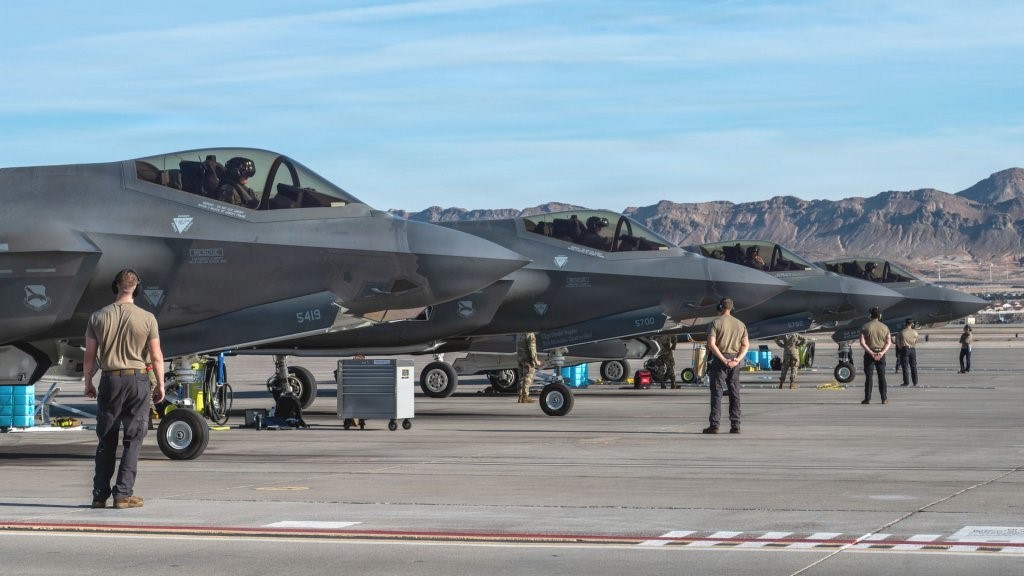
Core Viewpoint - The U.S. Air Force denies claims that some F-35A fighter jets were delivered without radar, specifically the AN/APG-85 AESA radar, amid ongoing development delays and cost overruns [1][3]. Group 1: Delivery and Radar Installation - Reports from "Daily Defense" suggested that all F-35A jets delivered by Lockheed Martin since June 2022 lacked radar due to installation structure compatibility issues with the existing APG-81 radar [3]. - An Air Force spokesperson confirmed that the 17th batch of F-35A jets was delivered with the APG-81 radar and stated that the Air Force is collaborating with the F-35 Joint Program Office to advance the delivery of jets equipped with the APG-85 radar [3]. Group 2: Radar Development and Challenges - Northrop Grumman has been developing the new APG-85 radar since at least 2023 to replace the APG-81 radar used in all F-35 variants, as part of the F-35 Block 4 upgrade plan, which has faced delays and rising costs [5]. - Despite the Air Force's denial of "no radar delivery" claims, there are still questions regarding whether jets configured for the APG-85 can temporarily install the APG-81 radar during the transition period, and the complexity and impact of such modifications remain uncertain [5].

Lockheed Martin: Why I Am Downgrading This Aerospace And Defense Giant
Seeking Alpha· 2026-02-13 09:01
Core Insights - The article emphasizes the importance of accessing comprehensive reports, data, and investment ideas in the aerospace, defense, and airline sectors through The Aerospace Forum, which is highlighted as a leading investment research service on Seeking Alpha [1]. Group 1: Analyst Background - Dhierin-Perkash Bechai is identified as an analyst specializing in aerospace, defense, and airline sectors, with a background in aerospace engineering, which enables him to provide informed analysis of the industry [2]. - The goal of The Aerospace Forum is to uncover investment opportunities within the aerospace, defense, and airline industries, indicating a focus on growth prospects in these sectors [2]. Group 2: Analytical Approach - The analysis provided by the forum is data-driven, suggesting that investment ideas are based on thorough data-informed assessments, which may enhance the reliability of the investment theses presented [2].

Trump's Covert Starlink Operation: How Elon Musk's SpaceX Became A Weapon Against Iran - Lockheed Martin (NYSE:LMT)
Benzinga· 2026-02-12 22:46
Core Insights - The Trump administration secretly smuggled approximately 6,000 Starlink satellite internet terminals into Iran, marking the first direct shipment of these devices into the country [1] - The U.S. State Department previously purchased nearly 7,000 terminals to support anti-regime activists amid a severe crackdown on protests and internet blackouts in Iran [2] - The operation highlights the integration of commercial technology into national security strategies, potentially creating new revenue opportunities for defense contractors [5] Geopolitical Context - Possession of Starlink terminals is illegal in Iran, yet many Iranians use them to circumvent government censorship [3] - Prediction markets indicate significant geopolitical risks, with a 44% chance of a U.S. strike on Iran by June 30 and a 17% probability of the Iranian regime falling by the same date [4] - The Pentagon is preparing a second carrier strike group for deployment to the Middle East, indicating heightened military readiness [3] Industry Implications - The revelation of the Trump administration's covert actions could escalate tensions between the U.S. and Iran, impacting volatility in energy and defense sectors as Q2 approaches [6] - Defense contractors are likely to benefit from the increasing tensions and the strategic use of satellite and communications technologies [5]