LVMH(LVMUY)

Search documents
LVMH : Share transactions disclosure
Globenewswire· 2025-11-25 16:47
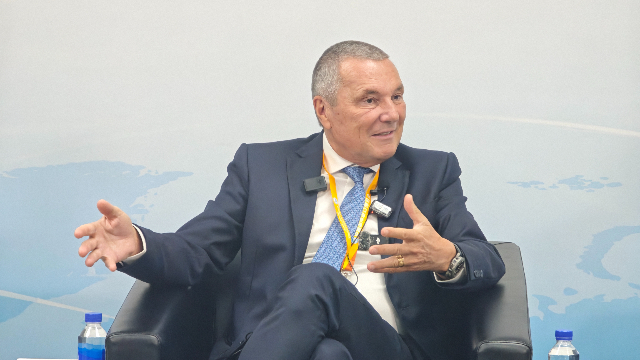
Core Insights - LVMH Moët Hennessy Louis Vuitton is a leading luxury goods conglomerate with a diverse portfolio across various sectors including Wines and Spirits, Fashion and Leather Goods, Perfumes and Cosmetics, Watches and Jewelry, and Selective Retailing [2]. Group 1: Company Overview - LVMH's Wines and Spirits division includes prestigious brands such as Moët & Chandon, Dom Pérignon, and Hennessy [2]. - The Fashion and Leather Goods division features renowned labels like Louis Vuitton, Christian Dior, and Fendi [2]. - In the Perfumes and Cosmetics sector, LVMH offers products from brands like Parfums Christian Dior and Fenty Beauty by Rihanna [2]. - The Watches and Jewelry division comprises luxury brands such as Bulgari and Tiffany & Co [2]. - LVMH is also involved in Selective Retailing through entities like Sephora and DFS [2]. Group 2: Share Transactions - Disclosure of share transactions conducted from November 17 to November 21, 2025, was submitted to the AMF on November 25, 2025, and is publicly accessible on the company's website [1].



X @Bloomberg
Bloomberg· 2025-11-21 17:48
Financial Investment - LVMH 将向其亏损的《Le Parisien》报纸注资高达 150 million 欧元(约 173 million 美元),以改善其财务状况 [1]
LVMH集团旗下基金在广州新设股权投资基金
Sou Hu Cai Jing· 2025-11-21 07:41
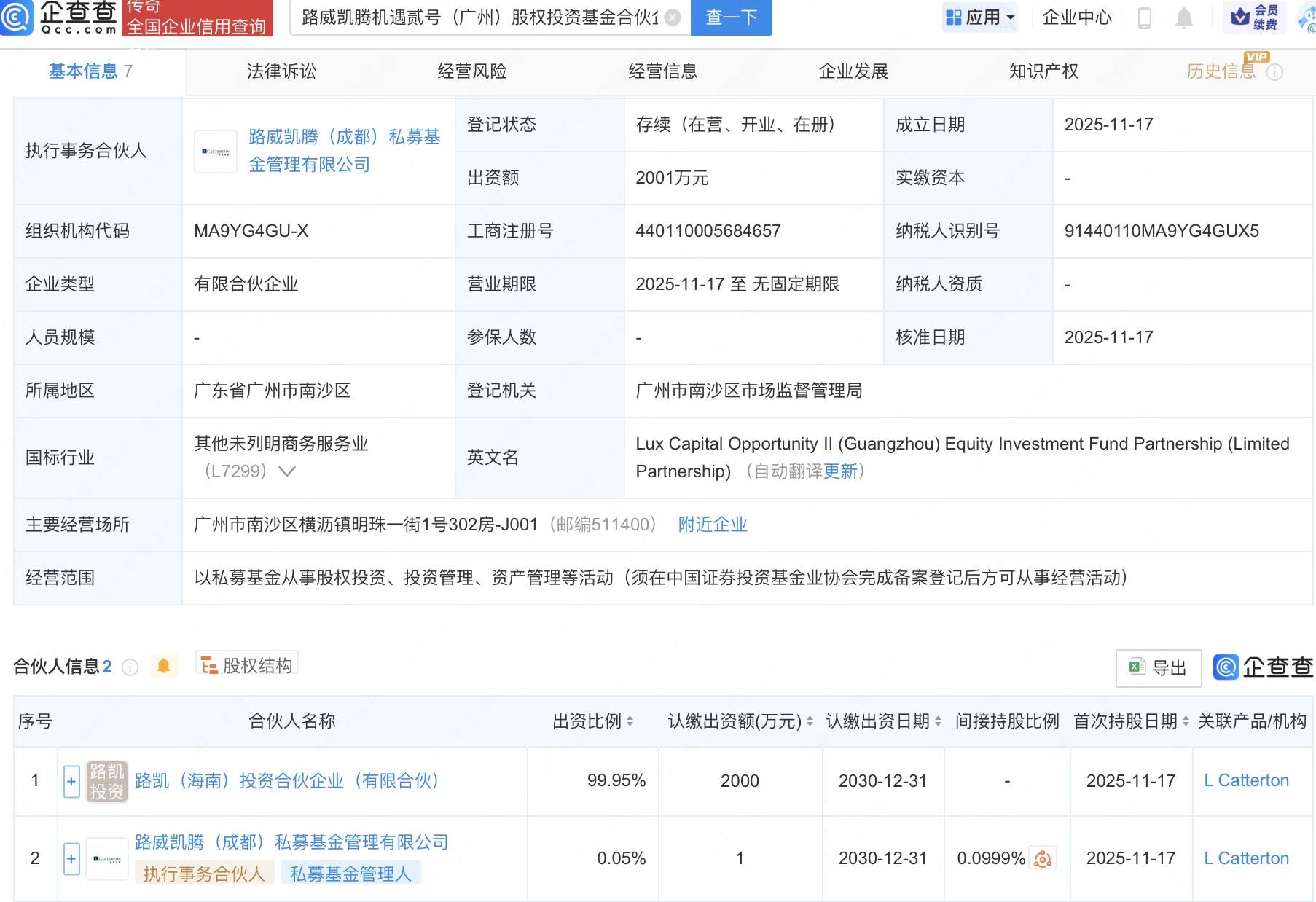
Core Insights - Recently, two private equity investment funds, Lux Capital Colorful No.1 (Guangzhou) and Lux Capital Opportunity No.2 (Guangzhou), were established, focusing on private equity investment, investment management, and asset management activities [1] Group 1: Fund Details - Lux Capital Opportunity No.2 has a registered capital of 20.01 million yuan, with the main partner being Lux Capital (Hainan) Investment Partnership (Limited Partnership) holding 99.95% of the shares [2] - Lux Capital Colorful No.1 has a registered capital of 12.101 million yuan, with similar operational focus and structure [3] Group 2: Management and Operations - Both funds are managed by Lux Capital (Chengdu) Private Fund Management Co., Ltd., which serves as the executive partner [1][2][3] - The operational scope of both funds includes private equity investment, investment management, and asset management, adhering to regulations set by the China Securities Investment Fund [2][3]
贾乃亮直播带货娇兰复原蜜被疑是假货,回应:官方旗舰店发货
Nan Fang Du Shi Bao· 2025-11-19 11:12
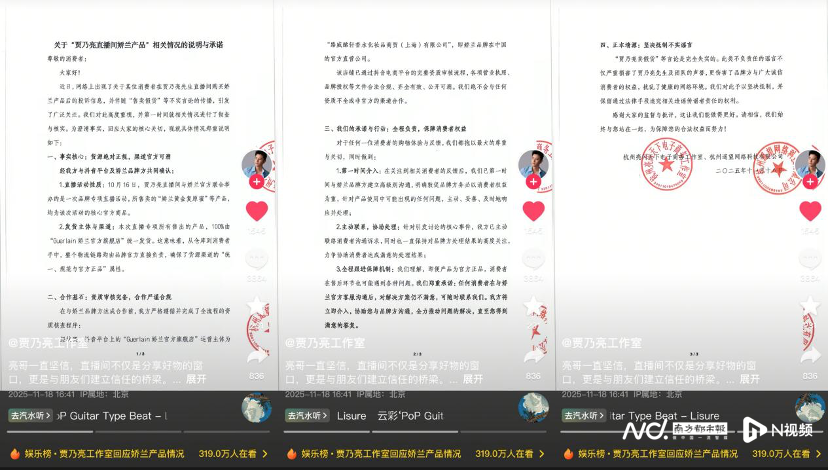
Core Viewpoint - The controversy surrounding the authenticity of "Guerlain Golden Recovery Honey" purchased through a live stream hosted by celebrity 贾乃亮 has raised significant concerns among consumers, leading to claims of counterfeit products despite assurances from the brand's official channels [1][3][5]. Group 1: Consumer Claims - A consumer reported purchasing approximately 7000 yuan worth of "Guerlain Golden Recovery Honey" from 贾乃亮's live stream, suspecting it to be counterfeit based on differences in packaging and texture compared to products from physical stores [3]. - The consumer's claims were supported by a third-party testing agency, which confirmed the product as counterfeit, leading to further questions about the brand's quality control [4][3]. Group 2: Brand and Seller Response - 贾乃亮's studio and the MCN company, 遥望科技, stated that all products sold during the live stream were shipped directly from the "Guerlain Official Flagship Store," ensuring authenticity [5][7]. - The official response emphasized that the logistics chain was managed by the brand itself, aiming to reassure consumers about the product's legitimacy [5][7]. Group 3: Company Background - The operational entity behind the "Guerlain Official Flagship Store" is 路威酩轩香化, a subsidiary of LVMH Group, which oversees the sales of several luxury brands in China [7]. - LVMH Group has not yet provided a public response to the allegations as of the latest updates [8]. Group 4: Sales Performance - During the live stream event on October 16, 贾乃亮's sales reached over 100 million yuan, with "Guerlain Golden Recovery Honey" being one of the top-selling products, accounting for sales between 5 million to 7.5 million yuan [5].

LVMH腕表部门收购瑞士制造商La Joux-Perret少数股权
Cai Jing Wang· 2025-11-13 05:09
Core Insights - LVMH has acquired a minority stake in Swiss manufacturer La Joux-Perret, with financial terms undisclosed [1] - The partnership aims to enhance production and innovation capabilities for LVMH's watch brands [1] - LVMH's watch division CEO Jean-Christophe Babin expressed enthusiasm about strengthening ties with La Joux-Perret, highlighting their technical expertise and industrial excellence [1]
LVMH Acquires Minority Stake in Swiss Watchmaker La Joux-Perret
WSJ· 2025-11-12 06:47
Core Viewpoint - LVMH's watch division has acquired a minority stake in La Joux-Perret, while the Swiss watch manufacturer will maintain its full independence [1] Company Summary - LVMH's watch division is expanding its portfolio through the acquisition of a minority stake in La Joux-Perret [1] - La Joux-Perret is a Swiss watch manufacturer known for its craftsmanship and will continue to operate independently despite the investment from LVMH [1] Industry Summary - The acquisition reflects ongoing trends in the luxury watch industry, where established brands seek strategic partnerships to enhance their offerings while allowing manufacturers to retain operational independence [1]
Here's why the LVMH share price is in a strong bull run
Invezz· 2025-11-11 10:08
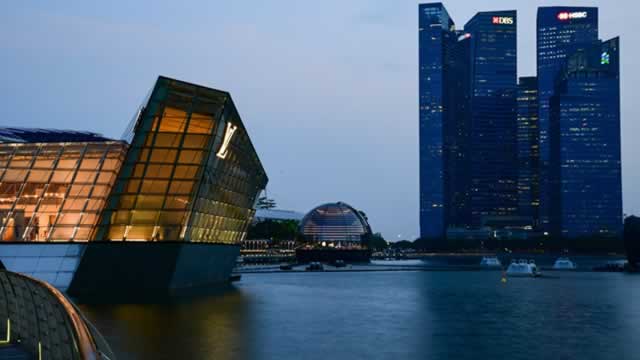
Core Insights - LVMH share price has experienced a strong uptrend recently, attributed to easing concerns regarding its Chinese business [1] - The share price reached a high of €630, marking its highest level since March and representing a 45% increase from its lowest point [1]

China Luxury Rebound: LVMH Is Set to Open Major Stores in Beijing
Bloomberg Television· 2025-11-11 08:20
How significant then is this new wave of store openings for LVMH and its China strategy. At a time when we're thinking about deflation in China, a pretty weak consumer housing market that is certainly not recovered. What is driving the shift back towards luxury spending if indeed we are seeing that.Right. So the scale of the new store openings is certainly significant because we're talking about four major LVMH brands, including Louis Vuitton, Dior, Tiffany and Loro Piana, and they're all opening multi-stor ...

践行ESG理念 深耕中国市场
Ren Min Wang· 2025-11-08 09:32
Group 1 - LVMH views China as a crucial strategic market and is confident in future development, planning to increase investments through cultural cooperation, sustainable development, technological innovation, and local talent cultivation [1] - The company is advancing its "LIFE 360" environmental strategy, aiming to eliminate single-use plastics, reduce carbon emissions and resource consumption, and optimize logistics to lower carbon footprints by 2026 and align with the UN's 2030 Sustainable Development Agenda [1] - LVMH emphasizes its commitment to the Chinese market, citing resilient consumer behavior and increasing demand for high-quality products, leading to continuous innovation in offerings such as immersive spaces and limited edition collaborations [1] Group 2 - LVMH maintains a "Made in France" core strategy focused on sustainability, high quality, consumer safety, and innovation, with plans to integrate technological advancements while preserving French cultural heritage [2] - The "SHOW ME" project aims to train young artisans in traditional crafts, aligning with China's emphasis on vocational skills and craftsmanship, demonstrating LVMH's commitment to long-term development in the region [2]
看短剧、逛夜生活地标,国际品牌高管如何"沉浸式"捕捉中国Z世代需求|进博深一度
Di Yi Cai Jing· 2025-11-07 14:05
Core Insights - The China International Import Expo is viewed as a comprehensive opportunity for brands to understand policy directions, observe competitors, and showcase their strengths [1] - Executives from the fashion and luxury goods industry express confidence in the future of the Chinese market despite new challenges [1][4] - Tapestry anticipates that 75% of its future growth will come from international markets, with China being the largest contributor [1] - LVMH's watch division CEO believes that China's rapid development in new technologies will lead to increased disposable income for consumers [2] Company Performance - LVMH has ended a multi-quarter revenue decline, showing slight growth, while Hermès and Prada reported revenue increases of 9.6% and 8% respectively [4] - Kering's revenue decreased by 5%, but the decline has narrowed significantly [4] - Several brands noted a recovery in the Chinese market, particularly during the National Day holiday sales [4] Market Trends - The high-end consumer market is seeing an influx of Chinese brands, attracting attention from industry giants [7] - Tapestry's executives emphasize the importance of adapting brands to resonate with the values of the current generation [7] - The overlap in consumer demographics between local Chinese brands and international luxury brands is significant, with a 77.3% overlap noted for certain brands [7] Consumer Engagement - Tapestry's executives frequently engage with consumers in various Chinese cities to better understand their preferences [5] - The use of social media platforms like Douyin and Xiaohongshu is highlighted as a means to connect with younger consumers [5] - The competition from emerging Chinese brands is seen as a catalyst for overall market growth and innovation [7]