NIKE(NKE)

Search documents
Nike CEO: 'Sport offense' will help make us more competitive
CNBC Television· 2025-10-06 15:30
So there's the internal culture, but there's also the the society, the the cultural relevance of Nike, which also feels like it's been lacking in the last few years. How do you restore something like that. >> Yeah, I think so.First of all, I what I what we did do and and the fifth component of the win now actions is this ground game. That's means that we have teams and uh teammates down into the key cities around the world where influence happens whether it is culture or sport and we lost those that the peo ...


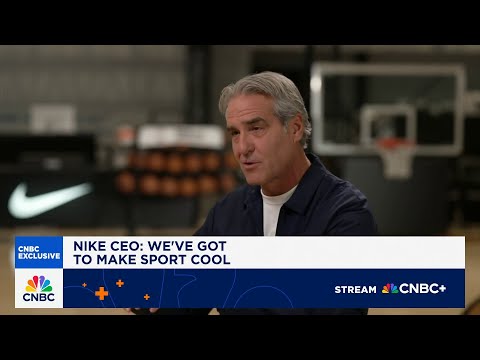
Nike CEO: 'Sport offense' will help make us more competitive
Youtube· 2025-10-06 15:30
Core Insights - The company recognizes a decline in its cultural relevance and aims to restore its connection with consumers through strategic initiatives [1][2] - A focus on enhancing the "ground game" by re-establishing teams in key cities to connect with cultural and sports influencers is part of the strategy [2][4] - The company aims to make sports appealing to a broader audience, targeting 8 billion potential consumers [3] Strategy and Competition - The competitive landscape has intensified, particularly in the wholesale sector, necessitating a strategic response to regain market share [4][5] - The company is focusing on specific sports categories to sharpen its competitive edge, acknowledging that competition varies significantly across different sports [5][6] - Growth drivers identified include North America and running segments, with wholesale performance being a strategic focus [6][7] Consumer Engagement - The company emphasizes understanding diverse consumer preferences across different retail environments, tailoring assortments and presentations accordingly [7][10] - New distribution channels, including partnerships with Aritzia, Urban Outfitters, and Amazon, have been successful in reaching younger demographics [8][10] - The company acknowledges the importance of balancing wholesale and direct-to-consumer strategies to cater to various consumer shopping preferences [9][11] Retail Innovations - Physical retail strategies are being enhanced through innovative store formats, such as the House of Innovation in New York, which showcases a focused approach to sport categories [12][13] - Revenue increases in physical retail formats indicate positive momentum in this area [13] - Digital experiences are being elevated to anchor on sports and innovation, aiming to drive traffic and engagement [14]
Nike's turnaround will take a while -- CEO Elliott Hill (NKE:NYSE)
Seeking Alpha· 2025-10-06 15:27
Core Viewpoint - Nike's turnaround is expected to take a considerable amount of time, indicating potential challenges ahead for the company in terms of performance [2] Company Performance - CEO Elliott Hill expressed concerns about Nike's performance, suggesting that the company may experience several more quarters of uneven results [2] - The CEO's comments had a negative impact on Nike's share prices, reflecting investor apprehension regarding the company's future performance [2]
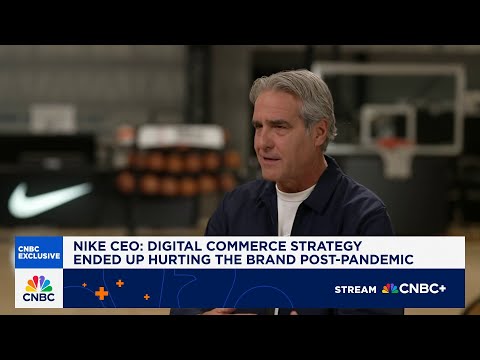
Nike CEO: We're putting the athlete back at the center of everything that we do
CNBC Television· 2025-10-06 15:16
So, here you are. It's been almost a year and you've had a year to really dig in and sift through the issues because you came to turn it around. So, what's your diagnosis of what went wrong.Well, I've tried not to look backwards. I've tried to snap the chalk line and move forward, but if if I had to, I think I'm going to oversimplify it. I I think when uh COVID hit uh supply got constrained, demand goes up and I think I the team did what I think anybody would do.You shifts product over to uh digital commerc ...
Nike CEO: We're putting the athlete back at the center of everything that we do
Youtube· 2025-10-06 15:16
Core Insights - The company faced challenges during the COVID-19 pandemic, leading to supply constraints and increased demand, which required a strategic pivot [1] - A shift towards digital commerce initially doubled revenue and margins, but as physical retail reopened, the strategy needed reevaluation [2][3] - The company recognized the need to balance digital and physical retail channels to cater to diverse consumer preferences [3] Company Strategy - The company is refocusing on its core mission of being a sport and growth company, emphasizing the importance of sport in its overall strategy [4][5] - A cultural shift is underway, with a renewed emphasis on inspiration and innovation for every athlete, supported by the reintroduction of core values [6][7] - The organizational structure has been revamped to align brands by sport, creating cross-functional teams that focus on specific consumer segments [8][9][10] Product and Market Focus - The new structure aims to enhance product innovation and storytelling, ensuring that decisions are tailored to the needs of specific athlete segments [10][11] - The company has seen positive results in specific categories, such as running, indicating a successful implementation of the new strategy [12]
NIKE Faces $1.5B Tariff Hit: Can It Protect Margins & Loyalty?
ZACKS· 2025-10-06 14:30
Core Insights - NIKE Inc. is facing increased challenges due to newly imposed reciprocal tariffs, which are estimated to add $1.5 billion in annual costs, up from a previous estimate of $1 billion just 90 days ago [1][10] - Despite exceeding first-quarter fiscal 2026 earnings expectations, NIKE's gross margins have declined by 320 basis points to 42.2%, influenced by rising product costs and tariff-related pressures [2][10] - The company is implementing cost-control and pricing strategies to protect margins, leveraging its global scale and supply chain expertise [3][4] Financial Performance - NIKE's gross margin is expected to face a 120 basis points drag in fiscal 2026 due to tariff costs, but management remains optimistic about offsetting these pressures through its "Win Now" strategy [4][10] - The Zacks Consensus Estimate indicates a year-over-year earnings decline of 23.2% for fiscal 2026, with a projected growth of 56.4% for fiscal 2027 [12] Competitive Landscape - Key competitors include adidas AG and lululemon athletica inc., both of which are focusing on innovation and strategic brand positioning to enhance their market presence [6][7][8] - adidas is emphasizing high-margin products and direct-to-consumer sales, while lululemon is expanding its product offerings and digital engagement [7][8] Market Positioning - NIKE is rebalancing its channel mix by focusing on wholesale partners and premium full-price sales, reducing reliance on discount-driven digital traffic [4] - The brand's strength lies in its emotional connection with consumers, particularly in performance categories like running, basketball, and football [5] Stock Performance and Valuation - NIKE shares have declined by 4.9% year to date, compared to a 7% decline in the industry [9] - The company trades at a forward price-to-earnings ratio of 36.25X, higher than the industry average of 30.12X [11]
Nike's turnaround will 'take a while,' CEO Elliott Hill says
CNBC· 2025-10-06 14:14
Core Insights - Nike's stock has decreased by approximately 12% over the past year, reflecting ongoing struggles under CEO Elliott Hill's leadership, with investors seeking clarity on the effectiveness of his turnaround strategy [1][3] - Hill acknowledges that the path to restoring mid-to-high single-digit revenue growth with strong margins will take time, emphasizing a portfolio approach to drive revenue and profit [2][3] Company Strategy - Hill is reversing the previous strategy of focusing solely on direct-to-consumer sales, which was implemented by former CEO John Donahoe, and is instead prioritizing relationships with wholesalers to regain lost shelf space [4][6] - The shift back to physical retail and a multi-channel distribution strategy is aimed at catering to consumer preferences for shopping across various platforms [5][6] - The company is restructuring its business segments to focus on individual sports rather than demographic categories, which is expected to enhance innovation and product development tailored to specific athlete needs [7][9] Financial Outlook - Nike anticipates an increase in tariff costs to $1.5 billion for the current fiscal year, up from a previous estimate of $1 billion, which is projected to impact gross margins by 1.2 percentage points [10][11] - The company is taking measures to mitigate the impact of tariffs by collaborating with suppliers and implementing price increases [11]
3 Key Takeaways From Nike's Earnings. Is This a Buying Opportunity?
Yahoo Finance· 2025-10-06 13:53
Core Insights - Nike reported a 1% increase in revenue for fiscal Q1 2026, reaching $11.7 billion, but this growth masks underlying challenges, with a 1% decline on a currency-neutral basis [2][5] - The divergence between Nike's Direct and Wholesale channels indicates a shift in strategy, with Direct sales declining by 4% while Wholesale grew by 7% [3][5] - Regional performance varied, with North America showing strength, particularly in apparel, while Greater China faced significant declines, particularly in footwear and equipment [4][5] Financial Performance - Nike's net income fell by 31%, with diluted EPS dropping from $0.70 to $0.49, reflecting a 30% decline [9] - Gross margin contracted by 320 basis points to 42.2%, impacted by increased discounting, unfavorable channel mix, and tariff pressures [9] - Operating expenses remained stable, with a slight decrease in selling and administrative costs, but were insufficient to counteract margin declines [9]
Nike Stock To $40?
Forbes· 2025-10-06 10:45
Core Insights - Nike has experienced an 11% decline over the past year, underperforming the S&P 500's 17% increase, despite a slight revenue surprise in the most recent quarter [2] - Historical performance indicates that Nike's stock is vulnerable during economic downturns, with significant drops observed during the inflation crisis of 2022 and the onset of COVID-19 [3] - Current challenges include weak revenue growth, squeezed profit margins, and a high valuation, raising concerns about potential further declines in stock price [4] Revenue Performance - Over the past three years, Nike's revenue has stagnated with an average decrease of 0.3%, and a 7% drop in the last twelve months from $50 billion to $46 billion [5] - In Q1 FY 2026, revenue increased by only 1% to $11.72 billion, primarily due to wholesale gains and a 4% rise in North America [5] - Direct-to-consumer sales fell by 4% to $4.5 billion, with Converse down 27% and Greater China experiencing a 9% decline [6] Margin Challenges - Nike's operating margins were 7.4% and net margins were 6.2%, significantly lower than the S&P 500 averages [9] - Gross margin decreased by 3.2 points to 42.2% in Q1 FY 2026, with net income falling 31% to $727 million [9] - Ongoing pressures from discounting, rising expenses, and competition are expected to continue affecting margins throughout fiscal 2026 [10][11] Valuation Concerns - Nike shares are currently trading around $74 with a P/E ratio of 38.2, which is above its historical average of 28x and the S&P 500's 24x [12] - If earnings per share (EPS) remains steady at $1.95 but the P/E ratio drops to 19-20x, the stock could fall to approximately $37, indicating a potential 50% decline [13] - A further decline in margins and revenues could lead to an EPS decrease of 15-20%, potentially dropping the stock to $31-$32, representing a 57-58% decline [13] Strategic Outlook - Despite being a strong global brand, Nike faces a pivotal moment with early signs of stabilization amid ongoing margin pressures and macroeconomic risks [14] - Successful execution of strategic initiatives is critical for the company's long-term performance and recovery [14]

Nike: Improvements, But Road To Recovery Remains Bumpy (NYSE:NKE)
Seeking Alpha· 2025-10-06 10:40
Core Viewpoint - The article emphasizes the importance of dividend investing in quality blue-chip stocks, Business Development Companies (BDCs), and Real Estate Investment Trusts (REITs) for building a sustainable retirement income stream [1]. Group 1: Investment Strategy - The company focuses on a buy-and-hold investment strategy, prioritizing quality over quantity in its portfolio selection [1]. - The aim is to help lower and middle-class workers build investment portfolios that consist of high-quality, dividend-paying companies [1]. Group 2: Personal Investment Philosophy - The company aspires to achieve financial independence through dividend income within the next 5-7 years [1]. - The investment approach is rooted in the belief that consistent dividend payments can provide a reliable source of income during retirement [1].