Nissan Motor(NSANY)

Search documents
Nissan joins Toyota, Honda in plans to export U.S. cars to Japan
CNBC· 2026-03-17 17:41
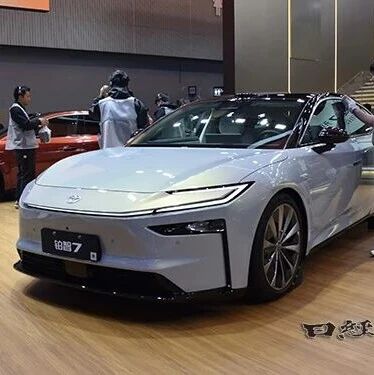
Core Viewpoint - Nissan Motor plans to export U.S.-produced vehicles, specifically the Nissan Murano, to Japan, marking a significant shift in its strategy following changes in Japanese vehicle import regulations [1][3]. Group 1: Company Plans - Nissan will begin importing the midsize Nissan Murano, manufactured in Smyrna, Tennessee, to Japan starting early next year, which is the first American-made Nissan sold in Japan since the 1990s [2]. - The introduction of the Murano aims to strengthen Nissan's product lineup in Japan and cater to the diverse needs of Japanese customers, as stated by Nissan CEO Ivan Espinosa [2]. Group 2: Regulatory Changes - The decision to import U.S.-made vehicles follows changes in Japanese regulations that allow easier importation of vehicles from the U.S., part of a trade deal that also reduced U.S. tariffs [3]. - Under the new regulations, U.S.-made vehicles are exempt from Japan's vehicle certification as long as they comply with American standards [3]. Group 3: Vehicle Specifications - The Murano will be imported with a left-hand steering wheel, which is standard for American vehicles but not typical in the Japanese market [4]. - Automakers usually need to modify vehicles to meet various safety and regulatory standards in different countries, which can include adjustments to lighting, side mirrors, and steering wheel placement [4].




Nissan Teams Up With Wayve and Uber to Develop Robotaxis
ZACKS· 2026-03-17 13:45
Core Insights - Nissan Motor Co., Ltd., Wayve, and Uber Technologies, Inc. have signed a memorandum of understanding to jointly develop robotaxis and initiate efforts towards launching autonomous ride services, with a pilot rollout planned in Tokyo by late 2026 [1][7] Group 1: Vehicle Development - Nissan is designing vehicles with fully redundant systems suitable for robotaxi use, aiming to accelerate the creation of a scalable autonomous vehicle platform through collaboration with Wayve [2] - The vehicle utilizes NVIDIA Corporation's DRIVE Hyperion reference architecture, supporting Level 4 autonomy with dual NVIDIA DRIVE AGX Thor processors for real-time advanced AI model processing while ensuring automotive safety [3] Group 2: Integration and Operation - The initiative focuses on integrating Wayve's end-to-end autonomous driving system into Nissan vehicles, ensuring compatibility with Uber's ride-hailing network to match passengers with robotaxis [4] - In the initial phase, vehicles will operate on Uber's platform with a trained safety operator onboard, allowing passengers to experience robotaxi services during their daily travel [4][5] Group 3: Technology and Market Adaptation - The Wayve AI Driver is designed to learn from real-world driving data and adapt to new environments without relying on high-definition maps, facilitating expansion into global markets and operation in complex urban settings like Tokyo [6][7]


菜鸟联盟,杀入全球自动驾驶修罗场
汽车商业评论· 2026-03-15 23:06
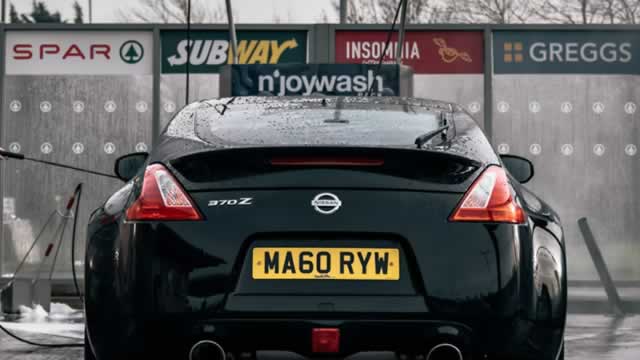
Core Viewpoint - A new strategic partnership has been established between Nissan, Uber, and Wayve to launch a pilot autonomous driving service in Tokyo by the end of 2026, marking Uber's first autonomous vehicle collaboration in Japan [3][5]. Group 1: Strategic Partnerships and Developments - Nissan will provide its Leaf electric vehicles integrated with Wayve's AI autonomous driving system for the pilot service [3]. - Wayve recently completed a $1.2 billion funding round to accelerate the commercialization of its autonomous driving technology, with investors including Uber, Nissan, SoftBank, Microsoft, Nvidia, and Mercedes-Benz [5]. - Other companies, such as Nuro, supported by Nvidia and Toyota, are also entering the Japanese autonomous driving market, indicating a competitive landscape [7][8]. Group 2: Market Dynamics and Growth Potential - The Japanese autonomous vehicle market is projected to grow from $4.02 billion in 2024 to $24.25 billion by 2033, with a compound annual growth rate (CAGR) of 22.1% [24]. - The global autonomous taxi market is expected to reach $189 billion by 2034, with a CAGR of 52.54% [21]. - Japan faces a significant shortage of drivers due to an aging population and labor laws, creating a pressing need for autonomous driving solutions [28][29]. Group 3: Regulatory Environment and Challenges - Japan's regulatory framework is cautious, requiring a driver to be present in autonomous vehicles, which may hinder the rapid commercialization of autonomous taxi services [36][38]. - The government aims to deploy 10,000 Level 4 autonomous vehicles by the fiscal year 2030 to address transportation capacity issues, although initial projections suggest fewer than 1,000 vehicles may be operational by 2027 [30][31]. Group 4: Business Models in Autonomous Driving - Two primary business models are emerging: the "heavy asset model," focusing on building and owning fleets, and the "light asset model," where technology companies provide AI solutions while outsourcing vehicle manufacturing and operations [41][47]. - Companies like Waymo and Uber are adopting hybrid strategies, combining self-operated services in high-demand areas with partnerships in emerging markets to optimize costs and operational efficiency [52]. Group 5: Competitive Landscape and Strategic Moves - Uber aims to become the largest autonomous vehicle service provider globally by 2029, leveraging its extensive user base and partnerships with various technology providers [57][58]. - Companies are increasingly adopting dual-platform strategies to mitigate risks associated with reliance on a single platform, enhancing their bargaining power in the market [61].
巨兽的黄昏与绝境中的联姻?
汽车商业评论· 2026-03-15 23:06
Core Viewpoint - Honda's recent $15.7 billion impairment loss in electric vehicle assets marks a significant turning point, leading to its first annual loss in history and the cancellation of the "Honda 0 Series" electric vehicle project, reflecting a broader crisis in the Japanese automotive industry [3][6][10]. Group 1: Honda's Challenges - The $15.7 billion impairment indicates Honda's acknowledgment that its previous investments in electric vehicles will not yield expected future returns, representing a complete denial of its recent electrification strategy [6][10]. - Honda's reliance on its traditional engineering culture has resulted in a slow response to the shift towards "software-defined vehicles," leading to a significant competitive disadvantage against companies like Tesla and emerging Chinese automakers [6][9]. - The cancellation of the "Zero Series" is not just a financial decision but a strategic admission that a mid-sized traditional automaker cannot independently transition to the smart electric era without scale and ecosystem support [10]. Group 2: Market Dynamics - The Chinese market poses a significant challenge for Honda, which has historically relied on it for profits. The rise of local electric vehicle manufacturers has drastically altered the competitive landscape, forcing Honda to lower prices on its traditional models to maintain sales [12][14]. - Chinese brands have established a stronghold in the market with vertically integrated supply chains and aggressive pricing strategies, making it difficult for Honda to compete without a localized R&D framework [14]. - The loss of profitability in China has severed Honda's critical funding source for its global electrification plans, jeopardizing its financial stability in other markets [14]. Group 3: Nissan's Restructuring - Nissan has undergone a significant leadership change, with the entire executive team, including CEO Makoto Uchida, being replaced as part of a drastic restructuring effort to survive amidst declining performance [16][18]. - The leadership overhaul is seen as a necessary step to eliminate historical burdens that hinder radical strategic changes, paving the way for potential collaboration with Honda [20][22]. - The merger between Honda and Nissan is viewed as a potential solution to their respective challenges, allowing for shared resources and enhanced competitiveness in the evolving automotive landscape [23][26]. Group 4: Cultural and Strategic Considerations - Despite the economic rationale for a merger, deep-rooted cultural differences between Honda's independent engineering ethos and Nissan's bureaucratic structure pose significant challenges [29][30]. - The urgency of survival in a rapidly changing market may force both companies to reconsider their cultural identities and prioritize collaboration over independence [36]. - The recent changes in Nissan's leadership signal a willingness to adapt, suggesting that both companies may find common ground in their pursuit of survival and competitiveness in the electric vehicle market [36].

日产汽车首席财务官“换将” Re:Nissan转型计划初见成效
Zhong Guo Jing Ying Bao· 2026-03-15 14:07
Core Insights - Nissan Motor has announced a change in its Chief Financial Officer position, with Jeremie Papin stepping down for personal reasons and George Leondis taking over effective April 1. This change comes at a critical time as Nissan advances its Re:Nissan transformation plan [2][3] Financial Performance - For the first three quarters of the fiscal year 2025 (April to December 2025), Nissan reported a consolidated net revenue of 8.6 trillion yen (approximately 371.32 billion RMB) and narrowed its operating loss to 101 billion yen (approximately 4.26 billion RMB), a significant improvement from a loss of 277 billion yen (approximately 11.96 billion RMB) in the first half of the fiscal year [5] - In the third quarter of fiscal year 2025 (October to December 2025), Nissan achieved an operating profit of 175 billion yen (approximately 7.56 billion RMB), exceeding market expectations. The company revised its full-year forecast, expecting a net revenue of 11.9 trillion yen (approximately 513.81 billion RMB) and an operating loss of 600 billion yen (approximately 25.9 billion RMB), an improvement of 215 billion yen (approximately 9.28 billion RMB) from previous estimates [5][6] Cost Management - Nissan has identified a cost reduction potential of 240 billion yen (approximately 10.36 billion RMB) in variable costs and has already achieved over 80 billion yen (approximately 3.45 billion RMB) in fixed cost reductions in the first half of fiscal year 2025. The company aims to exceed its original target of 250 billion yen (approximately 10.79 billion RMB) in fixed cost reductions by fiscal year 2026 [6] - The company is also working to improve its development processes to lower engineering costs and complexity, with a goal of reducing average hourly costs by 20%. Currently, the engineering cost per hour has already been reduced by 15% [6] Strategic Focus - Nissan's Re:Nissan transformation plan is focused on three core priorities: rigorous execution of strategies, enhancing product competitiveness, and achieving sustainable growth. The company is committed to ensuring a smooth transition in management and maintaining the momentum of the transformation plan [4][8] - The new CFO, George Leondis, brings extensive experience in financial and strategic transformation, having held key positions in major markets, which is expected to provide continuity and professional execution in Nissan's strategy [3][4] Market Position and Product Strategy - Nissan has launched several successful new products in China, including the N7 electric vehicle, which has achieved sales of over 50,000 units by the end of December 2025. The company also plans to introduce new models like the N6 and the Tianlai Hongmeng cockpit version in the second half of 2025 [9] - Despite facing challenges such as U.S. tariff policies and intense competition in the Chinese market, Nissan is focusing on core operations and leveraging its new product lineup to drive growth [7][10]
Uber, Wayve and Nissan plan to launch a robotaxi service in Tokyo this year
TechCrunch· 2026-03-12 14:58
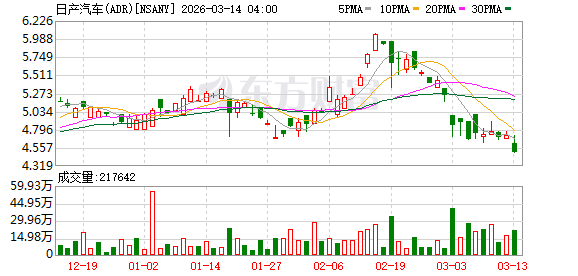
Group 1 - Wayve, a U.K.-based autonomous vehicle software company, has secured $1.2 billion in funding and is partnering with Uber and Nissan to launch a robotaxi service in Tokyo, with a pilot set for late 2026 [1] - The collaboration involves Wayve integrating its AI-powered self-driving software into a Nissan Leaf, which will be accessible on Uber's ride-hail network, marking Uber's first robotaxi partnership in Japan [2] - Wayve's autonomous software is designed to operate on any vehicle and hardware without relying on HD maps, while the company is also working on a robotaxi service in London and integrating driver-assistance technology in Nissan vehicles for production in 2027 [3] Group 2 - Uber is actively forming partnerships globally to establish itself as the leading app for hailing self-driving taxis, having formed over 25 partnerships to date [4] - Recently, Uber announced plans to introduce Zoox's purpose-built robotaxi on its app in Las Vegas later this year, further expanding its robotaxi offerings [4]
Uber, Nissan, Wayve Team Up to Offer Robotaxi Services in Tokyo
WSJ· 2026-03-12 03:35
Core Insights - Uber Technologies, Nissan Motor, and U.K. self-driving car startup Wayve are collaborating to provide robotaxi services, with a pilot program set to launch in Tokyo by late 2026 [1] Company Summaries - Uber Technologies is expanding its service offerings by partnering with Nissan Motor and Wayve to enter the robotaxi market [1] - Nissan Motor is leveraging its automotive expertise in this collaboration to enhance the development of autonomous vehicle technology [1] - Wayve, as a self-driving car startup, brings innovative technology and experience in autonomous driving to the partnership [1] Industry Implications - The collaboration signifies a growing trend in the automotive and technology sectors towards the development of autonomous transportation solutions [1] - The pilot program in Tokyo represents a strategic move to test and refine robotaxi services in a major urban environment, potentially influencing future deployments in other cities [1]
Nissan names new CFO amid turnaround challenges
Yahoo Finance· 2026-03-11 17:29
Group 1 - Nissan Motor Co. has appointed George Leondis as the new chief financial officer, succeeding Jérémie Papin, who is stepping down for personal reasons effective April 1 [1][3] - Leondis has a background in accounting and has been with Nissan since 2004, holding various senior finance and leadership roles across key markets [2][3] - Papin will remain with Nissan until mid-May to facilitate the closing of FY25 and ensure a smooth transition [3][4] Group 2 - Ivan Espinosa, president and CEO of Nissan, expressed gratitude for Papin's leadership during a critical recovery phase and emphasized the continuity of the company's priorities and commitments [4] - Nissan reported a net loss of nearly $1.5 billion in the first half of FY2025, with an operating profit loss of 27.7 billion yen ($180.7 million), marking a $430 million decline from the previous year [5]
Nissan CFO to depart amid turnaround challenges
Yahoo Finance· 2026-03-10 15:01
Group 1 - Nissan's CFO Jérémie Papin will step down for personal reasons after serving just over a year, with George Leondis set to take over the role effective April 1 [5][7] - Leondis has over two decades of experience at Nissan, having held various finance roles, including regional finance chief for Nissan Europe and Nissan AMIEO [4][5] - The leadership change occurs as Nissan continues its "Re:Nissan" restructuring plan aimed at improving financial performance after two years of challenges, including declining sales and profitability [5][6][7] Group 2 - The "Re:Nissan" plan, announced in May, includes workforce reductions of 20,000 and a reduction in manufacturing plants from 17 to 10 [6][7] - Nissan aims to achieve positive profitability and cash flow by full year 2026, targeting total cost savings of 500 billion Japanese yen (approximately $3.1 billion USD) compared to full year 2024 actuals [6]
丰田、本田、日产2月在华销量均下滑
日经中文网· 2026-03-10 02:19
Group 1 - Toyota's sales in China for February were 82,500 units, a year-on-year decline of 13.9% [4] - Honda's sales in China for February were 28,780 units, down 15% year-on-year, with significant declines in its joint ventures [4] - Nissan experienced the largest drop among the three Japanese automakers, with a 20% decline in February sales [2][5] Group 2 - The reduction in government subsidies for electric vehicles (EVs) has negatively impacted sales for Chinese automakers, with BYD's new car sales in February down 40% year-on-year [5] - Cumulatively, from January to February, Toyota's sales in China decreased by 1.9% to 227,900 units, while Honda's sales fell by 16% to 86,269 units, and Nissan's sales declined by 2% to 75,415 units [5] - The Chinese government's reduction of the vehicle purchase tax exemption for EVs starting in January has affected sales across the industry [4]