Nissan Motor(NSANY)

Search documents
中国买爆全球汽车工厂
创业邦· 2026-03-06 10:32
Core Viewpoint - The global automotive industry is undergoing significant capacity reduction, with major traditional automakers closing factories and cutting production, while Chinese automakers are seizing the opportunity to expand and localize their operations globally [5][10][20]. Group 1: Factory Closures and Capacity Reduction - Nissan plans to close 7 out of 17 global manufacturing plants, aiming to cut excess capacity by approximately 2.5 to 3 million vehicles by the fiscal year ending March 31, 2028 [5]. - Volkswagen announced the closure of at least 3 factories in Germany by the end of 2024, but later abandoned the complete shutdown plan, seeking alternative uses for two of the factories [5]. - Stellantis will close the historic Vauxhall commercial vehicle plant in Luton, UK, and has already reduced North American vehicle shipments by 23% in the first half of 2025 [7][9]. - General Motors has permanently ceased production of BrightDrop electric delivery vans at its Ingersoll CAMI plant and has reduced shifts at its Oshawa plant, affecting around 500 employees [7][9]. - Ford plans to close its Saarlouis plant in Germany by 2032, while Mercedes-Benz has already shut down factories in Brazil, France, and Russia [9]. Group 2: Capacity Utilization Trends - The automotive capacity utilization rate in the U.S. is fluctuating between 60% and 70%, with the automotive and light vehicle sector at approximately 65% [12][16]. - In Canada, the automotive assembly volume is projected to drop from 2.3 million units in 2016 to 1.2 million units by 2025, with the manufacturing capacity utilization rate declining from 80.4% to 78.7% [16]. - The European automotive industry is facing severe overcapacity, with an average utilization rate of only 55% in 2025, necessitating the closure of 8 factories to achieve sustainable capacity levels [19]. Group 3: Opportunities for Chinese Automakers - Chinese automakers are capitalizing on the global capacity reduction by acquiring idle factories and leveraging existing industrial assets for localized growth [10][20]. - In 2025, China's automotive exports reached 7.098 million units, a year-on-year increase of 21.1%, maintaining the top position globally for three consecutive years [22]. - Chinese brands have gained significant market share in Mexico and Europe, with nearly 20% in Mexico and 9.5% in Europe by December 2025 [22]. Group 4: Strategies for Localization - Chinese automakers are employing various strategies such as acquisitions, joint ventures, contract manufacturing, and greenfield investments to establish localized production [25][41]. - Acquisitions of idle factories allow Chinese companies to bypass lengthy approval processes and reduce localization timelines [26][30]. - Joint ventures have proven effective for Chinese automakers to adapt to local markets, as seen with Chery's partnership in Brazil [31][32]. Group 5: Global Perception and Cooperation - There is a shift in perception among foreign governments, viewing Chinese automakers as partners that can revitalize local manufacturing and create jobs [42][45]. - Collaborative efforts between Chinese automakers and local governments are increasingly focused on technology transfer and local workforce training [42][45]. - Countries like the UK and Canada are actively seeking partnerships with Chinese automakers to boost local production and employment [45][49].




Global Markets on Edge: Iran Conflict Escalates as China Restricts BHP and Nissan Issues UK Ultimatum
Stock Market News· 2026-03-05 10:38
Geopolitical Tensions and Energy Security - The Middle East conflict is prompting major economies to prioritize energy security, with India engaging in high-level talks with the IEA and OPEC to stabilize crude oil supply amid volatility in the Strait of Hormuz [2] - India is negotiating with the U.S. for maritime insurance and may adjust domestic gas supplies if the regional crisis escalates [2] - France has authorized U.S. military use of its bases for regional operations, coinciding with heightened threat levels declared by Qatar [3] - Azerbaijan has warned of consequences for Iranian attacks, indicating potential for broader regional conflict [3] - The Kremlin remains cautious, noting that Iran has not sought arms from Russia, while the EU considers delaying a ban on Russian LNG imports to mitigate energy price shocks [4] Trade Disputes and Manufacturing Threats - China has intensified restrictions on BHP Group, instructing steel mills to halt purchases of "Jinbao fines," escalating from previous bans and impacting 2026 contract negotiations [5] - Nissan has warned the UK government that its Sunderland plant could close if excluded from "Made in Europe" rules, which would impose tariffs on EU exports [6] Corporate Earnings and Economic Outlook - JD.com reported fourth-quarter net revenue of CNY 352.28 billion, exceeding analyst estimates of CNY 349.89 billion, despite an adjusted EBITDA loss of CNY 823 million, which was better than the anticipated loss [7] - Eurozone Retail Sales for January increased by 2.0% year-over-year, surpassing the 1.7% consensus, although month-over-month sales dipped by 0.1% [8] - ECB officials express concerns about short-term inflation spikes due to the Iran conflict, with differing views on the potential impact depending on the conflict's duration [9]



在日系遍地的东南亚,中国车凿开了一道口子
创业邦· 2026-03-04 00:36
Core Viewpoint - Japanese car brands are losing market share in Southeast Asia, with a significant decline expected by 2025, as Chinese brands and local manufacturers gain ground [5][11][19]. Market Share Trends - Japanese brands hold about 30% of global sales, with Southeast Asia being a crucial market where their share has historically exceeded 80% [5][6]. - By 2025, Japanese car sales in six ASEAN countries are projected to drop by 22% compared to 2019, while their sales in the U.S. remain stable at around 6 million units [11][13]. - In Thailand, the market share of Japanese cars has decreased from nearly 90% in 2019 to 68% in 2025, while Indonesia's share remains at 81% but is also declining [15][17]. Chinese Brand Growth - Chinese brands have increased their market share in Southeast Asia from less than 1% in 2019 to approximately 12% now, with Thailand reaching 22% and Indonesia at 14% [17]. - In Thailand's top ten car manufacturers for 2025, brands like BYD and MG are showing significant growth rates, with BYD's sales increasing by 47.5% [18]. Local Brand Competition - Local Southeast Asian brands are also capturing market share previously held by Japanese manufacturers, with VinFast in Vietnam surpassing Toyota in sales [19][21]. - Malaysian brands Perodua and Proton account for 60% of the market, with some models being influenced by Chinese technology [21]. Historical Context - Japanese car manufacturers have established a strong presence in Southeast Asia since the 1960s through local assembly and production, which created a long-standing market dominance [23][24]. - The shift in market dynamics is attributed to Southeast Asian countries' desire to develop their own automotive industries and reduce reliance on Japanese brands [27]. Government Support for EVs - Southeast Asian governments are actively promoting electric vehicles (EVs) and providing incentives for local and Chinese manufacturers to establish production facilities [29][30]. - Thailand's EV 3.5 plan offers significant tax reductions and cash subsidies for electric vehicles, encouraging foreign investment [29]. Export and Manufacturing Strategy - China's export strategy has shifted towards high-tech industries, including automotive and battery production, contributing to a record trade surplus [30]. - This aligns with Southeast Asian countries' interest in collaborating with Chinese manufacturers to enhance their automotive capabilities [30][31].




日产汽车:深耕中国EV市场 强化寒地性能测试 计划2026年出口中国研发车型
Zhong Guo Qi Che Bao Wang· 2026-02-27 05:55
Core Insights - Nissan is enhancing its competitiveness in the Chinese electric vehicle (EV) market by opening its cold-weather testing facility in Heilongjiang Province, focusing on developing models tailored for local demand [1][2] - The company plans to export models developed in China, including the N7, to global markets by 2026, using the Chinese market as a springboard for global EV transformation [1][3] Group 1: Cold Weather Testing and Model Development - Nissan's cold-weather testing facility in Heilongjiang is ideal for evaluating EV performance in extreme conditions, with temperatures reaching as low as -40 degrees Celsius [1] - The N7, Nissan's first EV developed specifically for China, is set to launch in April 2025 and features design elements and configurations that cater to Chinese consumer preferences [1][2] - The testing process ensures that the N7 maintains core quality standards consistent with global models, providing a competitive edge [2] Group 2: Sales Performance and Future Plans - Nissan's new car sales in China have declined from 1.56 million units in 2018 to 650,000 units in 2025, a drop of 60%, prompting the need for a robust EV strategy [2] - To counteract declining sales, Nissan is expanding its product line in China, with plans to launch the NX8 model, a pure electric SUV and extended-range electric vehicle (EREV), by 2026 [2] - The company aims to introduce 10 new energy models in China by summer 2027, leveraging local R&D and manufacturing capabilities to support global EV transition [3]
零跑汽车市场竞争力分析报告(2026版):零跑汽车快速崛起的底层逻辑是什么
腾易科技· 2026-02-26 13:45
Investment Rating - The report rates the industry positively, highlighting the rapid growth and market competitiveness of Leap Motor [11][14][23]. Core Insights - Leap Motor has successfully transitioned from initial struggles to becoming a leading player in the domestic market, with sales approaching 500,000 units by 2025 [14][24]. - The company's strategy focuses on cost-effective pricing and maximizing interior space, appealing to family-oriented consumers [12][14]. - Leap Motor's growth is attributed to its ability to attract users from traditional overseas brands, particularly in the compact car segment [23][24]. Summary by Sections Sales Performance - Leap Motor's domestic sales reached over 100,000 units in 2022 and are projected to approach 300,000 units in 2024 and 500,000 units in 2025 [14][24]. - The company has gained significant market share, challenging established brands like Volkswagen and Honda [14][24]. User Demographics - By 2025, over 80% of Leap Motor's users will be repeat buyers, with a significant portion coming from overseas brands [23][24]. - The average age of repeat users is over 40, primarily consisting of middle-income earners [44][57]. Competitive Landscape - Leap Motor's rapid rise has occurred amidst a decline in traditional overseas brands, which have struggled to meet the demand for economical and energy-efficient vehicles [68][69]. - The company has positioned itself effectively in the market by launching models that cater to the needs of cost-sensitive consumers [91][102]. Future Outlook - The report anticipates increased competition in the "economic large energy-saving vehicle" segment, with Leap Motor planning to launch new flagship models in 2026 [101][112]. - The competitive environment is expected to intensify as other brands introduce similar products, potentially impacting Leap Motor's market position [102][112].



【快讯】每日快讯(2026年2月26日)
乘联分会· 2026-02-26 08:36
Domestic News - Fujian Province has issued implementation details for the 2026 vehicle trade-in program, offering a maximum subsidy of 15,000 yuan for qualifying new energy vehicles and 13,000 yuan for fuel vehicles, based on 8% and 6% of the new car sales price respectively [3] - Henan Province has also released its 2026 vehicle trade-in subsidy details, with a maximum subsidy of 20,000 yuan for qualifying new energy vehicles (12% of the new car sales price) and 15,000 yuan for fuel vehicles (10% of the new car sales price) [4] - Guangzhou aims to drive the automotive industry's "smart and electric transformation" by supporting deep cooperation between GAC and Huawei, as well as promoting new products from companies like Xiaopeng [5] - BMW Group has signed a memorandum of cooperation with CATL to enhance collaboration in battery supply chains and reduce carbon footprints in electric vehicles [6] - Great Wall Motors plans to build a new factory in Espírito Santo, Brazil, with an annual production capacity of 200,000 vehicles [8] - Chery's new energy brand iCAUR will launch in South Africa in May 2026, with two SUV models and a network of 20 authorized dealers [9] - The right-hand drive version of the Avita 07 has begun deliveries in Thailand, with plans to launch five models by 2026 and expand to 80 countries by 2030 [10] - Huawei's QianKun reported that during the Spring Festival travel period, its assisted driving system accumulated 470 million kilometers, a 235% increase from the previous year [11] International News - VinFast has signed a memorandum of cooperation with PlusX Electric in the UAE to enhance electric vehicle charging accessibility and after-sales support [12] - BMW plans to start production of the all-electric X3 M and X4 M by the end of 2027 [13] - Nissan has launched the new generation Versa sedan in Mexico, which will not be sold in the U.S. market [14] - Waymo has expanded its autonomous driving service to ten cities, aiming for over one million rides per week by the end of the year [15] Commercial Vehicles - Shaanxi Automobile has signed a memorandum for a thousand-unit cooperation in Saudi Arabia, focusing on local market needs and product adaptation [16] - The 2026 model of the Yuanmeng Star Enjoy V6E has been officially launched, with a starting price of 59,900 yuan [17] - Neolix has announced that its L4 autonomous vehicles have surpassed one hundred million kilometers in cumulative driving distance, marking a significant milestone in the global delivery industry [18] - Daimler Trucks North America has launched a new generation of heavy-duty diesel engines, compliant with EPA 2027 standards, enhancing competitiveness in the commercial vehicle sector [19]



日产将在美国召回约64.3万辆SUV,涉及发动机和油门问题
Cai Jing Wang· 2026-02-26 02:07
Core Viewpoint - The National Highway Traffic Safety Administration announced that Nissan will recall a total of 642,698 Rogue SUVs in the United States due to safety concerns related to potential vehicle malfunctions [1] Group 1: Recall Details - A total of 318,781 vehicles are being recalled due to a fault in the throttle body gear [1] - An additional 323,917 vehicles are being recalled due to a risk of damage to the engine bearings, which could lead to oil leaks and increase the risk of engine fires and loss of vehicle power [1]
销利双跌,惨遭网暴!2025年“最惨”车企有哪些?
电动车公社· 2026-02-25 16:06
Group 1 - Nissan is referred to as the most "wasteful" automaker of 2025, having sold its headquarters building in Yokohama and subsequently leased it back, indicating severe financial distress [4][5] - Nissan's financial situation deteriorated dramatically, reporting a loss of 670 billion yen in the fiscal year 2024, a stark contrast to a profit of 400 billion yen the previous year, marking its first loss in a decade [7][8] - The company is projected to incur another loss of 650 billion yen in the fiscal year 2025, raising concerns about its operational viability and potential bankruptcy without new funding [8][9] Group 2 - Tesla's vehicle deliveries in 2025 fell to 1.636 million, a decline of 8.6% year-over-year, with revenue also decreasing by 3%, marking the first revenue drop in its history [16] - Despite launching new models like the refreshed Model Y, Tesla faces increasing competition from domestic brands, which are eroding its market share [22][23] - Tesla's continued use of a 400V architecture for its vehicles is seen as a disadvantage compared to competitors that have adopted 800V systems, impacting charging speed and overall competitiveness [23][24] Group 3 - Porsche experienced a significant decline in operating profit, dropping from 4.035 billion euros in the previous year to just 40 million euros in 2025, a 99% year-over-year decrease [29] - The company reported a total delivery of 279,449 vehicles in 2025, a 10% decline compared to the previous year, marking the largest drop since the 2009 global financial crisis [30][31] - Porsche's struggles are attributed to the rapid advancement of domestic electric vehicle brands, which have outpaced Porsche's own electric vehicle development [36][38] Group 4 - Stellantis reported a 5.2% decline in revenue to 148.7 billion euros in 2025, with a net loss projected between 19 billion to 21 billion euros, leading to the suspension of dividends for 2026 [43][44] - The group's total vehicle sales fell by 8% to approximately 5.4 million units, the most significant decline among the top ten global automakers [44] - Stellantis's failure to effectively penetrate the Chinese market is highlighted, with only 29,000 units sold in 2025, representing a mere 0.5% of total sales [55] Group 5 - Xiaomi Auto achieved a remarkable sales increase of 200.9% year-over-year, entering the top ten domestic automakers with annual sales of 410,000 vehicles [60] - Despite strong sales figures, Xiaomi Auto faces significant public scrutiny and negative media coverage, impacting its brand perception and leading to internal challenges for its CEO [60][61] - The company is urged to focus on product excellence and address public concerns proactively to maintain its market position and reputation [68]


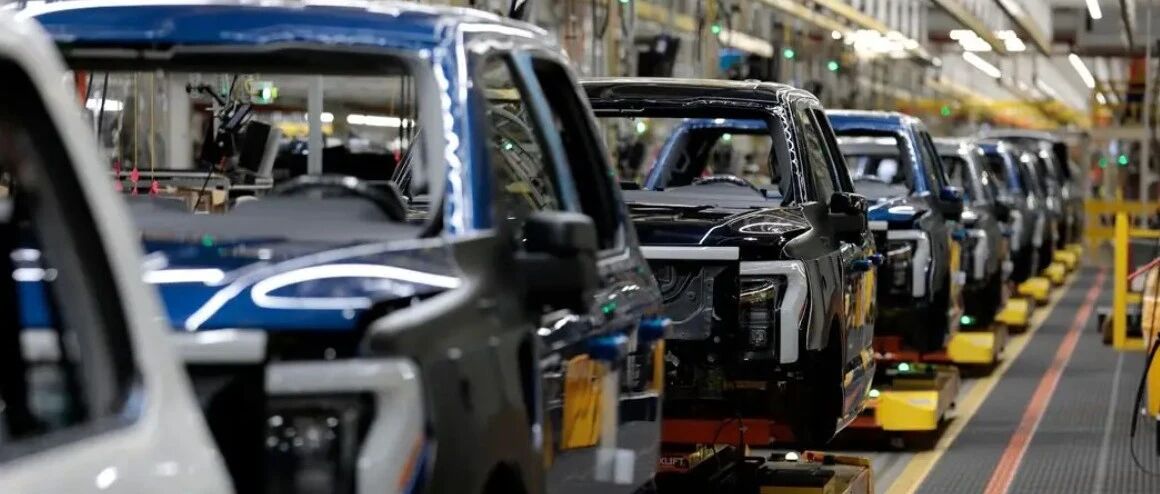
Wayve rockets to €7.2 billion valuation with €1 billion Series D bet on AI-driven autonomy – backing from Uber and Microsoft
EU· 2026-02-25 10:39
Core Insights - From 2026, consumers will experience Wayve-powered robotaxis through commercial trials with Uber, with passenger vehicles equipped with Wayve's AI Driver available from 2027 [1] - Wayve licenses its AI Driver to automakers, enabling customization for specific vehicles without relying on high-definition maps, aiming for global scalability with lower capital intensity [2] - Wayve has achieved zero-shot driving in over 500 cities across Europe, North America, and Japan, supported by a foundation model trained on diverse data from over 70 countries [3] - Uber plans to deploy Wayve's technology in more than 10 markets globally, starting with London in 2026, and has committed additional capital for multi-year deployments [4] - The partnership will see Wayve's AI Driver in L4-capable vehicles, with Uber operating the fleet, creating a scalable model for autonomous ride-hailing [5] - The industry is shifting towards end-to-end AI for scalable autonomy, with Wayve positioned to lead its global deployment [6]


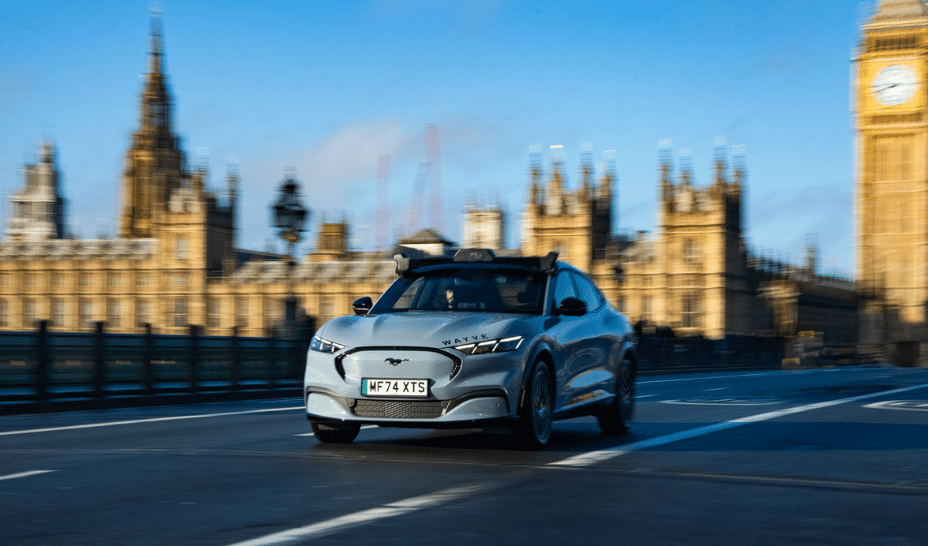
英伟达、微软增资自动驾驶厂商Wayve 后者估值冲至86亿美元
Ge Long Hui A P P· 2026-02-25 02:39
Group 1 - Wayve, an autonomous driving company, raised $1.2 billion in Series D funding, achieving a valuation of $8.6 billion [1] - The funding round was led by Eclipse, Balderton, and SoftBank's Vision Fund 2, with participation from Nvidia, Microsoft, and Uber [1] - Major automotive companies such as Mercedes-Benz, Nissan, and Stellantis also invested in this funding round [1]