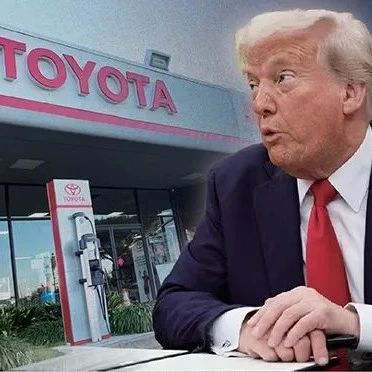
卡罗拉Cross

Search documents
丰田1月全球销量创历史新高,产量下滑6%
日经中文网· 2026-02-27 08:00
Core Viewpoint - Toyota's global sales in January reached 822,577 units, marking a 5% year-on-year increase and setting a record for January sales [2] Group 1: Global Sales Performance - Toyota's global sales, including Lexus, reached 822,577 units in January, a 5% increase year-on-year, achieving the highest record for January [2] - The overseas sales increased by 6% to 699,512 units, setting a historical record [2] - In the U.S., hybrid vehicle sales reached 176,853 units, growing by 8% despite additional tariffs imposed by the Trump administration [2] Group 2: Regional Market Insights - The previously weak Chinese market saw a 7% increase in sales, totaling 145,464 units, driven by the updated SUV model "Corolla Cross" [4] - In Europe, the "Yaris" and "Yaris Cross" performed well, with a 12% year-on-year increase, reaching 104,727 units [4] Group 3: Production and Supply Chain - Global production decreased by 6% year-on-year to 735,097 units due to new model launches and adjustments in production lines [2] - North American production dropped by 25% to 134,351 units, influenced by the redesign of the SUV "RAV4" and the discontinuation of certain gasoline models [5] - In Japan, production fell by 6% to 249,827 units due to fewer working days, while production in Asia, particularly in China, increased by 7% to 251,428 units [5]


日系车1月在华销量:丰田日产转增,本田跌幅缩小
日经中文网· 2026-02-11 03:23
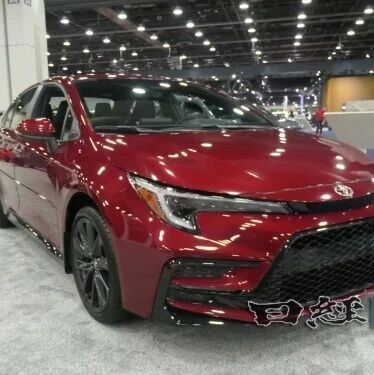
Group 1 - Toyota's sales increased by 6.6% year-on-year, reaching 145,500 units, marking the first growth in four months. The successful sales of the 2025 updated Corolla Cross contributed to this growth [3][6]. - In the electric vehicle (EV) segment, Toyota introduced new models such as the bZ3X and bZ5, resulting in a 70.9% increase in EV sales, totaling 6,400 units [3][6]. - Nissan's sales grew by 10.1%, reaching 50,024 units, driven by the upgraded fuel sedan "Tianlai," which features Huawei's smart cockpit, appealing to younger consumers [5][6]. Group 2 - Honda's sales declined by 16.5%, falling to 57,489 units. Although the decline was less severe compared to a 40% drop in December 2025, it still faced intense competition from Chinese automakers [6][7]. - The Chinese government plans to halve the vehicle purchase tax exemption for EVs starting January 2026, and adjustments to the vehicle trade-in subsidy system are also underway, leading to consumer hesitation in purchasing decisions [6].


丰田美国电池工厂投产,未来五年将在美投资100亿美元
Guan Cha Zhe Wang· 2025-11-13 06:41
Core Insights - Toyota has commenced operations at its $13.9 billion battery plant in North Carolina to meet the rising demand for hybrid vehicles and confirmed a plan to invest $10 billion in U.S. manufacturing over the next five years [1][3] - The North Carolina plant is Toyota's 11th facility in the U.S., covering 1,850 acres and capable of producing up to 30 GWh annually, employing 5,000 workers [1][3] - The plant will supply batteries for popular models such as the Camry, Corolla Cross, RAV4, and an undisclosed three-row hybrid SUV [1] Investment Plans - Over the next five years, Toyota plans to invest an additional $10 billion in the U.S., bringing its total investment to over $60 billion [3] - This investment strategy aligns with Toyota's commitment to a multi-faceted energy transition, offering a range of vehicles including fuel-efficient, hybrid, plug-in hybrid, electric, and fuel cell vehicles [3] Market Context - The U.S. government is expected to relax fuel economy standards, which were previously deemed too aggressive, potentially impacting the market dynamics for electric and hybrid vehicles [3] - Other automakers, such as Volkswagen, are also responding to the changes in U.S. policy by increasing the availability of hybrid models in the market [4]

丰田能挺过特朗普关税难关吗?
日经中文网· 2025-04-11 05:00
Core Viewpoint - The imposition of tariffs by the Trump administration is expected to significantly impact Toyota's production and sales in the U.S., potentially leading to increased costs and reduced sales volume [1][3]. Group 1: Impact of Tariffs - Toyota exports approximately 530,000 vehicles from Japan to the U.S. annually, accounting for about 20% of its U.S. sales [1]. - An increase in vehicle prices due to tariffs could lead to a sales decrease of 5-8% in the U.S. market [4]. - The tariffs will primarily be borne by importers, including Toyota, which plans to temporarily maintain its vehicle prices in the U.S. while seeking to lower costs to absorb tariff impacts [3][4]. Group 2: Production and Supply Chain Challenges - Toyota's domestic production system in Japan, which supports around 300,000 vehicles annually, is at risk due to the tariffs and potential shifts in production [1][4]. - The company has a supply chain network of approximately 60,000 domestic suppliers in Japan, which will also face challenges due to the tariffs [4][5]. - The production of luxury brand Lexus, which constitutes about 20% of Toyota's exports to the U.S., is primarily based in Japan, and any shift to local production in the U.S. could adversely affect Japanese suppliers [5]. Group 3: Long-term Considerations - If tariffs persist, relying solely on cost reductions may not be sustainable, and some manufacturers have already begun to raise prices [4]. - The automotive industry has historically operated under free trade principles, and the current tariff policies threaten to disrupt this established framework [5]. - Toyota's financial strength, with over 9 trillion yen in cash reserves, may help it navigate these challenges, but the broader implications for the domestic supply chain remain concerning [5].