Novo Nordisk(NVO)

Search documents
Eli Lilly cuts Zepbound prices in competitive weight loss drug market battle
Fox Business· 2025-12-01 18:43
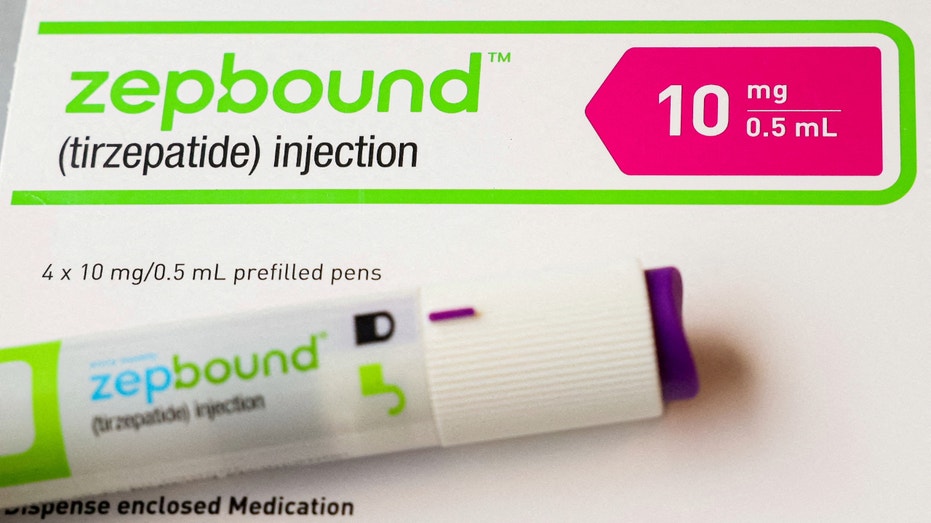
Core Insights - Eli Lilly has announced new price cuts for its weight loss drug Zepbound, reducing costs to enhance patient access and promote the use of its digital healthcare platform, LillyDirect [1][2] - The price for single-dose vials of Zepbound will now be $299 per month, down from $349, while the 5-milligram dose will be priced at $399, reduced from $499 [1][2] - The company aims to expand access for patients lacking insurance or adequate coverage through its Zepbound Self Pay Journey Program [2][9] Pricing Details - Regular monthly prices for Zepbound when not purchased through the Self-Pay Journey Program are significantly higher, ranging from $599 for 7.5 milligrams to $1,049 for 15 milligrams [5] - Multi-dose pens for Zepbound are expected to be priced at $299 for the lowest dose, with additional doses up to $449, pending FDA approval [6][8] Competitive Landscape - Eli Lilly and Novo Nordisk are both launching direct-to-consumer platforms to reduce barriers for new patients, enhancing their competitive positions in the weight loss drug market [9][11] - Novo Nordisk's platform, NovoCare Pharmacy, was launched in March to assist patients who cannot afford standard prices or lack insurance coverage for its weight loss drugs [11]


GLP-1 专题深度产品迭代驱动市场扩容,关注靶点、剂型及联合疗法研发进展
2025-12-01 16:03
Summary of GLP-1 Market Conference Call Industry Overview - The GLP-1 market is experiencing rapid expansion, with leading company Eli Lilly's market capitalization increasing nearly sixfold over the past five years, surpassing $1 trillion [1][2] - The market for GLP-1 drugs is projected to grow from $2.9 billion in 2015 to nearly $50 billion by 2024, with an annual growth rate of 47% [1][6] Key Points and Arguments - **Market Performance**: In 2024, global sales for semaglutide and tirzepatide are expected to approach $50 billion, continuing strong growth [2] - **Future Trends**: The GLP-1 sector is anticipated to be one of the most focused areas in pharmaceuticals, with each drug iteration potentially doubling market size within 3 to 5 years [3] - **Drug Competition**: Tirzepatide's prescription volume has recently surpassed that of semaglutide, with combined sales exceeding $10 billion in Q3 2025 [7] - **Growth Drivers**: The primary growth will come from expanding usage among individuals with mild obesity, as current prescription rates for GLP-1 drugs in diabetes are around 7% globally and 19% in the U.S., while weight loss indications have a penetration rate of less than 0.5% [8][10] Important but Overlooked Content - **Policy Changes**: Recent adjustments in U.S. Medicare policy will significantly reduce out-of-pocket costs for obesity medications, potentially increasing market volume for new drugs like Ofev and high-dose oral semaglutide [10][11] - **Market Dynamics**: The U.S. market has seen substantial consumer education regarding weight loss medications, which will facilitate the commercialization of new oral weight loss drugs [11] - **Differentiation Strategies**: Companies can achieve differentiation through target combination strategies or by developing oral formulations that improve patient compliance [13][15] - **Domestic Market Potential**: The Chinese weight loss drug market is expected to grow rapidly, driven by a large overweight population and a shift towards self-funded purchases due to limited insurance coverage [25][26] Conclusion - The GLP-1 market is poised for significant growth driven by new drug developments, policy changes, and increasing consumer awareness. Companies in this space, particularly those focusing on oral formulations and innovative treatment strategies, are likely to benefit from these trends.
Lilly Cuts Prices for Cash Buyers of Weight-Loss Drug Zepbound
Youtube· 2025-12-01 15:12
Core Viewpoint - Eli Lilly is reducing the prices for introductory doses of its weight loss drug Zep, amidst a competitive pricing environment with Novo Nordisk, leading to confusion in the market regarding pricing for these medications [1][3]. Pricing Strategy - Lilly is discounting the first starter dose of Zep by $50 and offering further reductions on the second starter dose, while maintaining prices for higher therapeutic doses [3][4]. - Novo Nordisk is also providing discounts on the initial months of treatment for its drugs, aiming to attract patients to start their weight loss journey [3][4]. Patient Experience - Patients often begin with lower doses due to side effects, and while discounts are beneficial, there is significant confusion regarding the actual prices they should be paying [6][8]. - Many patients are still paying the full price of $500 for Wegovy and Ozempic, despite the availability of discounts [6]. Market Dynamics - Both Lilly and Novo have made agreements with the Trump administration to lower drug prices starting next year, which may lead to more uniform discounts across the board [7]. - The insurance coverage for these medications remains inconsistent, prompting the need for companies to offer discounts [8]. Future Developments - There is anticipation of new oral medications entering the market next year, which could further lower prices, with expected starting doses around $150 a month [10]. - The demand for injectable medications remains high, and it is uncertain whether patients will switch to pills or if this will create a new market segment [11].
Eli Lilly Lowers Weight-Loss Drug Zepbound Prices After Trump Deal
Forbes· 2025-12-01 14:50
Core Viewpoint - The pharmaceutical companies Eli Lilly and Novo Nordisk are reducing the prices of their weight loss drugs to enhance accessibility for consumers [1]. Pricing Changes - Eli Lilly has decreased the out-of-pocket monthly price for the lowest single-dose vial of Zepbound to $299 from $349, marking a 14% reduction. The 5-milligram dose is now priced at $399, down approximately 20% from $499. Prices for the 7.5 to 15 milligram doses have been reduced to $449 from $499 [2]. - Novo Nordisk has announced a reduction in the out-of-pocket monthly price for Ozempic and Wegovy to $349 from $499. Additionally, the two lowest doses of either drug will be available for $199 per month for the first two months [3]. Market Reaction - Following the announcement of price cuts, Eli Lilly's shares fell nearly 1% in premarket trading, while Novo Nordisk's stock experienced a decline of more than 1.7% [3].
礼来(LLY.US)下调Zepbound入门剂量价格 减肥药竞争加剧推高行业压力
智通财经网· 2025-12-01 13:59
Core Viewpoint - Eli Lilly has lowered the entry price of its weight loss drug Zepbound in response to increasing competition from Novo Nordisk, marking a significant move in the ongoing price war between the two companies in the lucrative obesity treatment market [1][2] Pricing Strategy - Starting from this week, the cash price for the lowest dose of Zepbound will be $299 per month, a reduction of approximately $50 from the previous price [1] - The price for the next higher dose will decrease to $399 per month, down about 20% from the prior cash price [1] - The highest dose remains unchanged at $499 per month [1] Competitive Landscape - The price reduction is part of a broader competitive strategy between Eli Lilly and Novo Nordisk, which has also recently lowered its cash prices for its drugs Ozempic and Wegovy [1][2] - Novo Nordisk's entry-level price for Ozempic and Wegovy is $199 for the first two months, increasing to $349 thereafter [1] Market Context - Analysts project that the global obesity treatment market will reach $100 billion by the end of this decade, highlighting the significant financial stakes involved [2] - Both companies are exploring competitive advantages, including agreements with U.S. drug benefit managers and discounts for cash-paying customers [2] Regulatory Environment - The Biden administration has announced negotiations that could lead to discounts of up to 71% for Ozempic and Wegovy for federal Medicare patients, effective in 2027 [2] - Eli Lilly and Novo Nordisk have agreed to lower their prices in the U.S. as part of a government agreement that will also apply to cash-paying customers, with changes set to take effect in 2026 [2]
大量日版“减肥药”违规销售
第一财经· 2025-12-01 12:54
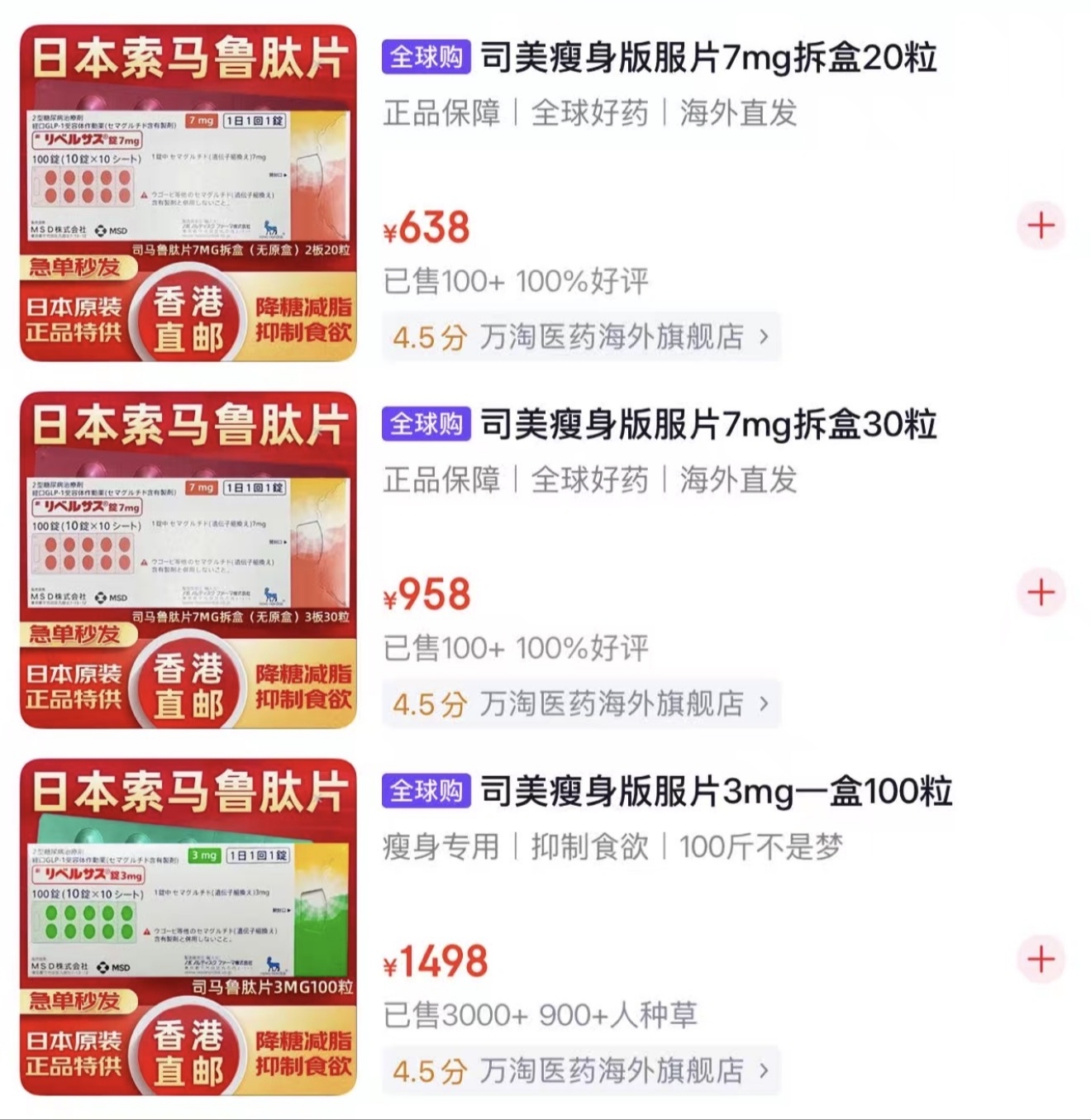
Core Viewpoint - Novo Nordisk's oral GLP-1 drug, semaglutide, is expected to receive FDA approval for weight loss in the U.S. by the end of this year, while no oral GLP-1 drugs for weight loss are currently available globally [3][10]. Group 1: Market Situation - There is a significant presence of products labeled as "oral," "weight loss," and "semaglutide" on major e-commerce platforms in China, primarily sourced from Japan and shipped from Hong Kong [3][10]. - The most common products found include "semaglutide weight loss tablets" in 3mg and 7mg dosages, with prices such as 638 RMB for 20 tablets of 7mg and 1498 RMB for 100 tablets of 3mg [3][10]. - Following inquiries about the legality of these sales, all such products were removed from the platforms [9]. Group 2: Regulatory Compliance - Semaglutide is classified as a prescription drug and must be purchased with a prescription, indicating that the current sales channels are non-compliant [10]. - The approved indication for semaglutide oral tablets globally is for the treatment of type 2 diabetes, with no current approval for weight loss, including in Japan [10]. Group 3: Pricing and Availability - Many domestic patients seeking weight loss are reportedly purchasing semaglutide through proxy channels from Japan, where the pricing is notably lower [18]. - The lowest price for the 3mg oral semaglutide in Japan is approximately 139.6 JPY per tablet, equivalent to about 6.8 RMB [18]. - The oral semaglutide "Nuohexin" is expected to be approved for type 2 diabetes treatment in China in January 2024, and it will also require a prescription for purchase [18].
Novo Nordisk's Latest Clinical Result Is Sending the Stock Plunging. Here's What Investors Need to Know.
The Motley Fool· 2025-12-01 12:07
Core Viewpoint - Novo Nordisk's recent clinical trial results for semaglutide in Alzheimer's treatment have raised concerns among investors, leading to significant market reactions, but the long-term potential remains to be seen as further data is expected [1][4]. Company Overview - Novo Nordisk is a Danish pharmaceutical company with a century-long focus on metabolic diseases, particularly diabetes and obesity treatments, with well-known products like Ozempic and Wegovy containing the active ingredient semaglutide [1][2]. Clinical Trial Results - On November 24, 2025, Novo Nordisk announced that its clinical trials EVOKE and EVOKE+ did not demonstrate that semaglutide could reduce Alzheimer's progression by at least 20%, failing to outperform a placebo [3][4]. - Preliminary results showed some improvement in disease-related markers, but the overall efficacy in slowing progression was not achieved [3][4]. Market Reaction - Following the trial announcement, Novo Nordisk's stock dropped approximately 10% to a low of $42.12 per share, the lowest since mid-2021, before recovering slightly to close at $47.05, down about 1% overall [5]. - Year-to-date, the stock has declined roughly 45%, and about 55% year-over-year, indicating a challenging period for shareholders [6]. Competitive Landscape - Novo Nordisk faces slowing sales growth for its key products, Wegovy and Ozempic, primarily due to increased competition from Eli Lilly, which has led to price cuts to maintain market share [7]. - Analysts had viewed the Alzheimer's trial as a long shot that could have significantly expanded the total addressable market if successful, but the disappointing results have diminished that potential [8]. Analyst Sentiment - A consensus among 21 analysts rates Novo Nordisk as a Moderate Buy, with an average score of 3.71 out of five, indicating that analysts did not expect success from the Alzheimer's trial but still see value in the stock despite current challenges [9]. - Despite concerns regarding pricing power, the company continues to dominate the growing market for diabetes and obesity drugs, with third-quarter revenue increasing by 11.8% to $11.74 billion, despite slower sales from core products [10].
大量日版口服司美格鲁肽违规“拆盒销售”,相关产品已全部下架
Di Yi Cai Jing· 2025-12-01 11:59
Core Viewpoint - The oral version of semaglutide, a GLP-1 drug by Novo Nordisk, is expected to receive FDA approval for weight loss in the U.S. by the end of this year, while currently, no oral GLP-1 drugs for weight loss are available globally, including Japan [1][6] Pricing and Market Availability - The price of oral semaglutide in Japan is among the lowest globally, with the 3 mg dosage priced at approximately 139.6 Japanese yen per piece, equivalent to about 6.8 RMB [9] - On a major e-commerce platform, the 7 mg dosage of oral semaglutide is priced at 638 RMB for 20 pieces, while the 3 mg dosage is priced at 1498 RMB for 100 pieces [1] Regulatory Compliance - Following inquiries about the legality of sales on e-commerce platforms, all related products were taken down, as semaglutide is a prescription drug that requires a prescription for purchase [6] - Currently, the approved indication for oral semaglutide globally is for the treatment of type 2 diabetes, with no approval for weight loss indications [6][9] Consumer Behavior - Many domestic patients seeking weight loss are reportedly purchasing oral semaglutide through proxy channels from Japan [9] - The oral version of semaglutide, branded as "Nuohexin," is expected to be approved for type 2 diabetes treatment in China in January 2024, and it will also require a prescription for purchase [9]
诺和诺德年内股价下跌43.10%!礼来替尔泊肽证明自己是真正的“减肥药之王”
GLP1减重宝典· 2025-12-01 04:21
整理 | GLP1减重宝典内容团队 ▍礼来:新晋"减肥药之王"的崛起 2025年第三季度,礼来报告替尔泊肽(糖尿病用Mounjaro+肥胖症用Zepbound)季度销售额突破100亿美元,进入全球最畅销药物之 列。截至2025年9月,礼来在美国GLP-1药物处方份额达到58%,诺和诺德为42%。替尔泊肽因显著优于司美格鲁肽的减重幅度与代谢 改善效果,被视为"下一代减肥药"的代表。 过去几年,GLP-1受体激动剂的代表药物——诺和诺德的司美格鲁肽(Ozempic/Wegovy)掀起全球减肥与糖尿病治疗热潮,推动公司 成 为 欧 洲 市 值 最 高 的 医 药 企 业 之 一 。 然 而 随 着 礼 来 的 加 入 , 行 业 格 局 迅 速 变 化 。 礼 来 的 双 靶 点 激 动 剂 替 尔 泊 肽 (Mounjaro/Zepbound)凭借更强的控糖与减重效果正在快速蚕食市场份额。在此背景下,诺和诺德股价近期出现明显回落,而礼来 则迎来新一轮估值上升。 ▍诺和诺德:昔日霸主的滑落 截至2025年底,诺和诺德股价显著下行,单日跌幅曾超过9%–12%。核心原因是其旗舰减肥与糖尿病药物需求不及预期,同时公司下 ...

异动盘点1201 | 亨得利复牌后涨超10%,铜业股集体走强;美股加密货币概念股普涨,白银股上涨
贝塔投资智库· 2025-12-01 04:05
Group 1: Stock Movements and Market Reactions - Hengdeli (03389) resumed trading and rose over 10% after announcing a voluntary cash offer at HKD 0.14 per share for all issued shares, excluding those already owned by the offeror and Mr. Feng Jiaqiao [1] - Anjuke Food (02648) increased nearly 5% following a report from Huachuang Securities after attending its 2025 first extraordinary general meeting, where management addressed operational and product channel strategies [1] - Copper stocks collectively surged, with Jiangxi Copper (00358) up 8.08%, China Daye Nonferrous Metals (00661) up 8.6%, and others, driven by a significant rise in LME copper futures, which exceeded USD 11,200, marking a historical high [1] Group 2: Industry-Specific Developments - Lichun Resources (02245) rose over 3% as reports indicated a major Chinese-controlled nickel smelter in Indonesia is cutting production due to tailings management issues [2] - Yuhua Education (06169) saw a nearly 1.89% increase after reporting a revenue of RMB 2.497 billion for the year ending August 31, 2025, a 5.4% year-on-year increase, with adjusted net profit rising 95.6% to RMB 914 million [2] - Jiantao Laminates (01888) increased nearly 7% as AI-driven demand for high-end PCBs surged, leading to price increases for key materials [2] Group 3: Strategic Partnerships and Collaborations - ZTE Corporation (00763) rose over 11% following reports of an upcoming AI phone launch in collaboration with ByteDance [2] - JD Health (06618) increased nearly 4% as demand for respiratory disease testing kits surged with the flu season, indicating a growing market for health-related products [3] - Xindong Company (02400) rose over 3% after announcing a strategic cooperation agreement with Golden Arc, including a financing agreement for USD 40 million [3] Group 4: Financial Performance Highlights - Bawang Tea (CHA.US) rose 6.09% after reporting Q3 results with a total GMV of RMB 7.93 billion and net income of RMB 3.208 billion, with overseas GMV increasing by 75.3% year-on-year [7]